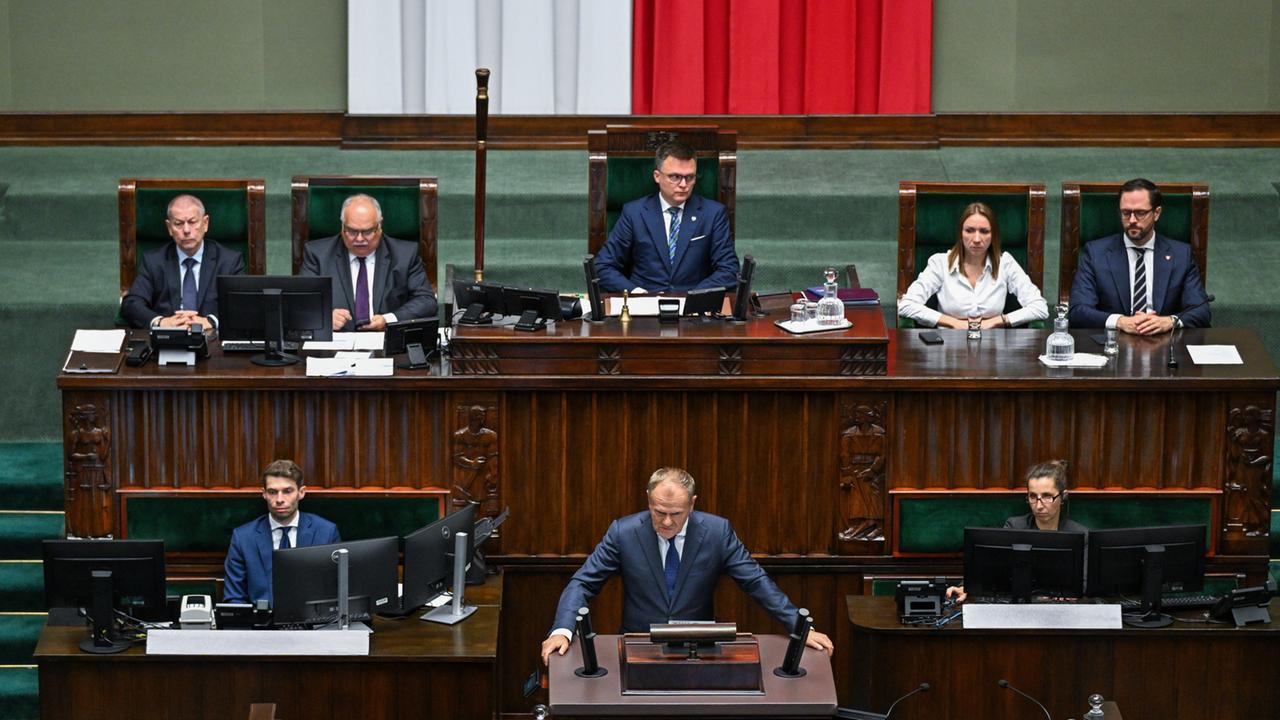
Warsaw, Poland – October 21, 2026 – In a significant legislative development, Poland’s parliament, the Sejm, has voted in favor of two bills aimed at liberalizing the country’s highly restrictive abortion law. The votes mark a pivotal moment in the ongoing debate over reproductive rights in Poland, a nation that has grappled with deeply entrenched conservative values and a powerful Catholic Church influence for decades. The proposed changes, spearheaded by the centrist-left coalition led by Prime Minister Donald Tusk, seek to reverse the stringent abortion regulations enacted under the previous Law and Justice (PiS) government, which had triggered widespread public outcry and months of sustained protests.
However, the path to actual reform remains fraught with obstacles, most notably the potential for a presidential veto. President Karol Nawrocki, who is supported by the conservative PiS party, has consistently voiced his commitment to protecting unborn life, casting a significant shadow over the future of these legislative proposals.
Main Facts: A Glimpse at the Proposed Reforms
The Polish parliament has taken a decisive step towards easing abortion access by approving two key legislative proposals. The first bill, which garnered a majority vote, aims to reintroduce the possibility of terminating a pregnancy in cases where there is a high probability of a severe and irreparable fetal malformation or a life-threatening condition for the fetus. This specific provision was in effect until late 2020, when it was struck down by the Constitutional Tribunal, then heavily influenced by the PiS government.
The second bill, which passed with a narrower margin, focuses on the decriminalization of abortion and providing assistance for such procedures. While this legislation also moves towards greater liberalization, its passage was more contentious, reflecting the ongoing divisions within Polish society and parliament on this sensitive issue.
The impetus for these reforms stems directly from the public’s strong reaction to the 2020 ruling that effectively banned abortions even in cases of severe fetal abnormalities. This decision, widely condemned by human rights organizations and women’s rights advocates, led to widespread protests that paralyzed cities across Poland for months, highlighting the deep societal schism on reproductive autonomy. Prime Minister Tusk’s coalition had prominently featured the promise of liberalizing abortion laws as a core pledge during their election campaign, underscoring the issue’s political significance.
Chronology: The Evolving Landscape of Abortion Rights in Poland
The journey to the current parliamentary votes is a testament to Poland’s complex and often contentious relationship with reproductive rights. Understanding the historical context is crucial to appreciating the significance of these recent developments.
-
Pre-2020: For decades, Poland maintained one of Europe’s most restrictive abortion laws, allowing terminations primarily in cases of rape, incest, or when the pregnant person’s life or health was at risk. While these grounds offered some latitude, the practical application often depended on the discretion of medical professionals and the willingness of women to navigate a system that could be perceived as unwelcoming or even punitive.
-
October 2020: The Constitutional Tribunal Ruling: In a landmark decision that sent shockwaves across the nation, Poland’s Constitutional Tribunal, then under the sway of the ruling PiS government, declared that abortions due to fetal defects were unconstitutional. This ruling effectively outlawed abortion in nearly all circumstances, leaving only the narrow exceptions for rape, incest, and immediate danger to the mother’s life.
-
Post-2020: Widespread Protests and Societal Backlash: The tribunal’s decision ignited a firestorm of public anger. From October 2020 onwards, Poland witnessed some of the largest demonstrations in its post-communist history. Women, often supported by allies, took to the streets in cities nationwide, carrying signs, chanting slogans, and engaging in acts of civil disobedience. The protests, dubbed the "Women’s Strike," were not only about abortion access but also symbolized a broader rejection of the PiS government’s conservative social agenda and perceived authoritarian tendencies. These demonstrations continued for months, demonstrating the depth of public opposition to the draconian law.
-
2023 Elections and the Rise of Tusk’s Coalition: The widespread discontent surrounding the abortion ban, coupled with other controversial policies of the PiS government, contributed to a significant shift in the political landscape. In the parliamentary elections of 2023, a coalition of centrist and liberal parties, led by Donald Tusk’s Civic Platform, secured a majority, ousting the PiS from power. A key promise of this new governing coalition was the restoration and liberalization of abortion rights.
-
October 2026: Parliamentary Votes on Reform: The recent votes in the Sejm represent the first tangible legislative action by the Tusk government to fulfill its electoral promises regarding reproductive rights. The approval of the two bills signifies a political will to move away from the restrictive measures imposed in 2020, though the final outcome remains uncertain due to the presidential veto power.
Supporting Data: The Impact of Strict Abortion Laws
The stringent abortion laws implemented in Poland have had profound and often devastating consequences for women, as evidenced by various reports and anecdotal accounts. The current legal framework, which severely curtails abortion access, places Poland among a handful of European nations with the most restrictive policies.
-
Limited Access and Increased Travel Abroad: Prior to the 2020 ruling, even with the existing restrictions, many Polish women sought abortions abroad, primarily in neighboring countries like Germany, Slovakia, and the Czech Republic, or further afield in the Netherlands. The tightening of the law has likely exacerbated this trend, leading to increased costs, logistical challenges, and emotional distress for women forced to travel to access healthcare. This creates a clear inequality, where only those with financial means can exercise their reproductive autonomy.
-
Rise in Illegal Abortions and Self-Managed Abortions: Concerns persist regarding an increase in clandestine and unsafe abortions performed by unqualified individuals or through self-administration of medication, often procured online. While official statistics on illegal abortions are inherently difficult to obtain, international health organizations have consistently warned that stricter laws do not eliminate abortions but rather drive them underground, leading to higher risks of complications, injury, and even death for women.
-
Psychological and Social Burden: Beyond the physical risks, the legal restrictions place a significant psychological and social burden on women. The inability to make decisions about their own bodies, particularly in cases of unwanted pregnancies, forced continuation of pregnancies with severe fetal anomalies, or pregnancies resulting from sexual violence, can lead to profound emotional distress, anxiety, and depression. The ongoing legal uncertainty and the fear of prosecution can also create a climate of intimidation.
-
Impact on Healthcare Providers: Medical professionals have also found themselves in a precarious position, caught between their ethical obligations to patients and the legal ramifications of providing abortion services. The ambiguity of the law and the fear of legal repercussions have led to a chilling effect, potentially causing some doctors to be overly cautious or to refrain from providing necessary care, even within the limited legal exceptions.
Official Responses and Political Stances
The parliamentary votes have elicited a range of reactions from key political figures and institutions in Poland, highlighting the deep ideological divisions surrounding the issue.
Government Coalition (Pro-Reform):
Prime Minister Donald Tusk and members of his coalition have consistently framed the proposed reforms as a matter of women’s rights, bodily autonomy, and a return to more humane healthcare practices. They argue that the previous government’s actions were an affront to fundamental freedoms and that the new legislation is a necessary step to rectify a grave injustice. Tusk has emphasized that the goal is to restore dignity and choice to women, allowing them to make deeply personal decisions without fear of legal persecution. The parliamentary votes are seen as a victory for those who have advocated for liberal reforms for years.
Opposition (PiS and Allies):
The conservative Law and Justice (PiS) party, along with its allies, has strongly opposed the proposed changes. They maintain that the current law, enacted by the Constitutional Tribunal, reflects the fundamental right to life of the unborn and aligns with traditional Polish and Catholic values. Their rhetoric often emphasizes the sanctity of life from conception and criticizes the reforms as a betrayal of these principles. PiS lawmakers have indicated their intention to mobilize against the legislation, particularly in their efforts to influence the presidential decision.
President Karol Nawrocki:
President Nawrocki’s position is pivotal. His office has stated that the president will "objectively and substantively review" the bills once they reach his desk. However, his past pronouncements and consistent alignment with the pro-life movement strongly suggest that a presidential veto is highly probable. His statements have consistently underscored his commitment to the protection of unborn life, making it unlikely that he would sign legislation that significantly liberalizes abortion access. This stance sets the stage for a potential constitutional showdown, where the parliament might need to override a veto.
Implications: A Nation at a Crossroads
The recent parliamentary votes in Poland represent more than just a legislative adjustment; they signify a nation grappling with its identity and future direction on a deeply divisive issue. The implications of these developments are far-reaching:
-
Potential for a Presidential Veto and Political Stalemate: The most immediate implication is the strong likelihood of a presidential veto. If President Nawrocki exercises this power, the proposed laws will not take effect unless the Sejm can muster a three-fifths majority to override it. This could lead to a prolonged political battle and further polarization, with the government coalition potentially facing challenges in securing the necessary votes to overcome the presidential obstruction.
-
Renewed Public Mobilization: The outcome of the legislative process, particularly if a veto is imposed, could reignite public protests. Women’s rights organizations and their supporters, who have shown remarkable resilience and determination in the past, are likely to mobilize again to pressure the president and defend the legislative progress made. Conversely, anti-abortion groups will also likely intensify their advocacy efforts to support the president’s position.
-
Impact on Poland’s International Standing: Poland’s stance on reproductive rights has been a subject of international scrutiny and criticism. A successful liberalization of abortion laws would likely be welcomed by many international human rights organizations and European partners, potentially improving Poland’s image on issues of gender equality and fundamental rights. Conversely, a continued adherence to highly restrictive laws, especially if accompanied by continued public outcry, could further isolate Poland on the European stage.
-
Broader Social and Cultural Shifts: The debate over abortion is intrinsically linked to broader discussions about women’s rights, secularism, the role of the Catholic Church in public life, and individual autonomy. The ongoing legislative struggle reflects a deeper societal negotiation of these values. The eventual outcome of this debate will have a significant bearing on the social and cultural fabric of Poland for years to come.
-
Future of Healthcare Access: The long-term implications for healthcare access in Poland are substantial. If the reforms are successfully implemented, it could lead to a more equitable system where women can access essential reproductive healthcare services without facing undue legal or financial barriers. However, if the restrictive status quo persists, the negative impacts on women’s health and well-being are likely to continue.
In conclusion, Poland stands at a critical juncture. The recent parliamentary votes are a significant step towards a more liberal abortion law, but the ultimate success of these reforms hinges on overcoming formidable political and institutional hurdles. The coming months will undoubtedly be a period of intense political maneuvering, public debate, and crucial decisions that will shape the future of reproductive rights in Poland and reverberate throughout its society.