Introduction: A Familiar Role on the Big Stage
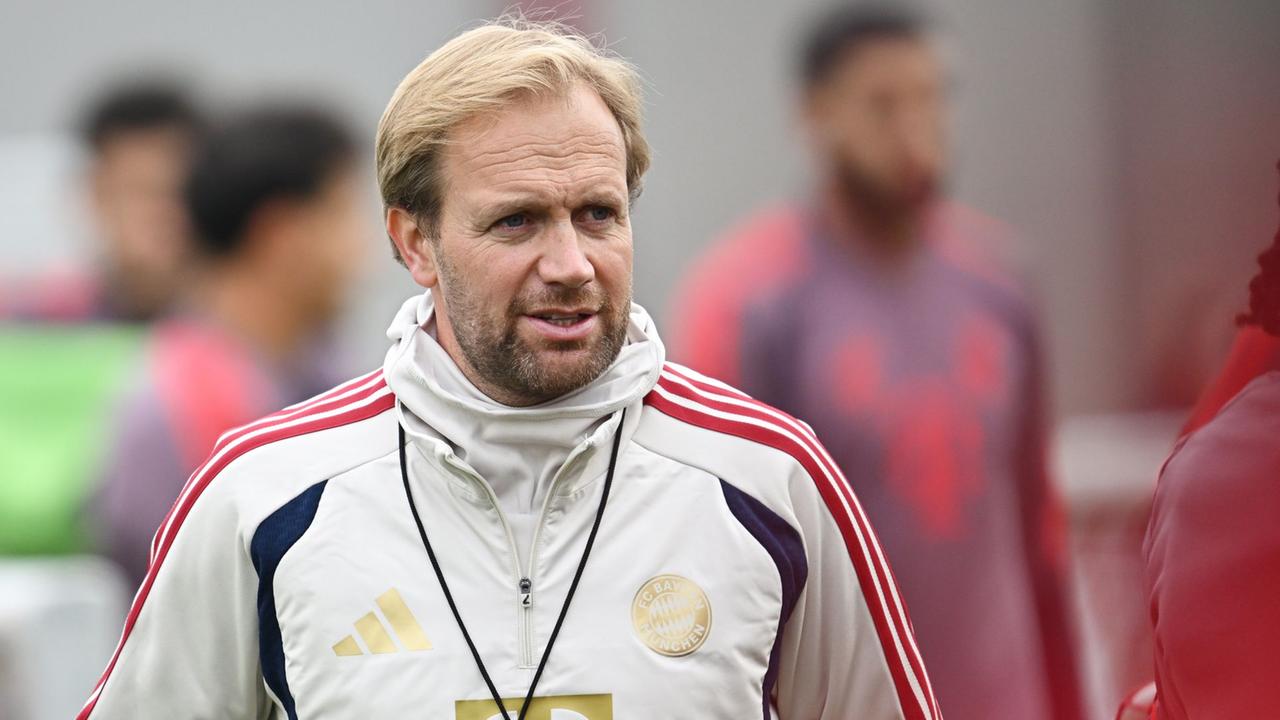
For the second time in his tenure at FC Bayern Munich, assistant coach Aaron Danks finds himself thrust into the spotlight, tasked with steering the German giants through a high-stakes Bundesliga clash. With head coach Vincent Kompany currently sidelined, the 43-year-old Englishman has been thrust into the captain’s chair for the upcoming match against SC Freiburg.
It is a scenario that mirrors the pressure of the Champions League semifinals, yet the stakes for the club—and for Danks personally—feel uniquely heightened this time. As Bayern navigates a series of internal and external challenges, Danks’ mantra remains remarkably simple: consistency, composure, and a steadfast commitment to established routines.
Main Facts: The Tactical Pivot
The news of Vincent Kompany’s absence has sent ripples through the Säbener Straße facility, forcing a rapid reorganization of the coaching staff. Unlike previous instances where the head coach remained in constant contact, Danks confirmed that for this specific encounter, the communication loop with Kompany is being deliberately minimized.
"We are trying to avoid football communication with him as much as possible," Danks explained during Saturday’s pre-match press conference. "We need to ensure that the staff and players are focused on the collective responsibility of the moment."
For Danks, the strategy for overcoming Freiburg is not found in radical tactical shifts or surprise personnel decisions. Instead, it is rooted in the preservation of the club’s existing identity. "We aren’t going to try anything new," Danks asserted. "We are sticking to what we know. That provides stability for the group and, frankly, for me as well."
Chronology: From Birmingham to the Allianz Arena
To understand why Aaron Danks is the man chosen to steady the ship, one must look at his extensive pedagogical background in football. His journey did not begin in the glitz of the Bundesliga, but in the trenches of youth development.
Early Career and Foundation:
Starting his coaching journey at just 15 years old, Danks spent formative years developing talent at Birmingham City and West Bromwich Albion. His reputation as a meticulous technician led him to the English Football Association, where he played a pivotal role in the youth setup. It was during this period that he first encountered a young Jamal Musiala, serving as a technical coach during Musiala’s time with the "Young Three Lions."
The Kompany Connection:
The professional bond between Danks and Vincent Kompany was forged during their time together at RSC Anderlecht. Kompany, identifying Danks’ tactical acumen and ability to manage complex player dynamics, brought him into his inner circle. This partnership eventually brought them to Munich, where they have worked to implement a high-intensity, possession-based style.
The PSG Precedent:
Danks’ current assignment is not his first rodeo in the hot seat. In late April, when Kompany was sidelined due to a yellow-card suspension, Danks managed the touchline during a chaotic 4-5 Champions League semifinal defeat to Paris Saint-Germain. While the result was a loss, his in-game management—notably his immediate tactical adjustment to withdraw Alphonso Davies for Konrad Laimer following a defensive error—was praised by analysts as a display of calm, decisive leadership under fire.
Supporting Data: The Anatomy of a Crisis
The current challenge facing Danks is compounded by an injury and personal leave crisis that has stripped the Bayern squad of several key performers. The depth of the roster is being tested in ways that even the most prepared coaching staff would find daunting.
The Absence List:
- Jamal Musiala: The creative heartbeat of the team remains out due to ongoing issues with neurological symptoms that have forced multiple recent absences.
- Joshua Kimmich: The midfield engine is currently away from the squad following a family bereavement, leaving a significant void in leadership and tactical control.
- Manuel Neuer: The veteran goalkeeper and captain is sidelined with persistent tendon irritation in his foot.
- Min-jae Kim: The defensive pillar is unavailable due to a minor muscle strain.
- Aleksandar Pavlovic: Multiple reports suggest a last-minute unavailability, further thinning the midfield ranks.
Despite these absences, Danks remains optimistic, pointing to the inherent professional culture of the club. "I trust these guys," he stated. "It’s a difficult situation, but the winning mentality here is ingrained. The chemistry we have built over the last two years—a familial unit—will be our greatest strength."
Official Responses: Trust in the Collective
The atmosphere at the training ground, according to club officials, remains professional. While the absence of a head coach is never ideal, the structure put in place by Kompany is designed to survive his temporary departure.
"We have been working together for a long time," Danks remarked. "The routines are ingrained in our DNA now. When you reach high-pressure moments—like a European semifinal or a critical Bundesliga title race—you don’t panic. You rely on the processes you have spent months refining."
Danks’ philosophy on pressure is grounded in his experience with the English FA. "If you let the moment carry you away, you feel the weight of the pressure," he noted. "By sticking to our standard operating procedures, we strip away the anxiety of the situation and allow the players to simply play football."
Implications: The Road Ahead
The match against SC Freiburg is more than just a quest for three points; it is a test of the club’s structural resilience. If Danks can lead the team to a positive result, it will serve as a powerful validation of the "Bayern system"—the idea that the coaching staff is an interchangeable, highly trained unit rather than a cult of personality centered solely on one man.
Tactical Outlook:
Expect Bayern to maintain their high defensive line, but perhaps with a more cautious transition phase to compensate for the loss of Kim and the stability provided by Kimmich. Danks is likely to rely on the veteran presence of players like Thomas Müller and Harry Kane to guide the younger, less experienced squad members through the tactical transitions.
The "Vince" Factor:
Danks was quick to credit the absent head coach for the current state of the team. "The chemistry we have is thanks to Vince," he said. "He has built a culture where the team is greater than the sum of its parts." The implication is clear: the team is not playing for a stand-in; they are playing for the vision established by the man who is currently away.
Conclusion
As the whistle blows at the Allianz Arena, the eyes of the football world will be on the technical area. Aaron Danks is not attempting to be Vincent Kompany; he is simply continuing the work that the two have built together. In a sport defined by chaos and unpredictability, Danks is betting on the one thing that has never failed him: the disciplined, professional, and familiar routine. For Bayern Munich, the goal is survival and success, and in Danks, they have a steady hand at the wheel to ensure they stay the course.