By International Affairs Desk
In a move that has sparked intense debate between climate advocates and economic policymakers, the European Commission has formally proposed a one-year delay in the implementation of stringent methane emission standards for imported fossil fuels. Originally slated for January 1, 2027, the requirement for importers of oil, gas, and coal to adhere to strict EU climate standards regarding methane monitoring and documentation will now be pushed to the beginning of 2028.
Brussels officials frame the decision as a pragmatic response to the ongoing energy price crisis and a necessary measure to ensure energy supply security. However, the postponement has drawn sharp criticism from environmental groups and members of the European Parliament, who argue that the delay undermines the EU’s global climate leadership at a precarious moment for the planet.
The Core of the Conflict: Methane’s Role in Climate Change
To understand the gravity of this delay, one must first understand the pollutant in question. Methane ($CH_4$) is a potent greenhouse gas that, while remaining in the atmosphere for a shorter duration than carbon dioxide, possesses a global warming potential significantly higher than that of $CO_2$ over a 20-year period. According to the German Environment Agency (UBA), methane is the second-most significant driver of anthropogenic climate change.
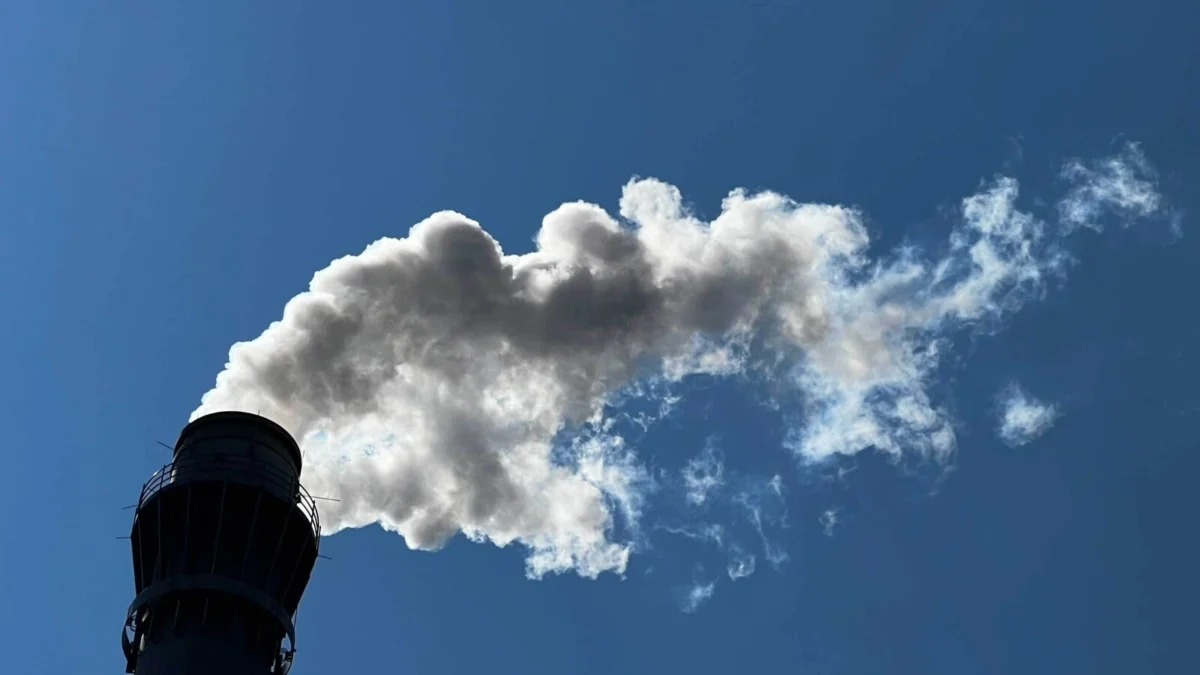
The energy sector is a primary culprit, with methane leaking from infrastructure—pipelines, compressor stations, and extraction sites—as well as through the intentional venting and flaring of gas. Under the EU’s existing Methane Regulation, which came into force in 2024, internal operators are already required to conduct regular leak detection and repair (LDAR) surveys. They are also subject to strict prohibitions on the routine venting and flaring of methane.
The delayed regulation was intended to extend this "gold standard" to imports. Under the original 2027 mandate, EU importers would have been legally obligated to ensure that producers in third countries—such as the United States, Qatar, and Algeria—met monitoring and reporting standards equivalent to those required within the European Union.
Chronology of the Policy Shift
The path to this delay is marked by a series of diplomatic pressures and economic reassessments:
- 2024: The EU Methane Regulation enters into force, establishing domestic requirements for LDAR and prohibitions on flaring.
- July 2026: Facing significant lobbying from major energy-exporting nations, the Commission issues a recommendation to member states to exercise leniency regarding penalties for non-compliance with certain obligations slated for 2027–2029.
- October 2026 (Early): Commission President Ursula von der Leyen signals that a delay is necessary to alleviate cost pressures on the energy sector during a period of macroeconomic instability.
- October 14, 2026: The Commission formally publishes the amendment proposal to defer the import-related compliance deadline by one year, moving it to January 1, 2028.
- Present: The proposal moves to the European Parliament and the Council of the EU for deliberation.
Supporting Data and Economic Rationales
The European Commission’s primary defense for the delay rests on the precarious state of energy markets. Following the shifts in global supply chains prompted by geopolitical instability, the Commission argues that imposing rigid regulatory requirements on foreign suppliers could jeopardize the volume of energy reaching European shores.
"The one-year shift is intended to avoid additional pressure on the security of supply for imported fossil fuels," a Commission spokesperson stated. By granting a grace period, the EU aims to provide importers and their international partners more time to align their reporting infrastructures with EU digital and environmental protocols without triggering immediate, costly supply interruptions.
Commission President von der Leyen emphasized that the shift is a "cost-saving measure" for a continent still grappling with the remnants of the energy price crisis. Crucially, the Commission maintains that this postponement does not dilute the "ambition, integrity, or scope" of the overarching regulation. They argue that the climate targets remain fixed; only the timeline for the compliance mechanism has been adjusted to accommodate the current economic reality.
Official Responses and Political Polarization
The proposal has created a rift within the European political establishment, highlighting the perennial tension between industrial feasibility and environmental urgency.
The Government Stance
In Germany, the reaction has been nuanced. Federal Environment Minister Carsten Schneider (SPD) has publicly affirmed his commitment to aggressive methane reduction, noting, "Otherwise, we will not be able to meet our climate targets at all." Despite this, he acknowledged the complexities involved in international supply chains. Conversely, Energy Minister Katherina Reiche (CDU) has adopted a more conciliatory tone, signaling openness to "greater flexibility" in the implementation of the rules, suggesting that the current economic climate warrants a pragmatic approach.
Parliamentary Dissent
The European Parliament is expected to be a battleground for this proposal. While some center-right factions may support the delay, the Social Democratic bloc has insisted that any deferral must be "strictly limited" to one year and not extended further.
The most vocal opposition, however, comes from the Green movement. Jutta Paulus, a prominent Green MEP, has been scathing in her criticism. "Just before the World Climate Conference, the EU Commission is making concessions to the fossil fuel industry and weakening one of the most effective levers for the short-term limitation of global heating," Paulus stated. She argued that the optics are disastrous: while European households and SMEs are urged to engage in rigorous energy conservation, the Commission is simultaneously granting a "regulatory holiday" to the fossil fuel giants responsible for the majority of the emissions.
Implications: The Climate and Global Energy Markets
The implications of this delay extend far beyond the European border.
1. The "Lobbying" Effect
The influence of non-EU exporters—particularly the United States and Qatar—has been significant. These nations, which are essential to Europe’s post-2022 energy strategy, have signaled that the EU’s reporting requirements could impose an undue administrative burden. By yielding to this pressure, critics argue the EU has signaled that its climate policy is "negotiable" when faced with the leverage of energy suppliers.
2. Environmental Impact
Methane’s role as a "short-lived climate pollutant" means that every year of inaction is a missed opportunity for immediate temperature mitigation. If the EU, which is a major consumer of global gas, fails to hold its suppliers accountable, the global incentive to repair methane leaks in producing nations diminishes. Environmental scientists warn that the "atmospheric warming debt" created by this one-year delay could be significant.
3. Regulatory Integrity
The Commission claims the "ambition" of the policy remains unchanged, yet there is a broader concern regarding the "slippery slope." If the 2027 deadline is moved once, will it be moved again? Industry analysts suggest that if the energy price crisis persists into 2027, the pressure to delay the rules until 2029 or beyond could intensify, effectively neutralizing the efficacy of the original regulation.
Conclusion: A Delicate Balancing Act
The European Commission finds itself in a classic "trilemma": balancing the urgent need for climate action, the requirement for energy security, and the necessity of keeping energy costs affordable for the European public.
The decision to defer the methane import rules until 2028 is a tactical retreat aimed at avoiding a political and economic backlash during a fragile recovery period. However, this delay carries a heavy cost in terms of environmental credibility. As the EU heads toward the next major UN Climate Change Conference, the move will likely serve as a focal point for critics who argue that the Union’s commitment to the European Green Deal is increasingly contingent upon the path of least economic resistance.
Whether this one-year delay proves to be a prudent pause or a significant step backward will depend on how the Commission uses the intervening months to firm up the reporting requirements and ensure that, come 2028, there are no further excuses for inaction. For now, the global fight against methane emissions has lost a critical year of momentum, leaving the EU to defend its climate record against the harsh reality of global energy politics.