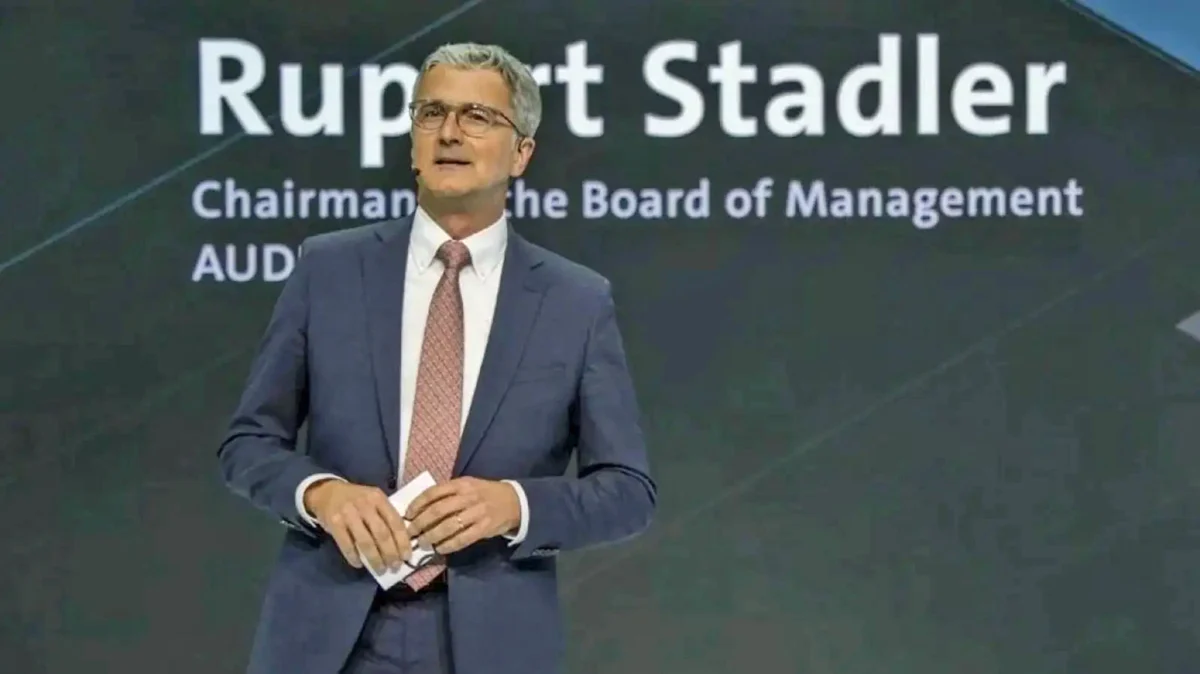
The legal saga surrounding the 2015 "Dieselgate" emissions scandal reached a significant milestone this week, as the Higher Regional Court (OLG) of Celle delivered a sharp rebuke to Volkswagen’s corporate governance strategy. In a ruling (Az. 9 U 93/22) that sent shockwaves through the automotive giant, the court declared the shareholder approval of a liability settlement with former Audi CEO Rupert Stadler invalid.
This decision marks a pivotal turn in the long-running battle between retail investors, activist shareholder groups, and the leadership of the Volkswagen Group. By striking down the ratification of the settlement, the court has effectively placed the burden of transparency and due diligence back onto the company’s Board of Management and Supervisory Board, signaling that "corporate cleanup" efforts cannot simply bypass the shareholders’ right to fully informed consent.
The Core of the Dispute: Transparency Deficits
At the heart of the OLG Celle’s ruling is the fundamental principle of the duty to inform. When Volkswagen presented the multi-million euro settlement package to its shareholders in 2021, the intent was to draw a line under the past. The package, totaling approximately 288 million euros, was designed to settle claims against several top executives and their professional liability insurers.
However, the court found that the information provided to shareholders regarding Rupert Stadler’s personal financial capacity was critically insufficient. Volkswagen had justified the relatively low personal contribution required from Stadler—4.1 million euros—by claiming that he lacked the financial resources to pay a higher amount.
The OLG Celle bench, however, ruled that the Supervisory Board failed to provide a "tenable factual basis" for this assertion. Shareholders were not told how the Board arrived at the conclusion that Stadler’s assets were insufficient to cover the potential damages, which legal experts estimate could have reached 300 million euros. Furthermore, the court suggested that the Supervisory Board itself may have lacked the necessary depth of investigation to make such a claim, leaving shareholders to vote in the dark.
A Chronology of the Dieselgate Fallout
To understand the gravity of the OLG Celle ruling, one must view it within the broader timeline of the most significant industrial scandal in German history:
- September 2015: The "Dieselgate" scandal erupts as Volkswagen admits to using defeat devices in millions of vehicles to cheat emissions tests in the United States.
- September 2015: CEO Martin Winterkorn resigns, marking the beginning of a massive corporate restructuring and a decade of legal turmoil.
- 2021: The Volkswagen Supervisory Board concludes a series of liability settlements with former executives, including Winterkorn and Stadler, totaling 288 million euros. Shareholders approve these settlements.
- 2023-2024: Various shareholder associations, including the Schutzgemeinschaft der Kapitalanleger (SdK), file lawsuits, arguing that the settlements were based on opaque data and insufficient disclosure.
- September 30, 2025: The Federal Court of Justice (BGH) issues a landmark ruling (Az. II ZR 154/23), overturning the previous lower court decisions that had favored Volkswagen. The BGH mandates a re-examination of the settlement process, specifically citing a failure to provide adequate transparency.
- December 2025: Rupert Stadler is definitively convicted of fraud, removing the possibility of using earlier, conditional settlement terms that were contingent on an acquittal.
- Present Day: The OLG Celle follows the BGH’s directive, striking down the settlement ratification and forcing Volkswagen back to the drawing board.
Supporting Data: The Financial Implications
The scale of the "Dieselgate" scandal remains unprecedented. To date, Volkswagen has incurred costs exceeding 33 billion euros—a figure that encompasses fines, compensation payments, legal fees, and massive technical retrofitting programs.
The settlements in question were intended to be a mechanism of "managerial liability," ensuring that those at the top shared the financial pain of the company’s systemic failure. However, the optics of these settlements were contentious from the start. Martin Winterkorn was pegged for 11.2 million euros, while Stadler was set to pay 4.1 million. When measured against the billions in lost market capitalization and legal damages, these figures were viewed by many investors as "hush money" rather than genuine restitution.
The OLG Celle’s focus on Stadler’s "financial capacity" is a vital legal precedent. If a company claims that an executive cannot pay, it must prove that it has conducted a forensic audit of that executive’s net worth. As Oliver Wilken, counsel for the Schutzgemeinschaft der Kapitalanleger, noted: "Whoever justifies a personal contribution based on [limited] financial capacity must either provide the shareholders with the underlying facts or honestly admit that no such basis was determined."
Official Responses and Corporate Strategy
Volkswagen’s reaction to the ruling has been one of defiance and procedural recalibration. A spokesperson for the group stated that the company does not share the court’s legal assessment and intends to defend its position rigorously. The company is currently reviewing its options, which include a potential "non-admission complaint" (Nichtzulassungsbeschwerde) to the Federal Court of Justice.
Crucially, the OLG Celle has split the proceedings. While the Stadler case has been struck down, the case against Martin Winterkorn remains a separate, ongoing legal process. This separation highlights the complexity of the web Volkswagen has spun; while the company attempted a "one-size-fits-all" settlement strategy, the courts are treating each individual’s liability with granular scrutiny.
Furthermore, following the BGH’s September 2025 directive, Volkswagen had attempted to "fix" the formal defects by putting the settlements to a second vote at the June 18, 2025, General Meeting. That vote passed with overwhelming majorities (97.46% and 99.99%). However, these new votes have already triggered fresh waves of litigation, proving that procedural window-dressing cannot resolve fundamental disputes regarding corporate accountability.
Implications for Corporate Governance
The OLG Celle ruling serves as a warning to major corporations: transparency is not an optional add-on to corporate governance; it is the bedrock of legitimacy.
1. The End of "Convenience Settlements"
By requiring a high standard of proof regarding an executive’s inability to pay, the court has made it significantly harder for companies to shield former bosses with low-contribution settlements. This will likely force future Supervisory Boards to engage in more aggressive recovery efforts against former executives, potentially involving asset seizures or more exhaustive financial discovery.
2. Heightened Shareholder Power
The ruling empowers activist shareholders. When shareholders are asked to vote on complex legal settlements, they now have the judicial backing to demand a "bottom-up" disclosure of facts. If the company cannot prove the logic behind a decision, shareholders have a clear path to nullify the outcome in court.
3. The "Stadler" Standoff
With the previous settlement effectively dead, Volkswagen and Audi have entered a new, uncertain phase. The company has publicly confirmed that it is in negotiations with Stadler for a new settlement. However, the dynamic has changed entirely: Stadler’s final conviction in December 2025 for fraud removes the "innocence" argument that once underpinned his defense. Volkswagen is now negotiating from a position of higher leverage, yet the public and legal pressure to secure a "fair" amount—one that accurately reflects the damage caused—has never been higher.
Conclusion
The decision by the OLG Celle is more than just a procedural setback for Volkswagen; it is a profound commentary on the accountability of the C-suite. As the automotive industry transitions toward an electric and autonomous future, the "Dieselgate" shadow remains a persistent reminder of the failures of the past.
Volkswagen must now decide whether to continue fighting these legal battles in the courtroom—risking further damage to its reputation and shareholder trust—or to adopt a model of radical transparency. By providing the full, unvarnished truth about the financial status of its former leaders, the company might finally move toward a resolution that satisfies both the law and the disillusioned investor base that has been waiting for justice for nearly a decade. For now, the road to closure remains blocked by the very legal hurdles the company once believed it had overcome.