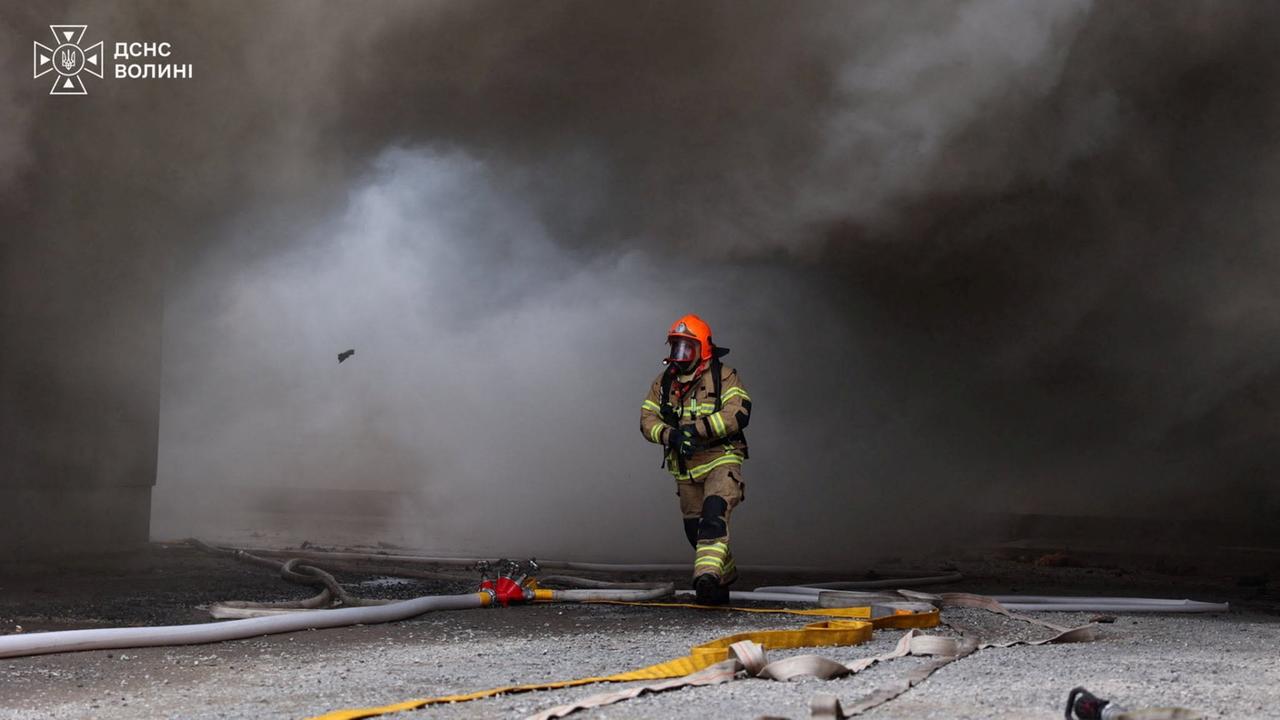
Kyiv, Ukraine – October 14, 2026 – Ukraine’s critical energy infrastructure has once again become the target of a relentless Russian offensive, with multiple heating power plants in the capital city of Kyiv struck by missile attacks. The assault, which occurred on Friday evening and into the night, has left an estimated 600,000 residents without electricity and resulted in multiple fatalities. In the wake of the strikes, President Volodymyr Zelenskyy has voiced sharp criticism, alleging that Ukraine’s Western allies, particularly the United States, failed to provide timely intelligence warnings of the impending attacks. This claim has created a palpable tension between Kyiv and its key international partners, even as NATO and the European Union have sought to de-escalate the situation and reaffirm their commitment to supporting Ukraine.
The Russian Ministry of Defense confirmed strikes targeting communication and energy infrastructure in Kyiv and the surrounding region, as well as in the Kharkiv Oblast. The attacks underscore Russia’s continued strategy of degrading Ukraine’s ability to function and resist, particularly by targeting its vital energy sector. The human cost of these attacks is mounting, with at least five people confirmed dead in Kyiv and two more in the Dnipropetrovsk region due to the strikes.
The core of the current controversy lies in President Zelenskyy’s assertion that Ukrainian air defense systems only detected the incoming Russian missiles as they approached the capital. "Once again, no warning from our partners," Zelenskyy stated on Facebook, expressing his profound frustration. He characterized the situation as "absolutely unjust," emphasizing that while Russia continues to destroy Ukrainian infrastructure, Ukraine is not even receiving early warnings of missile launches. This sentiment was echoed by other high-ranking Ukrainian officials, with one anonymously telling Agence France-Presse (AFP) that the U.S. had failed to inform Ukraine about Russian missile launches on two previous occasions when the energy sector was targeted. This official even suggested that the U.S. might be aiding Russia for unspecified reasons, a grave accusation that has sent ripples through diplomatic circles.
A Night of Destruction and Despair
The latest wave of Russian attacks on Ukraine’s energy infrastructure represents a significant escalation in Moscow’s campaign to cripple Ukrainian resilience. The targeting of all three heating power plants in Kyiv is a clear indication of Russia’s intent to maximize disruption and hardship for the civilian population, especially as autumn’s chill begins to set in.
Key events and reported impacts:
- Kyiv’s Energy Grid Devastated: All three heating power plants in the capital city of Kyiv were struck, causing widespread power outages.
- Fatalities Reported: At least five people were killed in Kyiv as a direct result of the attacks. Two additional fatalities were reported in the Dnipropetrovsk region.
- Massive Power Outages: Approximately 600,000 residents across Ukraine are currently without electricity, severely impacting daily life and essential services.
- Allegations of Intelligence Failures: President Zelenskyy and other Ukrainian officials claim a lack of timely intelligence from Western allies, particularly the U.S., prevented effective interception of the Russian missiles.
- Starlink System Disruption: Reports suggest that the operational capacity of the U.S.-provided Starlink satellite communication system was significantly limited during the night of the attacks, potentially hindering Ukrainian defensive operations.
The Intelligence Disconnect: Accusations and Rebuttals
The Ukrainian government’s accusations of a lack of intelligence sharing have cast a shadow over the typically strong U.S.-Ukraine relationship. President Zelenskyy’s Facebook post directly highlighted the perceived intelligence gap, stating that Ukrainian systems only detected the Russian missiles "when they were already approaching the capital." This suggests that crucial early warning data, often provided by U.S. intelligence assets, was either not shared or was received too late to be effective.
Adding another layer to the controversy, Serhiy Beskrestnov, a technology advisor to the Ukrainian Ministry of Defense, claimed that the Starlink satellite communication system, a vital tool for Ukrainian forces, experienced significant operational limitations during the night. He suggested this disruption may have contributed to the failure of certain Ukrainian defensive actions, including those aimed at countering novel Shahed drones equipped with jet engines.
However, U.S. officials have pushed back against these claims. One U.S. government representative denied any shift in Washington’s position regarding intelligence sharing with Kyiv. Similarly, NATO Secretary-General Jens Stoltenberg, speaking during a visit to Estonia, stated that U.S. President Trump had assured him that intelligence sharing had not been halted. Stoltenberg described Trump’s assurances as "very clear" and used the occasion to reiterate calls for increased allied support for Ukraine’s air defense capabilities.
The European Union also weighed in, with its representatives stating they had "no indication" that Washington had ceased information dissemination. German Foreign Minister Johann Wadephul echoed this sentiment, noting that he had not observed "any substantial reduction" in U.S. support.
These statements from NATO and EU officials suggest a discrepancy between the on-the-ground perceptions in Kyiv and the assurances being provided at the highest levels of the international alliance. The Kremlin, meanwhile, acknowledged the situation but advised caution in drawing conclusions, with spokesperson Dmitry Peskov stating that all developments hinting at a potential shift in U.S. policy towards Ukraine were being closely monitored.
Underlying Tensions and Strategic Implications
The current friction between the United States and Ukraine appears to stem from a complex interplay of factors, including recent media reports suggesting Washington had threatened to halt the flow of military intelligence if Kyiv did not demonstrate greater willingness to compromise. This alleged threat, if true, would represent a significant shift in U.S. policy and could have profound implications for Ukraine’s ability to defend itself.
Further complicating the narrative, Elon Musk, the owner of Starlink’s parent company SpaceX, publicly sided with U.S. President Trump on Saturday. Musk commented on the platform X (formerly Twitter) that Zelenskyy had "gone too far" in his reaction to a statement made by Trump regarding Ukrainian counterattacks on Russian refineries. This statement from Musk, who has played a crucial role in providing Ukraine with vital internet connectivity, adds another dimension to the growing diplomatic complexities. The context for Musk’s comment appears to be Kyiv’s prior criticism of a supposed diesel agreement between the U.S. and Russia.
The Broader Context: A War of Attrition and Information
The renewed Russian attacks on Ukraine’s energy infrastructure are part of a broader, protracted war of attrition. Russia has consistently employed tactics aimed at degrading Ukraine’s civilian capacity to endure the conflict, with energy facilities being a prime target. The effectiveness of Ukraine’s air defenses is directly linked to the quality and timeliness of intelligence it receives, making any disruption in this flow a critical vulnerability.
The Ukrainian government’s public airing of grievances regarding intelligence sharing, while potentially a strategic move to pressure allies, also highlights the immense pressures faced by Kyiv. The reliance on external support, both military and intelligence-based, is a stark reality of Ukraine’s defensive posture.
Looking Ahead: The Call for Enhanced Air Defense
In the face of these escalating attacks and the emerging diplomatic tensions, the call for enhanced air defense capabilities for Ukraine has become more urgent than ever. NATO Secretary-General Stoltenberg’s appeal to allies underscores the collective understanding that Ukraine’s ability to withstand Russian aggression is intrinsically tied to its capacity to intercept aerial threats.
The coming days and weeks will be crucial in determining the trajectory of U.S.-Ukraine intelligence sharing and the broader implications for Western support. The current situation demands clarity, transparency, and a unified approach from Ukraine’s allies to ensure Kyiv has the resources it needs to protect its people and its infrastructure from further Russian assaults. The world watches as this critical juncture unfolds, with the fate of Ukraine’s energy security and its overall defense capabilities hanging in the balance.