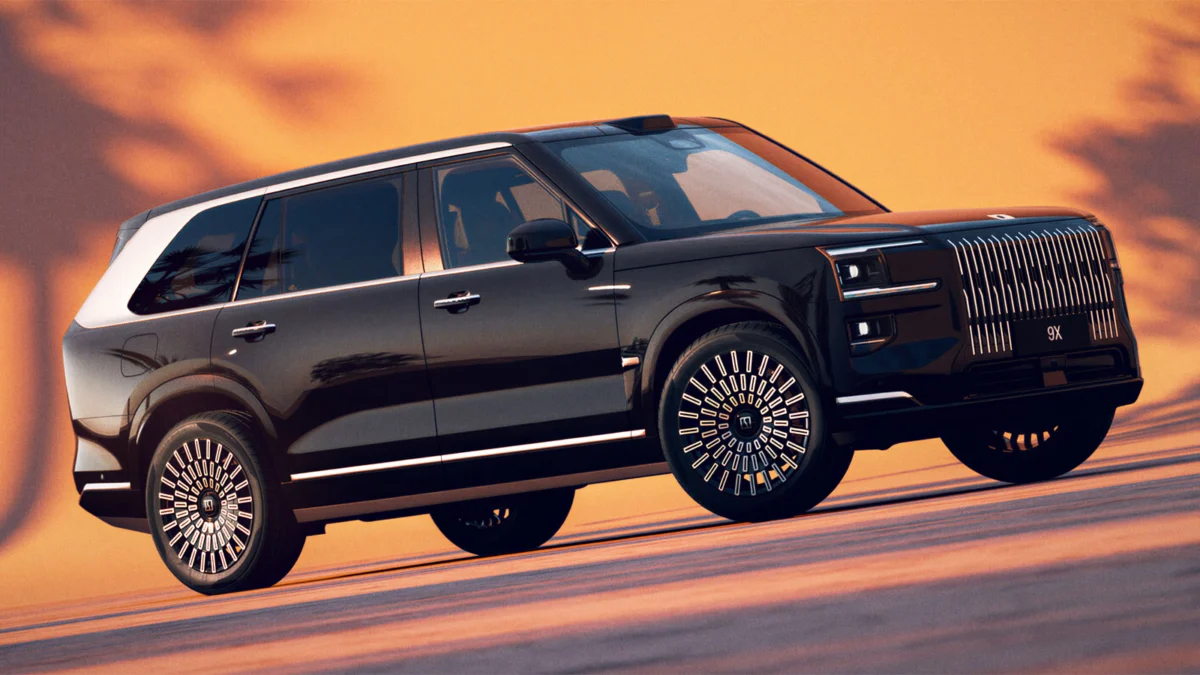
In a bold move to secure a foothold in the competitive European luxury vehicle market, Chinese manufacturer Zeekr has officially unveiled its latest flagship, the 9X, at a premiere event in Hamburg. The vehicle, a sprawling full-size SUV designed to blend executive comfort with cutting-edge powertrain technology, signals a shift in how manufacturers are approaching the transition from internal combustion to electrification. By employing a sophisticated serial hybrid system, Zeekr is attempting to bypass the traditional limitations of pure electric vehicles while offering the performance metrics of a high-end sports car.
The Technical Core: A New Approach to Hybridization
At the heart of the Zeekr 9X lies a serial hybrid architecture that distinguishes it from traditional plug-in hybrid electric vehicles (PHEVs). In this configuration, the wheels are driven exclusively by two powerful electric motors—one mounted on each axle—providing true all-wheel-drive capability.
The vehicle features a turbocharged 2.0-liter gasoline engine, but crucially, this engine has no mechanical connection to the wheels. Instead, it functions solely as an onboard generator, producing electricity to feed the drive motors and charge the battery pack. While the industry often struggles to classify this setup—oscillating between the labels of "Extended Range Electric Vehicle" (EREV) and "Plug-in Hybrid"—Zeekr’s implementation is undeniably performance-oriented. Because the 9X carries a substantial battery capable of propelling the vehicle independently for significant distances, it functionally mirrors a high-performance PHEV, though its internal operation is optimized for the continuous electrical generation characteristic of range-extender systems.
Performance Metrics: Challenging the Status Quo
The preliminary performance figures for the 9X are nothing short of aggressive. Zeekr claims a staggering system output of 660 kW (roughly 885 horsepower) and a peak torque of 935 Nm. These figures propel the massive SUV from 0 to 100 km/h in a claimed 4.1 seconds—a remarkable feat for a vehicle of this weight class—and allow for a top speed of 240 km/h.
The energy storage system is equally impressive. Utilizing NMC (Nickel Manganese Cobalt) cell chemistry, the 9X is equipped with a 55.1 kWh gross capacity battery. Zeekr estimates a purely electric range of up to 179 kilometers under test conditions. With the generator engaged, the company projects a total operational range of approximately 737 kilometers. However, these figures come with the standard caveat: official EU type-approval is still pending, and real-world consumption, particularly at high highway speeds or in cold weather, will likely deviate from these laboratory-derived numbers.
900-Volt Architecture: A Leap in Charging Efficiency
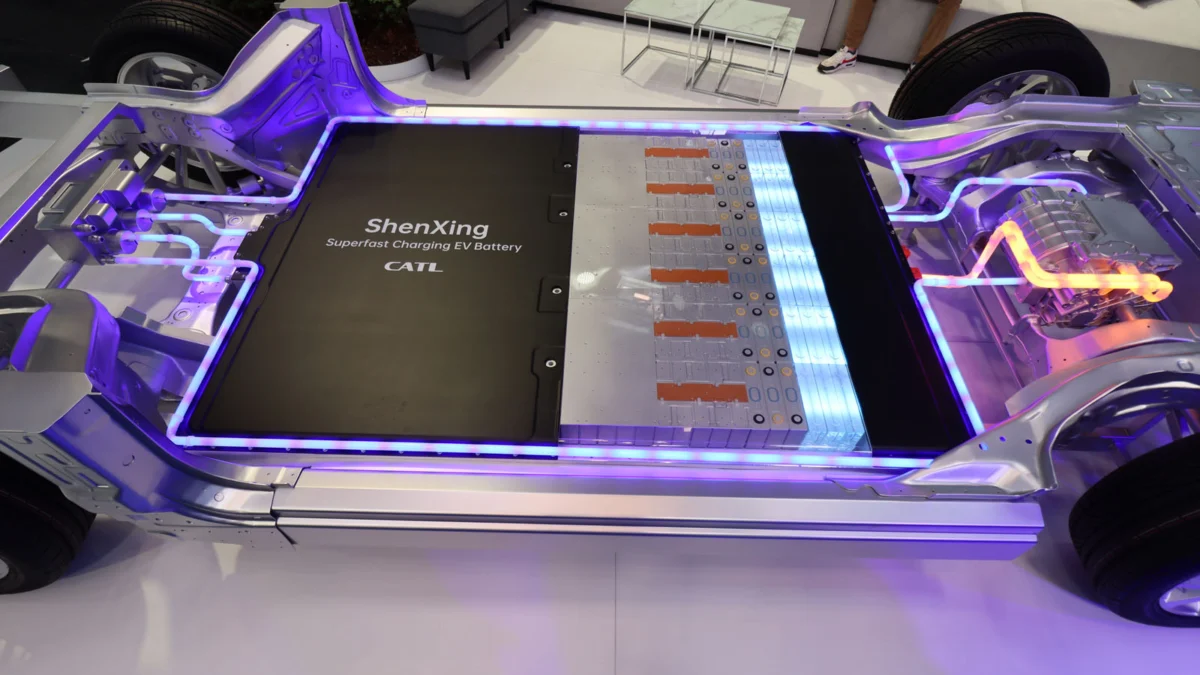
Perhaps the most significant engineering achievement in the 9X is its 900-volt electrical architecture. While most modern EVs operate on 400 or 800-volt systems, Zeekr’s push to 900 volts allows for higher power delivery with reduced current. This reduction in current directly minimizes ohmic heat losses in the wiring and internal components, effectively reducing the thermal load on the battery pack.

This high-voltage environment enables a peak DC charging capacity of 330 kW. Under optimal conditions, this allows the battery to charge from 10% to 80% in just 9.5 minutes. To put this in perspective, this represents a charging "C-rate" of approximately 6C—a figure that pushes the boundaries of current lithium-ion technology. While this performance is highly dependent on the availability of ultra-high-power charging infrastructure, it highlights the manufacturer’s commitment to minimizing downtime for its users. For home charging, the vehicle supports 11 kW AC input, which translates to a full charge in approximately 5.5 hours.
Interior Design: The Yacht-Inspired Cabin
Beyond the powertrain, the 9X is positioned as a "land yacht." Measuring 5.24 meters in length with a wheelbase of 3.17 meters, the cabin is configured as a 2+2+2 layout, prioritizing individual space for every occupant.
The second row features ultra-luxury individual seats with backrests that recline up to 145 degrees and include integrated electric leg rests. Entertainment is provided by a 17-inch OLED display that deploys from the headliner and can be adjusted horizontally by up to 88 centimeters. The audio experience is handled by a 32-speaker system with an astonishing 3868 watts of power. Furthermore, the dashboard is dominated by a 47-inch head-up display and two additional 16-inch OLED screens, all powered by dual Qualcomm Snapdragon 8295 processors.
The vehicle is also a showcase for comfort-oriented technology:
- Dual panoramic glass roofs that can be opened individually.
- Climate-controlled storage: A cooler/warmer box capable of maintaining temperatures between -6°C and +50°C.
- Active Suspension: A dual-chamber air suspension system with adaptive dampers, capable of 110 mm of height adjustment and offering three standard and seven off-road drive modes.
Safety, Autonomy, and Data Considerations
The Zeekr 9X is a sensory-heavy platform, equipped with a comprehensive suite of safety and autonomous-driving hardware. This includes a Lidar sensor, 11 cameras, 5 radar sensors, and 12 ultrasonic sensors. All data is processed by the Nvidia Drive Thor central computer, which is designed to handle the complex computations required for advanced driver-assistance systems (ADAS).
However, this level of connectivity and sensing raises inevitable questions regarding data privacy. As a vehicle that constantly monitors its surroundings and transmits data to cloud-based services, the 9X will face intense scrutiny in the European market, where privacy regulations (GDPR) are among the strictest in the world. As of the launch, Zeekr has yet to provide a detailed, region-specific roadmap for how it intends to handle and store the vast amounts of telemetry data collected by the vehicle’s sensor suite.

Economic Positioning and Market Implications
With a starting price of approximately 119,500 Euro (and 126,500 Euro for the "Black Line" trim), the Zeekr 9X is positioned to compete directly with titans such as the Mercedes-Maybach GLS, the Bentley Bentayga, and the BMW XM.
The strategy is aggressive. By offering a high-performance, ultra-luxury SUV at a price point that undercuts traditional luxury marques, Zeekr is testing the brand loyalty of the European elite. However, the manufacturer faces significant hurdles. The company’s service network in Europe is currently sparse, and it lacks the long-term historical data on residual values and vehicle durability that buyers in this segment typically demand. To mitigate these concerns, Zeekr is offering a robust warranty: up to 10 years of vehicle coverage (provided maintenance is performed at authorized centers) and 8 years on the high-voltage battery, both capped at 200,000 kilometers.
Chronology and Future Outlook
- Late 2024: Official unveiling in Hamburg, marking the entry of the 9X into the German and broader European conversation.
- 2025: Expected period for final EU type-approval and the rollout of localized marketing campaigns.
- December 2026 – Q1 2027: Scheduled timeframe for the first customer deliveries.
The 9X represents a pivotal moment for Zeekr. It is not merely a car; it is a statement of technical capability. By opting for a serial hybrid system rather than a pure BEV, Zeekr is acknowledging the current anxieties regarding charging infrastructure and range in the European market, while simultaneously demonstrating that "hybrid" no longer means "compromised performance."
Whether the European luxury consumer will embrace a Chinese-manufactured flagship with complex software requirements and a yet-to-be-proven service network remains to be seen. However, the technical specifications—particularly the 900-volt charging speed and the sheer computational power of the cockpit—suggest that Zeekr is not interested in following the market, but rather in forcing the established players to accelerate their own development cycles. The 9X is an ambitious, high-stakes gamble on the future of premium mobility.