BREMEN, Germany – June 21, 2026 – In a pivotal moment for Bremen’s political landscape, Wiebke Winter, a dynamic and ambitious 30-year-old politician, has been overwhelmingly elected as the Christian Democratic Union’s (CDU) lead candidate for the upcoming Bürgerschaftswahl (state parliamentary election), scheduled for roughly a year from now. At a spirited state party conference held in Bremen, Winter secured a robust 92 percent of the votes cast, signaling a strong mandate from her party to challenge the decades-long dominance of the Social Democratic Party (SPD) in Germany’s smallest federal state.
Her candidacy carries significant weight, as Winter could potentially become the first female Mayor of Bremen, a position historically held exclusively by men. The CDU, which has not governed Bremen since 1946, is banking on Winter’s fresh perspective and reform-oriented agenda to break the SPD’s entrenched hold on power, currently led by Mayor Andreas Bovenschulte. Winter, who already serves as the CDU’s parliamentary group leader in the Bürgerschaft, used her acceptance speech to issue a clarion call for a "new beginning" for Bremen, lambasting the city-state’s current socio-economic standing and outlining an ambitious platform focused on security, digitalization, bureaucratic reduction, and reliable childcare. Crucially, she also drew a clear line, unequivocally ruling out any future cooperation with the far-right Alternative for Germany (AfD) party.
This election marks not just a leadership transition for the CDU in Bremen but potentially a turning point for the city-state itself, as it grapples with persistent challenges ranging from high unemployment to educational disparities. Winter’s youth, gender, and reformist zeal offer a distinct contrast to the established political order, setting the stage for what promises to be a compelling and closely watched electoral campaign.
Main Facts: A New Chapter for Bremen’s CDU
The state party conference of the Christian Democratic Union in Bremen on June 21, 2026, was more than a routine assembly; it was a deliberate pivot towards a new political strategy, personified by the election of Wiebke Winter as their lead candidate for the Bürgerschaftswahl. At just 30 years old, Winter embodies a generational shift within the conservative party, offering a youthful and forward-looking face to an electorate often accustomed to more veteran political figures. Her near-unanimous endorsement, with 92 percent of delegates casting their vote in her favor, underscores the party’s desire for unity and a clear direction as they embark on a challenging electoral battle.
The historical significance of Winter’s candidacy cannot be overstated. Should she succeed in leading the CDU to victory and subsequently forming a government, she would become Bremen’s first female Mayor. This prospect alone introduces a potent symbolic element to her campaign, resonating with a broader desire for modern representation and leadership. For a party that has been in opposition in Bremen for nearly eight decades, her election represents a bold gamble and a renewed sense of purpose.
Winter’s platform is built on a direct critique of Bremen’s current state and a promise of tangible improvements. She has pledged to prioritize enhanced security for citizens, accelerate digitalization across public services and the economy, drastically reduce bureaucratic hurdles that stifle innovation and daily life, and ensure reliable childcare provisions for all families. These core policy areas directly address long-standing grievances and perceived failings of successive administrations. Furthermore, her explicit exclusion of the AfD from any potential coalition talks sends a powerful message about the CDU’s commitment to democratic values and its rejection of extremist politics, a stance that has become increasingly vital in the German political landscape. This declaration aims to reassure centrist voters and clearly define the CDU’s boundaries in a fragmented political environment.
Chronology: The Path to Candidacy
The journey to Wiebke Winter’s nomination began well before the official vote on June 21, 2026. As the respected parliamentary group leader of the CDU in the Bürgerschaft, Winter had steadily built a profile as a sharp, articulate, and pragmatic voice within her party. Her role as faction leader had provided her with a platform to challenge the incumbent government, articulate the CDU’s policy positions, and demonstrate her leadership capabilities in the daily cut-and-thrust of state politics. Internal discussions within the CDU Bremen had undoubtedly focused on the party’s long-term electoral strategy, particularly given their persistent struggle to gain significant traction against the dominant SPD. The consensus, it appears, gravitated towards a fresh face and a clear break from past approaches.
The state party conference itself was characterized by an atmosphere of anticipation and determination. Delegates, representing various branches and factions of the CDU across Bremen, gathered with a clear objective: to coalesce around a strong candidate who could inject new energy into the party’s electoral prospects. The formalities of the conference included reports from the state executive, discussions on policy motions, but the focal point was undoubtedly the nomination and election of the Spitzenkandidatin.
When it came time for the vote, the result was a resounding affirmation of Winter’s standing. The 92 percent approval rate was not merely a victory; it was an overwhelming mandate, a testament to her ability to unite different wings of the party and rally them behind a common cause. Such a high percentage indicates broad support, minimizing potential internal dissent and allowing the party to present a unified front as the election campaign approaches.
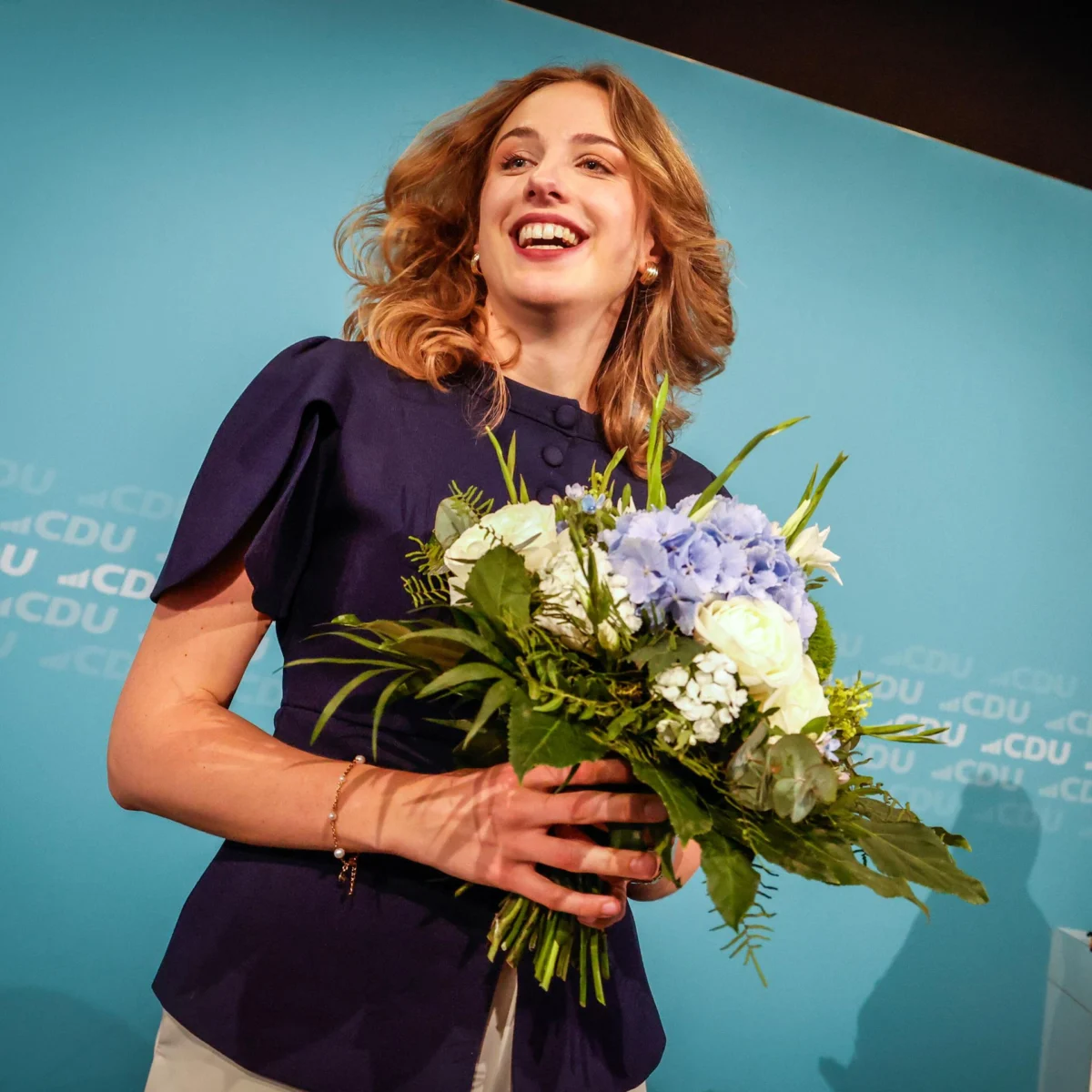
Following the vote, Winter delivered her pivotal acceptance speech. With an impassioned tone, she painted a stark picture of Bremen’s current challenges, referencing its unenviable position at the bottom of various national rankings. Her call for "Aufbruch" – a new beginning, an awakening – resonated deeply with the delegates, many of whom have witnessed the CDU struggle for relevance for decades. She didn’t shy away from directly criticizing the status quo, effectively laying the groundwork for a campaign that will frame the upcoming election as a choice between stagnation and transformative change. The immediate aftermath saw jubilant scenes, with party members, including State Chairman Heiko Strohmann, visible behind a beaming Winter, celebrating the decisive step taken towards the 2027 Bürgerschaftswahl. This moment marked the official launch of the CDU’s efforts to reclaim political leadership in Bremen after a long hiatus.
Supporting Data: Bremen’s Challenges and the CDU’s Ambition
The resounding 92 percent of votes cast in favor of Wiebke Winter at the CDU state party conference is more than just a statistic; it’s a powerful indicator of internal party cohesion and a clear signal that the CDU Bremen is united behind its new leader. This robust mandate empowers Winter to lead with confidence, free from the distractions of internal squabbles that can often plague political parties. It suggests that the party has acknowledged the need for a bold shift and is prepared to back its chosen candidate wholeheartedly in the challenging year ahead.
To understand the magnitude of the task ahead for Winter and the CDU, one must delve into Bremen’s unique political and socio-economic landscape. The city-state, comprising Bremen and Bremerhaven, has been a traditional stronghold of the Social Democratic Party since the end of World War II in 1946. This nearly 80-year reign is an anomaly in German politics, where power usually alternates more frequently. The SPD’s enduring presence has created a political culture deeply rooted in social democratic principles, often leading to "red-green" or even "red-green-red" (SPD, Greens, Left Party) coalition governments. The current government, led by Mayor Andreas Bovenschulte (SPD), exemplifies this long-standing tradition. For the CDU, breaking this historical cycle is not merely about winning an election; it’s about fundamentally reshaping the political identity of the state.
Winter’s campaign rhetoric is firmly anchored in the stark realities facing Bremen. She highlighted the state’s unenviable position with the highest poverty rate nationwide, the highest unemployment rate, and its consistent last-place ranking in national education comparisons. These are not mere talking points but deeply entrenched structural issues. Bremen’s economy, historically reliant on shipbuilding and maritime trade, has undergone significant transformation, leading to job losses and a need for new economic drivers. Its status as a city-state with limited hinterland and a complex demographic composition contributes to these socio-economic challenges, often necessitating substantial federal transfers to balance its budget. These indicators paint a picture of a state struggling to keep pace, providing fertile ground for Winter’s narrative of decline under prolonged SPD rule and the urgent need for a "new beginning."
Wiebke Winter’s profile as a young, articulate parliamentary group leader positions her as a modern conservative voice. Her emphasis on "Sicherheit" (security) aligns with traditional CDU values, promising a robust approach to public order and crime prevention. Her focus on "Digitalisierung" (digitalization) speaks to the need for modernizing public administration and fostering innovation in the economy. "Weniger Bürokratie" (less bureaucracy) is a perennial appeal to businesses and citizens alike, promising efficiency and ease of interaction with government. Finally, "verlässliche Kinderbetreuung" (reliable childcare) addresses a critical concern for families, impacting workforce participation and quality of life. These policy planks are designed to appeal to a broad spectrum of voters, from disillusioned middle-class families to business owners and those concerned about urban safety.
Crucially, Winter’s unequivocal exclusion of the AfD from any future coalition is a strategic declaration. In an era where mainstream parties grapple with the rise of populist and far-right movements, this clear demarcation is vital. For the CDU, a party that historically prides itself on being a broad Volkspartei (people’s party), maintaining a clear distance from the AfD is essential to preserving its democratic credibility and appealing to centrist voters who might otherwise be wary of any perceived flirtation with the far-right. This stance not only defines the CDU’s ethical boundaries but also shapes the potential coalition landscape for the next government.
Official Responses: Winter’s Vision and Party Alignment
Wiebke Winter’s acceptance speech at the CDU state party conference was the centerpiece of the day, a powerful articulation of her vision for Bremen and a direct challenge to the incumbent government. Her rhetoric was sharp and unsparing, yet imbued with a sense of hopeful urgency. She didn’t mince words when describing Bremen’s current predicament, repeatedly referencing its "last place" rankings in various national comparisons – be it poverty, unemployment, or education. This deliberate emphasis served to underscore her core message: that decades of SPD leadership have led to a stagnation from which only a fundamental change in governance can rescue the city-state.
Her call for "Aufbruch" – a term that transcends a simple "new beginning" to imply a more profound awakening or fresh start – was not merely a slogan but a philosophical underpinning for her campaign. It signaled a desire to shake off inertia, to confront difficult truths, and to proactively shape Bremen’s future rather than passively manage its decline. Winter’s policy pledges, such as enhanced security, accelerated digitalization, bureaucratic simplification, and reliable childcare, were presented as concrete steps towards this "Aufbruch." She framed these not as abstract ideals but as pragmatic solutions to everyday problems faced by Bremen’s citizens and businesses. Her commitment to reducing bureaucracy, for instance, speaks to frustrations often voiced by small and medium-sized enterprises, a key demographic for the CDU. Similarly, ensuring reliable childcare addresses a critical need for working parents and families.
The overwhelming support for Winter, evidenced by the 92 percent vote, clearly indicates that the party leadership and delegates are aligned with her vision. State Chairman Heiko Strohmann, seen standing proudly behind Winter in photographs, is a key figure whose backing signifies institutional support for her candidacy. This strong internal consensus is vital for a party gearing up for a high-stakes election. It allows the CDU to project an image of unity and determination, a critical factor in convincing voters that they are a credible alternative to the long-serving SPD.
While immediate official responses from rival parties were not detailed in the original report, one can anticipate the tenor of their reactions. The SPD, as the long-standing governing party, would likely attempt to downplay Winter’s critique, highlighting their own achievements and stability. Mayor Andreas Bovenschulte and other SPD leaders would probably defend their record, emphasizing social cohesion and stability, while perhaps portraying Winter’s agenda as either unrealistic or a threat to Bremen’s established social fabric. The Greens, likely coalition partners for the SPD, would probably focus on environmental and social justice issues, attempting to differentiate themselves from the CDU’s more economically liberal approach. The Left Party, if part of the ruling coalition, would likely reiterate their commitment to social welfare and critique any proposals perceived as neoliberal. Winter’s explicit exclusion of the AfD, while welcomed by centrist parties, would also be noted by the AfD itself, likely leading to their own counter-critiques and accusations of political exclusion.
Implications: A Transformative Bid for Bremen’s Future
Wiebke Winter’s nomination as the CDU’s lead candidate carries profound implications for Bremen’s political landscape, potentially marking a transformative period for the city-state. The sheer magnitude of the challenge she faces cannot be overstated: to break the Social Democratic Party’s near-eight-decade stranglehold on power. This is not just an electoral contest; it’s an attempt to redefine Bremen’s political identity and governance model. Her success would represent a seismic shift, ending an era of continuous SPD leadership and opening the door to a new political configuration.
The confluence of Winter’s youth and gender adds a significant layer to these implications. At 30, she would be one of Germany’s youngest state leaders, injecting a dynamic and potentially disruptive energy into Bremen’s often-staid political discourse. As a potential first female Mayor, her candidacy carries immense symbolic weight, appealing to voters seeking modern, inclusive leadership and challenging traditional perceptions of political authority. This aspect alone could mobilize new voter demographics and inspire a sense of progressive change, even from a conservative platform. Her youth could resonate with younger voters who feel disenfranchised or unheard, while her gender offers a powerful counter-narrative to the historically male-dominated top tiers of German politics.
Her policy platform, focused on safety, digitalization, bureaucratic efficiency, and childcare, is strategically crafted to address widespread public dissatisfaction. Improved security, for instance, taps into fundamental concerns about urban living quality. Accelerated digitalization promises a more efficient and modern state, appealing to businesses and tech-savvy citizens. Less bureaucracy is a perennial demand from both the private sector and individuals frustrated by administrative hurdles. Reliable childcare is a critical issue for families, impacting economic participation and quality of life. These policy points are not niche but broad-based appeals designed to capture the imagination of a diverse electorate feeling the pinch of Bremen’s structural challenges.
The explicit exclusion of the AfD from any future coalition talks has far-reaching implications for coalition dynamics. In an increasingly fragmented political environment, where multi-party coalitions are the norm, this clear red line limits the CDU’s options but also enhances its credibility among centrist voters. It signals that the CDU under Winter is committed to democratic principles and will not compromise on core values, even if it makes government formation more complex. This stance could be particularly attractive to voters who are disillusioned with the SPD but equally repulsed by the AfD, positioning the CDU as a safe, mainstream alternative.
The year-long campaign leading up to the Bürgerschaftswahl in mid-2027 will undoubtedly be intense. It will be characterized by robust debates on Bremen’s socio-economic future, the efficacy of the current administration, and the competing visions for the state. Winter will need to translate her internal party mandate into broad public appeal, effectively communicating her "Aufbruch" message and convincing a historically loyal SPD electorate to consider a conservative alternative. The campaign will also be a test of her ability to withstand intense scrutiny and articulate nuanced solutions to complex problems.
Furthermore, Bremen’s election, while a state affair, could also reflect broader trends in German federal politics. A strong performance by a young, reform-oriented CDU candidate in a traditional SPD stronghold could be interpreted as a sign of shifting voter preferences nationally. Conversely, a failure to make significant inroads might reinforce the perception of the CDU’s ongoing challenges in urban and socially diverse areas. Wiebke Winter’s candidacy is thus not just a local story; it is a significant political experiment that could provide valuable insights into the future direction of German conservatism and the evolving dynamics of its political landscape. Her bid for the mayor’s office represents a potential turning point, offering Bremen a chance to recalibrate its course and embark on a truly "new beginning."