The quest to understand the origins of the Red Planet’s companions, Phobos and Deimos, has entered a critical new chapter. On October 19, 2026, the Japanese Aerospace Exploration Agency (JAXA) launched the Martian Moons eXploration (MMX) mission, a landmark endeavor designed to unravel a cosmic mystery that has puzzled astronomers for decades. At the heart of this mission lies "Idefix," a sophisticated, dog-sized rover developed through a unique German-French collaboration. This mission is not merely a technical demonstration; it is a fundamental inquiry into the history of the solar system.
The Cosmic Mystery: What Are Phobos and Deimos?
The two moons of Mars, Phobos (with a diameter of approximately 27 kilometers) and Deimos (approximately 15 kilometers), are enigmatic objects. Their irregular shapes and unique orbital characteristics have long defied easy classification.
For years, the leading scientific hypothesis suggested that these moons were simply asteroids—rogue rocks captured by the Martian gravitational field as they wandered too close to the planet. However, current observations cast significant doubt on this theory. Stephan Ulamec, scientific coordinator at the German Aerospace Center (DLR), notes that the orbital mechanics of the moons tell a different story.
"The orbits are nearly circular," Ulamec explains. "That doesn’t match the standard model of a passing asteroid being captured by gravity. If they were captured, we would expect more eccentric, tilted orbits. This suggests a more complex, potentially violent, or indigenous origin."
If the capture theory is incorrect, the alternative is equally dramatic: the moons might be remnants of a massive, ancient collision—debris thrown out from the surface of Mars itself, which eventually coalesced into these two small, dark satellites. The MMX mission aims to provide the final, empirical proof required to settle this debate once and for all.
Chronology of the MMX Mission
The MMX mission is a multi-stage, high-stakes journey that spans several years of planning, execution, and return.
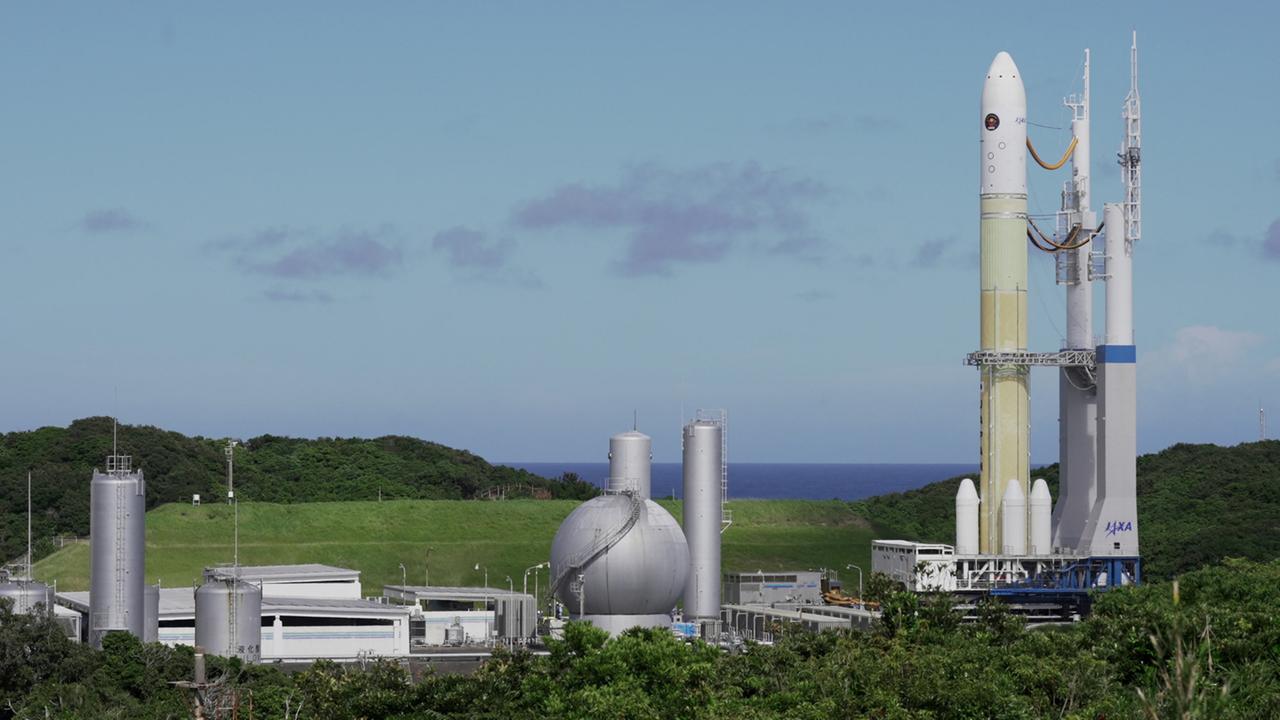
- October 19, 2026: Launch of the MMX spacecraft from the Tanegashima Space Center in Japan, carried by the H3 launch vehicle.
- 2027–2028: The cruise phase, during which the spacecraft travels through interplanetary space toward the Martian system.
- 2029: Arrival at Mars. The MMX craft will enter a specialized orbit that allows it to survey both moons while maneuvering through the complex gravitational environment of the Red Planet.
- 2029–2030: The landing phase. The MMX lander will attempt to descend onto the surface of Phobos. It is during this window that the "Idefix" rover will be deployed.
- 2031: The return phase. The spacecraft will collect samples from the surface, store them in a secure return capsule, and begin the long journey back to Earth.
- Post-2031: Scientific analysis. Researchers on Earth will perform isotopic and geological analysis on the samples, providing the definitive answer regarding the moons’ origins.
Technical Architecture: A Mission of Three Modules
The MMX spacecraft is an engineering marvel, divided into three distinct functional modules, each playing a vital role in the mission’s success.
- The Propulsion Module: This unit is the powerhouse of the mission. It is responsible for the long-distance travel from Earth to Mars, as well as the precise, fuel-efficient maneuvers required to enter the delicate orbits surrounding Phobos.
- The Exploration and Landing Module: This module houses the core scientific instrumentation, including advanced cameras and sensors. It serves as the mothership for the rover and the primary station for surface material collection.
- The Return Module: Designed for durability and precision, this module contains the Earth-entry capsule. It is engineered to protect the precious Martian-moon samples from the intense heat and mechanical stress of re-entering Earth’s atmosphere.
The "Idefix" Rover: A German-French Masterpiece
Named after the loyal, tireless dog from the famous Asterix comics, the "Idefix" rover is the crown jewel of the European contribution to the MMX mission. Weighing approximately 25 kilograms, this mobile laboratory is a testament to precision engineering under extreme constraints.
Navigating the Low-Gravity Environment
Operating on Phobos is a nightmare for traditional robotics. With gravity roughly 2,000 times weaker than on Earth, "Idefix" would effectively weigh no more than a light, empty envelope.
"If we drive too fast—anything over eight millimeters per second—the rover risks lifting off the surface entirely," explains Markus Grebenstein, the DLR project leader for "Idefix." "We have to move with extreme deliberation."
To manage the landing, the MMX mothership will hover 40 meters above the surface and release the rover. "It sounds dramatic, but it’s a gentle, 70-second descent," says Grebenstein. "When it finally touches down, the impact force is comparable to dropping a crate of beverages from just seven centimeters onto concrete."
Operational Challenges and Delayed Communication
Communication with "Idefix" is not instantaneous. Because the rover does not communicate directly with Earth, all data must be relayed through the MMX mothership. Given the vast distances, there is an average two-day delay in receiving data.
"We cannot ‘drive’ the rover in real-time like we do with Mars rovers," Grebenstein clarifies. "We have to use historical data to simulate the current state of the rover and make educated decisions about its next steps. It requires a high level of autonomy and pre-programmed safety protocols."
Scientific Instrumentation: What Lies Beneath?
Despite its small stature, "Idefix" is equipped with a sophisticated array of scientific tools designed to characterize the lunar regolith:
- Raman Spectrometer: This instrument will determine the chemical composition of the rocks, searching for signatures that reveal whether the material originated on Mars or in the outer solar system.
- Radiometer: This device measures the thermal properties of the surface, revealing how heat is absorbed and radiated, which helps identify the porosity and structure of the regolith.
- Wheelcams: These cameras provide close-up views of the interaction between the rover’s wheels and the surface. By observing how the "ripples" on the wheels move the sand, scientists can calculate the physical strength and density of the terrain.
These observations are not only scientifically significant but also operational requirements. "Idefix" will scout the terrain, providing essential data that will allow the MMX mothership to select a safe landing site for the final sample collection process.
Implications for Planetary Science
The successful execution of the MMX mission holds profound implications for our understanding of the solar system. If the samples returned in 2031 reveal that Phobos consists of materials found on the Martian surface, it will prove that the Martian moons are the result of a massive, ancient planetary impact—a "giant impact" event similar to the one that is believed to have formed Earth’s moon.
Conversely, if the composition points toward carbonaceous chondrites—the building blocks of outer-system asteroids—it would confirm that Mars captured these bodies early in the solar system’s history.
Beyond the question of origin, the data gathered by "Idefix" will provide a blueprint for future exploration of small, low-gravity bodies. As humanity looks toward mining asteroids or establishing outposts on moons, the lessons learned from "Idefix"—how to navigate, land, and sample in microgravity—will be indispensable.
The MMX mission is a triumph of international cooperation, combining the financial and logistical power of JAXA with the advanced robotics and scientific expertise of the DLR and the French space agency (CNES). As "Idefix" begins its slow, careful trek across the dusty, cratered plains of Phobos, it carries with it the hopes of the scientific community to finally piece together a story that has been written in the stars for billions of years.