Kathmandu, Nepal – October 23, 2026 – In the wake of a catastrophic flash flood that ravaged the Himalayas in August, the United Nations’ Green Climate Fund (GCF) has announced it is making a critical $20 million in emergency aid available to Nepal. The pledge, confirmed during an extraordinary virtual session of the fund’s board, represents a crucial lifeline for the Himalayan nation grappling with an immense humanitarian crisis and the daunting prospect of extensive reconstruction. However, the disbursement of these funds is contingent upon Nepal submitting a detailed project proposal that will undergo a rigorous approval process by the GCF’s governing body.
The announcement comes nearly two months after a sudden and violent deluge, triggered by what experts believe was a glacial lake outburst flood, devastated large swathes of the Nepal-Tibet border region. The disaster claimed over 1,400 lives in Nepal alone, with an estimated 5,000 individuals still unaccounted for, presumed lost to the torrents of water, mud, and debris. The Nepalese government has estimated the total cost of rebuilding the shattered infrastructure and communities at a staggering $4.8 billion, underscoring the vast disparity between the immediate aid package and the scale of recovery required.
The $20 million figure represents the maximum amount that countries can request from the GCF under a single application for immediate relief and early recovery efforts, highlighting the severity of the situation that prompted the fund’s rapid response mechanism. While the readiness of these funds offers a glimmer of hope, the path to recovery for Nepal remains long and fraught with challenges, as the nation confronts the accelerating impacts of climate change on its vulnerable mountainous landscape.
Chronology of Disaster and Response
The tragedy that unfolded in late August 2026 serves as a stark reminder of the escalating risks faced by communities in the world’s highest mountain ranges, often referred to as the "Third Pole."
The August Catastrophe: A Deluge from the Peaks
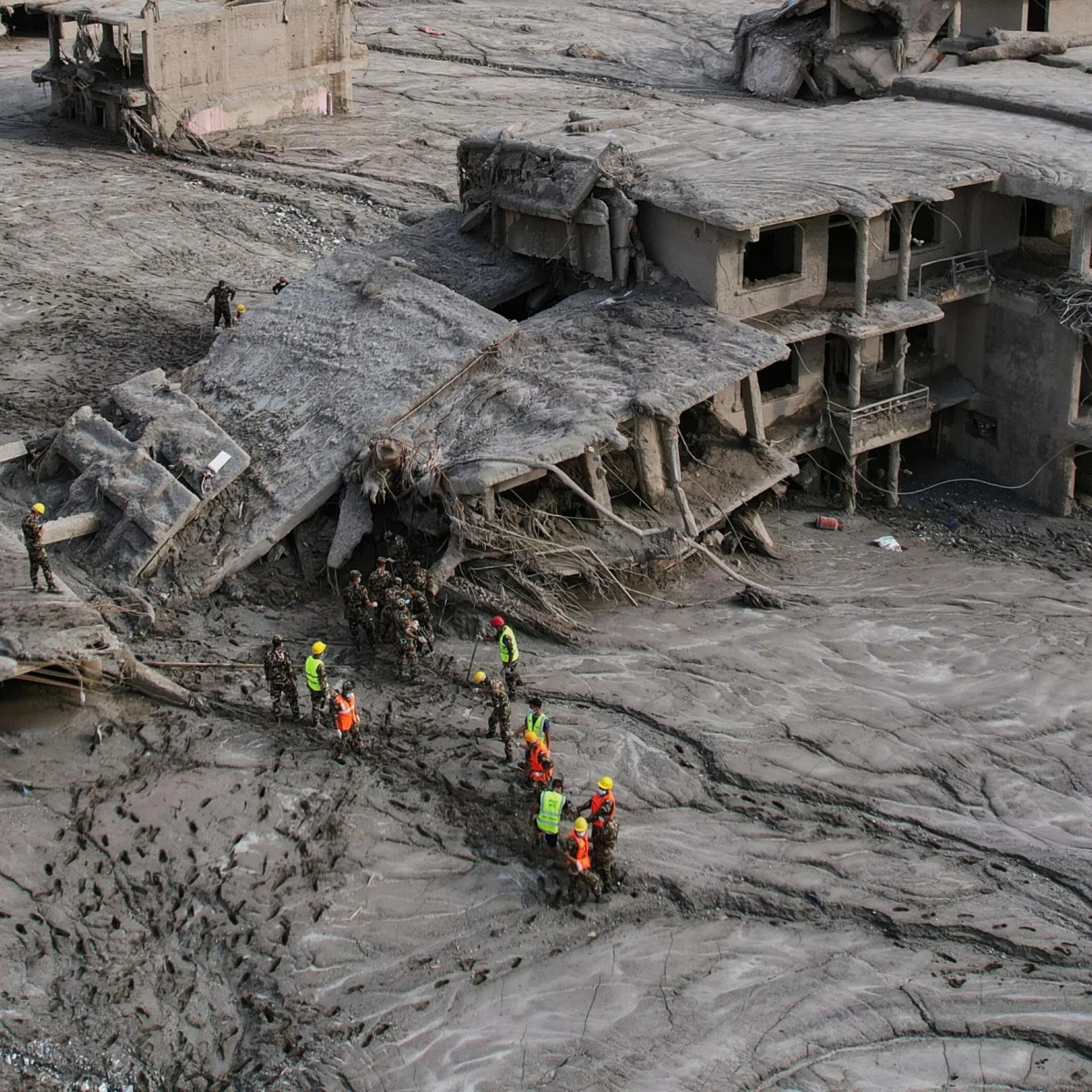
The devastating flash flood struck with terrifying speed and force in the final days of August, catching countless communities unprepared. Eyewitness accounts speak of an unprecedented surge of water, rock, and mud that tore through valleys and settlements along the Nepal-Tibet border. The district of Nuwakot, as depicted in harrowing drone footage showing rescue workers navigating deep mud amidst damaged buildings, was among the hardest hit, illustrating the widespread destruction.
Initial reports indicated that the flood originated from a sudden and massive discharge of water, likely from a glacial lake high in the Himalayas. Such events, known as Glacial Lake Outburst Floods (GLOFs), are becoming increasingly frequent and severe due to the rapid melting of glaciers driven by global warming. The sheer volume and velocity of the water obliterated homes, washed away bridges, severed vital road networks, and submerged vast tracts of agricultural land, which forms the backbone of the local economy.
The immediate aftermath was chaotic. Communication lines were down, roads were impassable, and entire villages were cut off, making search and rescue operations incredibly challenging. Local authorities, overwhelmed by the scale of the disaster, mounted valiant efforts, often with limited resources, to locate survivors and recover the deceased. The rugged, inaccessible terrain of the Himalayas further complicated these critical first-response actions, as rescue teams struggled to reach remote areas.
The Aftermath and Assessment: A Grim Toll
As the floodwaters receded, the true horror of the catastrophe began to emerge. The confirmed death toll in Nepal quickly surpassed 1,400, a number that continued to climb in the days and weeks following the event. More tragically, an estimated 5,000 individuals remained missing, their fates uncertain, leaving families in agonizing limbo. The sheer scale of the missing persons tally points to the suddenness and destructive power of the flood, which left little time for escape.
Beyond the tragic loss of life, the material destruction was immense. Thousands of homes were either completely destroyed or rendered uninhabitable, displacing tens of thousands of people. Critical infrastructure, including hospitals, schools, and essential services, suffered severe damage, further compounding the humanitarian crisis. Agricultural fields, the primary source of livelihood for many, were buried under layers of silt and debris, threatening long-term food security. Livestock, another vital asset for mountain communities, was also lost in vast numbers.
Experts from various international and national bodies quickly converged on the affected regions to assess the damage and determine the precise cause. Their preliminary findings strongly pointed towards a glacier collapse and subsequent GLOF event, underscoring the direct link between the disaster and climate change. The Nepalese government, facing an unprecedented challenge, undertook a rapid damage assessment, culminating in the projection of $4.8 billion required for comprehensive reconstruction and rehabilitation efforts. This figure encompasses rebuilding homes, restoring infrastructure, rehabilitating agricultural land, and implementing resilience measures to prevent future calamities.
International Response and GCF’s Announcement
In the weeks following the disaster, the international community began to mobilize support, albeit gradually. The United Nations and various humanitarian organizations launched appeals for aid, providing immediate relief in the form of food, shelter, and medical supplies to the affected populations. However, the long-term funding required for rebuilding remained a pressing concern.
It was against this backdrop that the Green Climate Fund (GCF) convened its extraordinary virtual session on October 23, 2026. The urgent nature of the meeting reflected the gravity of the situation in Nepal and the GCF’s mandate to support developing countries in addressing climate-related challenges. The announcement of the $20 million allocation was a direct response to the immense needs identified by the Nepalese government and international aid agencies. While a welcome step, the GCF’s commitment comes with the standard requirement for a detailed project proposal, outlining how the funds will be utilized for immediate recovery and resilience-building. This process, while necessary for accountability and effective resource allocation, can often introduce delays in the urgent delivery of aid.
Supporting Data and Context
The recent flash flood in Nepal is not an isolated incident but rather a symptom of broader, accelerating environmental changes. Understanding the context of Nepal’s vulnerability and the role of international mechanisms like the GCF is crucial.
The Global Climate Fund (GCF) and its Mandate
Established under the framework of the United Nations Framework Convention on Climate Change (UNFCCC), the Green Climate Fund is the world’s largest dedicated fund helping developing countries reduce their greenhouse gas emissions and enhance their ability to respond to climate change. Its core mandate is to support paradigm shifts towards low-emission and climate-resilient development pathways. The GCF channels climate finance to projects in developing countries that align with its strategic objectives, covering both mitigation (reducing emissions) and adaptation (coping with climate impacts).
The fund operates through various funding windows and mechanisms, including a "readiness and preparatory support programme" and a "simplified approval process" for smaller, urgent projects, which the $20 million for Nepal likely falls under. The $20 million cap for single-application emergency aid reflects the GCF’s intention to provide swift but targeted support for immediate needs, while larger, more complex reconstruction projects typically require more extensive proposals and greater funding allocations. The requirement for a detailed project proposal, approved by the GCF Board, ensures that funds are used effectively, transparently, and in line with the fund’s overarching goals.
Nepal’s Vulnerability to Climate Change
Nepal is consistently ranked among the most climate-vulnerable countries in the world. Its rugged, mountainous topography, coupled with a high dependence on climate-sensitive sectors like agriculture and hydropower, exposes its population to a range of hazards. The Himalayan region, often dubbed the "Third Pole" due to its vast ice reserves, is warming at a rate significantly higher than the global average. This accelerated warming is leading to:
- Rapid Glacial Melt: Glaciers are shrinking at an alarming pace, forming new glacial lakes or expanding existing ones. These lakes, often dammed by unstable moraines, pose a severe risk of Glacial Lake Outburst Floods (GLOFs) when the natural dams fail, as is believed to have happened in August.
- Increased Extreme Weather Events: Beyond GLOFs, Nepal experiences more frequent and intense rainfall events, leading to landslides, flash floods in river basins, and prolonged droughts in other areas. The monsoon season, vital for agriculture, has become more erratic and unpredictable.
- Impact on Livelihoods: The changing climate directly threatens the livelihoods of millions. Agricultural yields are becoming less reliable, water scarcity affects communities and hydropower generation, and crucial infrastructure is vulnerable to natural disasters. The pristine Himalayan environment, a draw for tourism, is also under threat.
This inherent vulnerability means that events like the August flash flood are not anomalies but rather harbingers of a future where such disasters could become more commonplace and severe, necessitating robust adaptation and resilience-building measures.
Humanitarian Crisis and Economic Strain
The flash flood has plunged Nepal into a profound humanitarian crisis. Beyond the immediate loss of life, the displacement of thousands has created urgent needs for temporary shelter, clean water, sanitation, and medical care. The destruction of health facilities has hampered efforts to treat injuries and prevent the spread of waterborne diseases. Psychosocial support is also critical for communities traumatized by the loss of loved ones and their entire way of life.
Economically, the disaster represents a significant setback for a developing nation already grappling with poverty and limited resources. The estimated $4.8 billion reconstruction cost is an enormous sum for Nepal, whose annual GDP is approximately $40 billion. This financial burden will strain national coffers, potentially diverting funds from other critical development initiatives. The long-term economic impact will be felt in reduced agricultural output, damaged tourism infrastructure, and the immense cost of rebuilding public services and private assets. The $20 million from the GCF, while helpful for immediate recovery, addresses only a fraction of the overall financial requirement, highlighting the need for much broader and sustained international support.
Official Responses and Calls for Action
The disaster has elicited strong reactions from the Nepalese government, international bodies, and climate activists, all underscoring the urgency of comprehensive action.
Nepalese Government’s Stance
The Nepalese government, while expressing profound gratitude for the GCF’s commitment, has consistently highlighted the overwhelming scale of the challenge and the need for substantially more international assistance. High-ranking officials have emphasized that Nepal, despite contributing minimally to global greenhouse gas emissions, bears a disproportionate burden of climate change impacts. They view the GCF’s pledge as a positive first step but stress that it is merely a fraction of the estimated $4.8 billion required for a resilient recovery.
The government has committed to preparing a robust and comprehensive project proposal for the GCF, ensuring that the $20 million will be utilized transparently and effectively for immediate recovery efforts, such as rebuilding critical infrastructure, providing housing for the displaced, and implementing early warning systems for future GLOFs. However, the capacity to quickly develop such detailed proposals while simultaneously managing a vast humanitarian crisis can be a significant challenge for a developing country. Nepalese leaders have also used this tragedy to renew their calls for greater climate justice and increased financial support from developed nations for "loss and damage" – a concept gaining traction in international climate negotiations, referring to irreversible harm caused by climate change.
International Community’s Role
Beyond the GCF, various international bodies and donor countries have extended support to Nepal. UN agencies like UNICEF, WFP, and WHO have been instrumental in coordinating humanitarian aid, providing essential supplies, and supporting public health initiatives. Non-governmental organizations (NGOs) have also played a crucial role in reaching remote communities and delivering grassroots assistance.
The disaster has reignited discussions within the international community about the collective responsibility to support climate-vulnerable nations. There is a growing consensus that the financial burden of climate change should not fall solely on those least responsible for it. The GCF’s swift response, albeit conditional, is seen by many as a testament to this evolving understanding. However, there remains a significant gap between the pledges made and the actual financial needs of countries like Nepal, especially when it comes to long-term adaptation and resilience building. Advocates are pushing for more predictable and accessible climate finance, moving beyond project-by-project funding to more programmatic approaches that support national climate action plans.
GCF’s Perspective
Officials from the Green Climate Fund have reiterated their commitment to supporting climate-vulnerable nations and acknowledged the severe impact of the August flash flood on Nepal. While the $20 million represents the maximum available through a single emergency application, GCF representatives have indicated that further funding opportunities could arise through different funding windows as Nepal develops broader climate adaptation and resilience projects.
The GCF emphasizes the importance of robust project proposals that demonstrate clear objectives, measurable outcomes, and alignment with national priorities. This due diligence process ensures accountability and the effective use of donor funds. The fund’s broader strategy aims to empower countries to develop their own climate solutions, integrating climate considerations into national development planning. For Nepal, this means not just rebuilding what was lost, but building back better and more resilient to future climate shocks.
Implications and Future Outlook
The August flash flood and the subsequent GCF pledge carry significant implications for Nepal’s immediate future and its long-term struggle against climate change.
Immediate Relief and Long-term Recovery
The $20 million from the GCF, once disbursed, will provide critical resources for the immediate phases of recovery. These funds could be instrumental in:
- Emergency Shelter and Infrastructure: Providing temporary housing, repairing essential roads and bridges to restore connectivity, and ensuring access to basic services.
- Early Warning Systems: Investing in advanced GLOF and flash flood early warning systems, including monitoring stations, communication networks, and community training, to save lives in future events.
- Climate-Resilient Reconstruction: Supporting the reconstruction of homes and public buildings using climate-resilient designs and materials, making them more resistant to future floods and landslides.
- Livelihood Restoration: Assisting communities in rehabilitating agricultural land, providing seeds and tools, and diversifying livelihoods to reduce dependence on climate-sensitive sectors.
However, the chasm between this $20 million and the $4.8 billion estimated for total reconstruction remains vast. Nepal will require sustained, multi-lateral support from various donors, international financial institutions, and private sector investments to achieve comprehensive recovery. The logistical challenges of rebuilding in a mountainous region, coupled with the need for community engagement and sustainable practices, will demand years of dedicated effort.
The Broader Climate Change Agenda
Nepal’s tragic experience serves as a powerful case study for the urgent need for global climate action. It underscores the concept of climate injustice, where developing nations, historically low emitters, disproportionately bear the brunt of climate change impacts driven largely by industrialized nations. This disaster will undoubtedly amplify Nepal’s voice in international climate forums, advocating for stronger commitments to emissions reduction and increased climate finance for adaptation and "loss and damage."
The event also highlights the critical importance of adaptation and resilience building. While mitigation (reducing emissions) remains paramount to prevent further warming, countries like Nepal must simultaneously invest heavily in measures to cope with the climate impacts that are already unavoidable. This includes nature-based solutions, improved infrastructure, and strengthened institutional capacities to manage disasters.
Regional Stability and Development
The long-term implications extend beyond Nepal’s borders. The Himalayas are a shared ecosystem, and glacial melt affects downstream nations. The August flood, occurring at the Nepal-Tibet border, also underscores the need for regional cooperation in monitoring glacial lakes and sharing data on hydrological changes. Stable and prosperous communities in the Himalayas are crucial for regional stability and sustainable development.
Ultimately, the future of Himalayan communities hinges on a concerted global effort to address climate change at its roots, coupled with robust, equitable, and accessible international support for adaptation and recovery. The GCF’s $20 million pledge is a necessary step, but it is just one brick in the monumental task of rebuilding Nepal and safeguarding its future against the accelerating threats of a warming world. The global community’s sustained commitment to climate action and solidarity with vulnerable nations will determine whether such tragedies become rarer exceptions or increasingly frequent occurrences.