Tel Aviv/Berlin – In a world grappling with resurgent geopolitical tensions and societal polarization, the ancient hatred of antisemitism continues to find new forms and justifications. Historian Dina Porat, a revered authority on Holocaust research and antisemitism, offers a sobering perspective on this persistent phenomenon. From the subtle shifts in political discourse to the overt violence witnessed on October 7th, Porat argues that a "thin, glistening surface" often conceals an underlying, deeply entrenched Jew-hatred, manifesting across both the political right and left.
In a recent interview, Porat, an emeritus professor at Tel Aviv University and chief historian for Yad Vashem, meticulously dissects the historical roots and contemporary expressions of antisemitism, drawing from her personal experiences and decades of academic rigor. Her insights reveal a disturbing continuity in anti-Jewish sentiment, adapting its rhetoric but never truly changing its core essence.
Early Encounters and a Life Dedicated to Understanding
Dina Porat’s journey into the study of antisemitism is deeply personal, rooted in her family’s harrowing experiences and her own early encounters with prejudice. Born in Argentina in 1943, Porat was just six years old when her family immigrated to Israel. Their departure from Eastern Europe was, as she explains, a direct consequence of rampant antisemitism.
Her mother hailed from the Raczki community in Lithuania, a region where anti-Jewish sentiment was historically pervasive. Having pursued language studies at university, her mother endured a brutal assault in 1932, beaten by Nazi-sympathizing students. This violent incident spurred her emigration to Argentina shortly thereafter. On her father’s side, the trauma ran even deeper: her paternal grandfather was killed during one of the brutal anti-Jewish pogroms that swept through Eastern Europe during World War I, claiming the lives of up to 200,000 Jews. Her father and his elder brother subsequently sought refuge in Argentina, leaving their small village near Pinsk in Belarus behind. These family narratives instilled in Porat an early awareness of the existential threat posed by Jew-hatred.
Porat’s first personal encounter with antisemitism occurred at the tender age of five in Argentina. She vividly recalls seeing the words "Kill the Jews" scrawled on a wall. Unable to read, she asked her father for an explanation. His response, etched into her memory, was profound: those who wrote such things were not good people, and this hatred was "not her problem." Her father wisely added, "Antisemitism is not the problem of the Jews. The antisemites have a problem. They believe they can solve it by attacking us." This distinction, between the target and the source of the problem, would shape Porat’s lifelong perspective. As the interviewer later asserted, and Porat agreed, it is indeed "our problem" – a societal problem that extends far beyond the Jewish community.
Her parents’ fervent Zionism played a pivotal role in their eventual move to Israel. Her father was a leading figure in the Argentinian Jewish community, founding a Zionist youth movement that would later contribute to the establishment of kibbutzim in Israel. This Zionist conviction, born from a desire for Jewish self-determination and security, deeply influenced Porat.
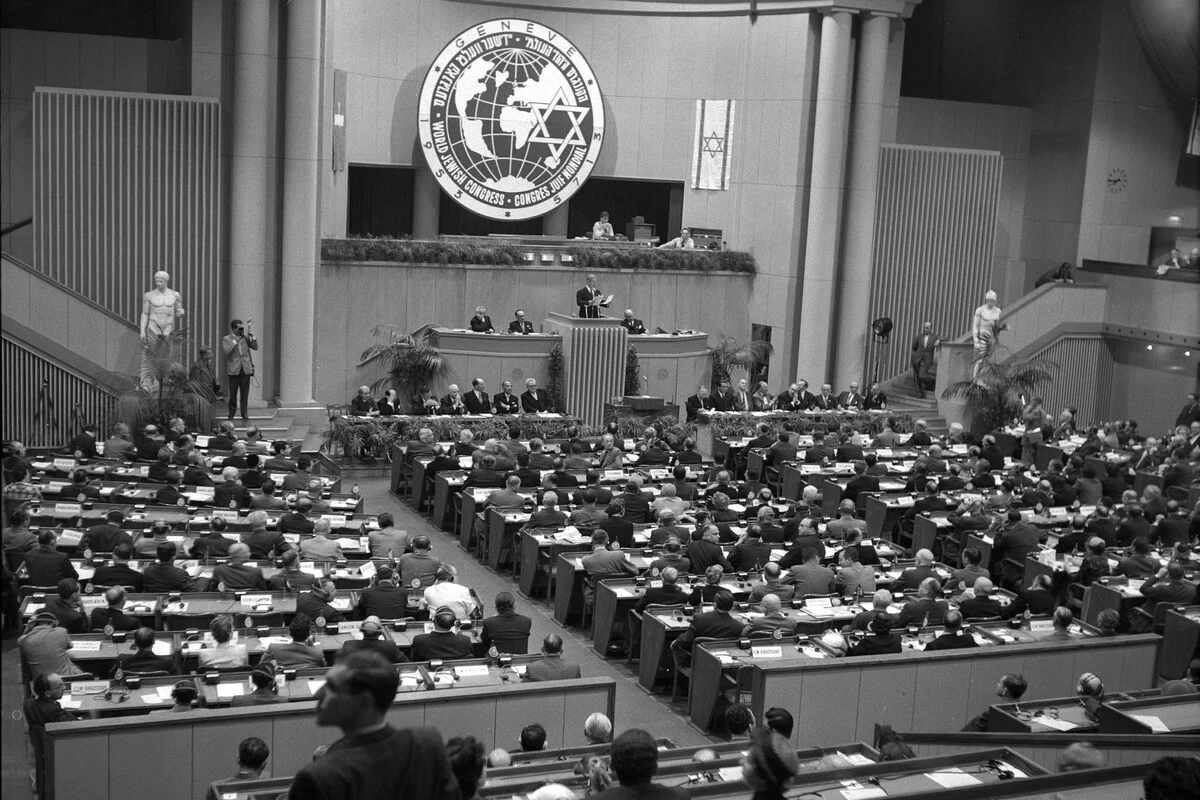
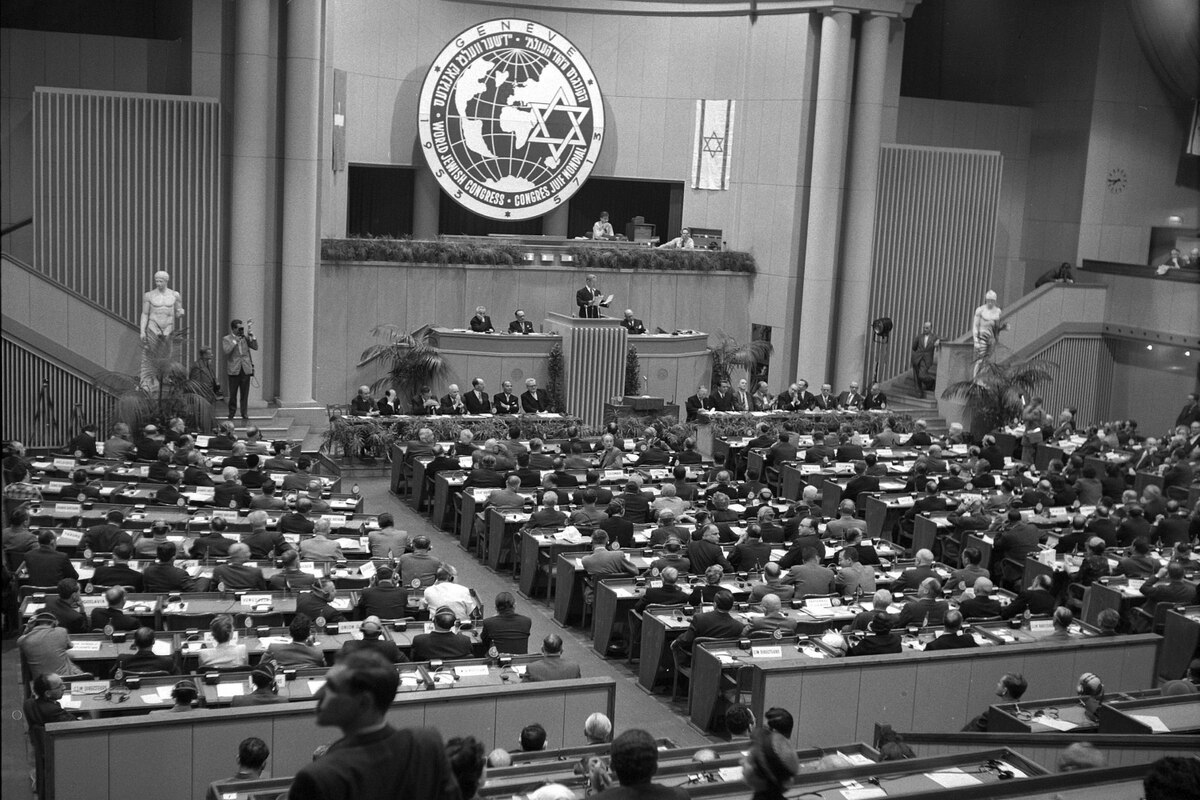
Her academic path, however, was far from straightforward. When she began studying Jewish history at Tel Aviv University in the mid-1960s, the systematic study of the Holocaust was virtually non-existent in Israel. "You are absolutely right," Porat confirms. "My engagement with the topic began at home in Argentina." As a child born during World War II, she witnessed the arrival of Holocaust survivors in Argentina, their stories recounted in her parents’ open home. Her father, working for the World Jewish Congress, brought home brochures on the subject, which she read, albeit understanding only that "something very bad had happened."
In Israel, her conviction solidified that "a Jew is not just an individual but part of a collective, and as an individual, one is also responsible for this collective." Yet, when she sought to pursue Holocaust studies, she faced resistance. The dean of her faculty advised her against it, warning she would "go crazy" if she delved into such a dark subject. Despite the initial discouragement, Porat persevered, becoming a self-taught pioneer in the field, driven by an unyielding commitment to understanding and preserving the history of Jewish suffering.
The Blurring Lines: Antizionism and Antisemitism
Porat then shifts her focus to contemporary manifestations of antisemitism, particularly the complex relationship between antizionism and antisemitism. The discussion highlights recent political rhetoric in Germany, where elected officials have voiced sentiments deeply alarming to Jewish communities. One Berlin state parliament member, deeply involved in the Palestine solidarity movement, reportedly stated that "there is no right to exist for states" generally, while another from the same party, Die Linke, declared that "the liberation of Palestine will only be complete when Tel Aviv is back in the hands of Palestine." Porat’s response is unequivocal: "Absolutely, that is antisemitism."
This direct identification of certain antizionist statements as antisemitic leads to a deeper exploration of a contentious debate. Is antizionism merely a critique of Israeli policy, or does it inherently cross into antisemitism? Porat firmly asserts the latter. "For a long time, I believed it wasn’t so," she admits, reflecting on a widespread misconception. "We all thought that. We believed we were being particularly precise by describing one event as antisemitic and another as antizionist. But then the distinctions blurred."
This blurring, she explains, began in the Soviet era, when the USSR engaged in "anti-Zionist" actions that were overtly laced with antisemitic terminology. However, the turning point, according to Porat, was the 2001 UN World Conference against Racism in Durban, South Africa. "I was present at that UN conference," she recalls. "Within just two days, many participants forgot what they knew about racism. It became an anti-Israeli and anti-Jewish event." The conference infamously defined Zionism as a form of racism, a resolution that Porat argues was a thinly veiled attack on Jewish self-determination. "It was about destroying Israel and killing Jews," she states starkly. "There was only one concept left, no longer antisemitism and antizionism. No distinction anymore."
Porat elaborates on why antizionism, in her view, is inherently discriminatory. "What is so ‘kosher’ about antizionism?" she asks rhetorically. "Why should it be better to be an antizionist than an antisemite? Antizionism is discriminatory against a single nation." She points out the hypocrisy: "Because they do not advocate for a Jewish state, but they do for states for all other peoples? Exactly. Every small island in the Pacific can become a state, even if there haven’t always been long traditions there. Jews have existed for 3,000 years. We are supposed to prove that we are worthy of a state." This selective denial of self-determination, she argues, is a clear indicator of antisemitism.
The International Holocaust Remembrance Alliance (IHRA) working definition of antisemitism, adopted by numerous countries and organizations, supports Porat’s view, stating that "denying the Jewish people their right to self-determination, e.g., by claiming that the existence of a State of Israel is a racist endeavor" is antisemitic. Porat’s analysis aligns perfectly with this widely accepted framework, highlighting that criticism of Israeli government policies is distinct from denying Israel’s right to exist.
The "Thin Layer": Right-Wing "Philo-Semitism"
The conversation then turns to the political right, where a different, yet equally insidious, form of antisemitism often operates. The interviewer notes a phenomenon where "many right-wing groups nowadays emphatically present themselves as pro-Israel and pretend to love all Jews…" Porat’s response is swift and incisive: "That is a very thin, glistening surface. A thin layer that pretends to love Israel and defend the country. But under this thin layer, the old Jew-hatred comes to the surface."
This phenomenon, often termed "philo-Semitism," particularly among certain segments of the far-right in Europe and North America, involves a strategic embrace of Israel, often to deflect accusations of antisemitism or to align with a perceived "Judeo-Christian" identity against a common enemy, typically Islam or progressive movements. However, as Porat suggests, this alliance is superficial and opportunistic. Beneath this façade, traditional antisemitic tropes and conspiracy theories often persist, simply redirected or temporarily suppressed for political expediency. The underlying prejudice, rooted in centuries of anti-Jewish sentiment, remains intact, ready to resurface when circumstances shift. It is, in her words, "only a tactical change, but it is not a real change in attitude. The image of the Jews has not changed."
October 7th and the Global Backlash: A Crisis of Perception
The interview then addresses the seismic events of October 7th, 2023, when Hamas launched a brutal terrorist attack on Israel, murdering over 1,200 people and abducting hundreds. One might expect such an atrocity to trigger a wave of global solidarity with Israel. Instead, Porat observes, "the opposite is the case. There is no solidarity movement with Israel."
She offers a multi-faceted explanation for this bewildering lack of international support and the subsequent surge in anti-Israel sentiment:
- Denial of the Crime: "The crime is denied, just as the Holocaust is denied to this day," Porat asserts. "The greater the crime, the stronger the denial, and the faster this denial comes." This immediate negation is not only from Hamas itself but also from its supporters, who often frame the perpetrators as "freedom fighters."
- Inability to Admit Error: For those who have historically supported Palestinian militant groups, acknowledging the barbarity of October 7th would require admitting they were wrong about those they championed. "It was not possible for these supporters to admit after the October 7th massacre that they were wrong. That they had supported murderers and rapists. So they decided to negate the crime." This psychological phenomenon of cognitive dissonance leads to a rejection of inconvenient truths to maintain existing ideological frameworks.
- The Old Antisemitism Resurfaces: Porat connects this rapid shift in global perception to the deep-seated antisemitism she consistently highlights. The interviewer notes that Israel’s image is "as bad as it has been in decades," extending to the United States, the film industry, and academia. Porat agrees, lamenting, "We are garbage cans." She questions the speed and ease with which this negative image took hold: "But why could this image change so quickly and easily? I believe because underneath, the old antisemitism shines through, which sees in us Jews a world problem."
The discussion also touches upon the Israeli government’s decision to wage a large-scale war against Hamas in the Gaza Strip, which has resulted in thousands of civilian casualties. Some, even those sympathetic to Israel, believe this war has exacerbated antisemitism abroad. Porat counters this view by emphasizing the target of the conflict: "The war was not directed against civilians. The war was directed against Hamas. It was against their headquarters and the underground tunnels." While acknowledging the tragic loss of civilian lives, she firmly places the blame on Hamas for operating within civilian areas, using them as human shields. "Unfortunately and unintentionally," she says of civilian deaths, "But the war was not against civilians, but against Hamas. Civilians were killed. But Hamas is to blame for that."
The accusation of "genocide" leveled against Israel by many in Europe and beyond is a particularly painful and potent manifestation of this negative image. For Porat, this accusation, often divorced from factual evidence, is a clear indicator of the deep-seated prejudice that quickly demonizes Israel and, by extension, Jews.
Combating Antisemitism: Education and Reassessing Herzl’s Vision
Given the persistent nature of antisemitism, with studies indicating that 10-20% of the German population holds antisemitic resentments—a percentage that has remained stubbornly consistent despite decades of efforts—the question of how to combat it is paramount. "That is very difficult to say," Porat admits. However, she proposes a crucial step: education. "If these feelings arise from ignorance about Jews, if one does not really know what Judaism is, if one cannot assess what is actually going on in the Middle East, then one could do this: teach the children who we are. Who are these Jews?"
This call for education speaks to the foundational role of understanding and empathy in dismantling prejudice. By addressing ignorance about Jewish history, culture, religion, and the complexities of the Israeli-Palestinian conflict, Porat suggests that some of the fertile ground for antisemitic sentiments might be diminished.
Finally, the interview turns to the enduring legacy of Theodor Herzl, the visionary of modern Zionism, who wrote in "The Jewish State" that Jews needed their own country to escape worldwide antisemitism. With the horror of October 7th erupting within Israel itself, the interviewer poses a challenging question: "Are Jews still safe in Israel? Was Herzl wrong?"
Porat’s response is nuanced and profound. "Certainly, the state failed," she concedes, acknowledging the profound security lapse that allowed the Hamas attack to occur. "That has nothing to do with Herzl. Herzl was right that Jews need their own state. But we failed on that day. We had already failed before. We didn’t see it coming. We were not vigilant."
This distinction is critical. Herzl’s fundamental premise—the necessity of a sovereign Jewish state for self-protection and self-determination—remains valid in Porat’s view. The failure was not in the concept of a Jewish state, but in the specific execution of its protective mandate on that tragic day. The ideal of a safe haven, while momentarily shattered, does not negate the historical necessity that brought it into being. The question of Jewish safety in Israel, therefore, becomes a question of vigilance, strategic foresight, and continuous effort, rather than a refutation of the Zionist vision itself.
Conclusion: A Persistent Challenge
Dina Porat’s insights paint a stark picture of antisemitism as a deeply ingrained, adaptable, and historically persistent phenomenon. Whether cloaked in the guise of anti-Zionism on the left or a superficial pro-Israel stance on the right, the underlying animosity towards Jews remains a formidable challenge. The aftermath of October 7th, marked by a global surge in anti-Israel sentiment and a denial of the atrocities committed, underscores the fragility of Jewish security and the pervasive nature of this ancient hatred.
Her call for education, for teaching future generations "who we are," resonates as a fundamental step in confronting ignorance and fostering understanding. While acknowledging the failures of the past, Porat’s unwavering commitment to the necessity of a Jewish state, coupled with a vigilant awareness of the enduring nature of antisemitism, offers a powerful, albeit sobering, perspective on one of humanity’s most persistent prejudices. The "thin layer" may shift and shimmer, but the old Jew-hatred, as Porat warns, remains ever present beneath the surface, demanding constant vigilance and principled resistance.