Rio de Janeiro, Brazil – October 25, 2026 – As Brazil heads to the polls today for a crucial presidential runoff election, the nation remains gripped by an overwhelming concern: the relentless surge of violence and organized crime. Voters across the vast South American country consistently identify public security as the gravest challenge facing their society, a sentiment profoundly shaped by escalating gang power and the state’s often brutal attempts to reclaim control. The two presidential candidates, incumbent Luiz Inácio Lula da Silva and challenger Flávio Bolsonaro, offer starkly contrasting visions for a nation teetering on the brink, each promising different remedies to a deeply entrenched crisis.
The urgency of this debate is underscored by events like the unprecedented police operation in Rio de Janeiro’s favelas last year, an incident that left an indelible mark on the national psyche and continues to fuel fierce arguments over the efficacy and ethics of the state’s approach to crime. With polls indicating a tight race, the outcome of today’s election is expected to profoundly redefine Brazil’s strategy against its most pervasive threat.
Chronology: A Day of Unprecedented Violence
October 28, 2025, Rio de Janeiro – The pre-dawn darkness still clung to the slopes of Rio de Janeiro’s Complexo da Penha and Complexo do Alemão favelas when hundreds of police officers launched an extensive raid. The objective: to dismantle the strongholds of the Comando Vermelho (Red Command), one of Brazil’s most formidable drug trafficking organizations. What followed was a brutal, hours-long confrontation, transforming the densely populated hillside communities into a war zone.
Barricades, hastily erected by gang members, ignited in fiery defiance, casting an eerie glow against the crumbling brickwork of the favelas. Gunshots echoed relentlessly through the narrow alleys and makeshift dwellings, punctuated by the heavier thud of automatic weapons and, chillingly, the explosion of grenades. Comando Vermelho, known for its extensive arsenal and fierce resistance, met the police incursion with overwhelming force, utilizing heavy weaponry and sophisticated tactics that mirrored those of a conventional army.
The most intense firefights reportedly occurred in the dense, forested areas above the favelas, providing cover for both sides and complicating police maneuvers. The sheer scale and ferocity of the engagement quickly spiraled beyond initial expectations, raising immediate questions about the planning and execution of the operation. To this day, the full scope of what transpired in those critical hours remains shrouded in controversy, with ongoing investigations attempting to ascertain whether police forces employed disproportionate or unlawful violence.
By the time the last shots faded and the smoke cleared, the human toll was staggering. A total of 122 lives were lost, including five police officers. The authorities, in their immediate aftermath, declared 117 of the deceased to be members of organized crime, a claim that has since been disputed in at least one documented case. This single operation instantly became the deadliest police action in Brazil’s history, reigniting a ferocious national debate about state violence, human rights, and the unrelenting war on drugs.
Supporting Data: The Scourge of Organized Crime
Brazil’s battle against crime is not new, but its current intensity and widespread impact are unprecedented. Organized crime groups have expanded their reach far beyond their traditional favela strongholds, permeating various layers of society and the economy.
The Ascendant Power of Brazil’s Gangs
The Comando Vermelho (CV) and the Primeiro Comando da Capital (PCC) are Brazil’s two most powerful criminal organizations, though numerous smaller factions exist. Originating in the prison system, these groups have evolved into sophisticated enterprises controlling vast illicit markets. Their operations extend beyond drug trafficking and arms dealing to include extortion, illegal mining, timber theft, fuel theft, and even control over local public services like transportation, gas, and internet in the territories they dominate.
In many favelas, the state’s presence is minimal or non-existent, leaving a power vacuum that criminal gangs readily fill. They often provide a semblance of order, mediating disputes, and sometimes even offering basic social services, albeit through a regime of fear and strict control. This parallel state structure undermines democratic governance and makes it incredibly difficult for legitimate authorities to establish lasting control. The economic deprivation and lack of opportunities in these communities make gang recruitment a grim but often perceived viable path for young people seeking income and belonging.
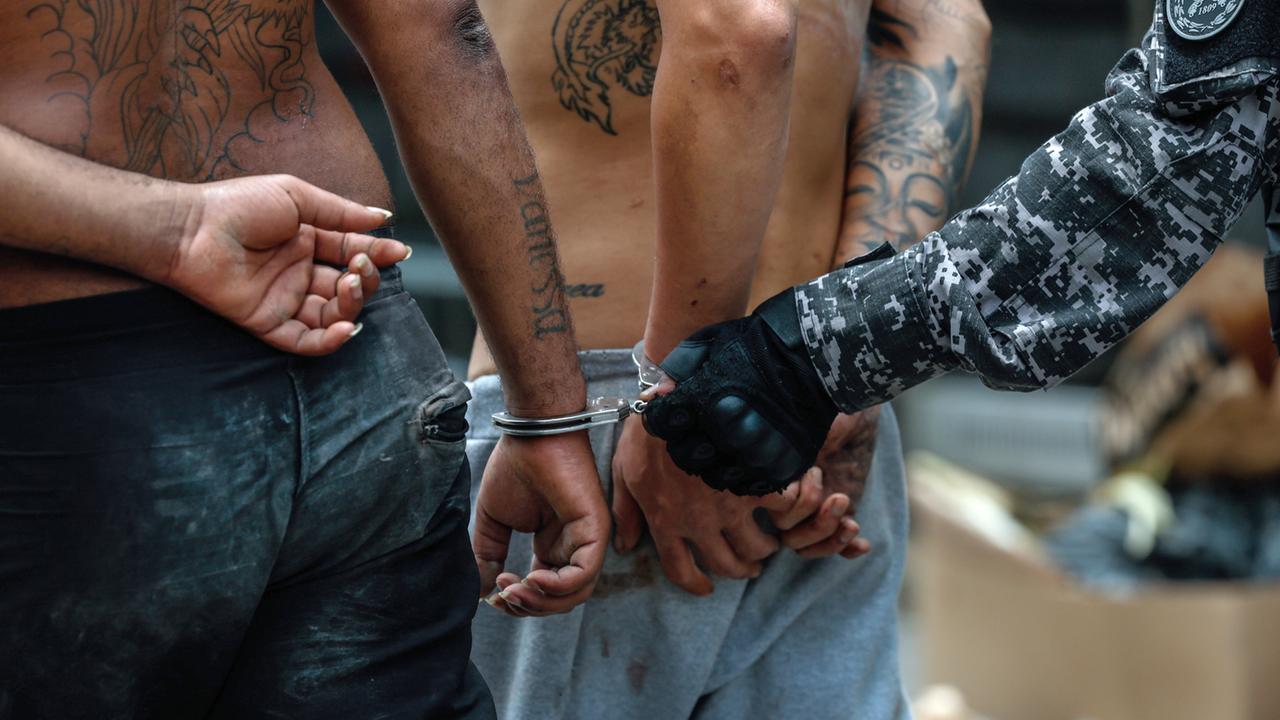
The 2025 operation in Complexo da Penha and Complexo do Alemão exemplifies the formidable challenge posed by these groups. The use of heavy weapons, including assault rifles and grenades, against well-equipped police units demonstrates their military-like capabilities. This constant escalation in firepower on both sides fuels a cycle of violence that devastates communities and traumatizes generations.
A Cycle of Violence and Public Opinion
For a significant portion of the Brazilian population, particularly those living outside the immediate impact zones of favela violence, the October 2025 operation was seen as a necessary, albeit tragic, step in the fight against crime. Polls conducted after the incident revealed that over 60 percent of Brazilians approved of the police action, viewing it as a decisive blow against drug gangs. This sentiment reflects a deep-seated frustration with pervasive crime and a widespread desire for a strong, uncompromising state response. The adage "only a dead bandit is a good bandit" resonates with many, highlighting a society weary of violence and increasingly willing to accept extreme measures.
However, for others, particularly human rights advocates and residents of marginalized communities, the operation was nothing short of a massacre, a stark illustration of state overreach and systemic violence against its own citizens. The lack of clarity surrounding many of the deaths, the allegations of summary executions, and the disproportionate number of casualties among favela residents raise serious questions about accountability and justice. The argument that such operations disproportionately target the most vulnerable, while the architects of the criminal enterprise—often a corrupt network of entrepreneurs, politicians, and police—remain untouched, is a powerful counter-narrative.
Official Responses: Divergent Paths to Security
The upcoming presidential runoff is fundamentally shaped by these two competing perspectives on public security. The candidates offer dramatically different strategies to tackle Brazil’s crime epidemic.
The "Iron Fist" Approach: Bolsonaro’s Stance
Flávio Bolsonaro, the right-wing conservative presidential challenger, has made public security the cornerstone of his campaign, advocating for an unyielding, militaristic approach. His rhetoric is characterized by calls for an "iron fist" against criminals, promising a relentless "war on Brazilian narco-terrorists." Bolsonaro’s proposals include significantly harsher penalties for offenders, the construction of additional prisons to alleviate overcrowding and enhance deterrence, and a legal framework that would grant police greater operational leeway, potentially reducing accountability for use of force.
His supporters often echo the sentiment that a strong state must assert its dominance over criminal elements, and that the protection of law-abiding citizens justifies aggressive tactics. Bolsonaro’s often-quoted declaration, "Either you go to prison, or our police officers will neutralize you," encapsulates his uncompromising philosophy. This approach resonates deeply with a populace fed up with crime and seeking swift, decisive action, even if it comes at the cost of civil liberties or raises concerns about human rights. His platform appeals to those who believe that the state has been too lenient, too bureaucratic, and too constrained in its fight against crime.
Lula’s Strategy: Intelligence and Systemic Reform
Incumbent President Luiz Inácio Lula da Silva, representing the center-left, presents a contrasting strategy. While acknowledging the severity of the crime problem, Lula emphasizes a more systemic and intelligence-led approach, focusing on dismantling the financial infrastructure of criminal organizations and fostering greater inter-agency cooperation. His vision prioritizes investigative work, data analysis, and coordinated efforts across federal, state, and municipal law enforcement bodies to disrupt criminal networks from the top down.
Lula has explicitly distanced himself from the high-casualty police operations favored by his opponents, stating, "We will not kill 100 or 200 people; we will arrest them." This promise underscores a commitment to due process and a belief that long-term solutions lie in effective policing, intelligence gathering, and addressing the root causes of crime, such as poverty and lack of education. His administration aims to strengthen public institutions, reduce corruption within law enforcement, and provide social programs that offer alternatives to life in crime. Lula’s supporters argue that simply escalating violence without addressing systemic issues is a self-defeating strategy that only perpetuates the cycle of brutality and destabilizes communities.
Human Cost: Voices from the Frontlines
Behind the statistics and political rhetoric are the profound human stories of those directly impacted by Brazil’s war on crime. The October 2025 operation, in particular, brought these personal tragedies into sharp focus.
Tauã Brito’s Grief and Activism
Tauã Brito, a mother from Complexo da Penha, lives with an unbearable grief. Her 20-year-old son, Wellington, was among the 122 fatalities of the October 2025 raid. She scrolls through old text messages on her phone, a poignant digital archive of a life abruptly cut short. Their last exchange was at 8:22 AM on that fateful morning; then, silence. Brito openly acknowledges her son’s involvement in criminal activities. "The right thing would be for me to visit my son in prison, not to have to bury him," she laments, her voice heavy with sorrow. She grapples with immense guilt, questioning if she could have done more to prevent him from joining the drug gang.
For Brito, the operation was not a success but a "massacre" where the state misused its power. She passionately argues that the focus on killing low-level gang members overlooks the deeper, more insidious problem. "Who sells the weapons, who brings the drugs?" she asks rhetorically. "A corrupt network of entrepreneurs, politicians, and police are at the top, but those at the bottom are killed." The constant reminder of her son in every street of Penha eventually forced her to move away, but the trauma remains. She suffers from depression, anxiety, and sleep disorders, relying on a private initiative for psychological support for herself and her daughter, as state assistance is notably absent.
Despite her immense personal loss, Brito has transformed her grief into a powerful mission. She founded a support organization for mothers who have lost their children to violence, providing a vital network of strength and solidarity in a society often indifferent to their plight. She believes that a Bolsonaro presidency would only lead to more deaths, intensifying the cycle of violence.
Bernardo Leal’s Sacrifice and Political Calling
Bernardo Leal, a senior criminal police officer, offers a starkly different perspective, though his experience is equally harrowing. During the October 2025 operation, Leal was leading his team to execute arrest warrants when they were ambushed. A rifle bullet tore through his femoral artery, causing life-threatening blood loss. He lay in a coma for a week and underwent nine surgeries, miraculously surviving. However, his leg could not be saved, a permanent physical reminder of the day’s brutality. Leal rarely speaks about the incident’s emotional toll, but admits that one of his children now suffers from severe separation anxiety.
For Leal, his survival is a profound mandate. He views the operation not as a failure, but as proof that the state, despite its challenges, can still assert its authority against criminals. He expresses frustration over the short-lived impact of such raids; the day after the 2025 operation, Comando Vermelho had already re-established its control in Penha. "We need plans for how the state can permanently regain control," Leal asserts, acknowledging the superficiality of temporary incursions.
Leal vehemently rejects accusations of police brutality, stating that officers are often met with heavy firepower and must defend themselves. "There can be no state that has no sovereignty," he argues. "And we no longer have sovereignty over these areas occupied by criminals." For him, police must execute their duties to uphold the rule of law; failure to do so means the state itself is lost. Motivated by his experience and conviction, Leal successfully ran for a seat in the Rio de Janeiro State Parliament with the conservative Progressistas party. He advocates for a multi-faceted approach: more education and opportunities to prevent recruitment, but also tougher laws and more decisive action against organized crime. Unsurprisingly, Leal is a vocal supporter of Flávio Bolsonaro, believing his hardline stance is essential for Brazil’s future security.
Implications: A Nation at a Crossroads
Brazil’s election today is not merely about choosing a president; it is about defining the very essence of the state’s relationship with its citizens and its approach to one of the most intractable problems.
The Deep Roots of Corruption and Inequality
The stories of Tauã Brito and Bernardo Leal, while vastly different, both highlight the deep-seated issues that fuel Brazil’s crime epidemic. On one hand, the lack of state investment in education, healthcare, and infrastructure in favelas creates fertile ground for criminal organizations to thrive, offering economic alternatives in desperate communities. On the other hand, widespread corruption within political and law enforcement circles undermines public trust and often allows the true masterminds of organized crime to operate with impunity, while the "pawns" bear the brunt of the violence. Any sustainable solution must address these fundamental inequalities and structural weaknesses.
The Future of Policing and State Sovereignty
The debate over police tactics, particularly the use of deadly force, will continue regardless of who wins the election. Bolsonaro’s proposed policies suggest a likely increase in high-casualty operations, potentially exacerbating human rights concerns and further militarizing policing. Lula’s approach, while promising a more nuanced strategy, faces the immense challenge of reforming deeply entrenched institutions and combating corruption without appearing "soft on crime" to a frustrated electorate. The question of state sovereignty over vast territories controlled by criminal factions remains central. How can the state regain control without alienating the very communities it seeks to protect?
A Pivotal Election for Brazil’s Security
Today’s runoff election is a pivotal moment for Brazil’s public security landscape. The choice between Bolsonaro’s "war on crime" and Lula’s "systemic reform" will determine not only the immediate tactics employed against criminal organizations but also the long-term trajectory of state-society relations, human rights, and the very fabric of Brazilian democracy. The millions of Brazilians heading to the polls are not just casting votes for a leader; they are casting votes for a vision of a safer, more just future, even if those visions are diametrically opposed. The world watches intently as Brazil decides which path it will take in its ongoing struggle for peace and order.