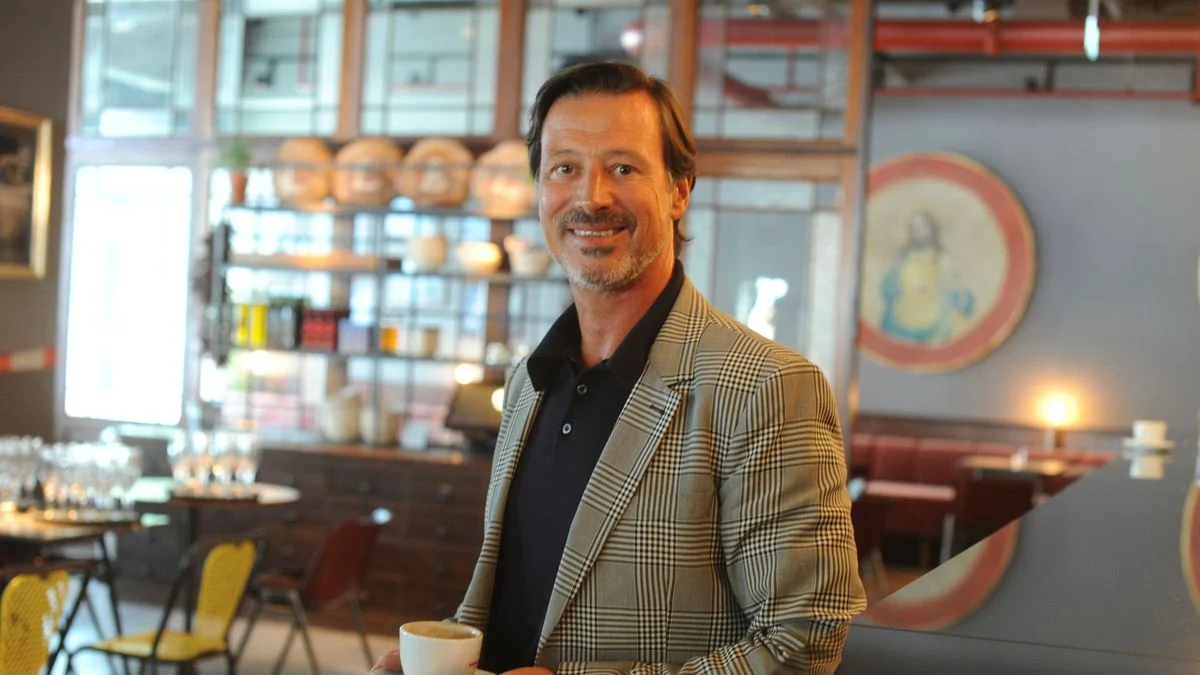
The Mediterranean island of Mallorca, a haven for both tourists and motorsport enthusiasts, was struck by tragedy on October 9, 2026. Klaus Rader, a prominent German entrepreneur best known as the co-founder of the highly successful restaurant chains L’Osteria and Vapiano, has died following a fatal accident during the “550 Challenge Mallorca” rally. Rader, 63, was a passionate automotive enthusiast whose life was defined by both his culinary innovation and his love for high-speed precision driving.
The accident occurred on a winding mountain road between the towns of Pollença and Lluc—a route known for its breathtaking vistas but also for its technical difficulty and treacherous drops.
Main Facts: A Life Cut Short on the Circuit
Klaus Rader was not merely a passenger in the world of business; he was a pioneer of the "system gastronomy" model that revolutionized how Europeans dine out. Beyond the boardroom, Rader was a committed rally driver who frequently participated in events that tested both machine and man.
According to local reports confirmed by the Guardia Civil, Rader’s vehicle left the asphalt on a mountain stretch, plummeting into a ravine. Despite the rapid response of emergency services, Rader could not be saved. He is survived by his wife and their four children. His co-pilot, 39-year-old professional driver Christina Ettel, survived the crash but reportedly suffered severe spinal injuries. She was transported to a local hospital, where she remains under medical care.
The vehicle involved in the crash, carrying the symbolic start number "000," was acting as a course car—a lead vehicle responsible for inspecting the track conditions before the official competitors began their runs. This detail underscores the sudden and unexpected nature of the tragedy, as the vehicle was tasked with ensuring safety rather than competing for speed.
Chronology: The Events of October 9, 2026
The day began under the typical conditions of a Mediterranean rally: clear skies and the anticipation of high-performance racing. However, the atmosphere shifted abruptly as the morning sessions commenced.

- Pre-Event Phase: The "550 Challenge Mallorca" was organized to showcase classic and modern sports cars on the island’s famous serpentine roads. Klaus Rader, an experienced hand in such events, was tasked with the "000" vehicle role, effectively serving as the safety scout for the field.
- The Incident: While navigating the technical ascent between Pollença and Lluc—a stretch renowned for its lack of guardrails and steep topography—the vehicle lost traction. Witnesses and subsequent reports indicate that the car veered off the road and fell into the ravine below.
- Emergency Response: Local emergency services, including the Guardia Civil and medical rescue teams, were dispatched immediately to the scene. The recovery operation was complex, given the remote and rugged nature of the terrain.
- The Confirmation: By late afternoon, news of the accident began to filter through regional media. By the early evening, a business partner of Rader’s confirmed the identity of the deceased, leading to an outpouring of grief from the business and motorsport communities alike.
The Legacy of an Entrepreneur
To understand the loss felt by the German business community, one must look at Rader’s immense contribution to the hospitality sector.
The L’Osteria Phenomenon
In 1999, Klaus Rader joined forces with Friedemann Findeis to launch L’Osteria. The concept was deceptively simple but revolutionary: large-format, thin-crust pizzas served in a vibrant, communal atmosphere that bridged the gap between fast food and fine dining. Under their stewardship, L’Osteria grew from a single location into a multinational powerhouse. Even after a US-based investment firm acquired a majority stake in the company in 2023, Rader maintained a presence as a minority shareholder, acting as a steward of the brand’s original vision.
The Vapiano Connection
Prior to his work with L’Osteria, Rader was a founding architect of Vapiano in 2002. Vapiano introduced the "fresh-casual" model to the masses, where pasta and pizza were prepared to order in an open-kitchen format. Rader’s ability to scale these concepts while maintaining perceived quality made him a titan of the industry. His influence in the German food scene was profound, shaping the dining habits of millions.
Official Responses and the Rally’s Cancellation
The impact of the tragedy was felt immediately by the organizers of the "550 Challenge Mallorca." In a move that signaled the gravity of the situation, the competition was officially terminated shortly after the accident.
In a formal statement released by the organizers, the tone was one of profound mourning rather than corporate mitigation. "This is a painful but inevitable decision, made with the utmost respect and consideration for the difficult circumstances," the statement read. "In such moments, no result, no ranking, and no sporting goal can be more important than what really counts. The competition fades into the background, and respect, humanity, and solidarity must stand above all else."
The decision to cancel the event was met with unanimous support from the participants, many of whom were friends or colleagues of Rader. The rally community, while competitive, is a tight-knit circle, and the loss of a prominent figure like Rader—someone who embodied the spirit of the sport—has cast a long shadow over the upcoming racing season in Southern Europe.

Implications: Safety and the Future of Mountain Rallying
The death of Klaus Rader has reignited discussions regarding the safety protocols of amateur and semi-professional rallies held on public mountain roads. While the "000" vehicle’s role is to identify hazards, the inherent risk of such environments remains high.
The "Course Car" Protocol
Industry analysts suggest that the incident will lead to a comprehensive review of the "course car" protocols. Questions are being raised about whether the speed at which these "test" vehicles travel matches their safety-check purpose, or if the competitive nature of the rally environment creates a subconscious pressure on drivers to perform at higher speeds than the road conditions allow.
The Intersection of Passion and Professionalism
Rader’s life serves as a case study for the "high-achiever" archetype. Often, individuals who reach the pinnacle of the business world seek equivalent adrenaline and precision in their hobbies. For Rader, the precision required to scale a restaurant chain was seemingly mirrored in his approach to the steering wheel. However, as colleagues and industry experts reflect on his passing, many are emphasizing the need for a balanced approach to high-risk hobbies.
A Community in Mourning
As of this writing, tributes continue to pour in. Former employees of L’Osteria and Vapiano have taken to social media to share stories of Rader’s hands-on leadership style. Unlike many corporate founders who retreat into the background once their companies go global, Rader was often described as being deeply involved in the "soul" of his restaurants—right down to the dough consistency and the layout of the dining halls.
The funeral arrangements are currently being handled by his family, who have requested privacy during this difficult time. The business world, meanwhile, continues to grapple with the departure of a man who changed the face of European dining. Klaus Rader’s life was defined by the bold pursuit of excellence, and his untimely passing is a poignant reminder of the fragility that exists even in the lives of those who seem to have mastered everything they touch.
As the investigation into the technical aspects of the crash continues, the focus remains on honoring a man who, in both his professional and private life, lived at full throttle.