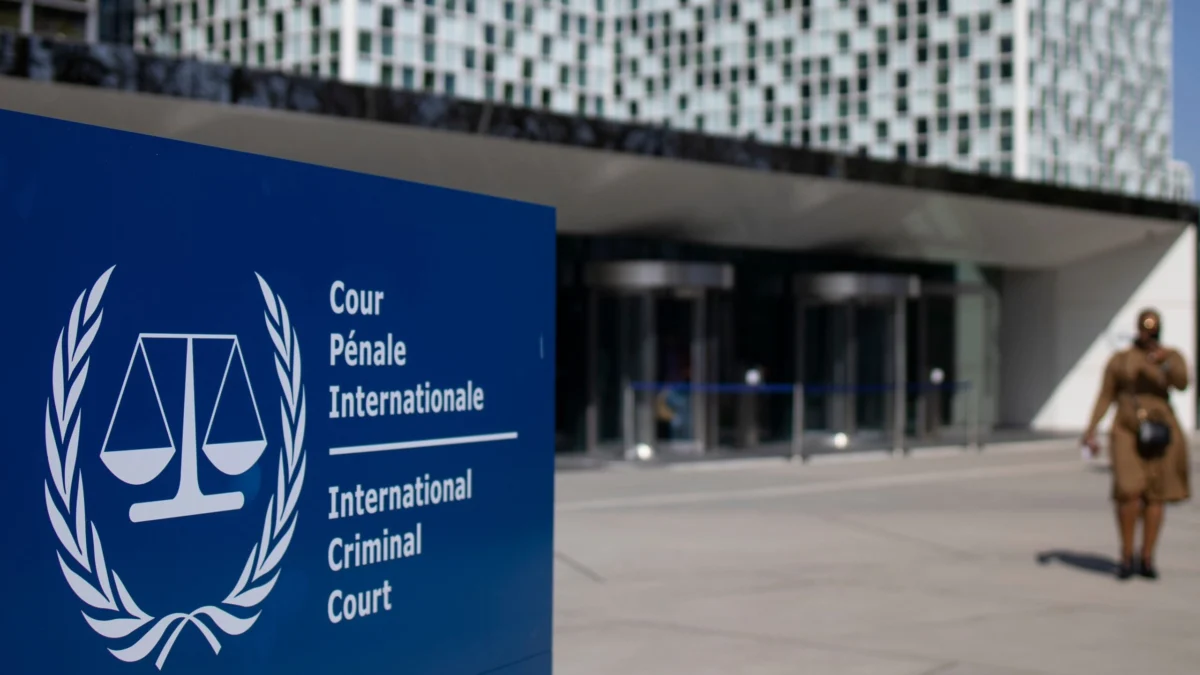
Washington, D.C. — In a dramatic escalation of the long-standing tensions between the United States and international judicial institutions, the Trump administration has unveiled a comprehensive package of sanctions targeting the International Criminal Court (ICC). The move, announced on Friday, marks a significant departure from previous policy, moving from targeted measures against individual court officials to an institutional assault designed to cripple the tribunal’s operational capacity.
The announcement came in a provocative temporal context, arriving just hours after former ICC judge Navi Pillay was announced as a recipient of the Nobel Peace Prize—a gesture widely viewed by the international community as an endorsement of the rule of law, which the White House has effectively characterized as a direct affront to American sovereignty.
The Core Conflict: Sovereignty vs. Global Justice
At the heart of this geopolitical firestorm is the fundamental disagreement over the scope of the ICC’s jurisdiction. Since its inception, the United States has maintained a stance of non-membership, arguing that the court poses an inherent threat to the constitutional rights of U.S. citizens and the operational freedom of its military personnel.
The current administration’s decision to move beyond mere rhetoric represents a "scorched-earth" policy toward the Hague-based institution. By expanding sanctions to encompass not only judges and prosecutors but also third-party entities—including private companies providing logistical, financial, or legal services to the Court—the U.S. is effectively attempting to sever the Court’s lifeline to the global financial system.
The Administration’s Stance
U.S. Secretary of State Marco Rubio, speaking on behalf of the President, adopted a combative tone in his briefing to the press. "President Trump will never allow the International Criminal Court to prosecute U.S. citizens," Rubio declared. "For this reason, the United States is today imposing sanctions against the International Criminal Court. We will prohibit transactions with this rogue court, cut off its resources, and paralyze its work."
This rhetoric underscores a perception in Washington that the ICC has evolved from a mechanism for international justice into a political weapon used to undermine the strategic interests of the United States and its closest allies, most notably Israel.
Chronology of a Deteriorating Relationship
The relationship between Washington and The Hague has been fraught for decades, but the path to the current crisis can be traced through several critical junctures:
- The Rome Statute Era (2002): Despite signing the Rome Statute, the George W. Bush administration withdrew the signature, citing fears that American soldiers could be subjected to politically motivated prosecutions.
- The Afghanistan Investigation (2017–2020): The ICC began formal inquiries into potential war crimes committed by all parties in the Afghanistan conflict, including U.S. military and intelligence personnel. This triggered the first wave of heavy-handed U.S. rhetoric.
- The Pivot to the Middle East (2023–2024): The tension reached a breaking point following the ICC’s decision to pursue arrest warrants against senior Israeli officials, including Prime Minister Benjamin Netanyahu. The U.S. viewed this as an unacceptable intervention into the domestic affairs of a democratic ally.
- The Friday Announcement: The formal imposition of systemic sanctions, intended to isolate the Court and impede its investigative capabilities regarding ongoing conflicts.
The Catalyst: The Israeli-Palestinian Conflict
While the Afghanistan investigation served as the original friction point, the current crisis is primarily fueled by the ICC’s recent focus on the Gaza conflict. The Court’s prosecutor, Karim Khan, has sought warrants for high-ranking Israeli officials, citing alleged war crimes and crimes against humanity.
The United States has consistently argued that Israel possesses a robust, independent judiciary capable of investigating its own conduct, thereby rendering the ICC’s intervention both legally unnecessary and politically motivated. By shielding its ally from international scrutiny, the U.S. has effectively pitted its diplomatic weight against the international legal order it once helped champion.
Supporting Data and Institutional Impact
The new sanctions are not merely symbolic. They utilize the full breadth of the U.S. Treasury’s authority to sanction "any entity" that facilitates the ICC’s work. This creates a "chilling effect" on global commerce.
Potential Economic Consequences:
- Banking Isolation: International banks, fearing secondary sanctions, are likely to freeze the ICC’s assets or block the transfer of funds necessary for court operations.
- Service Provider Exodus: Translation firms, cybersecurity experts, and legal consultancies based in the U.S. or operating in the U.S. dollar sphere may be forced to terminate contracts with the Court to avoid legal liability.
- Logistical Bottlenecks: The inability to pay for air travel, secure communication, or expert witness stipends through standard banking channels could bring ongoing investigations to a complete halt.
The ICC, which relies heavily on member-state contributions, now faces an existential crisis. If its primary financial and operational arteries are severed, the institution may find itself unable to fulfill its mandate, effectively rendering it an empty shell.
Official Responses: A Divided International Community
The announcement has triggered a wave of condemnation from the European Union, the United Kingdom, and human rights organizations worldwide.
The European Perspective
European leaders, who serve as the Court’s staunchest defenders, view the U.S. move as a dangerous retreat from the liberal international order. "The ICC is a cornerstone of global justice," a spokesperson for the EU High Representative stated. "Threatening an independent judicial institution is incompatible with the values that bind the transatlantic alliance."
The Human Rights Narrative
Advocacy groups, including Amnesty International and Human Rights Watch, have described the sanctions as an "assault on justice." They argue that by attacking the Court, the United States is providing a roadmap for authoritarian regimes to ignore international law with impunity. The irony of rewarding Navi Pillay—a champion of human rights—with a Nobel Prize while simultaneously sanctioning the institution she once served has not been lost on the global community, which views the timing as a deliberate insult to the principles Pillay represents.
Long-term Implications for International Law
The implications of this move extend far beyond the immediate operations of the ICC. If the United States succeeds in delegitimizing the Court, it signals a broader shift toward a "might-makes-right" global order.
1. The Erosion of Multilateralism
By actively working to "paralyze" a multilateral court, the U.S. is signaling that its domestic legal standards should override international treaties. This sets a precedent that other nations, such as Russia or China, will likely exploit to shield their own officials from future accountability.
2. A Crisis of Legitimacy
If the ICC cannot investigate the powerful, its legitimacy as a "Court of Last Resort" vanishes. The perception will shift from it being a neutral arbiter of justice to a body that only prosecutes leaders from weaker nations, thereby undermining the very concept of "universal" human rights.
3. The Transatlantic Schism
The sanctions place European nations in an untenable position. They are forced to choose between their long-standing security partnership with the United States and their commitment to the Rome Statute. This creates a rift that could weaken NATO and other security frameworks, as the U.S. pushes its allies to prioritize American foreign policy interests over their own international obligations.
Conclusion: A World Without Accountability?
The decision to impose sweeping sanctions on the International Criminal Court represents one of the most aggressive maneuvers in the history of U.S. foreign policy regarding international judicial bodies. By aiming to dismantle the Court’s ability to function, the administration has set the stage for a period of extreme diplomatic volatility.
As the international community grapples with this development, the central question remains: Is the world safer with an empowered, independent judiciary, or is the U.S. correct in asserting that such institutions are merely platforms for political overreach?
For now, the ICC remains in a state of high alert. With its resources under threat and its officials targeted by the world’s most powerful economy, the future of international criminal justice hangs in the balance. The coming months will determine whether the Court can weather this storm or if the dream of a global system of accountability will be the latest casualty of the current geopolitical climate.