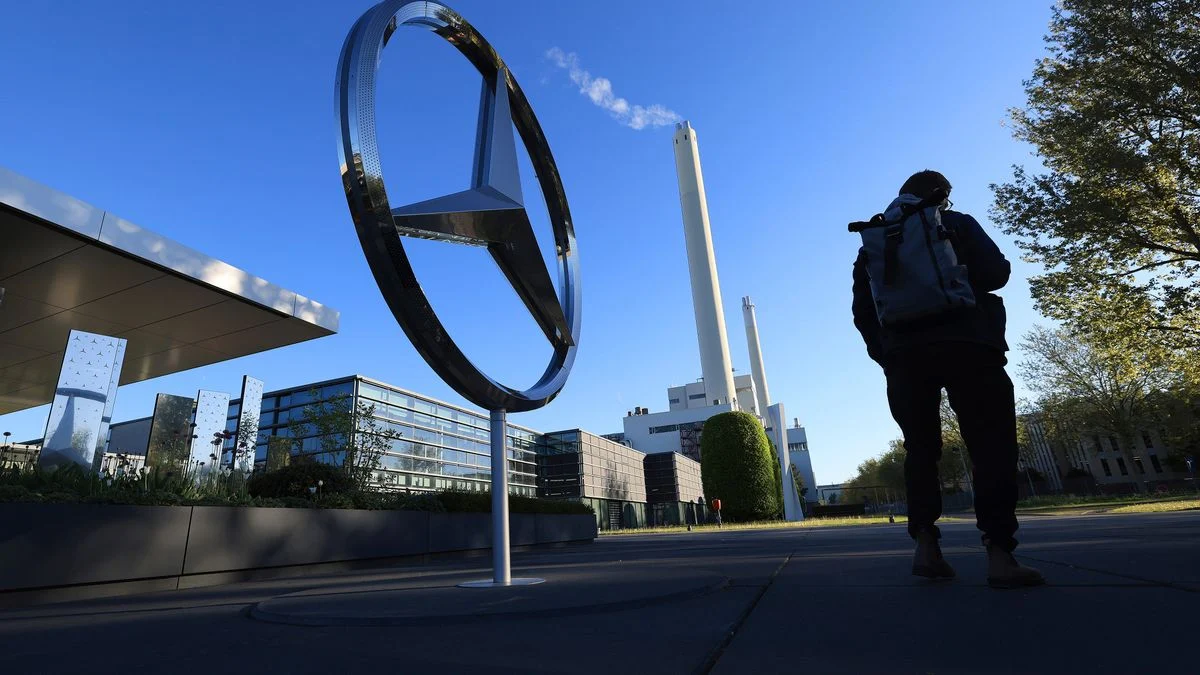
The German industrial landscape is currently facing a period of unprecedented volatility. At the heart of this storm is a high-stakes labor dispute at Mercedes-Benz, where the traditional 35-hour work week—a cornerstone of the German social market economy—is being challenged. This confrontation is not merely an internal HR issue for the Stuttgart-based automaker; it is a fundamental test of the resilience of Germany’s industrial model in an era of rapid technological transition and global economic pressure.
Main Facts: The Core of the Conflict
At the center of the dispute is a fundamental disagreement over labor flexibility versus job security. Mercedes-Benz management, navigating the expensive transition to electric vehicles (EVs) and facing stiff competition from agile, software-focused rivals, has signaled a desire to reassess existing labor agreements. The unions, led by IG Metall, maintain that the 35-hour week is non-negotiable, serving as a safeguard against the erosion of worker rights and a necessary balance for the high-intensity demands of automotive manufacturing.
The conflict touches upon three critical pillars:
- Productivity vs. Costs: Management argues that high labor costs in Germany, coupled with the rigidities of the 35-hour week, hinder the company’s ability to compete with global manufacturers who operate under different labor cost structures.
- The EV Transition: The shift from internal combustion engines to electric powertrains requires fewer assembly hours per vehicle. Management sees this as a reason to revisit staffing levels and working hour models.
- Labor Stability: Unions fear that undermining the 35-hour week will lead to "work intensification" and the eventual dismantling of the German "Mitbestimmung" (co-determination) model, which gives workers a seat at the table in corporate decision-making.
Chronology: How the Tension Escalated
The current impasse did not emerge overnight. It is the result of years of mounting pressure on the German automotive sector.
- 2020-2021 (The Pandemic Pivot): During the early stages of the COVID-19 pandemic, both management and labor agreed to temporary concessions. However, as the industry shifted its focus toward the massive capital expenditure required for electrification, those temporary measures began to calcify into points of contention.
- Early 2023: Mercedes-Benz announced its "Ambition 2039" strategy, outlining its path to a carbon-neutral vehicle fleet. As the company accelerated its software development initiatives, management began hinting that traditional manufacturing contracts were ill-suited for the "tech-company" aspirations of the firm.
- Late 2023 – Early 2024: Formal negotiations over collective bargaining agreements reached a deadlock. IG Metall, citing record inflation and the need to protect real wages, pushed for significant pay increases, while management demanded "flexibility clauses" that would effectively bypass the 35-hour week in specific business units.
- The Current Phase: As of mid-2024, sporadic "warning strikes" have become common, signaling a breakdown in the trust that has historically defined the German industrial relations model.
Supporting Data: The Economic Context
To understand the intensity of the dispute, one must look at the macro-economic data surrounding the German auto industry. According to industry analysts, the cost-per-unit of labor at German factories remains among the highest in the world.
- Competitive Disadvantage: When compared to EV production facilities in China or the United States, German plants face a 20-30% higher cost burden in terms of direct labor.
- The "Productivity Gap": While Mercedes-Benz maintains a lead in luxury quality, the software-defined vehicle era requires a different allocation of talent. Management reports that a significant portion of their current workforce lacks the specific digital skills required for the next decade, while current contracts make it difficult to pivot labor toward these roles without significant administrative friction.
- Inflationary Pressures: The German inflation rate, while stabilizing, has left a lasting impact on household budgets. Workers are demanding wage increases that exceed productivity gains, putting management in a position where they feel forced to demand longer hours or reduced benefits to maintain profitability.
Official Responses: A House Divided
The rhetoric from both sides underscores the depth of the divide.
The Management Perspective:
"We are in the midst of the most significant transformation in the history of the automobile," a Mercedes-Benz spokesperson recently noted. "To ensure the long-term viability of our German sites, we must have the ability to adapt our working models to the realities of a software-driven global market. The 35-hour week is a historical achievement, but it cannot become a structural impediment to our survival in a world of new, fast-moving competitors."
The Union (IG Metall) Perspective:
"We will not allow the burden of the automotive transition to be placed solely on the shoulders of the workers," says an IG Metall representative. "The 35-hour week is not just a work-time limit; it is a shield against burnout and a guarantor of quality. If Mercedes-Benz wants to save money, they should look at their executive compensation structures and inefficient management layers, not at the working hours of those who actually build the cars."
Implications: The Broader Impact on German Industry
The outcome of the Mercedes-Benz dispute will likely set a precedent for the entire German manufacturing sector. If the 35-hour week is successfully challenged, it could trigger a domino effect across the automotive, mechanical engineering, and chemical industries.
1. The Erosion of the "German Model"
For decades, the German industrial model—characterized by high wages, short hours, and strong union representation—has been the envy of the world. A defeat for the unions here would signal that this model is no longer sustainable in a globalized economy.
2. The Migration of Capital
If labor relations remain fraught, analysts warn that major industrial players may accelerate the migration of production to Eastern Europe or North America. This would have devastating consequences for the German labor market and the tax base of the country’s industrial heartlands.
3. Technological Sovereignty
The dispute also touches upon the "war for talent." If legacy companies like Mercedes-Benz are seen as places of constant labor strife and inflexible, outdated work structures, they will struggle to attract the software engineers and AI specialists they need to compete with companies like Tesla or Chinese EV giants.
Conclusion: A Turning Point for the Future of Work
The struggle over the 35-hour week is, at its core, a struggle for the identity of the German economy. Is it a heritage-based manufacturing powerhouse that prioritizes worker stability above all, or must it become a hyper-agile, tech-first entity that demands total flexibility?
As negotiations continue, the eyes of the entire European industrial sector remain fixed on Stuttgart. The compromise that emerges—or the conflict that persists—will define the landscape of German labor for the next generation. It is a reminder that in the transition to a new industrial era, the most difficult parts to upgrade are not the assembly lines or the battery packs, but the social contracts that have governed them for nearly a century.
This article is provided as part of our ongoing coverage of the German industrial sector. To stay updated on the latest developments in labor relations and the future of mobility, subscribe to our newsletter or access our comprehensive archive of industry analysis.