

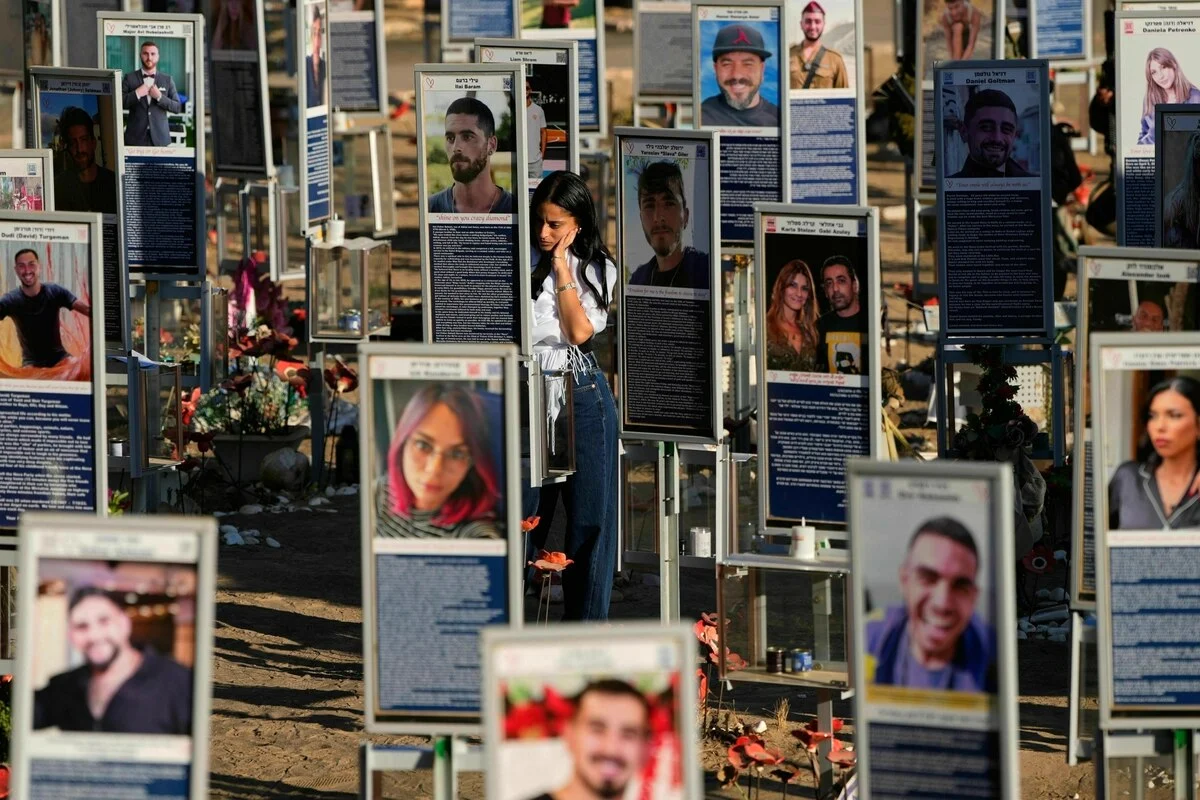
RE’IM, Israel – Three years have passed since the devastating Hamas attack on October 7, 2023, yet for the families of the victims, the passage of time has done little to dull the sharp edges of grief or to answer the haunting question that echoes across Israel: "How could this have happened?" As the nation marks this solemn anniversary, the collective trauma remains palpable, intertwined with a deepening sense of political disillusionment and a fervent demand for accountability.
The landscape around the former site of the Nova Music Festival, near Kibbutz Re’im, has transformed into a poignant, unofficial memorial. Here, amidst the once-vibrant fields where thousands danced just hours before the onslaught, a dark, gleaming stone stands beside a desolate bus stop. Etched into its polished surface is a smiling family photograph, accompanied by names, birthdates, and a shared, tragic date: 7. 10. 2023. This is a tribute to Bar Zohar, a young woman whose life, full of promise, was brutally cut short on that horrific morning. She was one of the many revelers who had been celebrating life at the festival, only to be caught in the merciless crossfire of an unprecedented terror attack. Her memorial, a testament to a life lost, serves as a stark reminder of the individual stories woven into the fabric of a national tragedy.
A Daughter’s Last Moments: The Zohar Family’s Enduring Pain
Kati and Meir Zohar, Bar’s parents, stand on the hallowed grounds of the festival, their faces etched with a grief that time can only soften, never erase. Around their necks, they wear identical silver chains, each bearing a pendant with their daughter’s radiant face. Their presence here, three years after the attack, is a testament to an unyielding parental love and a desperate search for understanding.
They recount the harrowing morning of October 7, 2023. As the first rockets screamed across the sky, Bar called, her voice laced with fear, pleading for her parents to pick her up. The Zohars, sheltering in their small northern village, urged her to get into her car and drive to safety. Bar and a few friends managed to flee the immediate chaos of the festival. Their escape, however, was tragically thwarted. Near Kibbutz Be’eri, a policeman stopped them, warning of terrorists in the area and, in a calamitous misjudgment, directed them back towards the Nova Festival site. This turn, intended for safety, became a fatal detour.
On their return journey, they encountered two vehicles carrying Hamas terrorists. Bar was shot. Despite her grievous wounds, she displayed an extraordinary will to survive, managing to transfer to another car with her friends. They drove back towards the festival grounds, desperately trying to alert the police. Bar, however, succumbed to her injuries shortly after, her last moments a blur of courage and terror.
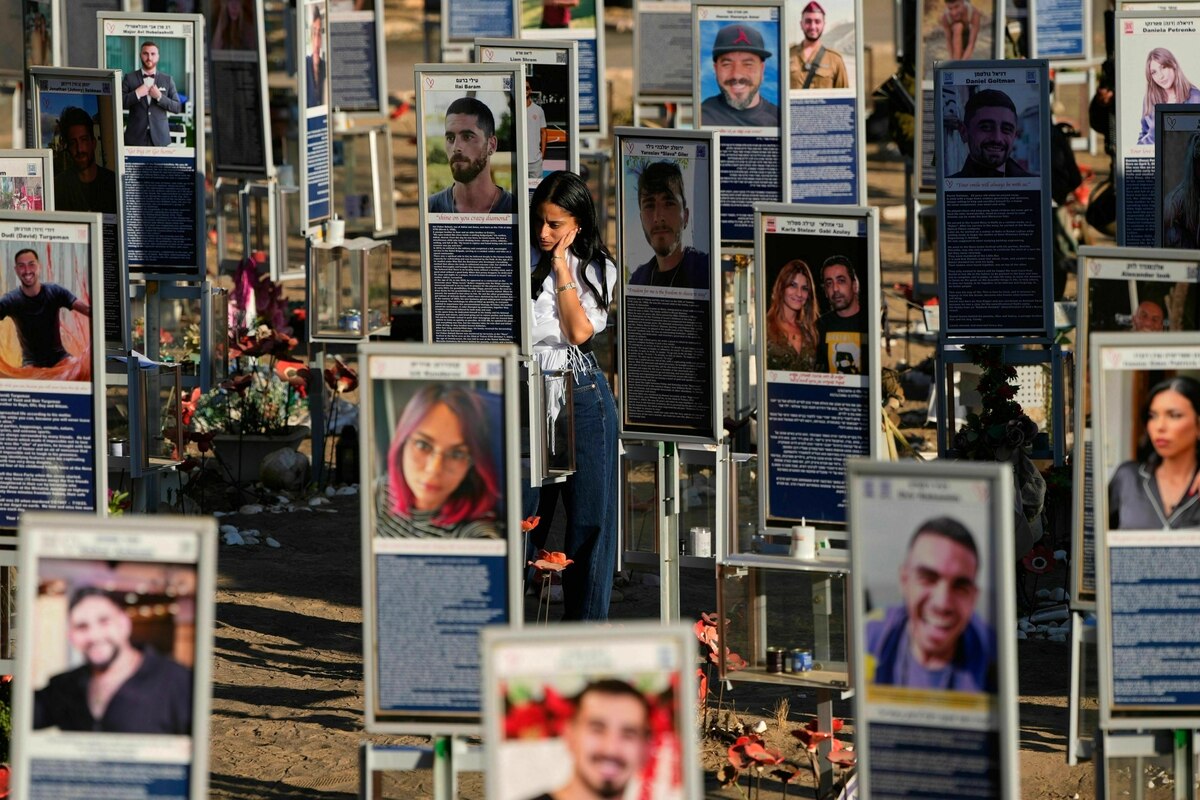
Meir Zohar, grappling with unimaginable loss, channeled his grief into action, becoming one of the co-founders of the memorial site at the Re’im parking lot. What began as a spontaneous outpouring of grief has evolved into a permanent, deeply affecting tribute. Even on ordinary days, thousands visit the site, now often referred to as "The 10/7 Museum," to pay their respects. On this three-year anniversary, the numbers swell further. Visitors wander through rows of memorial stelae, each adorned with photographs, names, and personal messages of those murdered. Strangers embrace, finding solace in shared sorrow. At the entrance, volunteers from the ultra-orthodox organization Chabad offer young men the opportunity to don Tefillin, the prayer phylacteries, a poignant act of spiritual remembrance and continuity in the face of devastation. The site is not just a place of mourning, but a stark reminder of the fragility of peace and the enduring strength of a community bound by grief.
Official Commemorations and Mounting Criticism
The official state commemorations for the three-year anniversary of the Hamas attack began precisely at 6:29 AM on October 7, 2026 – the exact minute the assault commenced. A national ceremony was held earlier in the week, with Prime Minister Benjamin Netanyahu laying a wreath at the Mount Herzl national cemetery in Jerusalem. However, this gesture, intended to unite the nation in remembrance, was met with sharp criticism and a pervasive sense of discontent.
Netanyahu faces fierce condemnation, particularly from the families of the hostages still held captive in Gaza and the victims of the October 7 attack. Unlike senior military and intelligence officials, who have publicly acknowledged failures leading up to and during the attack, the Prime Minister has steadfastly refused to accept any personal responsibility. His administration has also consistently blocked calls for an independent commission of inquiry, a move that deeply frustrates and angers the bereaved families. For them, the absence of a thorough, unbiased investigation into the security and intelligence lapses is an unbearable burden, perpetuating the agonizing question of how such an catastrophic breach of national security could have occurred. "We need to know what went wrong, at every level," demands one family member, speaking for many. "Without truth, there can be no real healing."

The Prime Minister’s resistance to an independent inquiry is not without context. Four weeks prior to this anniversary, the prominent Israeli daily Ha’aretz published an explosive report, citing three high-ranking anonymous foreign sources. According to the report, Netanyahu had been explicitly warned by United Arab Emirates President Mohamed bin Zayed just before October 7. In a phone call, bin Zayed allegedly cautioned Netanyahu that Hamas leader Yahya Sinwar was planning a "large operation" that would not only lead to bloodshed but also destabilize the entire region.
Adding to these revelations, it was subsequently reported that the Egyptian intelligence chief had also issued a similar warning to Netanyahu. The Prime Minister has vehemently denied all these allegations. Furthermore, according to media reports, he traveled to the UAE a week before the anniversary, allegedly attempting to persuade bin Zayed to retract the Ha’aretz report. These alleged attempts to suppress information and deflect responsibility have further eroded public trust and intensified the calls for transparency and accountability from a leadership perceived as more concerned with self-preservation than national interest.
A Nation at a Crossroads: The Fateful Election
The weight of these unresolved questions and the lingering trauma of October 7 cast a long shadow over Israel’s political landscape. Along the highway leading out of Tel Aviv towards the southern coast, yellow posters have become a ubiquitous sight. They feature Netanyahu’s face, emblazoned with the words "Guilty," "7. 10.," and a defiant promise: "We will not forget, we will not forgive." These posters are more than just political slogans; they are a visceral expression of a nation’s anger and a powerful testament to the public’s demand for change.
On October 27, Israelis will head to the polls, facing what many describe as a "fateful election." For Prime Minister Netanyahu, the stakes are profoundly personal. His political future hangs in the balance, as does his immunity from an ongoing corruption trial, which he has largely circumvented while in office. For his extreme-right coalition partners – particularly Minister of National Security Itamar Ben Gvir and Finance Minister Bezalel Smotrich – the election represents a critical juncture for their vision of Israel. They seek to continue shaping the country according to their ultranationalist and messianic ideals, pursuing plans for a "Greater Israel," funneling funds into settlement expansion, and further entrenching religious influence in public life. The period since October 7 has, disturbingly, seen a drastic increase in settler violence, a trend that critics attribute to the emboldened rhetoric and policies of these hardline factions.

Conversely, the government’s critics and opposition hopefuls yearn for a return to stability and a restoration of democratic norms. They envision a path away from the horror of October 7, the ongoing conflicts on multiple fronts, and what they perceive as the current government’s relentless erosion of democratic institutions. There is a deep desire among many Israelis for unifying leadership that can heal the nation’s profound rifts and guide it towards a more secure and just future.
A Head-to-Head Race and the Quest for Truth
Current polls predict a neck-and-neck race between the two main blocs, reflecting the deep divisions within Israeli society. Amidst this uncertainty, one thing remains clear: without the participation of Arab parties, the former military chief and Netanyahu’s primary challenger, Gadi Eisenkot, will struggle to form a governing majority. This presents a significant political challenge, as pressure on Eisenkot to avoid cooperation with Arab parties remains immense, given the often-strained relations and political sensitivities.
Despite these complexities, the opposition bloc is united on at least one critical promise: should they emerge victorious, they have pledged to immediately establish an independent commission of inquiry into the events of October 7. This commitment offers a glimmer of hope to the many families like the Zohars, who desperately seek answers and accountability.
Back at the Nova memorial site, Kati Zohar, who now works in Kibbutz Be’eri, reflects on her ongoing journey of grief and remembrance. "Every time I drive that road, I think of my daughter," she says, her voice heavy with emotion. "And I think of it as the last road she ever drove." The Zohar family, unable to wait for official investigations, undertook their own harrowing research to piece together Bar’s final hours. "It is traumatic to have to watch these images again and again," Kati admits, referring to security footage and eyewitness accounts they reviewed. "But we simply had to know."

Three years after the day that irrevocably altered Israel, the personal quest for truth pursued by families like the Zohars underscores a national imperative. The wounds of October 7 remain raw, demanding not just remembrance, but a profound reckoning. As Israelis prepare to make a pivotal choice at the ballot box, the shadow of that devastating day looms large, shaping their future and defining their collective yearning for justice, security, and a leadership that can finally provide the answers the nation so desperately seeks.





















