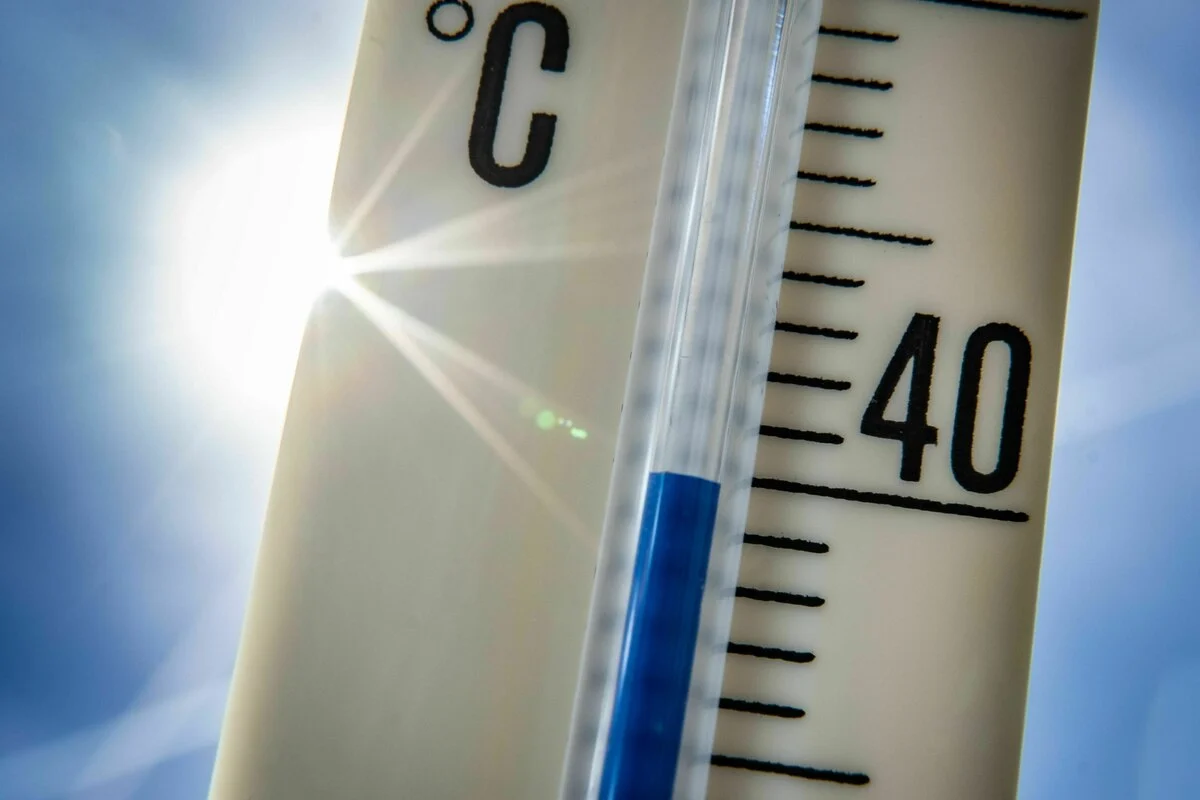
The summer of 2026 will be etched into European history not merely as a period of record-breaking temperatures, but as a humanitarian tragedy of unprecedented scale. A sobering analysis by British scientists has revealed that the 2026 heatwave claimed approximately 50,000 lives across urban centers in Europe—a figure that marks the highest heat-related mortality rate ever recorded. This devastating statistic serves as a visceral confirmation of the warnings issued by climate scientists for decades: the consequences of human-induced climate change are no longer a distant threat, but an immediate, life-altering reality.
The data, compiled by researchers at Imperial College London and the London School of Hygiene & Tropical Medicine, indicates that 65 percent of these deaths are directly attributable to anthropogenic global warming. As urban environments continue to trap heat and infrastructure remains inadequately prepared for the "new normal," the demographic impact of these extreme weather events is expanding beyond the elderly, claiming thousands of younger lives.
The Anatomy of the 2026 Heatwave: A Chronology of Crisis
The summer of 2026 was characterized by a series of relentless high-pressure systems that settled over the continent, turning cities into heat islands. While the entire season was marked by stifling temperatures—averaging 2.9 degrees Celsius above the 1991–2020 baseline in Western Europe—the catastrophe reached its nadir during a specific, agonizing two-week window.
The period between June 17 and July 1, 2026, proved to be the deadliest. During these 14 days, temperatures soared to an average of five degrees Celsius above historical norms for that time of year. This acute spike overwhelmed local healthcare systems and emergency services, which were largely unprepared for such a concentrated surge in heat-related illnesses, ranging from heatstroke and dehydration to cardiovascular and respiratory failure exacerbated by thermal stress.
The methodology used by the researchers provides a clear picture of this acceleration. By analyzing heat-related mortality data from over 850 urban centers across the EU, the United Kingdom, Norway, and Switzerland—a region home to 40 percent of the total population—the team compared actual reported deaths against a hypothetical model of what mortality rates would have looked like without the influence of human-emitted greenhouse gases. The resulting "excess mortality" figure—the 50,000 deaths—represents the specific human cost of the warming trajectory set in motion by industrial activity.
Supporting Data: A Disturbing Trend
To understand the severity of 2026, one must look at the trajectory of the preceding years. In 2022, a year previously considered an outlier, approximately 29,000 heat-related deaths were recorded in the same study area. At that time, 59 percent of those deaths were attributed to climate change.
In just four years, the number of deaths has nearly doubled, and the percentage of those deaths explicitly linked to climate change has risen from 59 to 65 percent. This upward trend suggests a non-linear progression; as the climate warms, the threshold at which human biological systems fail is crossed more frequently and by larger portions of the population.
Clair Barnes, a lead researcher in extreme weather and climate change at Imperial College London, did not mince words when discussing the findings. "We can say with a high degree of certainty that the summer of 2026 was the worst on record regarding heat-related mortality in large parts of Europe," she stated. "Behind these statistics are real people who lost their lives, and families who are grieving. It is a profound loss that underscores the urgency of the climate crisis."

The study also debunked the misconception that heatwaves are solely a threat to the elderly. While the elderly remain the most vulnerable group, the researchers highlighted that approximately 6,000 of the 50,000 victims were under the age of 65. This finding challenges urban planners to reconsider public health strategies, moving away from age-exclusive warnings and toward comprehensive, city-wide protective measures that account for the physiological toll of extreme heat on all citizens.
Official Responses and the Governance Gap
The scale of the 2026 disaster has triggered a frantic reassessment of government preparedness across the continent. However, responses have been uneven. In many European nations, heat adaptation strategies remain in the "assessment" or "planning" phase, a bureaucratic lag that epidemiologists warn is increasingly untenable.
Epidemiologist Pierre Masselot of the London School of Hygiene & Tropical Medicine has been vocal about the systemic failures of modern European cities. "It is becoming increasingly clear that our cities are poorly adapted to rising temperatures," Masselot noted. "We are operating in a climate that our infrastructure was never designed to handle. We need a rapid, systemic pivot toward cooling our urban environments."
Masselot’s recommendations for policymakers are threefold:

- Urban Greening: A massive expansion of green spaces—parks, vertical gardens, and tree-lined streets—to combat the "urban heat island" effect, where concrete and asphalt absorb and retain heat, keeping temperatures significantly higher than in surrounding rural areas.
- Infrastructure Reform: Retrofitting buildings to improve thermal efficiency and passive cooling, and reducing air pollution, which exacerbates the respiratory distress caused by high temperatures.
- Medical Resilience: Enhancing the capacity of public health systems to handle sudden spikes in heat-related emergency admissions, including better public cooling centers and more proactive outreach to vulnerable populations.
Despite these clear directives, many governments continue to prioritize short-term economic stability over the radical urban restructuring required to mitigate these risks. As the UN recently reported, the world is currently "dangerously far" from the 1.5-degree Celsius warming target, with current trajectories pointing toward a 2.8-degree rise. Without drastic policy shifts, the death toll of 50,000 in 2026 may eventually be viewed as a "mild" year in comparison to what lies ahead.
Implications for the Future: A New Era of Risk
The implications of the 2026 data are profound, touching upon everything from public health policy to the viability of European tourism and labor productivity.
Economically, the impact of such widespread mortality is massive, resulting in a loss of human capital and a surge in healthcare expenditure. Socially, it highlights the deepening inequality of the climate crisis; those living in lower-income, high-density urban areas with less access to air conditioning and fewer green spaces are disproportionately represented in the mortality statistics.
Furthermore, the 2026 heatwave serves as a wake-up call for the European insurance and housing sectors. If cities are increasingly prone to life-threatening heat, the insurability of property and the long-term desirability of certain urban centers will inevitably shift. The "Mediterraneanization" of Northern and Central Europe—a process where summers become characterized by prolonged droughts and extreme heat—requires a total rethink of how we design, build, and live in our cities.

The 2026 heatwave was not a "natural" disaster in the traditional sense. It was a man-made event, facilitated by decades of inaction. As the scientific community continues to refine its models and report its findings, the message to policymakers is no longer a request—it is a demand. The question is no longer whether we can adapt to a warmer world, but how quickly we can do so to prevent the next summer of record-breaking sorrow.
As the continent looks toward future summers, the shadow of 2026 hangs heavy. The scientific consensus is clear: the climate has changed, and our societies must change with it, or face the consequences of a planet that is becoming increasingly inhospitable to human life. The tragedy of 50,000 lives lost is a debt that cannot be repaid, but it can—and must—be the catalyst for an era of radical, necessary transformation.