By Nick Reimer
The world’s coral reefs, often described as the “rainforests of the sea,” are teetering on the precipice of a total ecological collapse. In a sobering announcement delivered at the IUCN (International Union for Conservation of Nature) summit in Yerevan, scientists have presented data that suggests a catastrophic trajectory for these vital marine habitats. According to the latest IUCN analysis, if current climate trends continue unabated, 96 percent of all shallow-water coral reefs could be lost by 2075. This is not merely a loss of biodiversity; it is the death of the primary engine of ocean health.
The Magnitude of the Crisis
Coral reefs are more than just vibrant underwater landscapes; they are the bedrock of marine life, supporting roughly 25 percent of all known ocean species. Their decline acts as an early warning system—a "canary in the coal mine"—for the health of our planet’s oceans.
Grethel Aguilar, Director General of the IUCN, did not mince words during the summit. "We know what is necessary: ambitious emissions reductions," she stated, emphasizing that the window for salvation is closing rapidly. The data indicates that we are no longer discussing a gradual decline, but an accelerated march toward extinction for these "ecosystem engineers."
A Chronology of Thermal Overload
To understand the urgency, one must look at the physical reality of ocean warming. Unlike sand or solid earth, water acts as a massive thermal sponge. According to a landmark study led by atmospheric physicist Lijing Cheng, the world’s oceans absorbed an staggering 228 zettajoules of energy between 1955 and 2019.
To put this astronomical figure into perspective, researchers translated this energy into the equivalent of the Hiroshima atomic bomb blast. The result is haunting: over the last quarter-century, the ocean has absorbed the equivalent of 3.6 billion Hiroshima-scale bombs. That is a statistical average of four atomic detonations worth of energy entering the world’s oceans every single second. This relentless influx of heat is the primary driver of the mass coral bleaching events we are witnessing today.
The Data: Tipping Points and Thresholds
The scientific consensus, led by the Intergovernmental Panel on Climate Change (IPCC), has long warned of these consequences. Their reports indicate that a global temperature increase of 1.5 degrees Celsius above pre-industrial levels would result in the loss of 70 to 90 percent of all coral reefs.
The reality has already bypassed these conservative estimates. Last year, the World Meteorological Organization (WMO) confirmed that global temperatures reached 1.55 degrees above pre-industrial levels. Furthermore, the 2025 "Global Tipping Points Report," presented at the COP30 climate summit in Belém, concluded that the earth has effectively crossed its first major climate threshold: the inevitability of near-total coral mortality. If humanity continues on its current trajectory—a warming path of 2.8 degrees Celsius—up to 99 percent of all coral reefs will vanish.

Biology of the Builders: The Symbiosis Under Siege
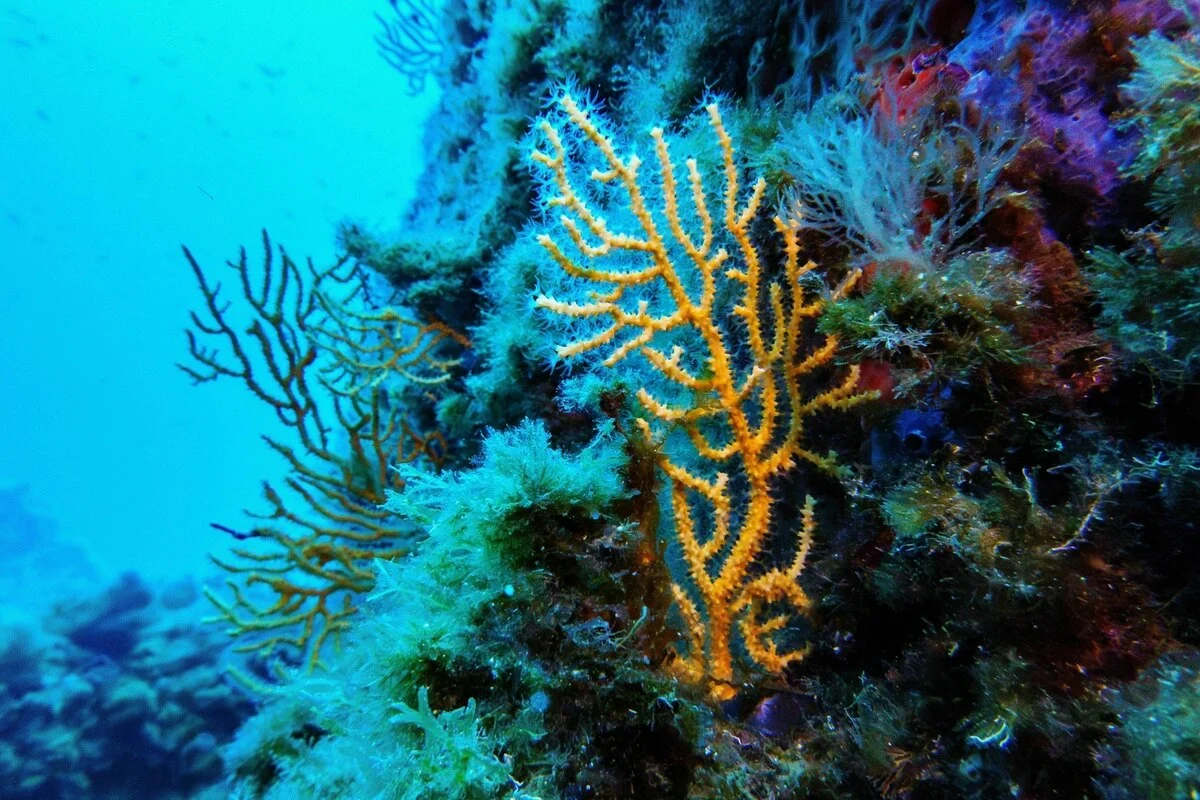
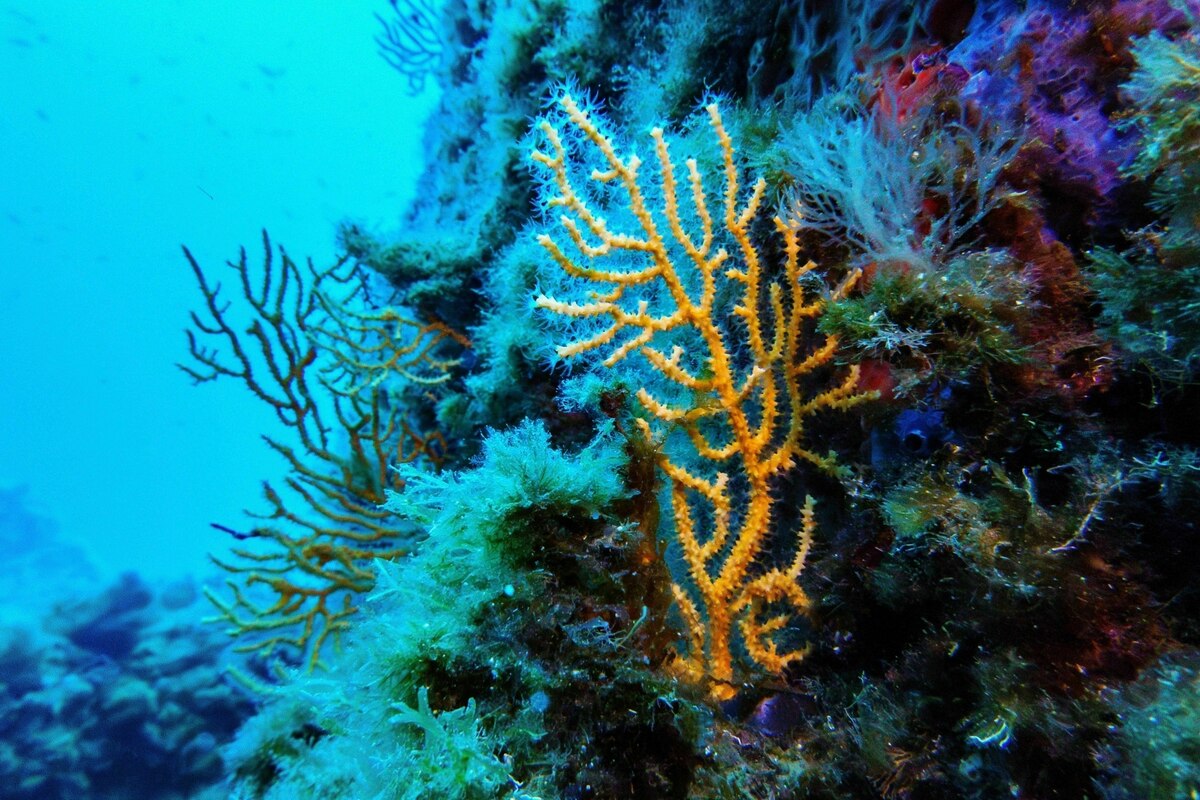
It is a common misconception that corals are colorful underwater plants. In reality, they are complex animals—cnidarians—that exist in a fragile, ancient symbiosis with microscopic algae known as zooxanthellae. This partnership has been a biological success story for approximately 500 million years.
The algae perform photosynthesis, providing the corals with the energy required for growth and the formation of their calcium carbonate skeletons. There are roughly 2,500 species of these "stone corals." Their legacy is monumental; they have constructed the largest biological structures on Earth. Landscapes like the Thuringian Basin in Germany, the Hohenlohe Plain, and the Kalbenstein are testament to the power of ancient coral, which once formed vast reef systems millions of years ago.
However, when water temperatures rise beyond a specific threshold, this delicate symbiosis fractures. The coral expels the algae, leading to "coral bleaching." The once-vibrant reef turns into a desolate, white skeleton landscape. While a bleached coral is not dead—it is merely starving and severely weakened—it requires a swift return to cooler temperatures to recover. In a warming ocean, these cool-down periods are becoming increasingly rare, making the death of the coral inevitable.
Current Status and Global Monitoring
The scale of the destruction is already visible. Current scientific assessments suggest that one-third of all reefs have already perished. Another 40 percent are classified as critically endangered, leaving only about one-third in a state that could be considered "relatively healthy."

Scientists are now documenting this destruction in real-time. In the Great Barrier Reef, researchers are using drone surveillance to map the extent of mass bleaching events as they happen. It is vital to note that this is not exclusively a tropical problem. Corals exist in cooler waters as well, including the Irish Sea and the deep, cold waters off the coast of Norway, where they face different but equally challenging stressors.
Implications for the Future
The IUCN analysis focused on warm-water, shallow-reef ecosystems covering a total area roughly the size of Syria. The findings indicate that the combination of marine heatwaves, ocean acidification, and overfishing is creating a "perfect storm" for collapse.
"The risk of a coral reef collapse is increasing," says Mishal Gudka, the scientific lead of the project. However, he offers a glimmer of hope, albeit a fragile one: "This should shake us awake, not lead us to despair. Coral reefs have a remarkable capacity to recover from bleaching if the stressors are removed."
The Path Forward: A Political and Ecological Imperative
The survival of these ecosystems depends entirely on the global transition away from fossil fuels. The "Global Tipping Points Report" and the IUCN findings serve as a final, urgent warning to world leaders. The destruction of these reefs is not just an environmental tragedy; it is an economic and humanitarian disaster. Millions of people rely on coral reefs for coastal protection against storms, for fisheries, and for tourism.

If we allow these ecosystems to die, we lose more than just a beautiful tourist destination; we lose a vital component of the Earth’s biological machinery. The cost of inaction is now quantifiable in the billions of dollars and in the permanent loss of species that have existed since long before humanity arrived.
As we look toward the next decade, the scientific community is unified in its message. We have the knowledge, the technology, and the capability to reduce emissions. What remains in question is the political will to treat the ocean’s fever before it is too late. The death of the world’s reefs is not yet a fait accompli, but it is a trajectory we are currently choosing. By choosing to ignore the data, we are choosing to dismantle the very foundations of life in our oceans.
The question remains: will the global community act before the last of the reefs turns to stone, or will we look back at the 2020s as the decade when we let the world’s most vibrant ecosystems slip into history? The answer lies in the emissions statistics of the next five years. The clock is not just ticking—it is screaming for change.