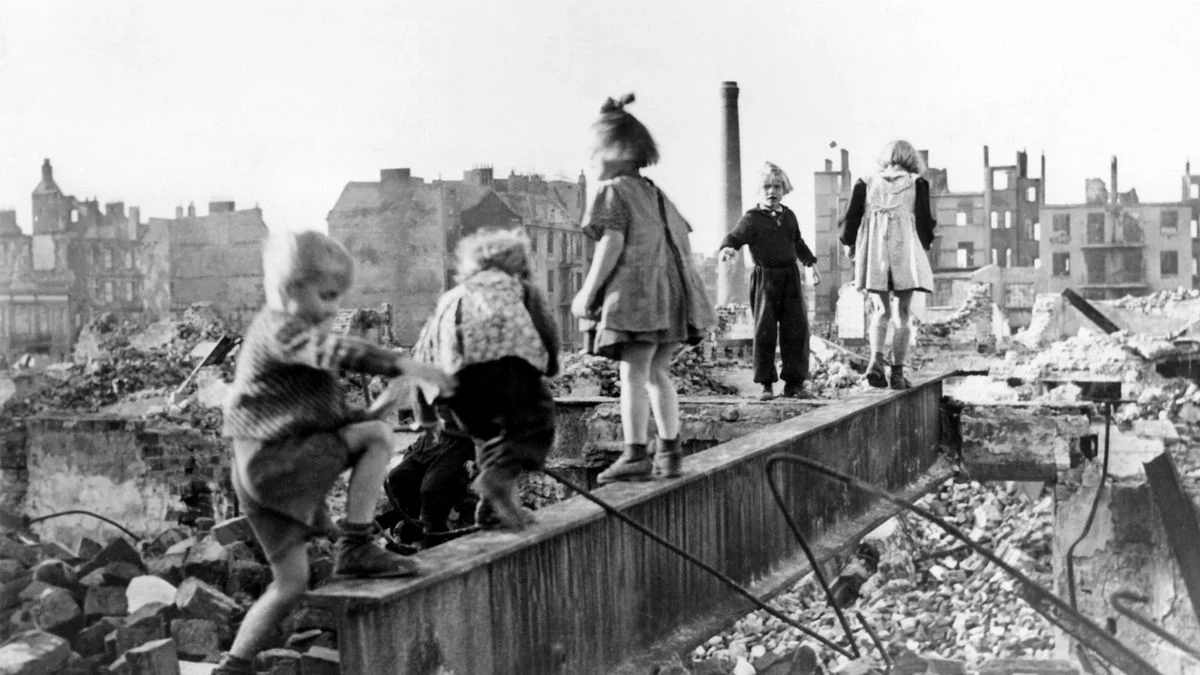
For decades, the silence was the loudest sound in many German living rooms. Following the collapse of the Third Reich, a generation of survivors—and their children—chose to bury the past beneath a veneer of "economic miracle" prosperity. Today, however, as the last eyewitnesses pass away, a new generation is turning to the archives. With the digitization of massive historical records, including those of the NSDAP, families are increasingly discovering that their ancestors were not merely passive bystanders, but active participants in the machinery of the Nazi state.
Addressing this "family shadow" is a complex, often painful process that requires more than just historical curiosity; it requires a psychological and ethical framework for reconciling the past.
The Archive as a Mirror: Confronting Ancestral Truths
The democratization of historical data through centralized digital archives has fundamentally altered the landscape of German remembrance. Where once a researcher had to navigate labyrinthine physical bureaucracy, digital databases now allow for rapid cross-referencing of names, birth dates, and service records.
The discovery of a relative’s party membership card (the Mitgliedskarte) or service records in the SS-Stammrolle often acts as a catalyst for a profound identity crisis. For many, the grandfather who was remembered as a kind patriarch is suddenly revealed as a mid-level functionary in the bureaucracy of the Holocaust.
Chronology of the Confrontation
- 1945–1960s: The Era of Silence. Post-war reconstruction focused on forgetting. The "Stunde Null" (Zero Hour) narrative framed the German population as victims of a regime they had not fully understood.
- 1968–1980s: The Intergenerational Conflict. The student movement began to challenge the silence of the fathers, leading to the first major public debates regarding complicity and collective guilt.
- 1990s–2010s: The Academic Shift. The opening of the Stasi archives and the digitization of the Arolsen Archives allowed for the first large-scale tracing of individual movements during the war.
- 2020–Present: The Digital Archive Revolution. With AI-assisted indexing, families can now scan thousands of documents in seconds, bringing a newfound intimacy to the research process.
The Psychological Burden: Why We Must Talk
Psychologists suggest that the "inherited silence" often manifests in the next generation as a form of "transgenerational trauma." When family secrets are kept, they do not disappear; they mutate into unspoken anxieties.
When a family member discovers, for example, that their grandfather was a block warden or a participant in the "Aryanization" of Jewish-owned businesses, they are faced with a paradox: how to love the person who provided for the family while condemning the actions that defined their public life.
The Stages of Discovery
- Denial: The initial reaction is often to assume a clerical error or to claim that the relative was a "nominal member" who had no choice.
- Validation: Moving from anecdotal family lore to documented fact. This is the stage where the digital archive becomes indispensable.
- Integration: The difficult work of acknowledging the ancestor’s humanity without excusing their crimes.
- Legacy Management: Deciding how this knowledge affects the family’s own values and their role in contemporary society.
Supporting Data: The Scale of Complicity
The sheer scale of the NSDAP’s reach is often underestimated. At its peak, the party claimed over 8 million members. When you include the various auxiliary organizations—the Hitler Youth, the League of German Girls (BDM), and the German Labour Front—the vast majority of the adult population was entangled in the Nazi state apparatus.
Statistical modeling of these archives suggests that for every "perpetrator" identified in a file, there are at least three to four descendants currently struggling with the implications of that record. This is not a fringe issue; it is a fundamental aspect of the German national identity.
Official Responses and Institutional Support
The German government, through the Federal Archives (Bundesarchiv), has invested heavily in making these records accessible. The official stance is that historical transparency is the only inoculation against the rise of future totalitarianism.
"We do not expect the grandchildren to carry the guilt of their grandparents," says Dr. Elena Fischer, a historian specializing in provenance research. "But we do expect them to carry the responsibility of remembrance. The archive is not a tool for punishment, but a tool for truth."
Organizations such as Gegen Vergessen – Für Demokratie (Against Forgetting – For Democracy) provide resources for families trying to navigate these discoveries. They emphasize that the act of uncovering the past is an act of civic engagement. By identifying the specific mechanisms of how their ancestors were radicalized, descendants become better equipped to recognize the early warning signs of extremism in the modern era.
The Implications: A New Ethic of Remembrance
What happens once the document is found? The implications are far-reaching.
First, there is the Historical Implication. The revision of family history adds layers of complexity to our understanding of the Third Reich. History is no longer just a collection of dates and battles; it is a tapestry of millions of individual choices—often cowardly, sometimes opportunistic, rarely heroic.
Second, there is the Societal Implication. As Germany faces a rise in right-wing populism, the lesson of the family archive is vital. It reminds us that the Nazis were not an external occupying force, but our own neighbors, our own colleagues, and our own blood. If we can understand how they fell for the siren song of authoritarianism, we are less likely to fall for it ourselves.
Finally, there is the Personal Implication. Moving from a state of "unconscious inheritance" to "conscious memory" is a form of emancipation. By bringing the hidden documents to the kitchen table, the family breaks the cycle of secrecy. They move from being victims of their history to being the curators of it.
A Practical Guide to Starting Your Research
If you suspect your family has a hidden chapter in the Nazi archives, experts suggest a systematic approach:
- Step 1: Gather Names and Locations. The more precise the geographical data (the Kreis or Gau), the easier the search.
- Step 2: Utilize the Federal Archives. Use the digital portal of the Bundesarchiv to request a search of the central party correspondence.
- Step 3: Consult the Arolsen Archives. Especially important if your family lived in areas affected by deportations or displaced persons.
- Step 4: Contextualize. Do not read a file in isolation. Research the history of the specific unit or party branch your ancestor belonged to.
Conclusion: The Responsibility of the Future
The process of confronting the family past is not a task with a definitive end date. It is a continuous practice. As digital tools become more sophisticated, the "hidden" becomes "visible" at an accelerating rate.
We must move beyond the binary of "good Germans" and "bad Nazis." The reality is far more uncomfortable: it is the story of ordinary people in extraordinary, horrific circumstances. By choosing to look into the archives, we are not just settling accounts with the dead. We are ensuring that the lessons of the past are not buried alongside them.
The archive is the mirror of the nation. It is time we looked into it, fully and without reservation, for only in the truth can we find a path forward. The legacy of the NSDAP is not just a stain on the record of the 20th century; it is a warning for the 21st. Addressing it within the family is the first step toward safeguarding the democratic future for which so many have sacrificed, and which we are now tasked to protect.