VIENNA – The Eurovision Song Contest (ESC) 2026 has reached a pivotal juncture. Following a high-stakes second semi-final in the Austrian capital, the field for Saturday’s Grand Final is now officially set. As the dust settles in the Wiener Stadthalle, the focus of the music world shifts to the culmination of the 70th edition of this global phenomenon—a milestone anniversary that has already delivered significant surprises, emotional triumphs, and high-octane performances.
The Finalists Emerge: A Night of High Stakes
The second semi-final, held on Thursday evening, served as the final filter for the remaining hopefuls. After a tense evening of voting, ten nations secured their passage to the Grand Final, joining the qualifiers from Tuesday’s opening round and the "Big Five" nations—France, Germany, Italy, Spain, and the United Kingdom—who receive automatic qualification.
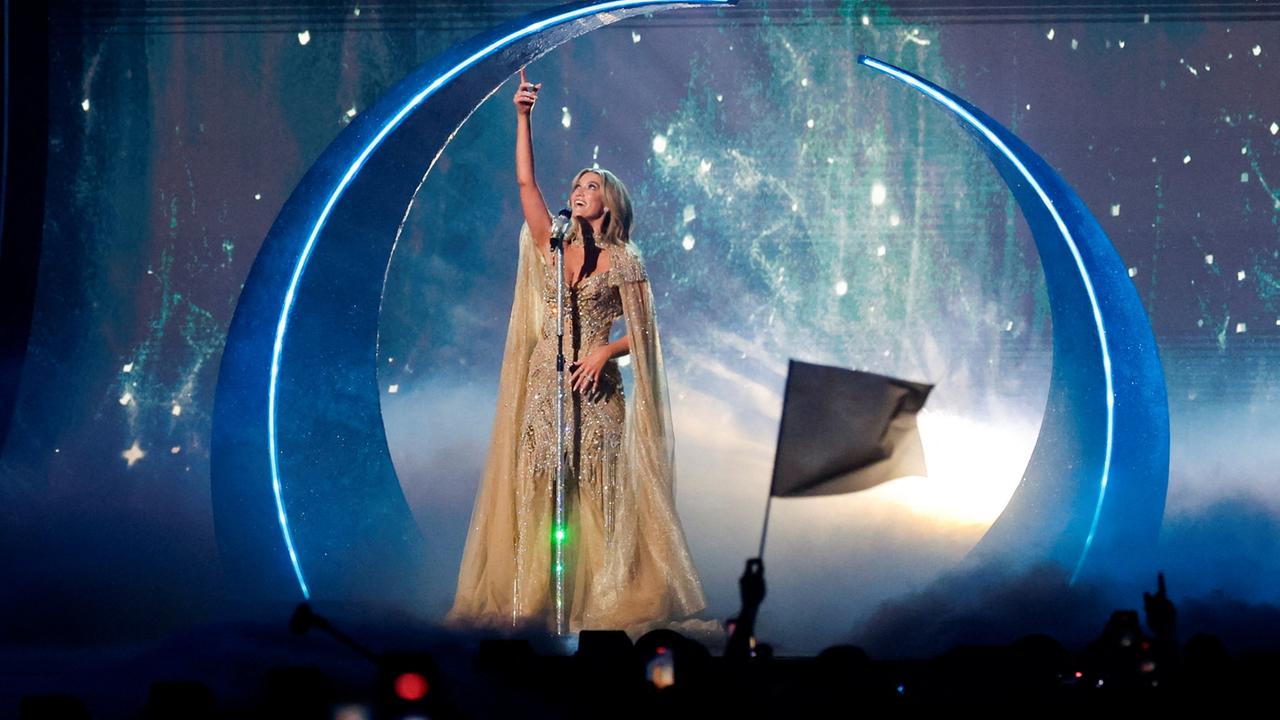
The star-studded evening was headlined by two major betting favorites who lived up to the immense pressure of the stage. Romania’s Alexandra Capitanescu mesmerized the audience and juries alike with her powerful vocal delivery of "Choke Me," a track that has been praised for its raw emotional intensity and modern production. Similarly, Australian superstar Delta Goodrem cemented her status as a frontrunner with a spellbinding performance of her ballad, "Eclipse." Goodrem, whose international profile adds significant prestige to this year’s competition, delivered a masterclass in stage presence, securing her spot in the finale with apparent ease.
Joining them in the final roster are entries from Bulgaria, Ukraine, Norway, Malta, Cyprus, Albania, and the Czech Republic, as well as Danish contender Søren Torpegaard Lund, whose poignant performance of "Før Vi Går Hjem" resonated deeply with voters across Europe.
The Heartbreak of Elimination
In the high-pressure environment of the ESC, the margin between triumph and elimination is razor-thin. While ten nations celebrated their advancement, five countries saw their 2026 Eurovision journey come to an abrupt end. The most notable casualty of the evening was Switzerland, whose entry failed to garner enough combined support from the professional juries and the public vote. Joining Switzerland on the sidelines are the delegations from Azerbaijan, Luxembourg, Armenia, and Latvia. For these nations, the focus now shifts toward internal reviews and preparations for the 2027 season.
Chronology of the 2026 Selection Process
The path to the 70th Grand Final has been a carefully orchestrated two-part process.
- Tuesday, May 12: The first semi-final established the initial momentum, seeing strong performances from early favorites including Finland and Greece. Their success ensured they would remain in the running for the coveted glass trophy.
- Thursday, May 14: The second semi-final finalized the field. The evening was characterized by a diverse array of genres, ranging from operatic displays to contemporary synth-pop, reflecting the evolving musical landscape of the Eurovision brand.
- Friday, May 15: The "Day of Reflection" and technical rehearsals. Delegations prepare for the final broadcast, fine-tuning choreography and sound design to ensure the live show meets the high production standards expected of the 70th anniversary.
- Saturday, May 16: The Grand Final. 25 acts will compete for the title in a show watched by an estimated global audience of 160 million viewers.
Supporting Data: The Dynamics of the 70th Anniversary
As the competition reaches its climax, the statistical profile of this year’s event is notable. With 25 countries competing in the Grand Final, the competition remains as diverse as ever. France’s representative, the singer Monroe, utilized the semi-final stage to showcase her vocal prowess with the operatic "Regarde!" As an automatic finalist, Monroe did not face the pressure of the vote, but her performance was widely regarded as a benchmark for the quality of the final show.
Germany’s Sarah Engels is also among those waiting in the wings. Engels, who is set to perform "Fire," has been working extensively with her production team in Vienna to optimize her stage design. For Germany, a country looking to improve upon its recent historical performance, the anticipation surrounding Engels’ appearance is palpable.
Official Responses and Stakeholder Perspectives
The European Broadcasting Union (EBU), the organizers of the ESC, expressed satisfaction with the production values and the seamless integration of the 70th-anniversary celebrations. "The standard of performance we have witnessed this week is a testament to the enduring power of music to unite nations," said an EBU spokesperson in a brief press statement following the second semi-final.
The delegations of the qualifying countries have been quick to celebrate, with social media channels for the Australian and Romanian entries reporting record-breaking engagement metrics. Conversely, the Swiss delegation expressed their disappointment but maintained a gracious posture, thanking their fans for the support throughout the national selection process. "While we are disappointed not to be participating in the final, the Eurovision experience remains a unique opportunity to share our culture with the world," the Swiss representative noted in a statement released shortly after the results were announced.
Implications for the Grand Final
The field of 25 is now balanced between established powerhouses and rising stars. The inclusion of heavyweights like Australia and Romania sets the stage for a competitive finale that analysts suggest could be one of the closest in recent memory.
The "Big Five" Factor
The participation of the "Big Five" is more than a formality. These nations provide the primary financial backing for the Eurovision Song Contest, and their presence in the final is essential for the broadcast’s commercial viability. Germany’s Sarah Engels and France’s Monroe serve as pivotal components of the Saturday night lineup. Their performances, unaffected by the qualification stress, allow them to present fully realized artistic visions that set a high bar for the competing nations.
The Competitive Landscape
As we approach the finale, the discourse has moved from "who will qualify" to "who will win." The juxtaposition of Delta Goodrem’s polished, ballad-heavy approach against the more experimental, high-tempo offerings from nations like Finland and Greece provides a fascinating contrast for the audience. The winner will be determined by a complex system of 50% jury voting and 50% public televoting, a system designed to reward both technical musicality and broad audience appeal.
Conclusion: The Final Countdown
As Vienna prepares to host the world on Saturday, the energy in the city is electric. The Eurovision Song Contest has once again proven its ability to captivate the continent, providing a platform for cultural exchange and musical innovation. Whether the trophy returns to a nation with a rich history of victories or finds a new home in a country seeking its first win, one thing is certain: the 70th Eurovision Grand Final will be a historic event.
With 25 nations, 25 songs, and millions of votes yet to be cast, the stage is set. Saturday night promises to be a celebration of everything that has made the ESC a cultural institution for seven decades—an evening where borders blur, and the focus remains solely on the power of the song. As the curtains rise on the final night, the eyes of the world will be on Vienna, waiting to see who will be crowned the champion of 2026.