

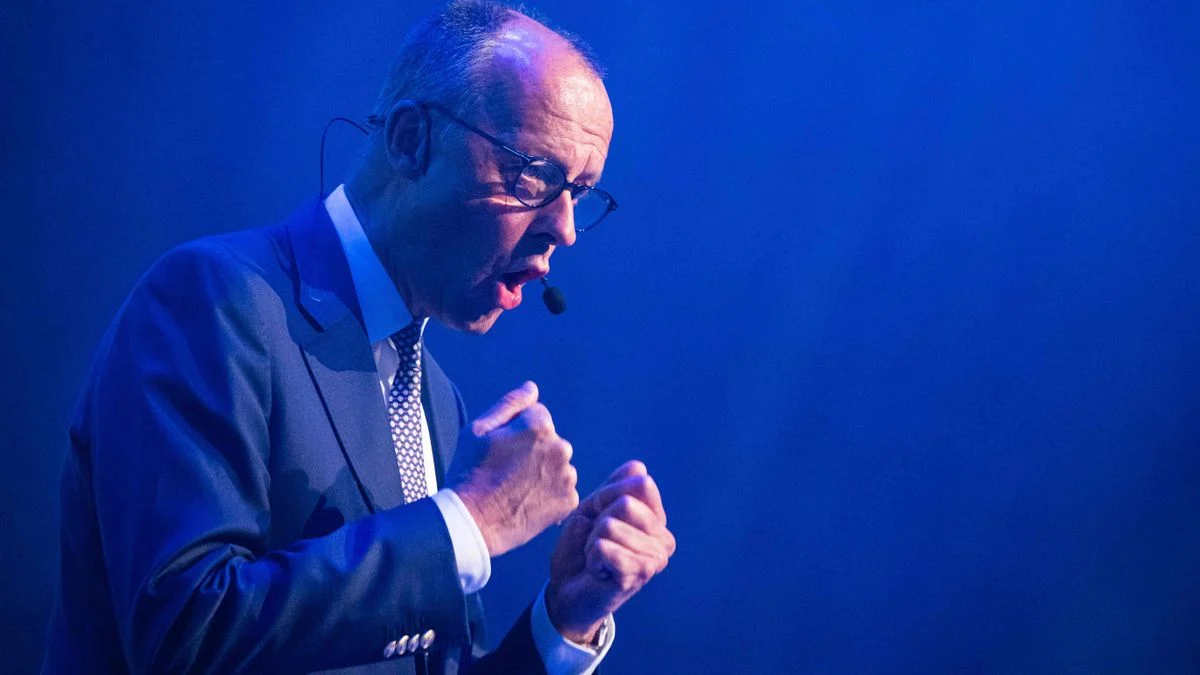
In the hallowed halls of the German Bundestag and across the sprawling landscape of the German media, a curious, almost desperate sentiment has taken root. It is a collective, cross-partisan yearning for a specific type of performance: a grand, singular oration by CDU leader and Chancellor-hopeful Friedrich Merz. The expectation is that, somehow, a single, impeccably crafted address could mobilize, inspire, and electrify a nation currently mired in economic malaise and political fatigue.
The Anatomy of a National Desire
The premise behind this mounting pressure is straightforward, if perhaps naive: that a "blood, sweat, and tears" speech, delivered with the gravity of a statesman, could act as a catalyst to jolt Germany out of its current state of lethargy. Political commentators, ranging from the center-left to the conservative press, have begun to view this hypothetical speech as the missing piece in Germany’s recovery puzzle.
The comparison is frequently drawn to Angela Merkel’s seminal 2020 televised address at the onset of the COVID-19 pandemic. That speech, widely regarded as a masterclass in empathetic leadership, provided a sense of shared purpose during an existential threat. Now, observers are asking: can Friedrich Merz provide a similar "political campfire" around which a divided and frustrated country can gather?
A Chronology of Expectations
The demand for a "grand address" did not emerge in a vacuum. It is the result of a compounding frustration with the current state of governance and the perceived lack of a unifying vision.
- Early 2025: As economic indicators began to show stagnation, the call for a "national narrative" from the opposition leader began to gain traction in op-ed columns.
- The SPIEGEL Interview: In a recent, high-profile exchange with DER SPIEGEL, Friedrich Merz was directly confronted with these expectations. His response was telling; he noted that the interviewers were far from the first to suggest he adopt a more Churchillian tone. He seemed weary of the trope, signaling that the burden of such a speech is often overestimated by those who demand it.
- The "Campfire" Discourse: Die Zeit journalist Mariam Lau prominently championed the idea of a "political campfire" in the Deutschlandfunk news cycle, framing it as a necessary step for national cohesion.
- The DGB Congress (May 2026): The tension culminated during the German Trade Union Confederation (DGB) congress. In what many interpreted as a high-stakes moment, Merz attempted to outline a path forward for the German economy. Instead of a unifying moment, he was met with boisterous jeering and vocal opposition. Lau later dryly noted that if this was the long-awaited "blood, sweat, and tears" speech, it was a "rather cold campfire."
- Calls from the Greens: Most recently, Green party leader Felix Banaszak joined the chorus, suggesting that the national situation—characterized by structural shifts and energy concerns—demands a formal, televised address from the Chancellor-candidate.
The Rhetorical Paradox of Friedrich Merz
To understand why this demand is both so persistent and so problematic, one must analyze the rhetorical history of Friedrich Merz. He is a politician whose career has been defined by precision, fiscal conservatism, and a penchant for confrontational debate rather than unifying oratory.

The Pyromane as Fire-Maker
Critics point to a recurring theme in Merz’s public life: his tendency to ignite controversy rather than consensus. His supporters admire his "straight talk," but his detractors argue that his style is fundamentally ill-suited for the role of a national healer. The paradox is that those asking for a unifying speech are asking a man known for his sharp edges to suddenly become a rounded, calming presence.
The Expectation Gap
The belief that a speech can solve structural issues—such as the digital deficit, the slow pace of bureaucratic modernization, and the complexities of the energy transition—reflects a "magical thinking" currently plaguing German political discourse. It assumes that the nation’s problems are primarily psychological or communicative, rather than systemic and material.
Supporting Data: The Climate of Public Opinion
Public sentiment in Germany is currently characterized by a "wait-and-see" approach, punctuated by bouts of intense dissatisfaction. According to recent polling data, the electorate is deeply divided:
- Trust in Institutions: Trust in the traditional party system remains at a historic low. A significant portion of the electorate feels that no single leader, including Merz, is currently capable of articulating a vision that bridges the gap between urban economic centers and rural industrial hubs.
- Economic Anxiety: Data from the Ifo Institute consistently highlights the concern among German SMEs regarding energy costs and regulatory burdens. When citizens demand a "speech," they are often actually demanding an economic plan. The tragedy for a politician like Merz is that a plan, no matter how detailed, rarely satisfies the emotional hunger for a "pep talk."
- Media Polarization: The "demand" for this speech is largely a media-driven phenomenon. Digital engagement metrics show that while the idea of a grand speech generates significant traffic, actual public discourse remains focused on tangible outcomes (prices, wages, taxes) rather than rhetorical flourishes.
Official Responses and Political Maneuvering
The political establishment is playing a delicate game. By calling for a speech, political rivals (like the Greens) are essentially setting a trap. If Merz refuses, he appears detached or incapable of leadership. If he complies and the speech fails to move the needle, he looks ineffective.
- The CDU/CSU Perspective: Insiders close to Merz argue that he is a "doer, not a talker." They believe that a speech without a legislative victory to back it up would be perceived as empty grandstanding.
- The Government’s Stance: The incumbent coalition, wary of Merz’s rising poll numbers, has largely remained silent on the "speech" debate, recognizing that any comment would only elevate the importance of the opposition leader’s potential remarks.
Implications for the Future of German Governance
The focus on a "national address" suggests a fundamental change in how the German electorate views the Chancellor’s office. There is a shift away from the traditional, technocratic understanding of the position toward a more "presidential," personality-driven model.

The Risk of Performative Politics
If the expectation for the "great speech" continues to grow, it risks turning German politics into a series of performative events rather than a contest of substantive policies. A speech can provide a moment of clarity, but it cannot replace the tedious, grinding work of coalition negotiation and parliamentary consensus-building.
Can Merz Adapt?
The question remains: is Friedrich Merz capable of the transformation his supporters desire? To deliver a truly resonant address, he would have to abandon his signature combative style—a style that has served him well in party primaries but may be his greatest obstacle in a general election. He would need to project a vulnerability that he has thus far avoided.
Conclusion: Beyond the Rhetoric
The obsession with a "national pep talk" is a symptom of a country that feels it has lost its compass. Whether or not Friedrich Merz delivers this speech is perhaps less important than what it says about the state of the German public. We are looking for a singular voice to tell us who we are and where we are going, because we have lost the ability to agree on those answers ourselves.
Ultimately, the "campfire" that commentators are so desperate for cannot be lit by a single orator. It requires fuel, air, and, most importantly, a dry space in which to burn. As of now, the political landscape in Germany remains damp with polarization and doubt. Whether Merz is the man to light the match, or merely another politician destined to blow it out, remains the defining question of the coming election cycle. The nation waits—not just for words, but for the hard, unglamorous work of reconstruction that must follow any speech worth hearing.












Leave a Reply