The streets of France are once again bearing the scars of profound societal fracture. Beyond the flickering images of burning cars, shattered storefronts, and the pervasive scent of acrid smoke, there lies a deeper, more systemic crisis. The recent waves of unrest are not merely isolated incidents of violence; they are the manifestations of a generation that feels systematically abandoned by the very state that promises them "Liberté, Égalité, Fraternité." As France grapples with these challenges, it is becoming increasingly clear that the Republic must engage in a painful but necessary reckoning with its own foundational values.
The Faces Behind the Unrest: A Generation Ignored
The narratives of those on the front lines—Arthur, Joseph, and Soukeyna—defy the simplistic, often polarized portrayal provided by mainstream political discourse. These are students of mathematics, political science, and secondary education, not professional agitators. They took to the streets not to engage in senseless destruction, but to demand a future where their educational institutions are not crumbling around them.
The youth revolt currently shaking the foundations of French society is symptomatic of a profound disconnect. It is a rebellion against the stagnation of public services, the scarcity of educators, and the slow erosion of the social contract. When these young people look at their school buildings, they see peeling paint and broken infrastructure; when they look at their prospects, they see a state that has effectively written off their potential. The question they pose is fundamental: What does the Republic actually offer its youth today?
A Chronology of Disenchantment
To understand the current explosion of frustration, one must look back at the trajectory of the French socio-political landscape. The spark for the 2023 riots was the tragic death of 17-year-old Nahel, who was killed by police during a traffic stop. However, this incident served merely as a catalyst for a long-simmering rage.
Much like the 2005 suburban riots, the recent unrest revealed deep-seated structural issues. In 2005, then-President Jacques Chirac acknowledged the corrosive nature of discrimination, famously stating, "We will not create anything lasting if we do not fight this poison of discrimination." He urged the nation to view the children of the banlieues (suburbs) as sons and daughters of the Republic, regardless of their background.
Yet, in the years since, that message has been largely ignored by the political establishment. The cyclical nature of these riots—from the Gilets Jaunes (Yellow Vests) in 2018 to the current youth-led protests—demonstrates that the "diagonal of the void"—that 1,500-kilometer stretch of rural and semi-rural France suffering from infrastructural decay—has now merged with a "diagonal of frustration" that spans from the forgotten suburbs to the heart of urban centers.

Supporting Data: The Anatomy of Discrimination
The frustration felt by these young people is not anecdotal; it is supported by rigorous data. The French human rights ombudsman has long highlighted the disproportionate nature of police interactions. Young men perceived to be of Arab or Black descent are four times more likely to be subjected to identity checks than their white counterparts. The disparity is even more staggering when it comes to searches and detentions, where the risk factor is twelve times higher.
Furthermore, economic discrimination remains a pervasive hurdle. Studies consistently show that job applicants with names or addresses associated with "problem" suburbs are systematically sidelined, regardless of their qualifications. When a young person is told that the color of their skin or their postal code dictates their treatment by the state, the Republican promise of equality ceases to be a reality and becomes a bitter irony.
Official Responses and Political Polarization
The response from the French government has been characterized by many as both reactive and dismissive. Instead of initiating a meaningful dialogue with student unions and community representatives, the administration has frequently resorted to blame-shifting. By pointing fingers at the far-left party La France Insoumise for "orchestrating" the protests, the government avoids the more difficult task of addressing the underlying grievances.

The political right, represented by figures like Marine Le Pen and Éric Zemmour, has utilized the chaos to amplify a narrative of "anarchic immigration." By labeling the protesters as "hordes of barbarians," they further alienate the very citizens they are supposed to represent. This rhetoric serves to dehumanize the protesters and justifies a heavy-handed, militarized security approach rather than a social-policy solution.
Meanwhile, President Emmanuel Macron’s perceived aloofness—epitomized by his infamous comment suggesting that an unemployed person need only "cross the street" to find work—has become a symbol of a governing style that is seen as elitist and disconnected from the harsh realities of the working class.
Implications: A Crisis of Institutional Trust
The implications of this growing divide are severe. An Ipsos survey from the summer revealed that only a quarter of French citizens aged 18 to 29 believe that the political class understands their concerns. A staggering 80% believe that those in power are failing to prepare for the future. As sociologist Michel Maffesoli noted, the youth no longer recognize themselves in the institutions or the elites who are supposed to represent them.

This lack of trust has created a dangerous feedback loop. When the government refuses to meet with student representatives or address legitimate complaints, young people are left with the impression that only violence can force the state to pay attention. This is a catastrophic failure of the democratic process.
The Path Forward: Reclaiming the Republic
The protests are no longer confined to the banlieues. A new, cross-class solidarity has emerged among the 18-to-25-year-old demographic. Whether in affluent districts or marginalized neighborhoods, young people are united by common struggles: the inability to find affordable housing, the instability of short-term employment contracts, and a mounting anxiety regarding the climate crisis. They are united against "La France à Macron"—a vision of a country where policy is dictated from the top down, and the voices of the populace are considered an afterthought.
For France to move beyond this cycle of unrest, it must undergo a profound transformation. This is not merely about increasing the police budget or implementing curfews, as the government has attempted. It is about a structural commitment to the values of the Republic. It requires:

- Ending Discriminatory Policing: The state must overhaul its relationship with minority communities, moving away from systemic profiling toward community-based policing that respects civil rights.
- Educational Equity: The Republic must invest heavily in schools in underprivileged areas, ensuring that a child’s zip code does not determine their access to quality education or future opportunities.
- Genuine Political Engagement: The government must cease its dismissive rhetoric toward activists and student organizations. True leadership involves listening to the "diagonal of frustration" and recognizing that these young people are not enemies of the state, but stakeholders in its future.
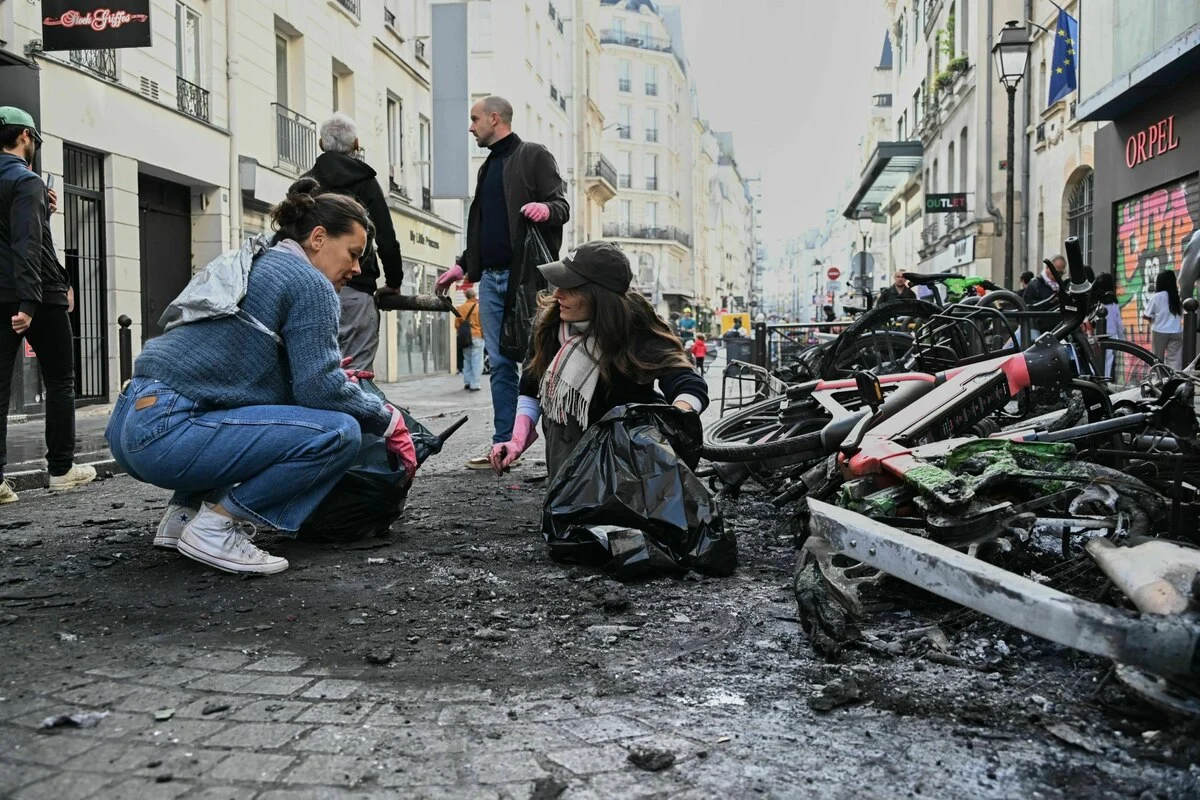
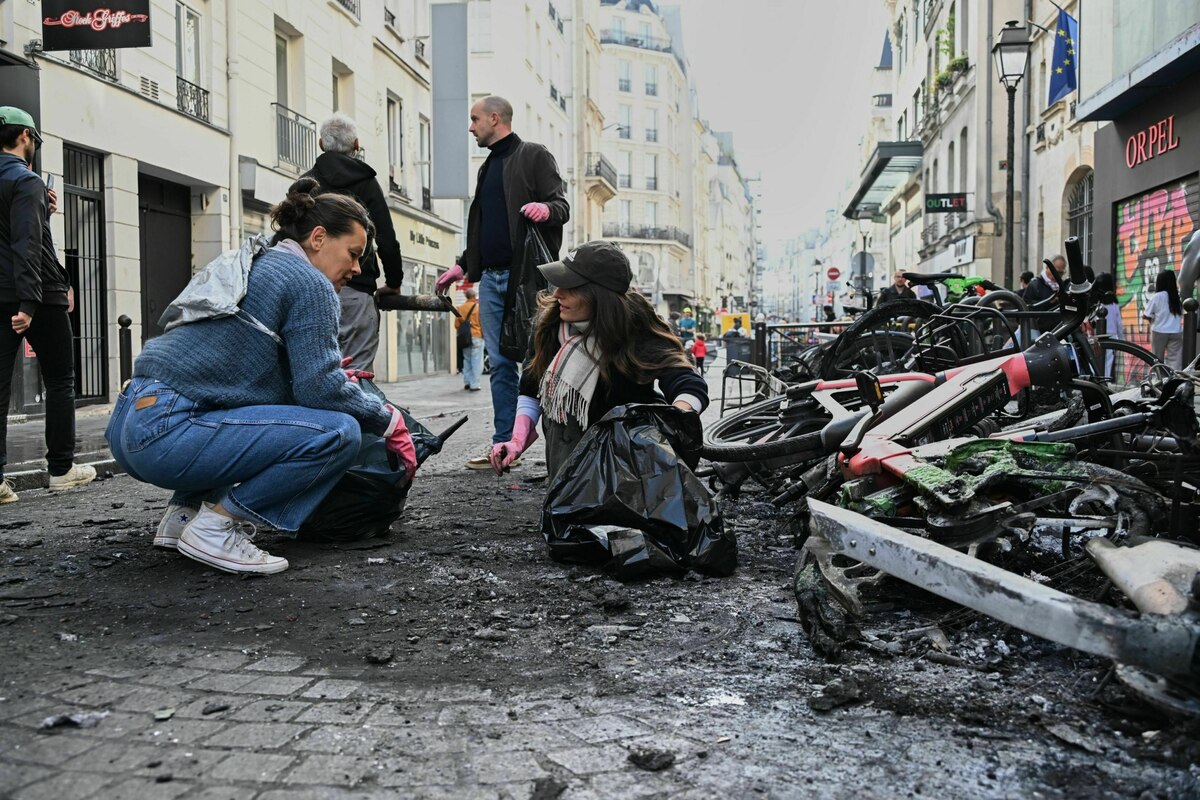
The images of people cleaning up the streets after the protests—many of them the very residents who have suffered most under current policies—tell a story of resilience. These citizens are doing the work of the Republic, literally and figuratively, while their leaders remain trapped in a cycle of denial and reaction. Unless the French state begins to treat all its citizens as equal, legitimate sons and daughters of the Republic, the fire of resentment will continue to smolder, waiting for the next spark to ignite a deeper, more profound reckoning.