
Berlin/Amherst – In a world grappling with persistent inflation and a palpable sense of economic insecurity, the concept of "affordability" has surged from a niche concern to a defining battleground in political discourse. This shift, profoundly articulated by economist Isabella Weber, forms the core of her urgent call for an "anti-fascist economic policy" – a framework designed to safeguard democracy by prioritizing human dignity and economic stability over unchecked market forces.
Weber, an Associate Professor of Economics at the University of Massachusetts Amherst and a prominent voice in the global inflation debate, argues that the prevailing economic strategies are not only failing to address the fundamental issues of affordability but are inadvertently creating fertile ground for the rise of right-wing extremism. Her recent book, "Antifaschistische Wirtschaftspolitik," lays out a compelling case for a re-evaluation of state intervention, particularly through strategic price controls and public buffer stocks for essential goods.
Main Facts: Affordability at the Forefront of a Fractured World
The interview with Professor Weber, conducted amidst the backdrop of Berlin’s recent elections where affordability dominated discussions, and the federal government’s controversial fuel price package (including a price cap and the prospect of an excess profit tax), highlights a critical juncture for economic policy. Weber observes that "affordability has moved from a fringe issue to a central campaign theme – not just in Germany." She points to the United States, where it is central to nearly all Midterm election campaigns, and to the United Kingdom, where it is a key element of Andy Burnham’s agenda, as well as in German states like Mecklenburg-Vorpommern under Manuela Schwesig. "Affordability is the buzzword of the hour," she states, underscoring its universal political resonance.

However, Weber critically dissects the German government’s response, particularly the fuel price package. She contends that such measures miss the fundamental point. "For me, the question arises: What is the essential good at stake? Fuel is not actually the essential good, but mobility – the ability to move," she explains. The current measures, she argues, focus solely on fuel prices, neglecting a holistic approach to mobility.
Instead, Weber advocates for a comprehensive package that would:
- Reintroduce a €9 "Deutschlandticket" (Germany Ticket): Rather than raising its price to €66.80 by 2027, making public transport less accessible.
- Implement a speed limit: A straightforward measure to save fuel where savings can easily be made.
- Introduce a bicycle bonus: Incentivizing sustainable and active forms of mobility.
Her vision is clear: "In an energy crisis, it is crucial to make alternatives to cars as attractive as possible while simultaneously ensuring that fuel remains affordable for those who depend on their cars." This dual approach aims to promote sustainable alternatives without penalizing essential car users.

Chronology: A Global Crisis of Affordability and Trust
Professor Weber’s analysis traces the current crisis of affordability and its political ramifications through a series of interconnected events and historical developments, presenting a chronological unfolding of economic shocks that have eroded public trust and fueled extremist narratives.
The Rise of Affordability as a Global Political Imperative:
Initially a topic often relegated to specialized economic debates, affordability has, in recent years, exploded into the mainstream political consciousness. This elevation is not accidental but a direct consequence of sustained economic pressures on households worldwide. The interview highlights its prominence in diverse political landscapes, from the fiercely contested US Midterms, where kitchen-table economics often dictate voter sentiment, to the UK, where figures like Andy Burnham champion it as a central tenet of their political platforms, and even within Germany’s federal states, as exemplified by Manuela Schwesig’s focus in Mecklenburg-Vorpommern. This global resonance signifies a collective recognition that the ability to afford basic necessities is a fundamental measure of societal well-being and governmental effectiveness.
Critique of Short-Sighted Policy Responses:
Weber’s critique of the German government’s fuel price package, including a price cap and a potential excess profit tax, is rooted in her broader economic philosophy. She questions whether these measures genuinely address the root cause of the crisis or merely offer superficial relief. Her proposed alternatives – a return to the highly successful €9 public transport ticket, the implementation of a national speed limit, and a bicycle bonus – are not simply about saving money but about fundamentally reshaping mobility choices. The €9 ticket, for instance, proved immensely popular during its brief existence, offering an accessible and affordable alternative to private car use, reducing both individual costs and environmental impact. Its potential reinstatement, rather than a price hike, would serve as a powerful signal of the state’s commitment to tangible affordability solutions. Similarly, a speed limit, often debated for its environmental benefits, also offers immediate, albeit modest, fuel savings. A bicycle bonus would further diversify mobility options, empowering citizens to reduce their reliance on increasingly expensive fossil fuels.

Challenging Market Orthodoxies: Scarcity and Distribution:
A cornerstone of Weber’s argument challenges the conventional economic wisdom that high prices are simply rational signals of scarcity, guiding efficient allocation. She contends that in times of crisis, this signal can be distorted and deeply inequitable. "Does this price signal represent a rational mapping of scarcity conditions?" she asks, positing a strong "question mark" over this assumption in the current energy crisis.
She draws a powerful parallel to Amartya Sen’s theory of famines, which posits that hunger often arises not from an absolute lack of food, but from an "entitlement failure" – the inability of certain populations to afford or access available food due to market mechanisms. Applying this to the energy crisis, Weber argues that allowing prices to rise unchecked means "people with little purchasing power can no longer afford the necessities, while those with ample purchasing power continue to consume lavishly, even wastefully." This stark imbalance, she warns, is not merely an economic inefficiency but a profound social injustice. The plight of Indian factory workers unable to afford cooking oil and Filipino fishermen priced out of diesel for their boats illustrates the devastating human cost of such market failures globally. For Weber, the "global North must save, but in a just way," advocating for a "package approach" that ensures essential access while curbing excessive consumption. This includes banning "Veblen goods" like private jets and superyachts, whose demand, ironically, often increases with price, symbolizing conspicuous consumption detached from real economic pressures.
The State’s Indispensable Role: Beyond Market Failures:
Weber emphatically rejects the notion that the state should retreat in the face of market complexities. She highlights that key sectors like energy and food are far from competitive. "Naturally, these are not competitive markets," she asserts, pointing to the immense concentration of power among a handful of private actors. She reveals staggering statistics: "The global trade in agricultural raw materials is shared by 70 to 90 percent by four companies: ADM, Bunge, Cargill, and Louis Dreyfus. Their inventories are sometimes larger than the annual consumption of entire countries. In crises, they profit from volatility and generate record profits." This concentration, she argues, underscores the need for robust state intervention, not less.
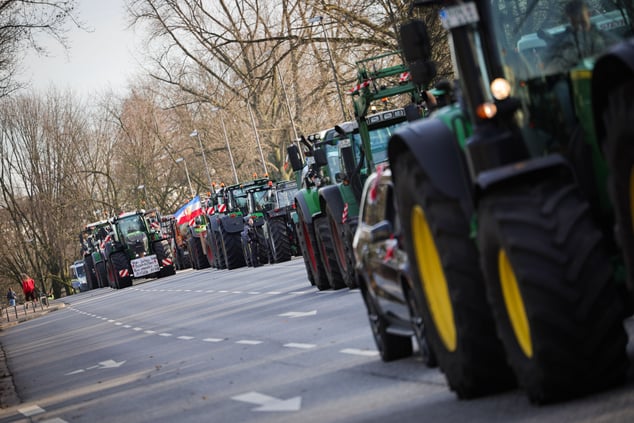
Her central proposal is the establishment of "public buffer stocks" for essential goods. This concept envisions a state-backed mechanism to "import and store a lot when prices are low and release stocks when they rise." This strategic intervention would stabilize prices, acting as a crucial counterbalance to market volatility and corporate profiteering. For farmers, this would translate into a "price guarantee" within a defined corridor, allowing them to sell to a public entity. Crucially, this system could also "link purchases to climate goals without becoming a bureaucratic monster," offering a more effective and less burdensome approach than current subsidy-heavy and over-regulated agricultural policies. She cites the recent farmer protests in Germany as clear evidence that "democratic parties are increasingly losing the rural population," further highlighting the urgency of such reforms for political stability.
Neoliberalism’s Unfulfilled Promise and the Rise of Extremism:
Weber directly confronts the foundational tenet of neoliberalism, particularly Friedrich August von Hayek’s argument in "The Road to Serfdom" that subordination to markets is preferable to subordination to the state, as a bulwark against totalitarianism. "The neoliberalism of the 1940s explicitly presented itself as an anti-fascist ideology," she acknowledges. However, she contends that "this promise was not fulfilled. The closer we got to the ideal, the stronger, in tendency, the far-right forces became."
She identifies three "tipping points" in Germany’s post-war history where this economic policy trajectory contributed to the rise of extremism:
- German Reunification: The "shock therapy" of overnight price liberalization, rapid privatization, and the immediate introduction of the Deutschmark in East Germany led to unprecedented levels of unemployment. This created deep-seated resentment and economic precarity, fueling early right-wing movements in the East during the 1990s.
- The Financial and Euro Crisis: The subsequent economic turmoil and austerity measures across Europe provided fertile ground for populist movements. The Alternative for Germany (AfD), for instance, was founded in this context, initially as an anti-Euro party, later evolving into a far-right nationalist force.
- The Current Energy and Inflation Crisis: The latest wave of economic shocks, exacerbated by global conflicts and supply chain disruptions, further intensifies economic insecurity and a sense of betrayal, pushing more people towards extremist ideologies.
While acknowledging that there isn’t a simple one-to-one correlation, Weber argues that "experiences of devaluation make it attractive when someone says: You are worth something because you are white, because you are German. The revaluation then happens through the devaluation of others." This powerful psychological mechanism is exploited by extremist narratives, offering a sense of belonging and worth to those feeling economically marginalized.

Trump as a Symptom of Economic Power Concentration:
The interview also delves into the American political landscape, using Donald Trump’s actions as a contemporary illustration of Weber’s concerns. She observes "two things simultaneously" in the US:
- The destruction of state structures: Trump’s efforts to dismantle or incapacitate government departments and agencies dramatically increases the state’s dependence on private corporations like Palantir and SpaceX. This creates "a market with guaranteed demand" for a select few, blurring the lines between public service and private profit.
- Abuse of power for enrichment: Trump’s tariff policies, for example, caused markets to "shoot up and down," allowing those with foreknowledge to reap "enormous profits." This demonstrates how concentrated economic power, unchecked by robust state institutions, can be leveraged for personal gain, further eroding public trust in fair governance. "One does not put a stop to this by saying from the outset that the state should be incompetent," she concludes, challenging the anti-state rhetoric often associated with certain economic ideologies.
Supporting Data: Evidence for a Systemic Crisis
Weber’s arguments are not theoretical abstractions but are grounded in concrete observations and historical evidence:
- Global Political Focus: The widespread political emphasis on affordability across diverse nations (Germany, USA, UK, Mecklenburg-Vorpommern) underscores its universal and urgent nature, indicating a deep-seated public concern.
- Mobility vs. Fuel: The distinction between "fuel price" and "mobility" highlights a crucial policy misdirection. The Deutschlandticket’s planned price increase to €66.80 by 2027, contrasted with its popular €9 predecessor, serves as a stark example of policies moving away from genuine affordability. The absence of a national speed limit and a bicycle bonus in the federal package further illustrates a missed opportunity for a holistic approach to sustainable and affordable mobility.
- Market Concentration in Agriculture: The dominance of four major corporations (ADM, Bunge, Cargill, Louis Dreyfus) in global agricultural commodity trade (70-90% control) is a critical piece of evidence. Their ability to profit from market volatility, with inventories exceeding national annual consumption, directly contradicts the ideal of a competitive market and highlights the potential for price manipulation and exploitation during crises.
- Global Impact of High Prices: The real-world consequences, such as Indian factory workers unable to afford cooking oil and Filipino fishermen unable to pay for diesel, vividly demonstrate the human cost of essential goods becoming unaffordable, especially in the Global South.
- Farmer Protests: The tractor blockades in Hamburg in 2024, as depicted in the article, serve as a tangible manifestation of the rural population’s discontent and their feeling of being abandoned by democratic parties, aligning with Weber’s argument for a more supportive agricultural policy.
- AfD Voter Demographics: The statistic that "more than 60 percent of people who rate their financial situation as bad voted for the AfD" in recent state elections provides direct empirical support for the link between economic insecurity and support for far-right parties.
- CDU’s Ahlener Programm (1947): The quote, "The content and goal of this social and economic reorganization can no longer be capitalist profit and power-seeking, but only the welfare of our people," serves as a historical reminder of a more socially oriented economic philosophy from a conservative party in post-war Germany, contrasting with contemporary neoliberal trends.
- Concentration of Economic Power and Political Influence: Weber’s observation that "a small number of companies divide entire markets among themselves, often globally" and that "economic power translates into political power" is a widely recognized concern in political economy. The rapid alignment of "the richest people in the world" behind Trump upon his return to the political stage exemplifies this.
- Central Bank Policies: The critique of central bank policies that combat inflation driven by supply shocks with higher interest rates, explicitly aiming to "cool down the labor market" (i.e., cause unemployment), highlights a policy choice that deliberately increases economic insecurity.
Official Responses: A Clash of Ideologies
The interview implicitly and explicitly addresses a fundamental tension between Weber’s proposed "anti-fascist economic policy" and prevailing orthodoxies, particularly those championed by market-liberal and neoliberal schools of thought.

The Government’s "Fuel Package" and Traditional Economic Thinking:
The German government’s fuel price package, including a price cap and an excess profit tax, represents a limited form of intervention. While it acknowledges the political necessity of addressing affordability, Weber criticizes its narrow focus on fuel rather than mobility and its failure to promote systemic alternatives. The underlying economic debate here revolves around the efficacy and appropriateness of price controls. Critics, adhering to classical economic theory, argue that price caps distort market signals, leading to shortages and misallocation of resources. They contend that allowing prices to reflect true scarcity encourages conservation and incentivizes alternative supply, even if it causes short-term pain. Weber, however, questions whether the current "price signal" is a "rational mapping of scarcity," especially when global oil prices are influenced by geopolitical events and speculative trading (e.g., "what Donald Trump posts on Truth Social"). This challenges the very notion of a "pure" market signal in times of crisis.
Hayek’s Legacy and the Fear of State Overreach:
The interviewer directly confronts Weber with Friedrich August von Hayek’s seminal argument in "The Road to Serfdom," which posits that extensive state planning and intervention inevitably lead to totalitarianism, making "subordination to markets" a superior, freedom-preserving alternative. This reflects a deep-seated fear in Western democracies of state power falling into "wrong hands," particularly in the context of rising authoritarian tendencies exemplified by figures like Donald Trump.
Weber acknowledges the historical context of Hayek’s argument – that neoliberalism emerged as an "explicitly anti-fascist ideology" in the 1940s. However, she asserts that "this promise was not fulfilled." Her counter-argument is that "even subordination to markets needs a state to enforce them and frequently cushions the consequences with higher social spending." She argues that the pursuit of a purely market-driven ideal has, paradoxically, coincided with a strengthening of "far-right forces." This implies that the perceived market freedom has not translated into democratic resilience but rather exacerbated inequalities and insecurities that fuel extremism.

Sociological Perspectives vs. Economic Realities:
The interview touches upon the discrepancy between economic and sociological explanations for the rise of the AfD. Sociologists and political scientists often attribute support for the AfD primarily to "identity issues and fears of loss," with less emphasis on "material disadvantage." Weber directly challenges this, stating that "fears of loss also have economic reasons." She cites the statistic that over 60% of people who identify their financial situation as poor voted for the AfD in recent state elections, providing a strong counter-narrative. This highlights a crucial divergence in interpreting populist movements: are they primarily cultural phenomena, or are their roots deeply intertwined with economic hardship and perceived systemic failures? Weber clearly aligns with the latter, emphasizing that "it is not about saying that only economic policy can stop the rise of the extreme right. There is no monocausal explanation." However, she stresses the "co-responsibility" of economic advisors for the democratic consequences of their recommendations.
Central Bank Policy and Economic Insecurity:
Weber critiques the traditional central bank response to inflation, which often involves raising interest rates with the explicit goal of "cooling down the labor market" – a euphemism for increasing unemployment. She argues that reacting to inflation driven by "shocks in essential goods" with such measures "increases insecurity even further." This directly contradicts the idea of maintaining economic stability and dignity, instead actively contributing to the very insecurity that she links to political extremism.
In essence, the "official responses" discussed in the interview largely represent the prevailing economic consensus that Weber is challenging. She views these responses as either insufficient, misdirected, or actively counterproductive to the long-term health of democratic societies, particularly in their failure to grasp the profound link between economic policy and political stability.

Implications: The Dignity of Economics and the Future of Democracy
Isabella Weber’s analysis carries profound implications for the future direction of economic policy and the stability of democratic societies. Her core message is an urgent call for a paradigm shift, moving away from a narrow focus on market efficiency towards an "anti-fascist economic policy" that places human dignity and democratic resilience at its center.
The Indispensable Role of the State in Preserving Dignity:
Weber’s proposals, particularly the creation of public buffer stocks and a comprehensive mobility package, imply a significantly expanded and reoriented role for the state. This is not about state overreach into every aspect of life, but rather a strategic intervention in essential goods markets to ensure basic affordability and stability. By guaranteeing fair prices for farmers and making public transport genuinely affordable, the state can visibly demonstrate its capacity to act for the welfare of its citizens. This direct action, Weber argues, is crucial for rebuilding trust in democratic institutions. When politicians claim democracy is the best system but confess helplessness regarding the affordability of daily life, "trust breaks." In contrast, by tackling affordability directly, the state can show that "the crisis is not unavoidable. Democratic action can make our lives better again." This proactive approach is framed as a bulwark against the disillusionment and resentment that feed extremist narratives.
Economic Power and Political Extremism: A Dangerous Interplay:
The connection Weber draws between the "extreme concentration of economic power" and the rise of "extreme politics" is a critical implication. When a few global corporations dominate essential markets, their economic leverage translates directly into political influence, potentially undermining democratic processes. This concentration of power, combined with growing economic insecurity among the populace, creates a volatile cocktail. The rich, Weber observes, quickly rally behind figures like Trump who promise to serve their interests, further entrenching an economic and political elite. This highlights the need for robust antitrust measures and regulations that prevent such concentrations of power, ensuring that economic benefits are broadly distributed rather than hoarded by a few.

The Peril of Economic Insecurity and the Erosion of Trust:
The second major implication is the direct link between economic insecurity and the appeal of extremist ideologies. Weber emphasizes that when policies like central bank interest rate hikes explicitly aim to "cool down the labor market" (i.e., create unemployment) in response to supply-shock-driven inflation, they exacerbate the very insecurity that pushes people towards the far-right. This creates a dangerous feedback loop: economic policies designed to manage inflation inadvertently create the conditions for political instability. Her warning that "this is extremely dangerous" underscores the severity of this issue. It suggests that traditional economic tools, when applied without considering their social and political consequences, can inadvertently undermine the democratic fabric.
The Moral Responsibility of Economic Advisors:
A deeply personal implication of Weber’s work is the call for increased moral responsibility among economic advisors. "We economic advisors bear a co-responsibility for the consequences of our recommendations for democracy," she states. This is a powerful challenge to the notion of economics as a purely technical or value-neutral discipline. It argues that economic models and policy recommendations are not just about numbers; they have direct, tangible impacts on people’s lives and the health of their political systems. Therefore, economists must consciously consider the democratic implications of their advice, striving for policies that uphold dignity and social cohesion.
Reclaiming the "Anti-Fascist" Legacy:
Finally, Weber’s use of the term "anti-fascist economic policy" is a deliberate and provocative act. It reclaims a historical legacy, reminding us that even conservative movements like the post-war CDU, through programs like the Ahlener Programm, understood the necessity of placing the "welfare of our people" above "capitalist profit and power-seeking" to prevent a return to the dark past. She asserts that the threat of fascism is experiencing a resurgence "like not since the 1930s," making this historical lesson acutely relevant. It’s a stark reminder that democracy is not merely a political system but also rests on a stable and equitable economic foundation.

In conclusion, Isabella Weber’s enriched perspective compels a re-examination of conventional economic wisdom. She argues that the current global crises demand bold, dignity-centered economic policies that actively counter market failures, reduce economic insecurity, and thus fortify the foundations of democracy against the rising tide of extremism. Her work serves as a crucial warning and a roadmap for a more resilient and equitable future.