

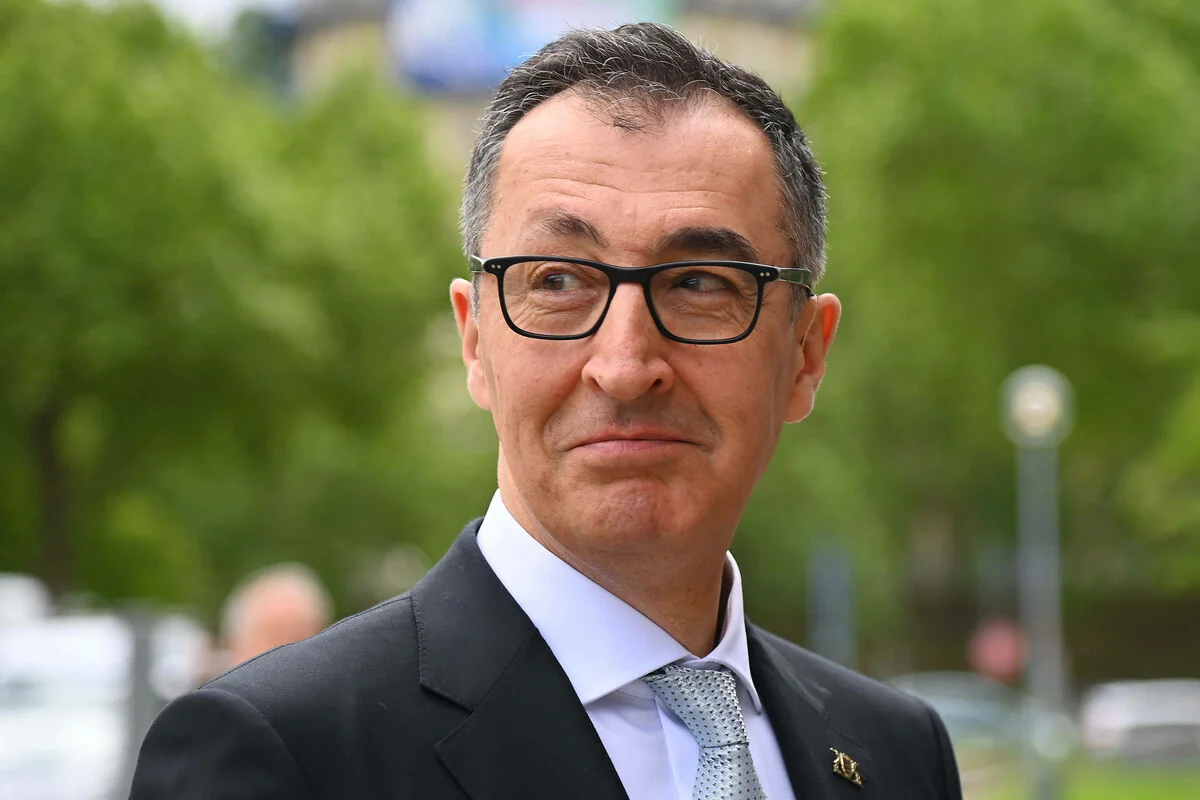
The political landscape in Stuttgart has shifted. In a move that signals both a continuation of the state’s “Green-Black” governing experiment and a significant personal test for one of Germany’s most prominent politicians, Cem Özdemir has been elected Minister-President of Baden-Württemberg. Yet, the path forward is far from smooth. As he steps into the shoes of his long-serving predecessor, Winfried Kretschmann, Özdemir faces a reality defined by slim legislative margins, an emboldened opposition, and the arduous task of maintaining cohesion within a coalition that is as ideologically diverse as it is pragmatically necessary.
The Main Facts: A Victory Tempered by Skepticism
Cem Özdemir’s election to the highest office in the state was not the landslide coronation one might expect for a seasoned national figure. With a coalition majority of 112 seats in the state parliament, Özdemir secured 93 votes in his favor. While this is a clear mandate for his premiership, the gap—roughly 19 votes shy of the full coalition strength—reveals the underlying friction within the ranks of his partners, particularly the Christian Democratic Union (CDU).
This discrepancy is more than a mere statistical footnote; it is a clear indicator of the “hard work” that lies ahead. In the current German political climate, where internal party discipline is increasingly challenged by populist rhetoric, the existence of “defectors” within the coalition sends a cautionary signal to the new government. It suggests that while the formal agreement between the Greens and the CDU holds, the emotional and political buy-in remains a work in progress.
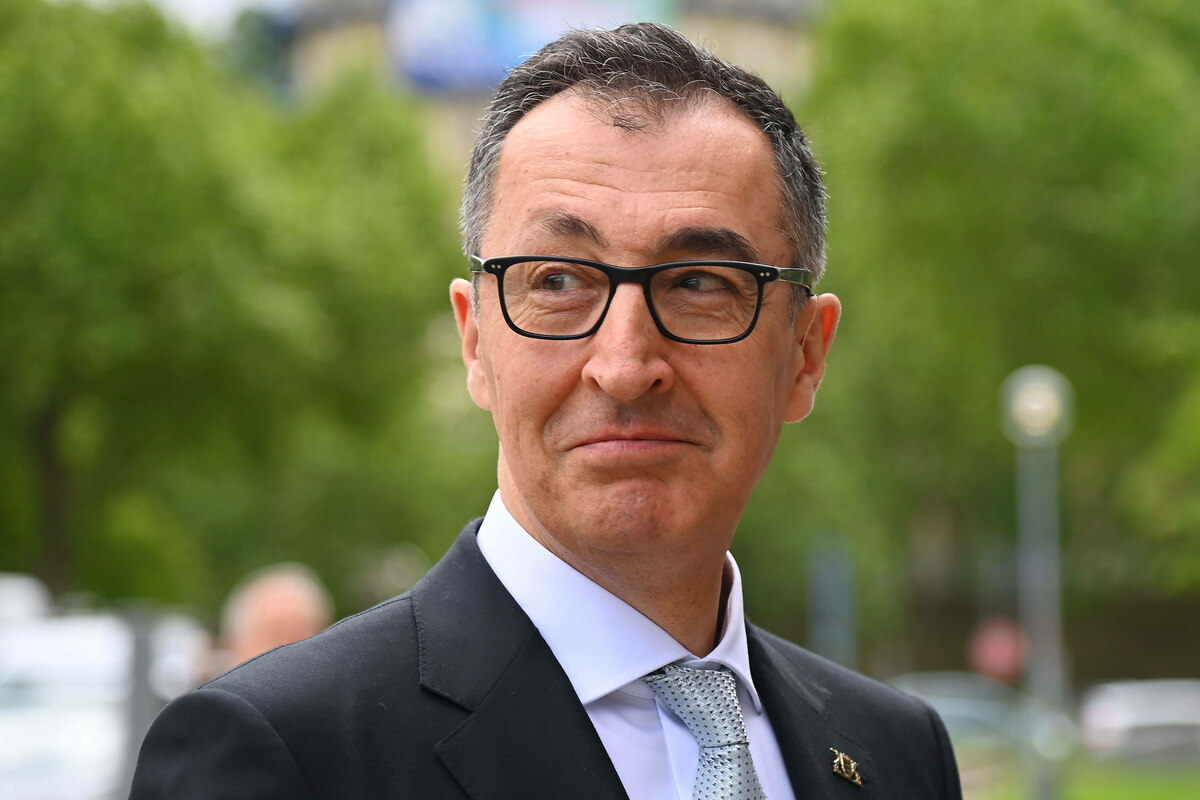
A Chronology of a Delicate Alliance
The formation of this government was not a foregone conclusion. Following a state election that left the CDU feeling both strategically bruised and politically slighted, the negotiations required to bring the two parties back to the table were extensive.
- The Post-Election Chill: After the election, the CDU, having performed strongly in several districts, initially struggled with the prospect of remaining the junior partner to the Greens. A sense of injury regarding perceived negative campaigning during the election cycle created a cooling effect on inter-party relations.
- Building the Foundation: The weeks leading up to the election of the Minister-President were defined by a deliberate effort to build a rapport between Özdemir and CDU leader Manuel Hagel. The transition from formal professional distance to a more personal, working relationship—culminating in the two leaders moving to a first-name basis—was a critical milestone.
- The Symbolic Gesture: In a moment of theatrical political symbolism, newly elected State Parliament President Thomas Strobl presented Özdemir with a marathon runner’s jersey before his swearing-in. The message was clear: this term is not a sprint; it is an endurance test that will require stamina, focus, and the ability to pace oneself against internal and external pressures.
The Opposition Strategy and the Resilience of the CDU
One of the most telling moments of the recent parliamentary session occurred when the Alternative for Germany (AfD) attempted to disrupt the proceedings. By nominating CDU leader Manuel Hagel as a “counter-candidate” to Özdemir, the AfD sought to exploit the ideological divide between the conservative right and the ecological left.
Hagel’s response was immediate and resolute. Standing firm, he declined the nomination, explicitly stating that he was not available for such a maneuver. His rebuttal served as a bulwark against attempts to destabilize the coalition: “I stand for reliability. We do what we promised before the election.”

This moment was a vital test for the CDU. While the party’s leadership has committed to the coalition, the 19 “No” votes (or abstentions) from the floor highlight a segment of the party that remains unconvinced. The challenge for Hagel in the coming months will be to reconcile this conservative wing with the pragmatic reality of governing in a coalition that has, for years, defined the stability of Baden-Württemberg.
Supporting Data: Personnel and Policy Shifts
Özdemir’s approach to his first cabinet suggests a strategy rooted in stability rather than radical upheaval. By retaining many of the experienced ministers from the “Kretschmann Era,” he is insulating his administration against the risks typically associated with a transition of power.
However, there are notable strategic changes:

- The Andreas Jung Factor: A significant appointment is that of Andreas Jung, a climate policy expert from the federal CDU, who moves to the state’s Ministry of Culture. This move is widely interpreted as a bridge-building exercise. Jung is highly respected by the Greens, and his presence is intended to soften ideological clashes.
- The Departure of Hardliners: The exclusion of ideological firebrands, such as former Agriculture Minister Peter Hauk, from the new cabinet list indicates a desire to reduce friction. Özdemir appears to be curating a team that prioritizes consensus-building over partisan grandstanding.
Official Responses and Political Implications
The political establishment in Germany is watching the Stuttgart coalition with bated breath. At a time when the “Grand Coalition” in Berlin is navigating treacherous waters, the stability of the Baden-Württemberg model is being held up as a potential blueprint.
However, observers note that the “Green-Black” model is no longer a novelty; it is a standard that must be constantly maintained. For the Greens, the objective is to solidify their role as the dominant force in the center-left. For the CDU, the goal is to prevent the loss of their core identity while contributing to a functioning, productive state government.
The implications for the wider German political landscape are profound. If Özdemir can successfully navigate the internal dissent and deliver on policy goals—particularly in the transition to a sustainable economy—he will solidify his position as a central figure in German politics. Conversely, a failure to manage these internal fractures could lead to a paralysis of state governance, providing further fuel to the populist opposition.

Conclusion: A Marathon of Governance
As Cem Özdemir begins his tenure, he does so with the awareness that the honeymoon period is non-existent. The “mau” (tepid) result of his election serves as a reminder that the political ground beneath him is shifting.
The task of keeping “Black and Green” aligned in the southwest of Germany will indeed be a “hard piece of work,” as noted by observers. It requires more than just a coalition agreement signed on paper; it requires the continuous, daily effort of managing conflicting interests, soothing ruffled feathers, and demonstrating that, despite the differences, the coalition serves the citizens of Baden-Württemberg more effectively than any alternative.
The marathon has begun. Whether Özdemir reaches the finish line with his coalition intact will depend on his ability to prove that his leadership can transcend the narrow interests of party politics and address the broader, pressing challenges of the state. In a political era defined by polarization, the success of the Stuttgart experiment may well determine the viability of future cross-party alliances across the nation.















Leave a Reply