The announcement of the Nobel Prize in Literature is more than just a cultural milestone; it is an economic earthquake that rattles the foundations of the global publishing industry. When the Swedish Academy reveals the year’s laureate, the quiet aisles of bookstores are suddenly transformed into arenas of frantic activity. The "Nobel Prize Effect"—a surge in public interest and a subsequent scramble for stock—presents a logistical challenge for retailers, a production crisis for publishers, and a unique sociological phenomenon for literature itself.
With the 2026 Nobel Prize for Literature awarded to Canadian writer Anne Carson, bookstores from Berlin to New York are once again grappling with the immediate, high-pressure demand that follows the world’s most famous literary accolade.
The Immediate Logistical Reality
For Gibran Syed, a floor manager for modern literature at the prestigious Dussmann bookstore in Berlin, the hours following the Nobel announcement are a test of agility. When Carson’s name was announced, the store immediately saw a surge in inquiries. However, reality quickly set in: while English-language editions of works like Eros the Bittersweet or Autobiography of Red were available, the German translations were suddenly in short supply.
"We are doing our best to secure stock," Syed explains. "But because every bookstore in the country is placing orders at the same time, we have to manage expectations. Until the new shipments arrive, we are directing customers toward e-books and original language versions." This scenario highlights the core issue of the Nobel Effect: the prize is a surprise, and the market is rarely ready for the instant, massive spike in demand that follows.
A Chronology of the Nobel Effect
The history of the Nobel Prize is littered with examples of the "discovery" or "rediscovery" of authors. Unlike the German Book Prize, which focuses on a single, newly published work, the Nobel Prize honors an entire body of work. This creates a specific, long-tail demand that differs significantly from standard bestseller lists.
- 1929 – The Established Giant: Thomas Mann received the prize, but as an already internationally acclaimed author, the commercial impact was different from the "discovery" effect.
- 2009 – The Catalyst: Herta Müller’s win sent her backlist into orbit. Publishers like the Wallstein Verlag saw sales of her earlier works jump into the five-figure range, proving that the Nobel can turn a niche literary figure into a household name.
- 2021 – The Unknown Variable: The win for Abdulrazak Gurnah serves as the modern benchmark for the Nobel Effect. A largely unknown figure in the German-speaking market at the time, his works were completely unavailable in translation. The ensuing race to print and distribute his books became a case study in market adaptation.
- 2025/2026 – The Modern Pattern: Following the award for Laszlo Krasznahorkai, data from Media Control revealed that his book sales increased by a staggering 400% in the four weeks following the announcement compared to the preceding twelve weeks.
Supporting Data: Quantifying the Surge
The "Nobel Effect" is not just anecdotal; it is a measurable economic force. Market research indicates that the prize acts as a global "seal of quality." According to data analyzed by Media Control on behalf of RBB, the demand for a laureate’s work does not merely spike for a week; it remains elevated for a significant duration.
In the case of Laszlo Krasznahorkai, even one year after his win, his books were selling 16 times faster per week than they had before the announcement. However, there is a clear ceiling to this momentum. Sandra Richter, director of the German Literature Archive in Marbach, notes that the effect typically evaporates after 12 to 24 months. "The spotlight is finite," Richter explains. "Attention naturally shifts to the next laureate, and the market follows the next wave of hype."
Official Perspectives and Academic Analysis
The transition from an academic selection to a retail product is a complex process. For smaller publishers, such as Matthes & Seitz—who hold the rights to four of Anne Carson’s books—the Nobel Prize is both a dream and a logistical nightmare.
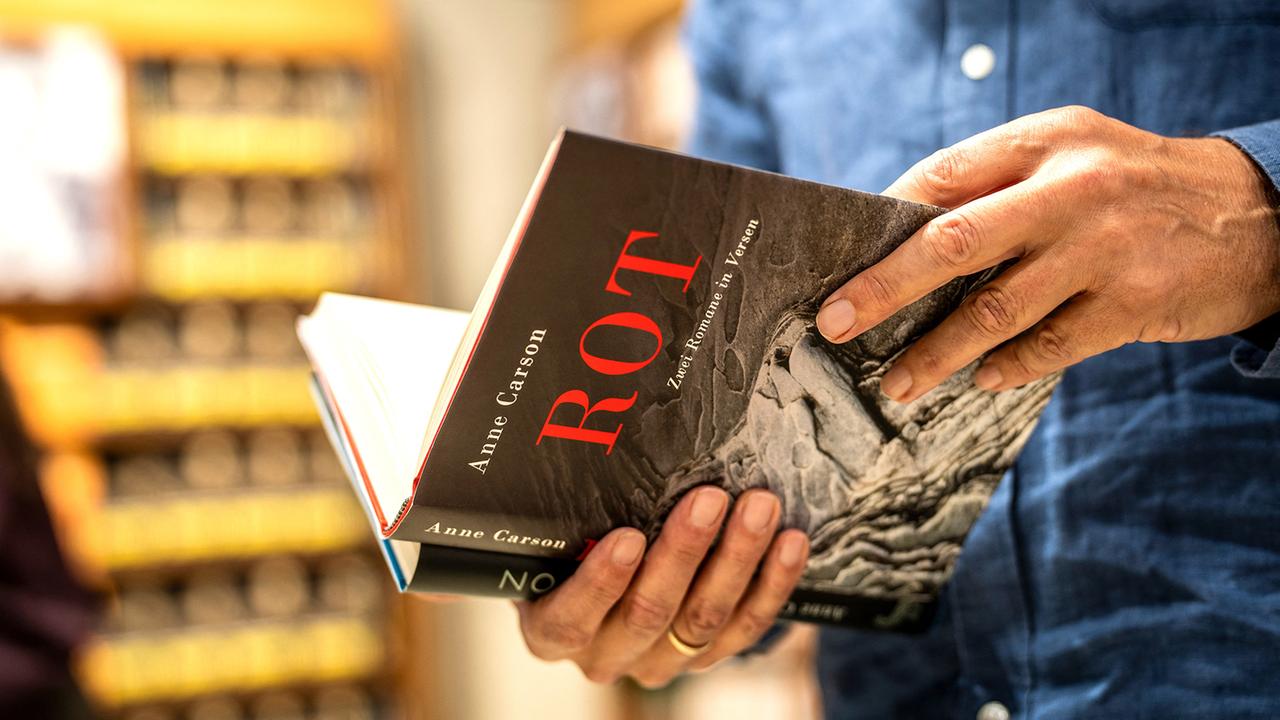
Andreas Rötzer, head of the publishing house, admits that the situation is unprecedented for them. "We are currently calculating print runs and logistics for titles that haven’t moved at this speed before," Rötzer notes. The challenge lies in predicting whether the demand is a fleeting interest from casual buyers or a sustained growth in the author’s readership.
Literary experts emphasize that the Nobel Prize is not a guarantee of commercial success for every recipient. Sandra Richter and her colleague Dèlan Canan Çakir have studied this phenomenon extensively. Their research suggests that the prize acts as a "filter" that increases international visibility and encourages translations. However, the impact varies. Pearl S. Buck, for example, received the prize in 1938, but because her work was already subject to debate regarding its literary quality, the "Nobel boost" was far less pronounced than for other winners.
Implications for the Future of Literature
The Nobel Effect raises fundamental questions about the role of the literary canon. Is a writer "great" because they won the Nobel, or do they win the Nobel because they are already great?
The Genre Factor
The type of literature matters immensely. As Gibran Syed points out, poetry and complex essayistic works—like those of Anne Carson—rarely reach the same mass-market volume as a gripping novel. Yet, for these authors, the Nobel provides a platform that sustains their work in perpetuity. Even if the immediate sales peak fades, the author’s inclusion in the "Nobel canon" ensures that their books remain in print for decades, potentially reaching new generations of students and scholars.
The Christmas Effect
Timing plays a crucial role. With the Nobel announcement occurring in October, the industry has roughly two months before the December 10th award ceremony—the peak of the holiday shopping season. For bookstore managers like Syed, this is the most critical window. "We are preparing for a massive demand in December," he says. "The Nobel is the ultimate gift for the literary-minded, and by the time the medal is handed over in Stockholm, we intend to have full shelves ready for the holiday rush."
A Global Seal of Approval
Ultimately, the Nobel Prize remains the most powerful marketing tool in the literary world. It forces a collision between high-brow literature and the mechanics of global capitalism. While the "Nobel Effect" may be a temporary surge for the bookstore, for the author, it is a permanent elevation in status. It signals to publishers worldwide that the work is worthy of translation, and to readers that the book is worth their time.
As the industry continues to adapt to the surprise of each new winner, one thing remains clear: the Nobel Prize in Literature is the only literary event capable of turning the quiet pursuit of reading into a global, high-stakes commercial event. Whether the hype lasts for two months or two years, the Nobel ensures that the author’s voice is heard across borders, languages, and cultures, fulfilling the very purpose of the literary arts.