The dream of autonomous mobility is undergoing a significant paradigm shift. For years, the industry promised a "Level 5" future—a world where steering wheels would become redundant ornaments. However, as the technological, regulatory, and safety hurdles proved more daunting than anticipated, the automotive sector has pivoted toward a more pragmatic approach: highly sophisticated, human-supervised automation.
Mercedes-Benz, a long-time leader in automotive innovation, has announced a major strategic push to bring "door-to-door" automated driving to its production fleet by 2027. This move represents a departure from the niche, highly restricted Level 3 systems of the past, aiming instead for a pervasive, user-centric experience that promises to turn even the most arduous urban commutes into effortless journeys.
Main Facts: The Vision for 2027 and Beyond
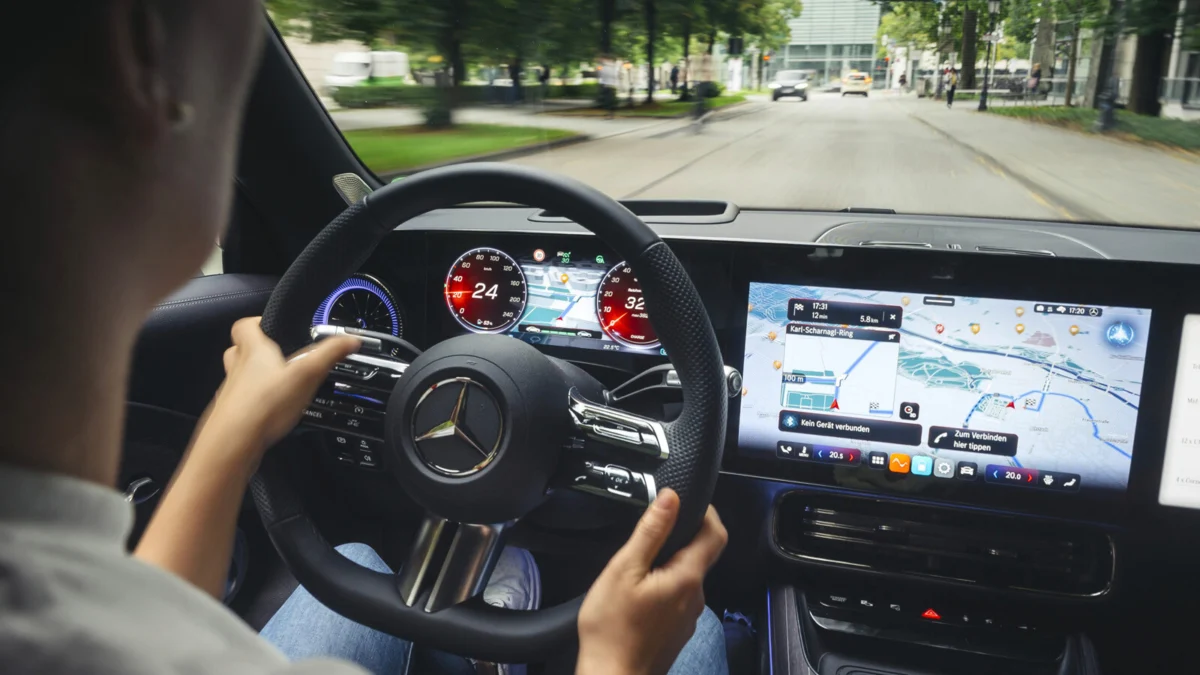
Mercedes-Benz is set to deploy a new generation of automated driving features that effectively allow a vehicle to navigate from a starting point to a destination with minimal human intervention. While the vehicle handles the heavy lifting—steering, acceleration, braking, and complex decision-making—the driver remains the ultimate supervisor.
Crucially, this is not "autonomous" driving in the legal sense of removing the human from the equation. Instead, it is an advanced evolution of Level 2+ assistance, where the car manages the environment, but the occupant retains the responsibility for the vehicle’s safe operation.
Key milestones announced by the manufacturer include:
- The Launch Timeline: A pilot program for select customers in Stuttgart and Munich is scheduled for late 2026, followed by a broader rollout in series-production vehicles starting in the first half of 2027.
- Over-the-Air (OTA) Accessibility: Mercedes plans to leverage its existing fleet, offering OTA updates to eligible hardware-equipped vehicles, ensuring that the technology is not limited solely to brand-new models.
- Integration of Wayve AI: In a move to leapfrog conventional rule-based software, Mercedes is integrating the "Wayve AI Driver." This end-to-end deep learning system, already tested in London’s complex taxi environments, marks a transition from human-coded logic to machine-learned intelligence, allowing the car to adapt to unpredictable real-world scenarios more naturally.
Chronology of the Development Path
The road to this announcement has been paved by years of iterative development and strategic partnerships.
2020–2023: The Level 3 Experiment
Mercedes-Benz made headlines by being one of the first manufacturers to achieve legal approval for Level 3 autonomous driving (Drive Pilot) in specific high-traffic scenarios on German autobahns. While a technical triumph, the market response was muted. The cost-to-benefit ratio for a system that only functions under specific conditions (e.g., clear markings, specific speeds, and traffic jams) proved too high for the average consumer.
2024: The Strategic Pivot
Recognizing that limited-use cases were not driving mass adoption, Mercedes began re-evaluating its software stack. The company recognized that the future lies in "Level 2++" or "Level 2+," where the system is always active, providing continuous support rather than functioning only in rare, ideal conditions.
Late 2024–2025: The AI Integration
The announcement of the partnership with London-based AI startup Wayve signaled a major shift. By moving away from static, map-heavy navigation toward a vision-based, AI-driven model, Mercedes positioned itself to handle the complexity of urban centers, which have historically been the "final boss" for autonomous systems.
2026–2027: The Rollout
The upcoming phase involves the testing of the "MB.Drive Assist Pro" system in real-world German traffic, followed by the mass-market release.
Supporting Data: The Hardware and Software Architecture
The complexity of navigating dense urban environments requires an immense computational and sensory infrastructure. Mercedes-Benz has detailed a robust architecture designed to ensure safety and precision:
- Sensor Suite: Each vehicle is equipped with a comprehensive array of hardware, including ten high-resolution cameras, five radar sensors, and twelve ultrasonic sensors. This redundancy ensures that if one sensor is obstructed by dirt or glare, others can compensate.
- Compute Power: At the heart of the system is a central computer capable of processing up to 254 TOPS (Trillion Operations Per Second). This power is essential for real-time processing of the visual data streams required for deep learning.
- The Technology Stack: The system is an amalgamation of three critical pillars:
- MB.OS: The proprietary Mercedes-Benz operating system that serves as the foundation.
- Nvidia Hyperion: The compute architecture providing the hardware backbone.
- Alpamayo Stack: A sophisticated driving software framework combined with the "Halos" full-stack safety system.
This synergy allows the car to not only "see" the environment but to understand the intent of other road users—a critical requirement for navigating roundabouts, intersections, and high-pedestrian areas.
Official Responses and Strategic Implications
While Mercedes-Benz has not yet disclosed the specific pricing structure for these services, the industry trend suggests a move toward a "feature-on-demand" model. By including the necessary hardware in most new vehicles—such as the upcoming CLA, GLA, GLB, and the electric variants of the C-Class and GLC—the manufacturer is betting on a high "take rate."
Addressing Market Acceptance
The manufacturer has explicitly stated its intention to offer a "free trial month" for customers. This strategy is designed to lower the barrier to entry, allowing users to experience the convenience of the system before committing to a subscription or purchase.
Industry analysts point out that this model solves a fundamental problem: the high cost of autonomous hardware is amortized over a much larger fleet. As more users engage with the technology, the cost of development and deployment decreases through economies of scale.
Regulatory Challenges
Despite the technological progress, the regulatory landscape remains a significant variable. The UNECE (United Nations Economic Commission for Europe) is currently formalizing the standards for AI-based driving systems. Mercedes-Benz is working closely with these bodies to ensure that their "MB.Drive Assist Pro" satisfies the rigorous safety standards required for widespread urban use. The shift from "static" rules to "dynamic" AI requires a new way of verifying safety, which is currently the subject of intense international debate.
Implications: The Death of the "Assist vs. Autonomy" Dichotomy
For years, the industry was obsessed with the SAE levels of automation (Level 1 through 5). However, as Mercedes’ recent strategy demonstrates, these labels are becoming increasingly irrelevant to the consumer.
The average driver does not care if the car is "Level 2" or "Level 3"; they care about the utility, safety, and reduced cognitive load of their commute. By focusing on a system that is consistently available and highly capable, Mercedes is essentially blurring the lines between "assisted" and "automated" driving.
The Impact on Ownership
This evolution will fundamentally change the value proposition of a Mercedes-Benz vehicle. A car will no longer be a static asset that depreciates; it will be a platform that grows more capable over time. An owner who buys a vehicle in 2025 might find that by 2028, their car is navigating city streets with a level of proficiency that was unthinkable at the time of purchase, thanks to the continuous integration of AI updates.
Conclusion
The road to 2027 is clear. Mercedes-Benz is not trying to sell the "end of driving," but rather the "optimization of driving." By integrating cutting-edge AI like the Wayve system with their proven safety architecture, the company is positioning itself to dominate the premium market. If successful, this transition will not only make roads safer and travel more efficient but will likely redefine the role of the automobile in the modern urban landscape—turning the car from a tool of labor into a partner in mobility.