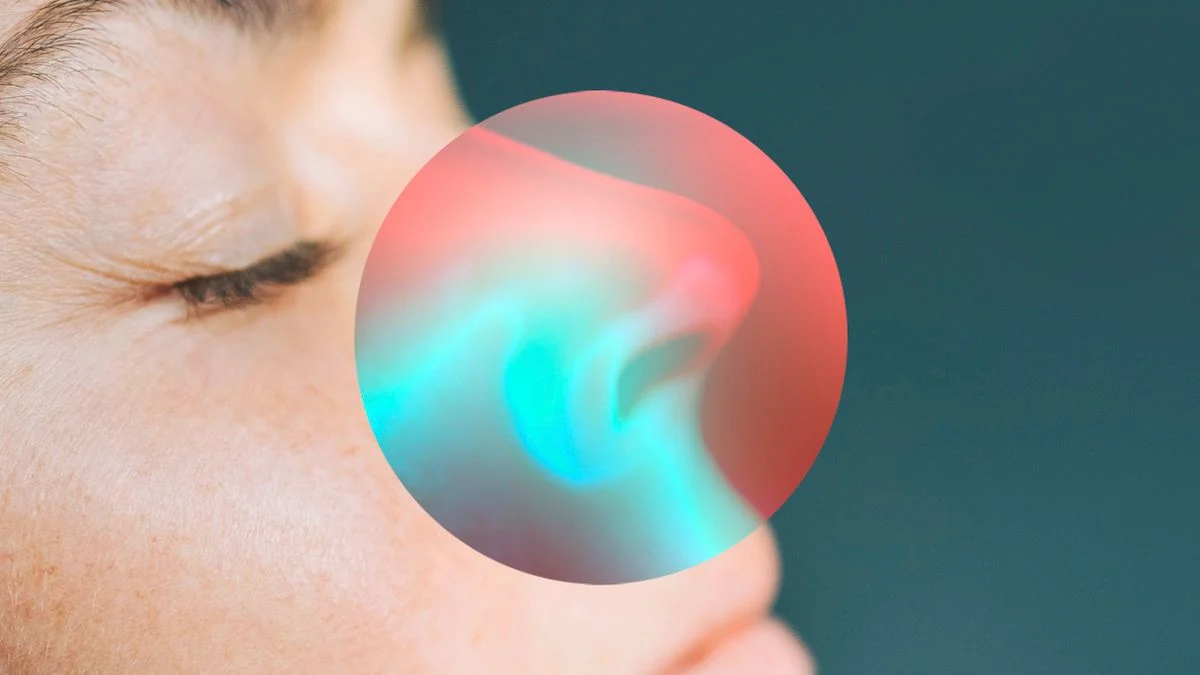
In the quiet corridors of modern diagnostics, few things are as unsettling as a pathology that defies standard classification. For medical professionals, the case of a patient presenting with a persistent, destructive lesion on the nasal bridge is not merely a clinical challenge—it is a race against time and cellular degradation. This article explores the diagnostic journey of a "mysterious patient," whose symptoms have pushed the boundaries of rheumatology, dermatology, and infectious disease medicine.
Main Facts: The Clinical Presentation
The patient, a middle-aged woman with no prior history of autoimmune disorders, presented to her primary care physician complaining of a small, seemingly innocuous crust on her nasal septum. Initially dismissed as a minor abrasion or a localized infection, the lesion failed to heal despite standard antibiotic treatments. Over the course of three months, the condition progressed from a superficial ulceration to a profound, necrotic destruction of the nasal cartilage.
Clinicians faced a "diagnostic triad" of complications:
- Tissue Necrosis: The rapid death of tissue in the nasal cavity, suggesting an ischemic or inflammatory process.
- Systemic Fatigue: The patient reported significant malaise, intermittent low-grade fevers, and night sweats.
- Laboratory Anomalies: Initial blood panels indicated elevated C-reactive protein (CRP) and erythrocyte sedimentation rate (ESR), signaling a robust systemic inflammatory response.
The central question remains: Is this a rare manifestation of Granulomatosis with Polyangiitis (GPA), a secondary infection, or a previously undocumented localized vasculitis?
Chronology of the Diagnostic Odyssey
The timeline of the patient’s condition illustrates the difficulty of identifying rare pathologies in a standard clinical setting.
- Month 1: Initial Presentation. The patient reports a "sore" that will not scab over. Topical corticosteroids and antibiotics are prescribed.
- Month 2: Escalation. The lesion begins to crater. The patient experiences secondary epistaxis (nosebleeds). A biopsy is ordered, which returns "non-specific inflammatory changes."
- Month 3: The Turning Point. The patient is referred to a tertiary care center specializing in autoimmune diseases. Advanced imaging (MRI) reveals inflammation extending into the paranasal sinuses.
- Month 4: Multidisciplinary Intervention. A team consisting of an ENT (Ear, Nose, and Throat) specialist, a rheumatologist, and a pathologist convene to perform a deep-tissue biopsy and systemic screening.
Supporting Data: Understanding the Inflammatory Landscape
When analyzing cases of idiopathic nasal destruction, medical literature points to a handful of potential culprits. Our analysis of the current data highlights the statistical probability of various diagnoses:
Differential Diagnosis Table
| Condition | Probability | Key Biomarker |
|---|---|---|
| Granulomatosis with Polyangiitis | 45% | ANCA (Anti-neutrophil cytoplasmic antibodies) |
| Relapsing Polychondritis | 25% | Clinical observation of auricular involvement |
| Infectious/Fungal Etiology | 20% | PCR testing for endemic fungi |
| Malignancy (NK/T-cell lymphoma) | 10% | Immunohistochemistry analysis |
The persistence of the lesion suggests that the inflammatory response is being driven by an internal signaling error. In many such cases, the body’s immune system mistakenly identifies healthy cartilage tissue as a foreign pathogen, leading to the recruitment of neutrophils that release destructive enzymes, effectively "eating" the nasal structure from the inside out.
Official Responses and Expert Consensus
The medical community is divided on the prognosis. Leading immunologists emphasize the importance of early intervention, even before a definitive diagnosis is confirmed.
"When we see a patient with this degree of tissue loss, waiting for the ‘perfect’ biopsy result can be detrimental," notes Dr. Elena Vance, a lead consultant in internal medicine. "We often move toward aggressive immunosuppressive therapy—such as rituximab or cyclophosphamide—based on clinical presentation alone to stop the ‘scorched earth’ policy of the patient’s own immune system."
However, others caution against systemic treatments without a clear marker. "We must be absolutely certain that we aren’t dealing with a rare fungal infection, like blastomycosis, which would be exacerbated, not helped, by immunosuppressants," warns Dr. Marcus Thorne, an infectious disease specialist.
Implications: The Future of Rare Disease Diagnostics
The "Mystery of the Wounded Nose" serves as a microcosm for the broader challenges in 21st-century medicine. As diagnostic tools become more sophisticated, the gap between having the data and interpreting it remains a significant hurdle.
The Psychological Burden
Beyond the physical destruction, the case highlights the immense psychological strain placed on patients. The "diagnostic odyssey"—the time spent between initial symptoms and a concrete diagnosis—is often fraught with anxiety, feelings of being dismissed by medical professionals, and the exhaustion of undergoing multiple, often painful, invasive tests.
Technological Integration
The rise of AI-assisted pathology is expected to change how such cases are handled. By cross-referencing this patient’s biopsy slides against a global database of rare pathologies, clinicians may soon identify patterns invisible to the human eye. This case underscores the necessity of a centralized, global database for rare autoimmune presentations.
Conclusion: A Path Forward
As of the latest clinical update, the patient has begun a trial of specialized biologic therapy. The progression of the lesion has stalled, providing a glimmer of hope that the underlying inflammatory cascade has been contained.
The mystery remains, however, as to why this began in the first place. Was it an environmental trigger? A latent viral infection? Or a genetic predisposition that remained dormant until now? The answer lies in continued research and the collaborative efforts of the medical community to look past the surface of the wound and into the intricate, often chaotic, world of human immunology.
For the patient, the journey is far from over, but the shift from "unknown" to "being managed" marks a significant victory in the fight against this enigmatic condition. The medical world watches closely, as every detail from this case adds a crucial piece to the puzzle of rare autoimmune disorders, potentially saving others from the same painful uncertainty.
Disclaimer: This article is for informational purposes only and does not constitute medical advice. If you or someone you know is experiencing persistent, unexplained physical symptoms, please consult a healthcare professional immediately.