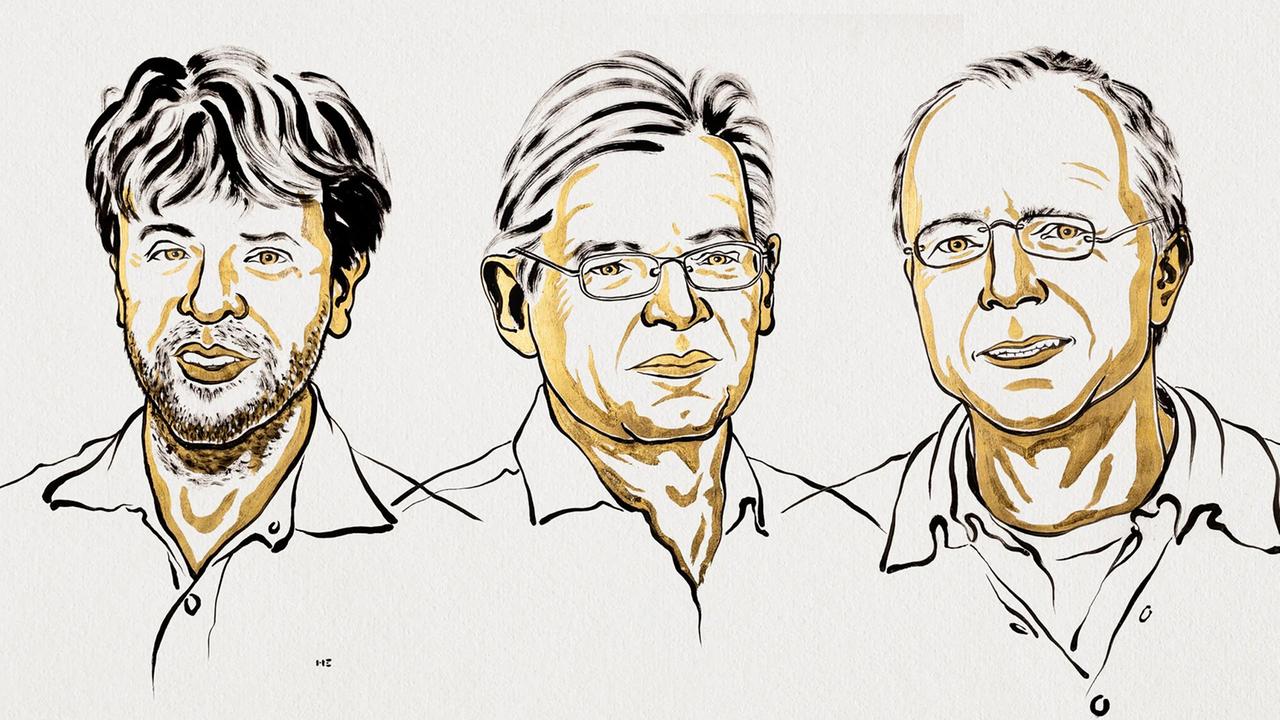
Stockholm – In a triumph for curiosity-driven research and international collaboration, the Nobel Committee has awarded the 2026 Nobel Prize in Physiology or Medicine to a trio of visionaries: Peter Hegemann of Humboldt University in Berlin, Georg Nagel of the University of Würzburg, and Karl Deisseroth of Stanford University. Their groundbreaking work in the development of optogenetics—a revolutionary technique that allows scientists to control the activity of individual neurons with light—has fundamentally altered our understanding of the brain’s architecture.
The announcement, made on October 5, 2026, marks a watershed moment in neurobiology. By enabling researchers to "switch" specific nerve cells on or off with surgical precision, the laureates have provided the scientific community with a master key to unlock the long-standing mysteries of memory, emotion, and complex behavior.
The Genesis of a Scientific Revolution: From Algae to the Human Brain
The story of this year’s Nobel Prize is one of unexpected discovery. It began not in a sophisticated neuroscience laboratory, but with the study of simple, single-celled green algae known as Chlamydomonas.
The "Lichtschalter" (Light Switch) Discovery
In the early 2000s, biophysicist Peter Hegemann and biologist Georg Nagel were investigating how these microscopic organisms navigate their environment. They discovered a unique protein on the surface of the algae that acted as a light-sensitive ion channel. When exposed to specific wavelengths of light, the channel would open, allowing ions to flow across the cell membrane and trigger an electrical signal.
This discovery was the "Eureka" moment. Hegemann and Nagel realized they had identified a biological light switch. However, translating this mechanism into the complex environment of a mammalian brain required a different set of expertise.
The Deisseroth Integration
Enter Karl Deisseroth, a psychiatrist and neurobiologist at Stanford University. Deisseroth saw the potential to apply this "light switch" technology to the brain. Through meticulous genetic engineering, he and his team successfully expressed these algal proteins in the neurons of living mice. By delivering light pulses via fiber optics into the brain, they could activate or silence specific neural circuits, observing the behavioral changes in real-time. This technique, which they dubbed "optogenetics," allowed researchers to observe causality—showing exactly which neurons fire to trigger a memory or a specific emotional state.
Chronology of an Innovation
The path to the Nobel Prize was paved with years of interdisciplinary effort:
- 1990s – Early 2000s: Hegemann and Nagel focus their research on the sensory physiology of Chlamydomonas, characterizing the light-gated ion channels.
- 2003: Nagel and his collaborators provide the first proof of concept that these channels could be expressed in other cell types.
- 2005: Karl Deisseroth’s lab at Stanford publishes the foundational paper in Nature Neuroscience, demonstrating the successful use of these light-activated channels to control neurons in mammalian tissue.
- 2010s: Optogenetics becomes the gold standard in neuroscience laboratories globally, leading to thousands of studies mapping the neural basis of addiction, anxiety, and movement disorders.
- 2026: The Nobel Committee recognizes the trio for the foundational discovery and subsequent application of optogenetics, cementing their place in the history of science.
Implications: A New Era for Medicine
The clinical potential of optogenetics is vast. As Abdel El-Manira, a member of the Nobel Committee at the Karolinska Institute, noted, the technology extends far beyond basic research. It serves as a diagnostic and potential therapeutic tool for understanding and eventually treating neurological and psychiatric disorders.
Decoding Pathological Circuits
Many of the most debilitating human conditions—such as Parkinson’s disease, epilepsy, depression, and schizophrenia—are now understood to be "circuitopathies," or disorders of faulty brain connectivity. Optogenetics allows researchers to identify the specific "miswiring" in these circuits. By mapping the exact pathways involved in, for example, the tremors of Parkinson’s or the depressive loops of clinical anxiety, scientists are now designing more targeted therapies, including deep-brain stimulation and novel pharmaceutical approaches.
Beyond the Laboratory
The committee highlighted that this method is now used in labs across the globe to decipher the "secrets of the brain." By allowing researchers to see how a network of cells creates a sensation, or how a specific circuit regulates hunger or aggression, optogenetics has shifted neuroscience from a descriptive field to a mechanistic one. The ability to "see" and "steer" neural activity in real-time is arguably the most significant advancement in the field since the discovery of the synapse.
Official Responses and the Value of Research
The news was met with immense surprise and humility by the laureates. Thomas Perlemann, secretary of the Nobel Committee, recounted the difficulty of reaching the winners, particularly Karl Deisseroth, who was asleep when the call came. "All three were absolutely stunned," Perlemann stated. "And all three expressed the same sentiment: a profound gratitude for the collaboration that led to this breakthrough."
The Political Perspective
In Germany, the announcement was celebrated as a victory for the domestic research ecosystem. Friedrich Merz, Chancellor of Germany, took to social media to express his pride. "This award shows that German research is world-class," Merz wrote. "It is a testament to the importance of funding basic research and the necessity of international scientific cooperation."
The recognition of Hegemann and Nagel highlights the strength of the German academic landscape, where long-term, curiosity-driven funding allows scientists the freedom to pursue unconventional avenues—like studying algae—that eventually lead to transformative medical breakthroughs.
Supporting Data: The Magnitude of the Prize
To understand the scale of this achievement, one must look at the historical context of the Nobel Prize.
- Historical Precedent: Since its inception in 1901, the Nobel Prize in Physiology or Medicine has been awarded to 232 individuals. This year’s prize is a rare acknowledgment of a tool-based discovery that has enabled a surge in secondary research.
- The Prize Money: The laureates will share a total of approximately one million euros. While significant, the real value of the award is the global validation of optogenetics as a cornerstone of 21st-century medicine.
- The Week Ahead: The medical prize marks the beginning of the annual Nobel week. It will be followed by announcements in Physics, Chemistry, Literature, and Peace. The ceremony will culminate on December 10, the anniversary of Alfred Nobel’s death, in a gala event in Stockholm.
Conclusion: The Light that Guides Future Cures
The 2026 Nobel Prize is not merely an award for a technique; it is an award for a shift in perspective. Before Hegemann, Nagel, and Deisseroth, the brain was a "black box" that could be observed but rarely controlled. Today, thanks to their light-sensitive ion channels, the brain is a map that can be read and a circuit board that can be tuned.
As the scientific community looks toward the future, the applications of optogenetics in treating Alzheimer’s disease, sensory restoration (such as curing certain types of blindness), and complex behavioral disorders suggest that we have only scratched the surface. The light that these researchers discovered in a humble pond-dwelling alga is now, quite literally, illuminating the path toward curing the most complex diseases known to humanity.
By prioritizing curiosity and fostering international bridges, these three laureates have proven that the most profound advancements often emerge from the most unexpected places. As we celebrate their work, we are reminded that the mysteries of the human mind are no longer beyond our reach—they are waiting to be lit.