In a startling development that blurs the lines between environmental satire and culinary avant-garde, Germany’s long-standing debate over nuclear energy has taken an unexpected, fluorescent turn. This Thursday, the taz "Wahrheit" (Truth) column—the world’s most venerable home for journalistic satire—unveiled a poetic manifesto that challenges the very nature of energy production, mushroom foraging, and the radioactive seasoning of the Bavarian forest floor.
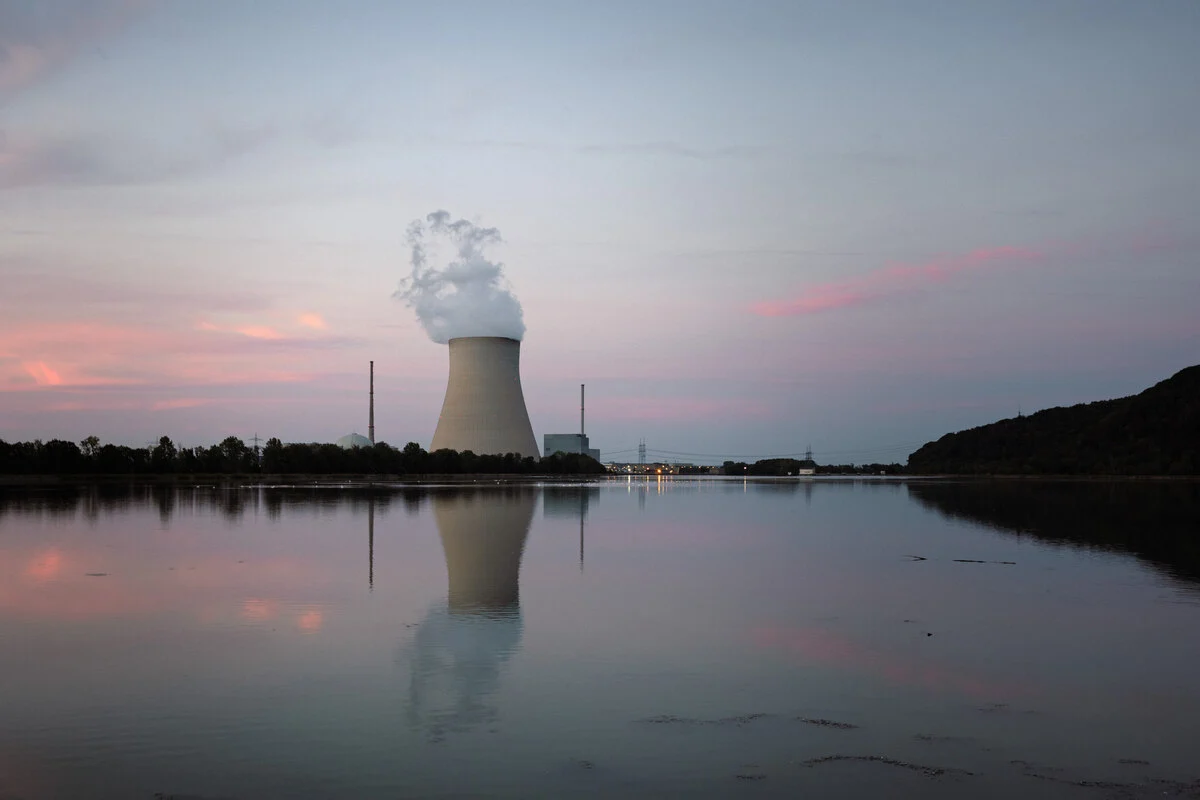
While the scientific community remains focused on the decommissioning of power plants like Isar 2, a new cultural movement is suggesting that perhaps we have been looking at nuclear energy through the wrong lens. Instead of merely powering light bulbs, could the remnants of the nuclear age be the secret ingredient to a perfect autumn risotto?
The Main Facts: A Radioactive Gastronomy
The core of the issue lies in the lingering legacy of the nuclear era in Southern Germany. For decades, the consumption of wild mushrooms in the deep forests of the south has been shadowed by the historical fallout of Chernobyl and the operational history of local nuclear facilities. While health authorities have long warned of "Cesium-137" levels in forest floor produce, the taz satire piece reframes this as a deliberate culinary choice.
The poem, which serves as the centerpiece of this discourse, highlights a bizarre paradox: as the autumn air turns cold and crisp, the forest floor yields its "atomic delicacies." The irony is sharp—while the taz is known for its scathing political critique, this latest entry suggests that the "pepp" provided by radioactive isotopes is, in fact, the missing link in modern haute cuisine. The text playfully posits that when a Geiger counter begins to "yell and crackle" over a plate of risotto, the diner should not flee in terror, but rather embrace the "fine things" resting on their dinnerware.

Chronology of a Nuclear Controversy
To understand the absurdity of the current discourse, one must look at the timeline of Germany’s nuclear exit, or Atomausstieg.
- 1986: The Chernobyl disaster leaves a lasting radioactive fingerprint across the soils of Southern Germany, affecting the mycological ecosystem of the Bavarian forests.
- 2011: Following the Fukushima incident, the German government accelerates the permanent shutdown of its nuclear power plants, marking the beginning of the end for the domestic nuclear industry.
- 2023: The final three nuclear power plants in Germany, including Isar 2, are officially disconnected from the power grid.
- October 2026: The taz publishes a satirical poem calling for a "re-seasoning" of German life, suggesting that the ghost of Isar 2 might still provide the necessary "kick" for culinary enthusiasts.
This timeline reflects a nation caught between its technological past and its green-energy future. By juxtaposing the decommissioning of a power plant with the foraging of wild mushrooms, the satire highlights the lingering, invisible presence of the nuclear era in the German subconscious.
Supporting Data: The Science of "Glow-in-the-Dark" Dining
While the taz piece is inherently humorous, it touches upon a legitimate, albeit niche, area of environmental science: the persistent bioavailability of radiocesium in forest fungi.
Data from the Federal Office for Radiation Protection (BfS) has consistently shown that certain species of mushrooms—specifically the Xerocomus badius (Bay bolete)—act as biological sponges for radioactive isotopes. In some regions of Southern Germany, these mushrooms continue to exhibit activity concentrations that exceed the legal threshold for market sale.

However, the "culinary" perspective offered by the satire suggests a form of extreme locavorism. If the forest is already "glowing," why not own it? From a strictly objective standpoint, the consumption of such mushrooms is discouraged by health officials due to the long-term biological half-life of Cesium-137. Yet, the satirist turns this scientific concern into a aesthetic one: if the risotto glows, it is, by definition, a "luminous" dish.
Official Responses and the "Isar 2" Dilemma
The satirical appeal for "Frau Reiche" (a reference to the complex landscape of German environmental oversight) to "re-season" the forest with the help of the decommissioned Isar 2 plant has sent ripples of laughter—and perhaps a hint of discomfort—through the corridors of German bureaucracy.
There have been no official rebuttals from the Ministry for the Environment, largely because the piece falls squarely within the tradition of the taz’s "Wahrheit" section, which prides itself on three guiding principles:
- Why be objective when you can be personal?
- Why research when you can write?
- Why prove it when you can assert it?
These principles have allowed the taz to operate as a unique entity in the global press. By ignoring the need for traditional journalistic "balance," they expose the underlying absurdity of political debates. The demand for the reactivation of Isar 2 as a spice rack is a biting commentary on the political voices that continue to lobby for the return of nuclear power long after the concrete has begun to cool.

Implications: The Future of Satire and Nuclear Memory
What does this "radioactive risotto" tell us about the state of the German discourse? Firstly, it indicates that the nuclear debate is not dead; it has simply moved into the realm of the surreal. When a society is unable to resolve its existential questions through policy, it often turns to satire to process the cognitive dissonance.
The implications are twofold:
1. Cultural Normalization: By turning the fear of radiation into a culinary trope, the taz effectively strips the "nuclear monster" of its terror. It is a classic move of political satire: if you cannot defeat the issue, make it ridiculous. By equating a nuclear power plant with a salt shaker, the author diminishes the perceived threat of the decommissioned infrastructure.
2. The Enduring Legacy of "Die Wahrheit": As the only dedicated satirical section of a daily newspaper worldwide, the taz Truth remains a vital component of the democratic process. It serves as a safety valve for national tensions. Whether it is complaining about low water levels in the Rhine or the "tasty" radiation in the Bavarian woods, the taz keeps the conversation going when mainstream media finds the topics too sensitive or too tedious.

Conclusion: A Cautionary Tale (With a Side of Fungi)
As the sun sets on the age of nuclear power in Germany, the debate continues to simmer in the shadows of the forest. The taz poem serves as a final, biting reminder that the consequences of our energy choices are not just found in balance sheets or carbon emission reports, but in the very soil we walk upon.
Whether or not one decides to heed the call to "re-season" their dinner with the spectral echoes of Isar 2, the message is clear: the nuclear era is a part of the German landscape, for better or for worse. It remains in the soil, in the mushrooms, and, most importantly, in the satirical ink of the taz.
So, this Thursday, as the reader sits down with their morning coffee and the taz, perhaps they will glance at the woods with a bit more skepticism. Or, perhaps, they will simply marvel at how, in a world of complex energy transitions, the most honest critique of our times comes not from a parliamentary session, but from a poem about a glowing bowl of rice.
Disclaimer: The article above is a satirical analysis based on the provided text. Consumption of wild mushrooms from areas with high radioactive contamination is strictly advised against by health authorities. Please stick to supermarket-bought produce and leave the nuclear energy to the experts.