As the German Football Association (DFB) attempts to navigate the decades-long impasse surrounding the structure of the Regionalliga, a new battle line has been drawn. The proposed "Compass Model," championed by DFB President Bernd Neuendorf, was intended to be the ultimate compromise to ensure a direct path to the 3. Liga for all regional champions. However, as the December 2026 extraordinary Bundestag approaches, the proposal is encountering stiff resistance from key regional powerhouses, threatening to derail the most significant structural reform in German football history.
1. Executive Summary: The Core Conflict
For years, the structure of the German fourth tier has been the "Achilles’ heel" of the DFB’s organizational landscape. Currently, the Regionalliga is divided into five regional associations (Nord, Nordost, West, Südwest, and Bayern), yet only four promotion spots exist for the 3. Liga. This mathematical impossibility has forced the DFB into a complex system of play-offs, which have been widely criticized by fans, clubs, and officials for lacking sporting fairness and undermining the prestige of winning a league title.
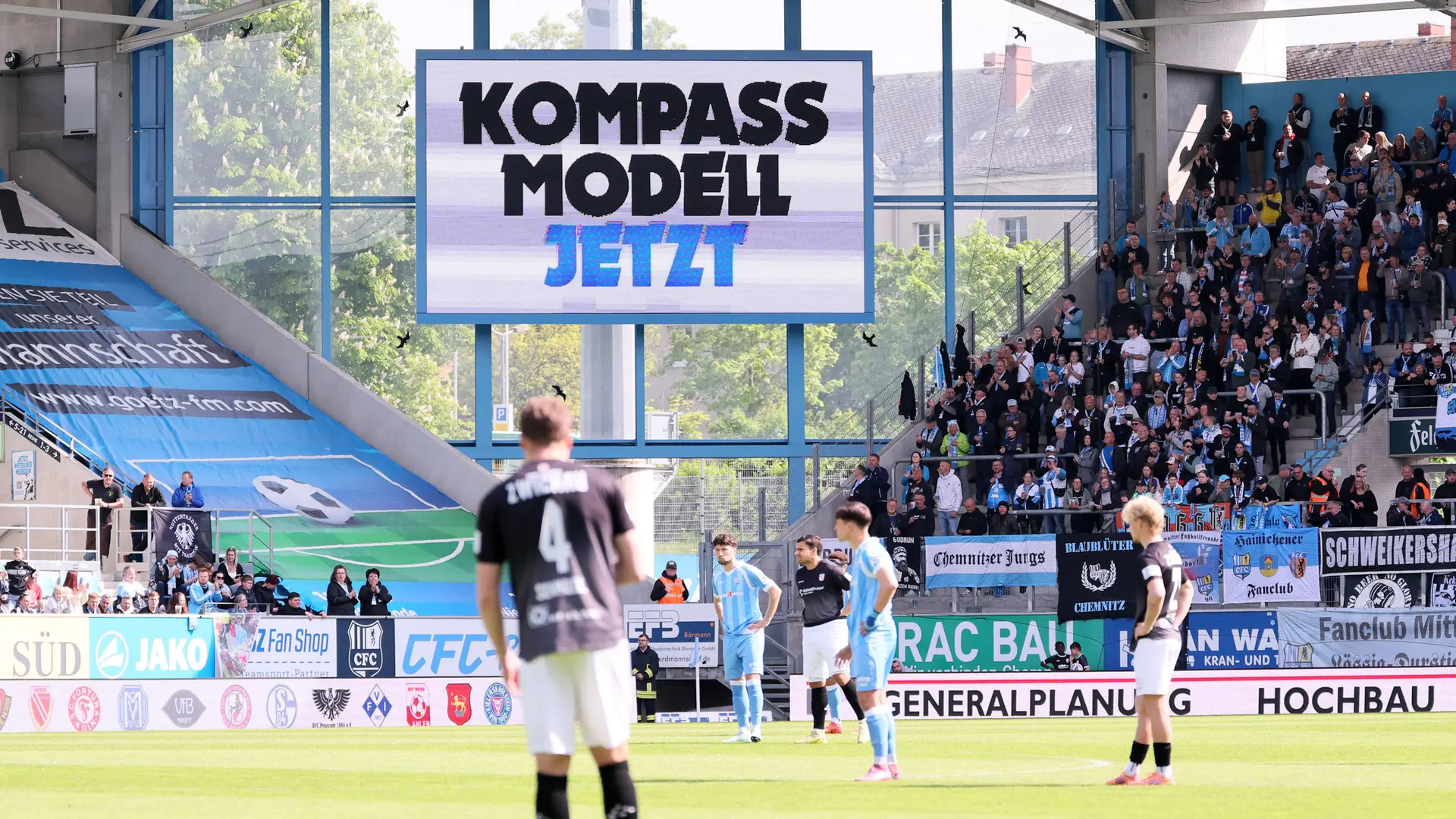
The "Compass Model" is the DFB’s proposed solution: a structural overhaul that would realign regional boundaries into four distinct, balanced leagues of 20 teams each. By aligning the geography with the promotion spots, the DFB aims to guarantee that every league winner earns a direct, unconditional path to professional football. However, regional pride and economic realities in states like Hesse and Bavaria have created a significant roadblock, with critics arguing that the cost of this "fairness" is the destruction of historical, fan-favored rivalries.
2. Chronology of the Reform Debate
The quest for a perfect Regionalliga structure is not a new phenomenon; it has been a recurring headache for the DFB for over a decade.

- 2012-2018: The introduction of the current five-league system was intended to decentralize the fourth tier, but it immediately triggered debates over promotion equity. The "play-off" years, where champions were forced to battle for a spot in the 3. Liga, became a source of immense frustration for clubs who felt that a season of hard work could be undone by a single penalty shootout.
- 2024: Following persistent pressure from member clubs, DFB President Bernd Neuendorf elevated the reform to a matter of "urgent priority." He commissioned an internal task force to study the "Compass Model," which utilizes geographical data to re-draw league lines based on travel efficiency and club density.
- October 2026: As the official draft of the proposal was finalized, opposition began to consolidate. A coalition of influential Hessian clubs issued a formal statement of concern, arguing that the reform was "insufficiently matured."
- November 2026: Following a heated meeting between Neuendorf and the leadership of the Bavarian Football Association, it was revealed that an alternative proposal is being drafted, setting the stage for a dramatic showdown at the December 18, 2026, extraordinary Bundestag.
3. The "Compass Model": Engineering Equality
The fundamental premise of the Compass Model is simplicity: a nationwide, four-tier structure that mimics the professional pyramid. By creating four leagues of 20 teams, the DFB theoretically solves the promotion bottleneck.
The Technical Rationale
The model uses a "centroid" approach—a mapping technique that places teams into the league where their travel distances are minimized. From the DFB’s perspective, this is the most professional way to handle the logistics of the fourth tier. It aims to create:
- Uniformity: Four leagues, four champions, four direct promotion spots.
- Sustainability: Reduced travel costs through optimized geographical placement.
- Predictability: A clear, consistent path for clubs looking to transition from amateur status to the professional ranks of the 3. Liga.
4. The Resistance: Why Hesse and Bavaria Say "No"
While the DFB points to maps and data, the clubs point to their history and their fan bases. The backlash, led by clubs like Kickers Offenbach, FSV Frankfurt, and the Bavarian state association, is rooted in the fear of losing the "cultural fabric" of football.
The Hessian Concerns: Loss of Identity
In a joint statement, a collective of prominent Hessian clubs—including KSV Hessen Kassel, TSV Steinbach-Haiger, and SG Barockstadt Fulda-Lehnerz—expressed deep skepticism. Their primary objection is that the Compass Model treats football clubs like data points on a spreadsheet, ignoring the "emotional geography" of the game.
"The currently discussed reform models are, from the perspective of the Hessian clubs, not yet developed in sufficient depth," the statement reads. The clubs argue that by forcing them into new, arbitrary groupings, the DFB would effectively "tear the clubs out of their ancestral regional environment."
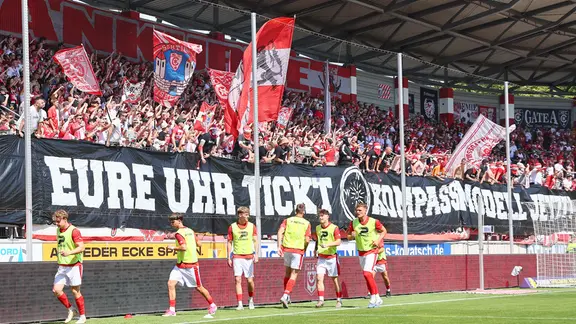
The loss of regional derbies—matches that provide the highest gate receipts and define the identity of the clubs—is a deal-breaker. A league structure that separates Frankfurt from Offenbach or Kassel from their local rivals is viewed by these clubs as an existential threat to their financial viability and fan engagement.
The Bavarian Gambit: Expanding the 3. Liga
Christoph Kern, representing the Bavarian Football Association, has emerged as the primary architect of the opposition. His proposed alternative is not a redistribution of the Regionalliga, but an expansion of the 3. Liga.
Kern proposes increasing the 3. Liga from 20 to 22 teams, thereby creating five relegation spots. This would allow the five existing Regionalliga champions to all be promoted simultaneously. This model is highly attractive to the regional associations, as it keeps their internal structures untouched. However, it faces immense resistance from existing 3. Liga clubs, who fear that diluting the league with more teams—and potentially more relegated sides—will hurt the financial distribution of media rights.
5. Economic and Social Implications
The debate over the Regionalliga is, at its heart, a conflict between two different philosophies of German football.
The Professionalized Vision
The DFB leadership views the current system as a barrier to development. They argue that if German football wants to be competitive on the European stage, it needs a "cleaner" pyramid. If the fourth tier is constantly mired in political infighting, it struggles to attract the television investment and sponsorship that a more organized system would command.
The Traditionalist Vision
For the regional associations, the DFB’s "professionalization" is a form of centralization that ignores the reality of thousands of volunteers, local supporters, and regional sponsors who keep the game alive. When a club like Kickers Offenbach speaks, they are speaking for a community that identifies with its local rivals. If the DFB forces a change that renders these local rivalries obsolete, they risk alienating the grassroots base that provides the foundation for the entire German football system.
6. Official Responses and the Road to December 18
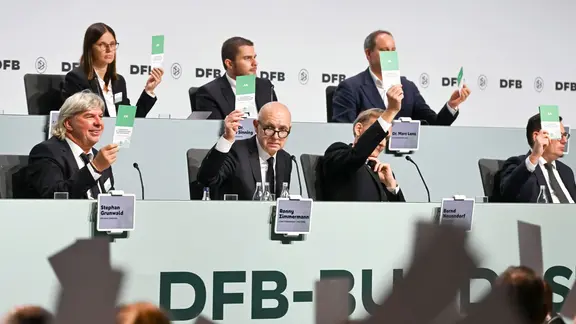
The tension between the DFB executive board and the state associations is reaching a boiling point. President Bernd Neuendorf has framed the reform as essential, warning that the status quo is untenable. However, he is finding that his authority is limited when faced with the collective bargaining power of regional associations.
The Kicker Report and the "Kern Initiative"
Recent reports from the Kicker suggest that Christoph Kern is actively building a coalition for his 22-team 3. Liga proposal. If he succeeds in gathering enough support from the regional delegates by mid-November, the December 18th, 2026, extraordinary Bundestag could see the "Compass Model" voted down before it even gains traction.
The DFB is now in a race against time to either:
- Modify the Compass Model: Integrate safeguards that protect traditional derbies even within the new geographical groupings.
- Lobby the 3. Liga Clubs: Convince the professional clubs that an expansion to 22 teams—while seemingly unfavorable—is the "lesser evil" compared to a total, disruptive regional collapse.
7. Conclusion: A Critical Juncture
The debate over the Regionalliga reform is more than just a logistical dispute; it is a battle for the soul of German football. The "Compass Model" represents the cold, hard logic of efficiency, while the resistance from Hesse and Bavaria represents the preservation of footballing culture.
As the industry looks toward December 18, 2026, the DFB finds itself at a crossroads. If the Compass Model passes, it will mark a new era of centralized control and structural alignment. If it fails, the DFB will be forced back to the drawing board, likely needing to find a path that satisfies both the need for professional equity and the demand for cultural continuity.
One thing is certain: for the sake of the players, the fans, and the clubs themselves, the "haze of uncertainty" that has plagued the Regionalliga for over a decade must end. Whether through the Compass or a new, compromise-heavy path, the DFB must deliver a solution that ensures that a championship is won on the pitch—and rewarded with the promotion that every club dreams of.