By Sports Editorial Desk
Date: October 27, 2026
For 45 years, the trophy cabinet at the Säbener Straße in Munich remained incomplete in one specific, glaring regard. While the FC Bayern mantelpiece is groaning under the weight of Bundesliga shields, DFB-Pokal trophies, and UEFA Champions League titles, the individual pinnacle of world football—the Ballon d’Or—had eluded the club since Karl-Heinz Rummenigge last hoisted it in 1981.
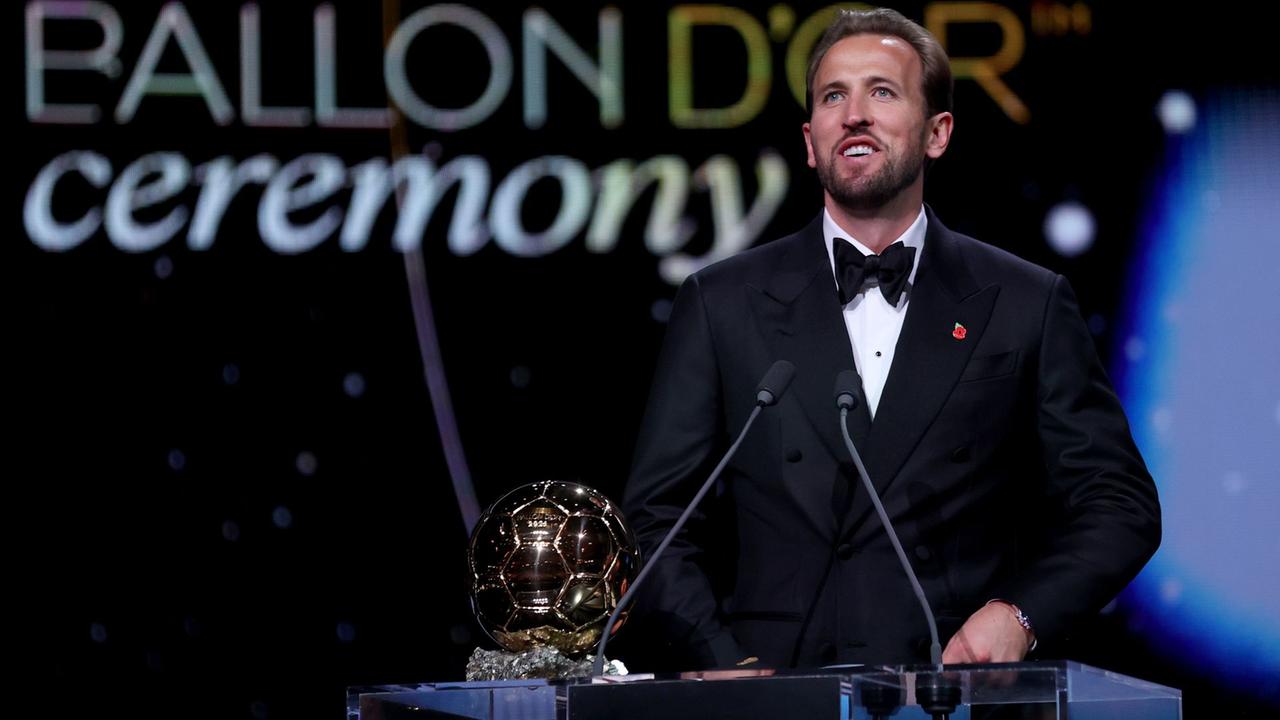
That changed on Monday night. Harry Kane, the talismanic English striker who swapped North London for Bavaria, has finally brought the Golden Ball back to Munich. This is not merely an individual accolade for a prolific goalscorer; it is a profound, strategic, and symbolic shift for one of the world’s most storied football institutions.
The Weight of History: Breaking a 45-Year Drought
To understand the magnitude of Kane’s triumph, one must look at the historical context of the Ballon d’Or. In 1981, when Rummenigge won, the award was exclusively for European players plying their trade in Europe. The landscape today is fundamentally different; the Ballon d’Or now represents the absolute global benchmark of individual excellence.
For decades, FC Bayern has been the "nearly club" when it came to this specific honor. The list of players who wore the red jersey and came agonizingly close is a roll call of legends who define modern football history:
- Franck Ribéry (2013): The architect of the treble-winning season who felt the sting of a controversial third-place finish.
- Manuel Neuer (2014): A pioneer of the modern sweeper-keeper role who arguably changed how the position is played, yet finished behind the perennial duopoly of Lionel Messi and Cristiano Ronaldo.
- Robert Lewandowski (2020 & 2021): Perhaps the most painful chapters. The cancellation of the 2020 award due to the pandemic, followed by his narrow loss in 2021, left a bitter taste in Munich that has lingered for years.
Kane’s victory acts as a cathartic release. It validates the club’s infrastructure and its ability to harbor the world’s best talent, silencing the whispers that suggest the Bundesliga is no longer a stage for the sport’s ultimate individual honors.
The Prestige Gap: The Battle Against La Liga and the Premier League
The Ballon d’Or is more than a trophy; it is a marketing machine and a gravitational force in the transfer market. For the last two decades, Real Madrid and FC Barcelona—driven by the individual brilliance of Cristiano Ronaldo and Lionel Messi—monopolized the award.
This created a "prestige vacuum" in Germany. Young, world-class talents growing up in South America, Africa, or even Europe look toward the clubs that produce winners of the Golden Ball. When a superstar wins that trophy in a white Madrid kit or a blue Barcelona shirt, it acts as a permanent advertisement for that club.
The Recruitment Challenge
FC Bayern has faced increasing difficulty in convincing the next generation of "Galacticos" to choose Munich over the financial might of the English Premier League or the historical allure of the Spanish giants. The club has seen players like Erling Haaland, Dani Olmo, Florian Wirtz, and Anthony Gordon slip through their fingers.
In the case of Anthony Gordon, his public comments upon joining Barcelona—stating that the move was "never a question" once he knew of their interest—highlighted the emotional and "glamour" deficit Bayern has faced. Munich has long been respected for its economic stability and domestic dominance, but it has lacked the "cool factor" that currently defines the elite of Spain and England.
Analyzing the Impact: Why This Changes the Transfer Landscape
Kane’s win provides Bayern with a "soft power" boost that money cannot buy. Here is how this triumph changes the club’s trajectory:
1. Validating the "Bayern Pathway"
While Bayern has historically preferred to develop talent (the Säbener Straße philosophy), Kane proves that a mature, world-class superstar can join Bayern, adapt, and reach the summit of the sport. It tells prospective signings: "You don’t have to go to Madrid to be the best in the world. You can do it in Munich."
2. Marketing and Global Reach
The Ballon d’Or winner brings an inevitable surge in brand visibility. From shirt sales to social media engagement, having the current "King of Football" on the roster provides the commercial department with unprecedented leverage. It makes the club a more attractive partner for global sponsors who want to be associated with the current world number one.
3. Tactical and Cultural Influence
The club’s coaching staff and board recognize that this award serves as a morale booster. As Co-Trainer Aaron Danks noted ahead of the DFB-Pokal fixture against Magdeburg: "I am incredibly happy for Harry and for Bayern Munich. It is a deserved recognition for what this club stands for." This sentiment reflects a shift from a defensive posture—where Bayern had to justify why players should stay in Germany—to an offensive one, where they can lead the narrative.
Chronology: From Rummenigge to Kane
- 1981: Karl-Heinz Rummenigge wins the Ballon d’Or, setting a high bar for the club.
- 2013-2014: The "Near Miss" Era begins as Bayern dominates Europe but sees the individual award go elsewhere.
- 2020-2021: The "Lewandowski Paradox," where Bayern’s dominance is undisputed, yet the Ballon d’Or remains elusive, sparking intense debate over the award’s criteria.
- 2023: Harry Kane signs for FC Bayern, a statement signing that signals the club’s intent to return to the absolute top of the global food chain.
- 2026: Kane secures the Ballon d’Or, ending the 45-year drought and resetting the club’s standing in the hierarchy of world football.
Implications: The "Mia San Mia" Renaissance
The success of Harry Kane must not be treated as an isolated event. It is the centerpiece of a strategic pivot for FC Bayern. The club is moving away from the "quiet giants of Bavaria" persona and leaning into a more global, high-profile identity.
The Wirtz and Musiala Factor
The challenge for the board now is to utilize this momentum. With talents like Jamal Musiala already in the squad and long-term targets like Florian Wirtz still in the crosshairs, the club has the infrastructure to build a dynasty. Kane’s win acts as a mentor-level signal: if you want to win the big one, you come to a place that produces winners.
Financial Sustainability vs. Global Ambition
Bayern remains one of the few elite clubs that operates without massive external debt, a point of pride that has sometimes hindered them in the high-stakes auction for players like Gordon or Haaland. However, the prestige earned through Kane’s Ballon d’Or provides a different kind of currency. It creates an aura of success that can persuade a player to choose the sporting project in Munich over a larger salary package elsewhere.
Conclusion: A New Chapter
As the club prepares for its upcoming domestic and European challenges, the atmosphere at the training ground is palpably different. There is a sense of pride that has been missing for a long time.
Harry Kane’s Ballon d’Or is not just a statue to sit in a trophy case; it is a message to the world. It declares that FC Bayern Munich is not a regional power but a global stage where the absolute best of the best belong. The drought is over. The "Mia San Mia" mentality has found its latest, most glittering expression, and the rest of the footballing world has been put on notice.
The question is no longer whether Bayern can compete with the elite; it is whether the elite can now keep up with the new standard set in Munich.