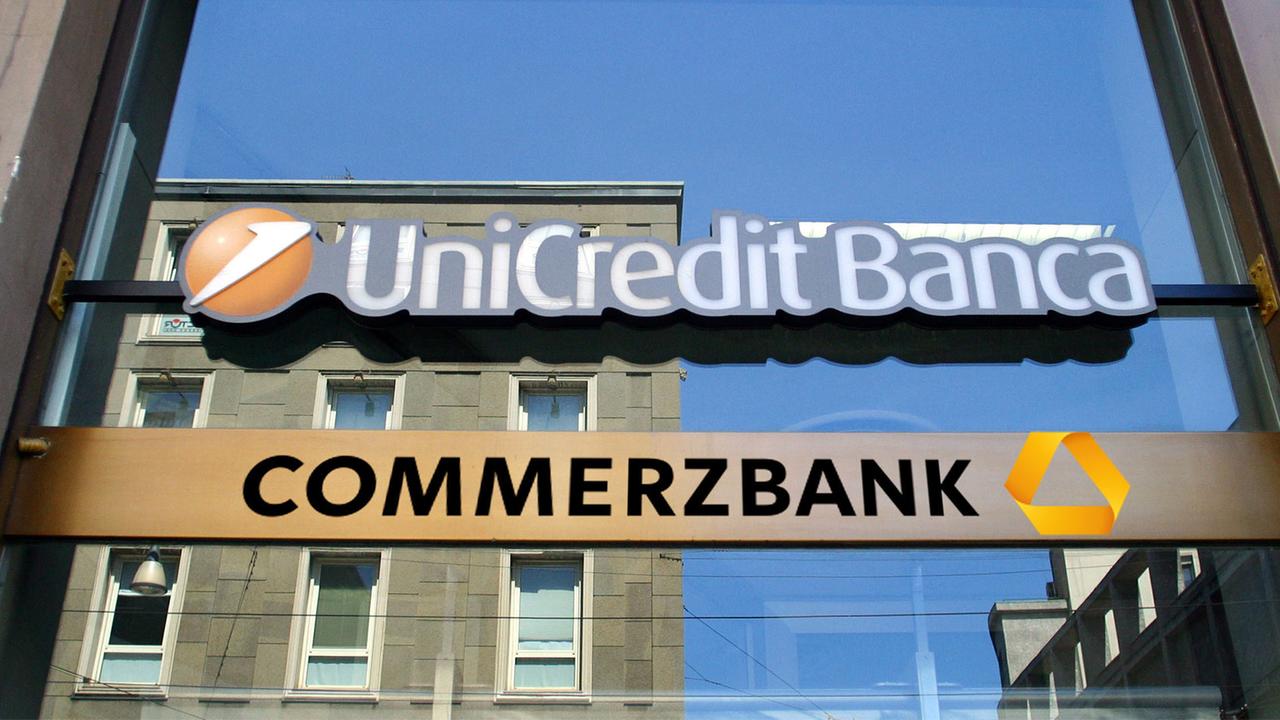
As the European Central Bank grants its formal blessing for UniCredit to increase its stake, the German financial sector stands on the precipice of a historic transformation. What began as a hostile maneuver has evolved into a complex geopolitical and economic puzzle that could redraw the map of European finance.
The landscape of the German banking sector is undergoing its most significant structural shift in decades. With the European Central Bank (ECB) recently signaling its approval for the Italian banking giant UniCredit to acquire a majority stake in Germany’s Commerzbank, the industry is bracing for a seismic change. The move, which has been met with both cautious optimism from market analysts and fierce resistance from labor unions, marks the potential end of an era for one of Germany’s most storied financial institutions.
The Chronology of an Aggressive Takeover
The path to this juncture has been anything but conventional. The saga began when UniCredit, led by its CEO Andrea Orcel, began quietly accumulating shares in Commerzbank. By mid-2024, the Italian bank had secured a stake of nearly 30 percent, effectively crossing a critical threshold that alerted regulators and sent shockwaves through the corridors of power in Berlin.
Initially, the move was perceived as a hostile "raid." The German government, which still holds a 13 percent stake in Commerzbank—a legacy of the state bailout during the 2008 financial crisis—expressed strong disapproval. Berlin’s opposition was rooted in concerns regarding the potential loss of a key domestic lender for Germany’s vital "Mittelstand" (small and medium-sized enterprises).
Despite this, UniCredit continued its pursuit, utilizing complex derivative instruments and secondary market purchases to lock in its position. In October 2026, the final regulatory hurdle was cleared when the ECB confirmed that there were no supervisory objections to UniCredit increasing its stake beyond the 30 percent limit, effectively removing the ceiling on its potential ownership.
Key Facts: The Anatomy of the Deal
To understand the scale of this transaction, one must look at the numbers. If UniCredit achieves its stated goal of securing a 50 percent stake by the end of the year, it will effectively gain operational control over Commerzbank.
- Financial Footprint: The combined entity would boast a staggering balance sheet of approximately 1.3 trillion euros, creating a powerhouse capable of competing with the largest financial institutions in the United States and Asia.
- Regulatory Status: While the ECB has given its blessing, the process remains subject to the final approval of the European Commission’s competition authorities, who must ensure that the merger does not result in an unhealthy market monopoly.
- The Stakeholder Power Struggle: The German government remains a pivotal player. By retaining its 13 percent stake, the state is not merely a passive investor but a strategic gatekeeper. The German government is currently leveraging this position to extract guarantees regarding the preservation of Commerzbank’s Frankfurt headquarters and the protection of its domestic employees.
Supporting Data: Why Now?
Why is UniCredit so determined to capture the German market? Financial experts point to the persistent "home-bias" that has hampered European banking efficiency for years. Florian Heider, Scientific Director at the Leibniz Institute for Financial Research (SAFE), notes that German banks have struggled to scale compared to their international peers.
"The European market remains fragmented," Heider explains. "US banks benefit from a massive, unified domestic market. European banks, by contrast, are often restricted by national borders. Cross-border mergers like this are one of the few viable paths to achieving the scale necessary to remain competitive in a digital, globalized economy."
The data supports this perspective. While the German banking sector is stable, it is often criticized for low profitability and outdated cost structures. By merging Commerzbank with its existing German subsidiary, HypoVereinsbank, UniCredit aims to unlock billions in synergies, streamline operations, and eliminate redundant infrastructure.
Official Responses and Political Maneuvering
The tone from Berlin has shifted from outright hostility to pragmatic, albeit tense, negotiation. Federal Finance Minister Lars Klingbeil recently remarked that there are no longer "hardened fronts," but rather "constructive conversations" taking place between the government, the management of the two banks, and the European regulatory bodies.
The shift reflects a sobering reality: in a global market, the protectionist instincts of national governments are often at odds with the economic benefits of European integration. However, the government is not yielding without conditions. Their demands are clear:
- Headquarters: Commerzbank must remain anchored in Frankfurt.
- Mittelstand Support: The new entity must maintain its commitment to lending to German small and medium-sized businesses.
- Job Security: A moratorium on forced redundancies is a central pillar of the ongoing negotiations.
Implications: The Human Cost and Market Shifts
While shareholders and analysts see a "milestone," the workforce sees a threat. The service sector union, ver.di, has been vocal about its fears of a "slaughter" of jobs. Jan Duscheck, the union’s representative for the banking industry, has demanded immediate clarity, noting that with 40,000 employees globally, the uncertainty is creating a toxic work environment. Estimates suggest that a full integration could lead to the loss of up to 15,000 positions as back-office functions and branch networks are consolidated.
Furthermore, the impact on corporate clients is a point of concern. Competitors like Deutsche Bank are actively courting Commerzbank’s disaffected corporate clients, hoping to capitalize on the uncertainty. Yet, there is a counter-argument: for companies with international operations, the merger could be a boon. A bank with a robust presence in both Germany and Italy—and a deep reach into Central and Eastern Europe—could offer a superior service for multinational European corporations.
The Future of Leadership
The most immediate question following a successful acquisition is: who will run the bank? Financial experts, including Volker Brühl of the Center for Financial Studies at Goethe University, suggest that the current management board of Commerzbank is unlikely to survive. Having fought the takeover with such vehemence, their relationship with the new owners is effectively irreparable.
UniCredit is expected to call for an extraordinary general meeting early next year to install its own candidates on the supervisory board. This board will, in turn, be responsible for appointing a new CEO. While the German state intends to retain its right to nominate two board members, the balance of power has decisively shifted toward Milan.
Conclusion: A New Chapter for Europe
The potential acquisition of Commerzbank is more than a corporate takeover; it is a litmus test for the European Banking Union. It asks whether the European market can truly function as a single economic bloc, or if national interests will continue to obstruct the consolidation necessary to challenge the global giants of Wall Street.
For Germany, the loss of Commerzbank’s independence is a historic caesura—the end of a 156-year-old tradition. Yet, for Europe, it may be the necessary evolution of a financial sector that has for too long remained a collection of national silos. As the year draws to a close, all eyes will be on the boardrooms in Frankfurt and Milan, waiting to see if the promise of a more competitive, unified European bank can be fulfilled without sacrificing the stability and employment that the German financial system has long provided.
The deal is, by all accounts, no longer a matter of "if," but "how." The coming months will determine whether this transition creates a new, formidable champion for the European economy or a cautionary tale of corporate overreach.