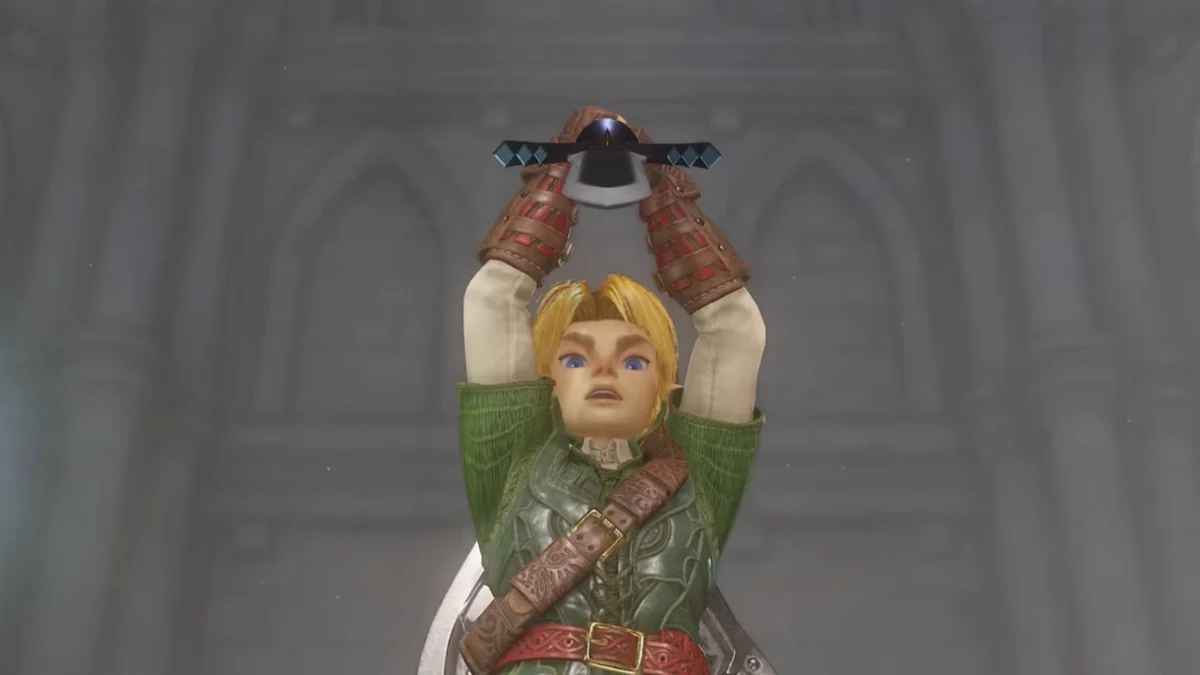
For nearly three decades, The Legend of Zelda: Ocarina of Time has occupied a throne in the pantheon of video games that few have dared to challenge. With a legendary Metacritic score of 99, it remains the gold standard of critical acclaim. As the gaming world prepares for the release of the long-awaited Nintendo Switch 2, all eyes have been fixed on the platform’s flagship a ground-up reimagining of the 1998 classic. With the review embargo lifting just one day ahead of its November 5, 2026, release, the verdict is in—and it is nearly perfect.
The Consensus: A Flawless Return to Hyrule
The data is as overwhelming as it is impressive. With 80 critical reviews now registered on Metacritic, the Ocarina of Time remake for the Nintendo Switch 2 has secured a stellar Metascore of 96. Perhaps most striking is the distribution of these reviews: there is not a single negative or even mixed critique to be found.
Every single outlet, from industry titans to specialized gaming magazines, has classified the experience as "universally acclaimed." The chorus of praise includes top-tier marks of 100/100 from renowned publications such as GamesRadar+, Eurogamer Germany, Destructoid, and 4Players. Critics have praised the title for its masterful balance of nostalgia and modernization, noting that while the core DNA of the 1998 masterpiece remains intact, the graphical fidelity, quality-of-life improvements, and refined mechanics make it feel like a brand-new experience suited for modern hardware.
A Chronological Perspective: Measuring Greatness
To understand the magnitude of this score, one must look at the history of the franchise’s critical reception.
The 1998 Benchmark
The original Nintendo 64 release of Ocarina of Time is the highest-rated game in the history of the aggregator site. However, it is essential to contextualize that 99-point score. It was derived from 22 reviews—a modest sample size by today’s standards, reflecting the niche nature of gaming journalism in the late 90s. While the score remains a monument to the game’s impact, critics often point out that the sheer volume of modern scrutiny makes maintaining such a high average significantly more difficult.
The 3DS Transition
In 2011, Nintendo attempted to bring the magic of Hyrule to a new generation with Ocarina of Time 3D for the Nintendo 3DS. While it was a critical success, it settled at a 94 on Metacritic. While stellar, it fell just short of the original’s impossible standard. The current Switch 2 remake, sitting at 96, has successfully surpassed its 3DS predecessor, proving that even after 28 years, the title possesses a unique ability to adapt and thrive.
Supporting Data: Why the Score Matters
The current 96/100 score is a testament to the meticulous work of the development team. Unlike a simple "HD remaster," this remake appears to have been treated with the reverence of a cultural heritage project.
The analytical breakdown of the 80 reviews suggests three primary pillars for the game’s success:
- Technical Fidelity: Leveraging the advanced capabilities of the Switch 2, the game features lighting, textures, and draw distances that were previously impossible, effectively realizing the vision the developers had in 1998.
- Mechanical Modernization: By integrating modern control schemes, haptic feedback, and refined user interfaces, the game removes the "clunkiness" often associated with N64-era titles without compromising the challenge of the original puzzles.
- Pacing and Atmosphere: Critics have noted that the game’s pacing holds up remarkably well against modern open-world design, serving as a reminder of why the original was considered a blueprint for the 3D action-adventure genre.
The November Clash: Zelda vs. The Titans
The release of Ocarina of Time on November 5, 2026, sets the stage for one of the most competitive months in gaming history. The game arrives exactly two weeks before the highly anticipated release of Grand Theft Auto VI.
While Rockstar Games’ GTA VI is arguably the most hyped product in the history of the medium, it remains to be seen if it can challenge the critical record set by Ocarina of Time. The sheer scale of GTA—a massive, systemic open world—presents a different type of design challenge compared to the tightly curated, dungeon-centric design of Zelda.
The Player Sentiment
While critics have spoken, the community’s voice is equally compelling. Recent polling conducted by ComputerBase regarding the November 2026 release schedule offers a fascinating snapshot of current player sentiment.
- 30.4% of participants have identified Ocarina of Time as their "must-play" title for the month.
- 25.6% are looking toward World of Warcraft: Forever, indicating a strong appetite for established, nostalgic franchises.
- 25.2% of respondents are prioritizing GTA VI, a figure that highlights the split in the market between open-world sandbox enthusiasts and fans of classic adventure titles.
Other titles such as Stellar Blade Complete Edition (5.3%), Warhammer Survivors (4.8%), and Gothic 3 Classic (4.3%) round out the list, though it is worth noting that 29.3% of participants expressed a lack of interest in the major November releases, perhaps waiting for the holiday season to settle before making a purchase.
Implications for the Industry
The success of Ocarina of Time on the Switch 2 carries profound implications for the gaming industry. It validates the "remake strategy" that has become a staple of modern publishing. When done with sufficient care and technological investment, a remake can not only serve as a financial success but can also reinvigorate a brand, introducing classic mechanics to a younger audience that may have been intimidated by the technological barriers of the original hardware.
Furthermore, it establishes the Switch 2 as a console capable of delivering both high-performance, modern gaming experiences and legacy content that resonates with core fans. By positioning Ocarina of Time as the primary "killer app" for the console’s launch window, Nintendo has successfully utilized nostalgia as a bridge to sell new hardware.
Final Reflections
Will the score of 96 hold? As more reviews trickle in from smaller outlets and late-arriving international publications, the average may fluctuate slightly. It is mathematically unlikely that the remake will touch the 99-point record of the original, but in the context of modern game criticism, a 96 is effectively an equivalent triumph.
The enduring legacy of The Legend of Zelda: Ocarina of Time is not just in its score, but in its ability to remain relevant across three decades of rapid technological advancement. Whether one is a veteran of the N64 era or a newcomer exploring the plains of Hyrule for the first time on the Switch 2, the message from the critical community is clear: some legends never fade. They simply wait for the right moment to be retold.
As we approach the November 5 release date, the industry will watch closely not just to see if the game sells units, but to see if it can maintain this level of critical dominance in the face of the massive cultural tidal wave that is GTA VI. For now, Nintendo can rest easy—they have reminded the world exactly why Hyrule is the most important map in gaming history.