


As the nights draw in and the autumnal crispness settles across Europe and North America, a familiar, ritualistic disruption approaches: the biannual adjustment of our clocks. On the night of October 25, 2026, the hands of the clock will turn back from 3:00 a.m. to 2:00 a.m., gifting the population an extra hour of sleep. Yet, beneath this seemingly benign adjustment lies a growing, contentious debate about the necessity, health impact, and future of time-shifting.
For years, critics have decried the practice as a relic of the past, with experts like Steffen Schändlich, a sleep researcher based in Halle, Germany, labeling the switch "utterly pointless." As the debate intensifies, the central question has shifted from "should we stop changing the clocks?" to "which time should we adopt permanently: Summer or Winter?" The answer, according to a growing body of medical research, is more definitive—and more surprising—than many realize.
The Great Clock Reset: Main Facts and Current Status
The transition from Daylight Saving Time (DST) back to Standard Time (often referred to as "Winter Time") is a practice rooted in the early 20th century, initially designed to optimize daylight usage for energy conservation and agricultural productivity. However, in our modern, electrified, and digitized society, these original justifications have largely withered.

The primary conflict in the current political landscape is a clash of preferences. Public opinion polls, such as those conducted by Forsa, consistently show a majority of citizens in favor of a permanent "Summer Time" (DST). The rationale is simple and intuitive: people want to enjoy long, light-filled evenings after work or school. Conversely, the scientific and medical community has largely coalesced around an opposing view, advocating for a permanent "Winter Time" (Standard Time).
A Chronological Perspective: How We Got Here
To understand the current gridlock, one must look at the history of the practice.
- 1916: Germany was the first country to introduce DST during World War I to save fuel.
- The 1970s: The Oil Crisis prompted many Western nations to adopt formal, extended DST as an energy-saving measure.
- 2014: Russia, after a three-year experiment with permanent Summer Time, abruptly reverted to permanent Winter Time due to public dissatisfaction with dark winter mornings.
- 2018: The European Commission, responding to a massive public consultation, proposed the abolition of the time-switch.
- 2026: The stalemate continues. While the political will to abolish the switch exists, the lack of consensus on whether to stick with Summer or Winter time has caused the legislation to languish in European Union committees.
Why the Medical Consensus Favors Winter Time
The argument for permanent Winter Time is not based on preference, but on biology. Our bodies are governed by the circadian rhythm—an internal clock synchronized by sunlight.

The Importance of Morning Light
A recent systematic review of existing studies, led by psychiatrist Dr. Raymond Lam of the University of British Columbia, highlights the critical role of morning light. According to Dr. Lam, "Morning light is crucial for our internal clock, our sleep, and our mood."
When we force ourselves to operate on a permanent Summer Time schedule, we effectively shift our social clock away from our biological clock. This creates a state of "social jetlag." By artificially pushing the sunrise later into the morning, we deprive the body of the light signals it needs to wake up effectively.
The Health Implications
The data suggests that a permanent Summer Time would lead to a surge in sleep-related disorders. In regions where the sun rises late, there is a statistically higher prevalence of seasonal affective disorder (SAD), depression, and sleep fragmentation. Even now, during the transition periods, researchers observe that between one and three percent of the population experiences significant health disruptions.
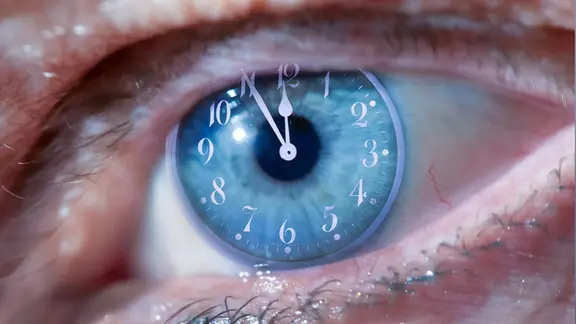
Furthermore, research indicates that people living on the western edge of a time zone—where the sun rises later than in the east—already exhibit higher risks for various health conditions, including metabolic issues and decreased cognitive performance, simply due to the mismatch between their local time and the sun’s position.
Balancing Productivity vs. Preference
It is essential to acknowledge why the public prefers Summer Time. Professor Patrick Baylis, an economist at the University of British Columbia, notes: "People value having more daylight after work and school." This is a tangible quality-of-life benefit.
However, the medical community warns that these evening benefits come at a cost. The trade-off for an extra hour of evening light is a persistent state of sleep deprivation for a large segment of the population. Studies have shown that a lack of alignment between our work schedules and natural light cycles leads to lower productivity and poorer educational outcomes. The "afternoon slump" is exacerbated when our internal systems are forced to wait for a dawn that feels perpetually delayed.

Official Responses and Policy Gridlock
The European Union’s attempt to end the time change has become a case study in bureaucratic paralysis. While the European Commission formally proposed the change in 2018, the power to choose the final time zone rests with individual member states.
The fear among policymakers is twofold:
- Economic Disruption: A fragmented map of time zones across Europe could wreak havoc on logistics, aviation, and cross-border commerce.
- Public Backlash: Governments fear that if they implement permanent Winter Time, the public will be furious about the "lost" light in the evenings. If they implement permanent Summer Time, they fear potential long-term health care costs and public health crises caused by chronic sleep deprivation.
As a result, member states have largely opted for the status quo, preferring the known, albeit flawed, system of changing clocks over the political risk of choosing a "wrong" permanent time.

Implications for the Future: What Can We Expect?
As we approach the 2026 time change, the evidence points toward a growing rift between public desire and scientific necessity.
The Impact on Vulnerable Populations
Children and teenagers are particularly susceptible to the effects of shifting time. The 1974 US experience—where permanent Summer Time was implemented during the oil crisis and then quickly repealed—remains a cautionary tale. Parents were horrified by the prospect of children waiting for the school bus in total darkness, leading to increased safety concerns and a public outcry that forced the government to revert to the old system.
Potential Solutions
Some chronobiologists have suggested "middle-ground" solutions, such as shifting school and work start times rather than the entire time zone. If we cannot agree on a single time, perhaps we should adjust our social expectations of when the day begins. By starting work and school an hour later, we could effectively achieve the benefits of "more light" without the physiological costs of permanently shifting the clock.
Conclusion
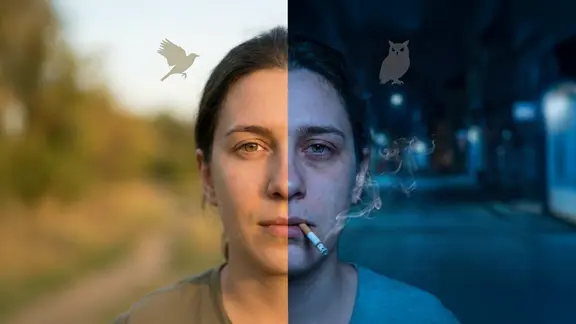
The debate over the clock is, at its core, a debate over how we want to live. Do we prioritize our immediate, leisure-based desire for light at the end of the day, or do we respect the evolutionary programming of our internal biological clocks?
While the political debate remains deadlocked, the scientific evidence is increasingly clear. A permanent shift to Summer Time would likely act as a public health experiment with negative long-term consequences for sleep, mood, and cognitive health. As we turn our clocks back this October, we are reminded that while we can manipulate the hands on the wall, we cannot easily manipulate the biology that dictates our health. Until policymakers can bridge the gap between human biology and societal convenience, we are likely to remain stuck in this biannual cycle—a constant, rhythmic reminder of our inability to fully control the passage of time.


