In an era where humanity faces escalating health crises and the urgent need to transition away from fossil-fuel-based industries, researchers at the Martin Luther University Halle-Wittenberg (MLU) are turning to an unexpected source: the trash heap. By marrying agricultural leftovers with the precision of Artificial Intelligence, scientists are unlocking powerful medicinal compounds that were previously too expensive or rare to manufacture at scale.
The Hidden Power of Plants
Nature has long been a pharmacy. From the humble hop plant to complex botanical structures, plants synthesize a vast array of "secondary metabolites." Unlike primary substances like sugars and proteins, which are essential for a plant’s basic survival, secondary metabolites are the plant’s defense mechanisms. They act as natural pesticides, chemical deterrents against herbivores, or beacons to attract pollinators.
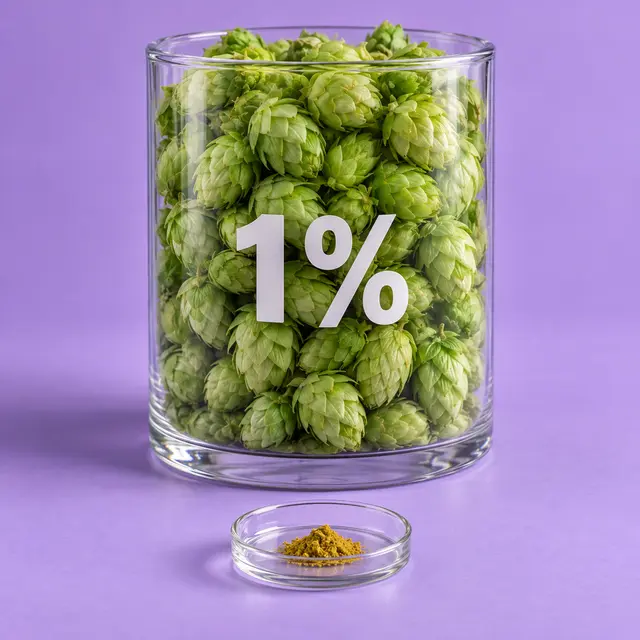
In the case of hops, one such compound is "Xanthohumol," a prenylated phenolic compound with significant biological activity. While these compounds are medically promising—showing potential to stimulate the nervous system, prevent Alzheimer’s, inhibit cancer cell growth, regulate inflammatory processes, and combat diabetes—they are notoriously difficult to obtain. In a typical plant, these specialized substances often account for less than one percent of the total mass. Extracting, isolating, and purifying them has historically been a cost-prohibitive, labor-intensive process, making mass production for medicine a daunting hurdle.
The Paradigm Shift: Redefining "Waste"
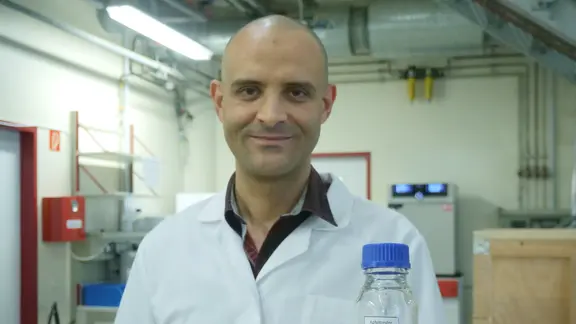
Enter Mohamed Nagia, a pharmaceutical researcher at the Martin Luther University Halle-Wittenberg. Nagia’s team is challenging the traditional definition of industrial byproducts. Instead of viewing agricultural residue as waste, they view it as a primary raw material.
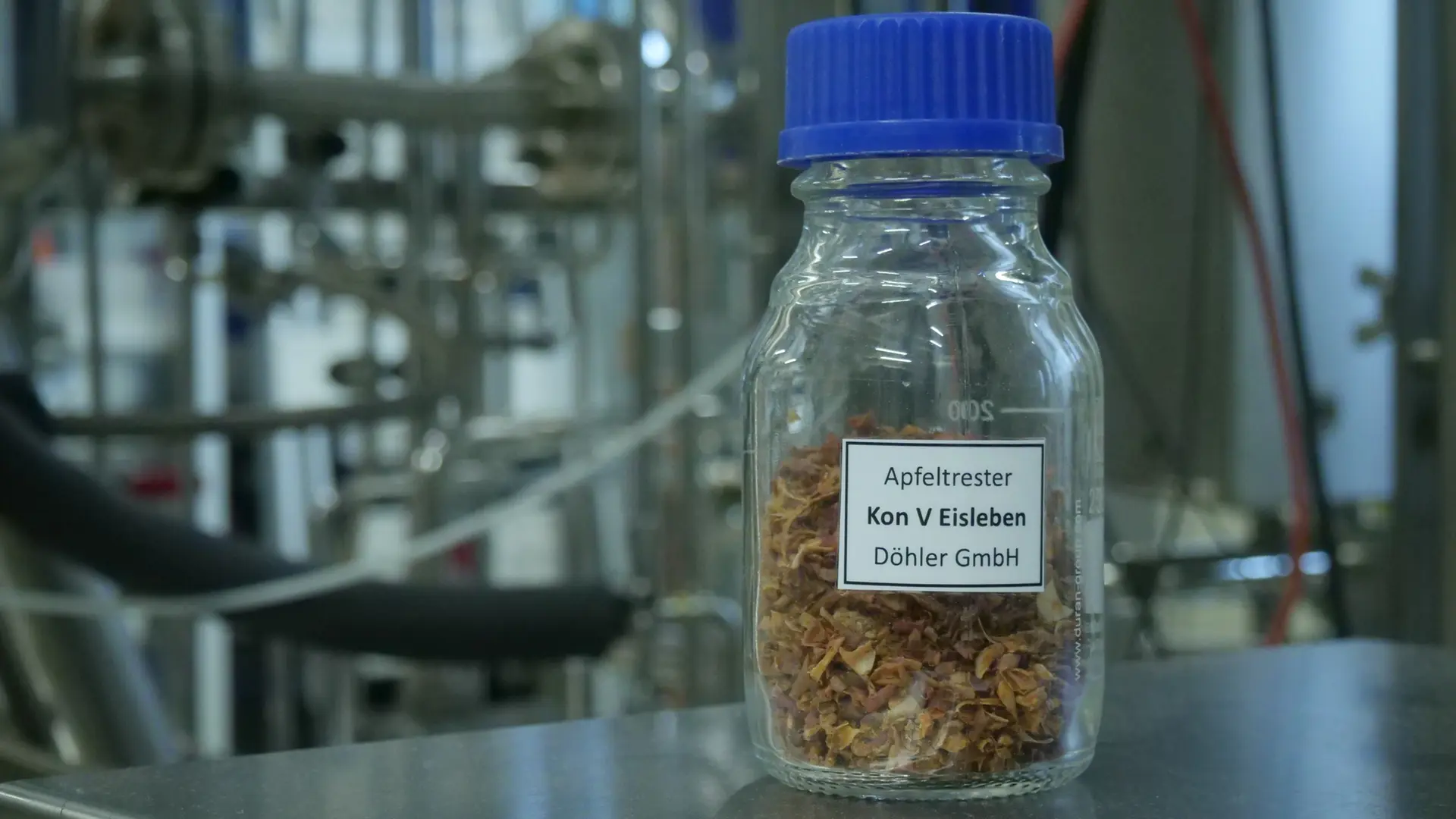
"Our motto is: No waste, we call it starting material," says Nagia.
The project focuses on two major industrial streams: apple pomace—the pulp left over after juice production—and lignin, a byproduct of the paper industry. The scale of this potential feedstock is immense. In Germany alone, the production of roughly 500 million liters of apple juice annually results in up to 250,000 tons of apple pomace. By tapping into these massive streams, the researchers are securing a sustainable, low-cost supply chain for their experiments.
The Role of AI in Molecular Discovery
The central challenge remains: how to extract or synthesize these compounds efficiently? The answer lies in enzymes. Enzymes are nature’s high-speed catalysts, and for every secondary plant metabolite, there exists a specific enzyme responsible for its creation. However, the human body and the botanical world contain thousands of different enzymes, creating a "needle in a haystack" problem.
To solve this, Nagia’s team collaborates with Mehdi Davari from the Leibniz Institute for Plant Biochemistry. They utilize AI algorithms to navigate vast biological databases. "We cannot test every possibility in the laboratory," explains Davari. "We use AI to scan data and suggest the best candidate enzymes."
This digital-first approach allows researchers to design and simulate enzyme interactions on a computer. Only the most promising candidates are then moved to the wet lab for physical testing, drastically reducing research and development timelines and costs. This methodology has already culminated in the creation of a digital platform that can be adapted for various enzymatic processes, not just those related to apple pomace.
The Future: Cellular Factories
Once the ideal enzymes are identified, the next stage of the project involves "molecular cell factories." Scientists are genetically modifying yeast cells to act as bio-reactors. By tweaking the metabolism of these cells, they can induce them to produce high concentrations of the desired secondary plant metabolites.
The goal is to provide the pharmaceutical industry with a "toolbox" of standardized, scalable processes. By using yeast to ferment agricultural residues, manufacturers could potentially produce complex medicinal precursors in large batches, independent of seasonal harvests or climate fluctuations.
Chronology of a Bio-Economic Transformation
- The Foundation: Initial research identified the high potential of secondary plant metabolites for treating chronic diseases.
- The Problem: The extraction cost for these rare compounds remained prohibitive for standard pharmaceutical applications.
- The Pivot: Researchers at MLU began investigating agricultural waste streams (lignin and apple pomace) as carbon-rich feedstocks.
- The Digital Integration: The adoption of AI-driven protein engineering allowed for the rapid identification of enzymes capable of converting these feedstocks.
- The Pilot Phase: Development of "cell factories" using yeast cells began, turning lab-scale findings into potential industrial processes.
- The Present: Integration into the regional structure-change strategy for Central Germany, supported by a 100-million-euro federal investment.
Supporting Data: The Scale of Opportunity
The economic implications for Central Germany are profound. As the region pivots away from coal-based energy, it is positioning itself to become a global leader in the bio-economy.
- Feedstock Potential: 250,000 tons of apple pomace per year in Germany alone.
- Investment: The federal government has earmarked 100 million euros to support the "Digitalization of Plant Value Chains," a network of 20 research projects.
- Human Capital: More than 2,600 people are currently employed in research and industrial roles related to the bio-economy in the region.
- Efficiency Gains: AI-assisted enzyme design has shortened the time-to-discovery for metabolic pathways by an estimated 60% compared to traditional screening methods.
Official Perspectives on the Structural Shift
Klaus Pillen, an agronomist at the University of Halle, underscores the importance of this work for the regional economy. "These projects contribute to an extensive value creation," says Pillen. "There is often more value in these residues than in the fruit itself."
The regional organization BioEconomy e.V. confirms that the bio-economy has already become a critical pillar for the region. By shifting from fossil-based chemical production to renewable, plant-based inputs, the region is securing its industrial relevance for the 21st century.
Implications for Medicine and Industry
The implications of this research extend far beyond the laboratory. If successful at a commercial scale, the "Halle Model" could transform the pharmaceutical industry by:
- Reducing Costs: Lowering the barrier to entry for producing complex, plant-derived drugs, potentially making life-saving treatments more affordable.
- Enhancing Sustainability: Replacing petroleum-derived precursors in chemical synthesis with renewable agricultural waste.
- Strengthening Food Security: By creating value for farmers through waste-stream monetization, the project stabilizes the agricultural sector.
- Decentralizing Production: Creating specialized, high-tech manufacturing hubs in former industrial areas, preventing economic stagnation during the energy transition.
In conclusion, the work being done at the University of Halle is more than just a scientific experiment—it is a blueprint for a circular economy. By treating the byproduct of the apple juice industry as a precious resource and using the raw power of Artificial Intelligence to harness nature’s own chemistry, researchers are proving that the medicine of the future may well be hidden in the waste of the past.