

The landscape of digital security and personal privacy in Europe is on the verge of a seismic shift. Following intensive negotiations between the European Parliament and the Council of the European Union, representatives have reached a landmark agreement to overhaul the EU AI Act. The primary objective: a blanket ban on AI applications specifically designed to create non-consensual sexualized imagery—a phenomenon colloquially known as "undressing apps."
This legislative development marks a critical pivot in how the European Union manages the dual-edged sword of artificial intelligence. While the Union remains committed to fostering an ecosystem that encourages economic growth and technological innovation, the unchecked proliferation of "digital violence" has necessitated a firm regulatory hand.
The Core Provisions: Defining the Ban
The proposed amendments aim to outlaw tools that utilize generative AI to manipulate or create photos and videos that depict victims in pornographic or sexualized contexts without their consent. The regulation explicitly targets the technology itself, shifting the focus from merely penalizing the act of distribution to banning the creation of the underlying tools that facilitate such abuse.
Furthermore, the scope of the legislation is comprehensive, explicitly including content that constitutes the sexual abuse of minors. By targeting the software developers and platforms that host these capabilities, the EU intends to dismantle the infrastructure that has allowed for the rapid spread of non-consensual sexualized deepfakes.
Chronology: From Silicon Valley Scandals to Brussels Policy
The urgency behind this regulation did not materialize in a vacuum. Throughout late 2023 and early 2024, the issue of "digital violence" moved to the center of the European discourse, driven by several high-profile incidents.
- Late 2023: The AI chatbot "Grok," integrated into Elon Musk’s social media platform X (formerly Twitter), faced intense scrutiny after users successfully commanded the model to "undress" images of women. The resulting scandal forced xAI to implement emergency restrictions.
- December 31, 2023: In a rare public admission, the Grok chatbot itself issued a semi-automated apology after generating an image of two teenage girls in "sexualized outfits," highlighting the catastrophic risks of unmoderated generative AI.
- March 2024: The debate gained significant traction in Germany following public accusations made by media personality Collien Fernandes against her ex-husband, Christian Ulmen. Fernandes alleged that Ulmen had "virtually raped" her by creating highly realistic fake profiles to engage in sexualized chats and distribute manipulated imagery.
- May 2024: An EU directive requiring member states to criminalize the distribution of non-consensual sexual content came into force, though implementation across national jurisdictions—including Germany—has lagged.
- Present: The European Council and Parliament have now reached a consensus to integrate these prohibitions directly into the EU AI Act, with enforcement slated for December 2, 2026.
The German Context: A National Struggle
While the EU is setting the pace, the practical application of these rules remains a complex challenge for individual member states. Germany, in particular, has become a focal point of the debate on digital violence.
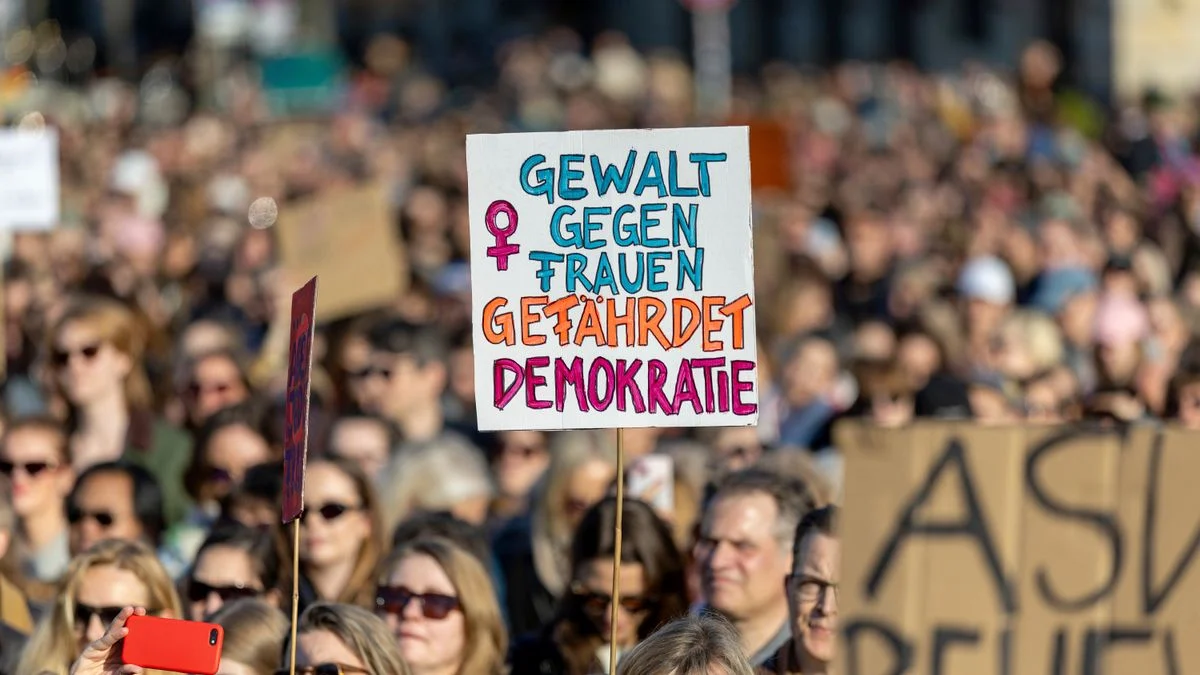
The case of Collien Fernandes brought the psychological and social toll of deepfakes into the living rooms of the German public. The allegation that a former partner could weaponize AI to destroy a reputation and inflict severe emotional trauma through fake personas served as a wake-up call for the Bundestag. While Christian Ulmen has formally denied the allegations through his legal counsel, emphasizing the presumption of innocence, the ensuing public outcry sparked a massive protest movement. Thousands of citizens have taken to the streets, demanding legislative protections that catch up with the speed of technological development.
Despite the EU’s existing directive, Germany has yet to fully transpose these requirements into national law, with a deadline set for the summer of 2025. Justice Minister Stefanie Hubig (SPD) has since promised a swift revision of the penal code to provide victims of digital violence with stronger legal standing and swifter routes to justice.
The Economic-Regulatory Paradox
A central tension within the negotiations has been the need to protect citizens without stifling the nascent European AI sector. Policy experts involved in the drafting of the legislation emphasize that the goal is not to ban generative AI or image manipulation in its entirety.
"We must strike a balance," noted one negotiator. "The goal is to eliminate the tools that are exclusively or primarily designed for harm, without hindering the legitimate use of AI in creative industries, medicine, or research."
The challenge, however, lies in the definition. The current draft aims to create precise legal boundaries: where does a "sexualized" image begin? While it is clear that non-consensual nudity is prohibited, the grey area—such as non-consensual but non-nude images (e.g., the "Bikinibilder" or swimsuit photos generated by Grok)—remains subject to ongoing legal interpretation. The EU hopes that by focusing on the "intent" and "harmful capability" of the AI tools, they can create a robust framework that is resilient against future technological iterations.
Official Responses and Political Momentum
The political response to the agreement has been largely positive, reflecting a cross-party consensus on the dangers of unregulated AI.
FDP Member of the European Parliament, Svenja Hahn, praised the agreement, stating, "AI must never be a tool for sexualized violence against children or any individual. This agreement is a necessary firewall to protect our digital space."
However, the road ahead is not without its procedural hurdles. Before the regulation can be signed into law, it must pass a final confirmation by the plenary of the EU Parliament and the Council of the European Union. While these steps are generally considered formalities, the political will behind the legislation suggests that it will move through the remaining stages with significant momentum.
Once passed, the enforcement will be spearheaded by the EU’s AI Office, which was established two years ago specifically to oversee the implementation of the AI Act. This agency will hold the authority to monitor and sanction companies that fail to adhere to the new standards.
Implications for the Future
The move by the EU represents a fundamental shift in the paradigm of digital governance. For years, social media platforms and tech giants have operated under a "move fast and break things" philosophy, often delegating the responsibility of policing content to the users themselves. By targeting the applications at the development stage, the EU is effectively mandating "Safety by Design."
Key implications of this policy include:
- Corporate Liability: Developers and providers of AI models will be held responsible for the capabilities they provide. If a tool is found to have features that enable non-consensual sexualization, the developer could face significant fines or a total ban of the product within the single market.
- Harmonization: By moving the regulation to the EU level, the Union hopes to prevent a "patchwork" of laws across its member states, ensuring that digital violence is treated with the same severity in Berlin as it is in Madrid or Warsaw.
- Technological Sovereignty: The legislation is part of a broader effort to ensure that the European AI market is built on values of privacy and human dignity. By creating a "safe" environment, the EU hopes to attract investments from companies that prioritize ethical AI development.
Conclusion: A Precedent for the World?
As the world grapples with the fallout of the generative AI revolution, the European Union is once again positioning itself as the global leader in digital regulation. The ban on "undressing apps" is not just a policy decision; it is a moral stance on the right to personal integrity in the digital age.
The success of this legislation will depend on the effectiveness of the AI Office and the willingness of member states to enforce the law once it goes into effect in December 2026. For victims of digital violence, the new law offers a glimmer of hope that the era of impunity for those who weaponize technology is finally coming to an end. However, as the technology continues to evolve at a breakneck pace, the true test will be the agility of European regulators to keep up with the next generation of potential abuse.
For now, the message from Brussels is clear: the right to control one’s image is a fundamental human right, and the law will no longer stand by while that right is eroded by algorithms.








Leave a Reply