By International Science Correspondent
In a landmark decision that marks the most significant shift in timekeeping since the dawn of the atomic era, the General Conference on Weights and Measures (CGPM) has officially voted to abolish the "leap second." For over half a century, this intermittent adjustment has served as the bridge between the steady, relentless ticking of atomic clocks and the erratic, wobbling rotation of our planet. Now, the international scientific community has decided that the cost of synchronization outweighs its benefit, effectively decoupling our digital clocks from the astronomical movements of the Earth.
The Core Conflict: Atomic Precision vs. Planetary Chaos
To understand why the leap second is being retired, one must first understand the fundamental tension between two different ways of measuring time.
The first is "Atomic Time" (TAI), which is generated by the ultra-precise vibrations of cesium atoms. It is the gold standard of modern technology, allowing for GPS navigation, high-speed telecommunications, and the synchronization of global financial markets. It is perfectly consistent, ignoring the whims of the physical universe.
The second is "Universal Time" (UT1), which is based on the Earth’s rotation relative to the stars. This is the "true" solar time, which dictates the rising and setting of the sun. However, the Earth is a poor timekeeper. Its rotation is subject to a variety of complex, unpredictable forces. Tidal friction caused by the Moon acts as a cosmic brake, gradually lengthening our days over geological timescales. Conversely, recent shifts in global climate—specifically the melting of polar ice caps—have redistributed mass toward the equator, which ironically acts to accelerate the Earth’s rotation.
Because these variables are constantly in flux, the rotation of the Earth is not constant. For decades, the leap second was the patch used to bridge this gap. Whenever the difference between Atomic Time and Solar Time threatened to exceed 0.9 seconds, a leap second was inserted at the end of June or December. Since the system was introduced in 1972, we have added 27 of these seconds. The last occurred at the end of 2016.
Chronology of the Leap Second (1972–2026)
The history of the leap second is a history of the struggle to maintain a "human" sense of time in an age of machine precision.
- 1972: The first leap second is introduced. The scientific community adopts Coordinated Universal Time (UTC) as the global standard, tethering atomic precision to Earth’s rotation.
- 1970s–1990s: Leap seconds become a routine, if slightly annoying, part of global timekeeping. Most systems are manually adjusted, and the impact on digital infrastructure is minimal.
- 2000–2010: As the internet expands and global high-frequency trading becomes the norm, the "manual" approach to leap seconds begins to fail. Automated systems start reporting crashes when they encounter the 23:59:60 timestamp.
- 2012: A major leap second event causes outages across popular web services, including Reddit, LinkedIn, and Mozilla, signaling that the current system is no longer scalable.
- 2016: The last leap second is added. It is widely considered a "near miss" for many critical financial systems.
- 2026: The CGPM officially votes to abolish the leap second, setting a horizon for the transition that pushes the next necessary adjustment into the fourth millennium.
Supporting Data: The Digital Fragility
The primary driver for this decision is not scientific inaccuracy, but rather digital stability. Modern computing relies on timestamps that are assumed to be strictly monotonic—meaning they always move forward in a predictable, linear fashion.
When a leap second is introduced, software engineers have to contend with a "time jump" or a "time repeat." Imagine a database server that expects the next second after 23:59:59 to be 00:00:00. Instead, it receives 23:59:60. To many legacy systems, this is a fatal error. It can trigger race conditions in distributed databases, cause synchronization failures in cloud computing clusters, and disrupt the precise timing required for the global financial sector.
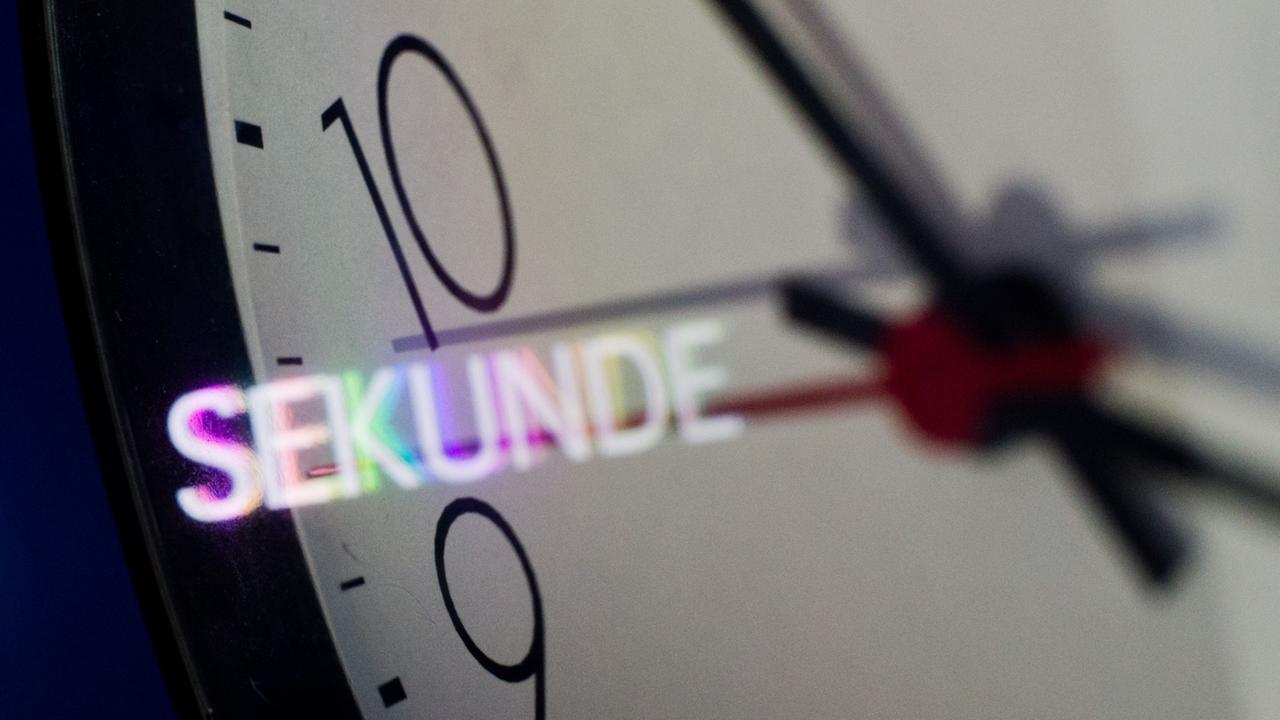
Furthermore, the uncertainty of the Earth’s rotation makes it impossible to program these events far in advance. Because we cannot predict the Earth’s exact speed for the next decade, we cannot "hard-code" these adjustments into systems years ahead of time. The potential for a "negative leap second"—where the clock must skip a second to catch up to an accelerating Earth—poses an even greater risk, as many systems lack the programming logic to delete a second.
Official Responses and the New Global Consensus
The resolution passed by the CGPM represents a rare moment of near-unanimous agreement in the scientific community. Representatives from the world’s leading metrology institutes, including the Bureau International des Poids et Mesures (BIPM), have emphasized that the divergence between atomic time and solar time is, in a practical sense, negligible.
"The public perception of time is already largely detached from the solar zenith," notes one lead researcher involved in the CGPM discussions. "For the vast majority of the global population, the local time zone offset—often influenced by daylight savings or arbitrary political borders—already creates a discrepancy between the clock and the sun of far more than one second. Insisting on keeping atomic time within one second of solar time is a legacy requirement that serves no functional purpose in the 21st century."
By allowing the tolerance to widen to a full hour, the scientific community has effectively bought the world a "buffer" that will last for centuries. Under the new guidelines, if the discrepancy between UTC and astronomical time ever reaches one hour, the international community will collectively decide how to handle it—likely through a "leap hour" or by simply adjusting regional time zones to account for the drift.
Implications for the Future
The End of "Human-Centric" Time
The abolition of the leap second is a symbolic end to the era where time was defined by the sky. We are moving toward a future where "Time" is defined by the absolute, unchanging frequency of physical matter. For astronomers, this is a minor inconvenience—they will simply continue to calculate the offset between their instruments and the world clock. For the average person, the change will be invisible.
The Millennium Horizon
Perhaps the most striking aspect of the new policy is the timeline. Because the Earth’s rotation is slowing, the drift is gradual. By relaxing the synchronization requirement to one hour, we have effectively "punted" the problem of recalibration into the year 3000. This provides a stable, predictable foundation for the next several generations of digital infrastructure.
A Catalyst for Standardization
This decision is expected to lead to a more robust global digital architecture. Without the "leap second" wildcard, software developers can build systems with the confidence that time will never "repeat" or "skip." This simplifies the logic required for high-frequency trading, satellite navigation, and deep-space communication.
Conclusion
The leap second was a brilliant, elegant solution for a world that was still transitioning from the age of the sundial to the age of the atomic clock. It served us well for over 50 years, ensuring that our wristwatches remained in harmony with the planet. However, in an age where the global economy runs on nanosecond-precision, the leap second had become a relic of a slower, less connected time.
By retiring the leap second, the CGPM has chosen to prioritize the stability of our digital foundations. While the Earth may continue to wobble, speed up, and slow down, our clocks will now tick with the unwavering consistency of the universe itself. We have officially stepped into a future where time is no longer a matter of the stars, but a matter of universal constants—a change that will ensure the seamless operation of our global society for the next thousand years.