By Investigative Desk
October 5, 2026
The hydrological map of Germany is turning a stark, alarming shade of brown. As the autumn season sets in, the anticipated relief from summer’s scorching heat has failed to materialize. Instead, the country is grappling with an unprecedented water crisis that has reduced its most vital inland waterways—the Rhine and the Bodensee (Lake Constance)—to mere shadows of their former selves.
Experts are now painting a grim picture of the current state of these lifelines. Florian Krekel, representing the Waterways and Shipping Authority in Bingen, offered a sobering assessment of the Rhine’s composition: "At this moment, the river is, broadly speaking, fed only by wastewater treatment plants, glacial melt, and a small amount of groundwater influx."
This is not merely an environmental footnote; it is a systemic emergency that threatens the industrial backbone of Europe’s largest economy, disrupts supply chains, and forces a fundamental rethink of how Germany manages its most precious resource.

The Anatomy of the Crisis: Main Facts
The data emerging from hydrological stations across the country confirm that the drought is not a temporary anomaly, but a sustained environmental stressor. As of early October, the Bodensee’s water level has plummeted below the 2.50-meter mark, a level that is exceptionally low for this time of year.
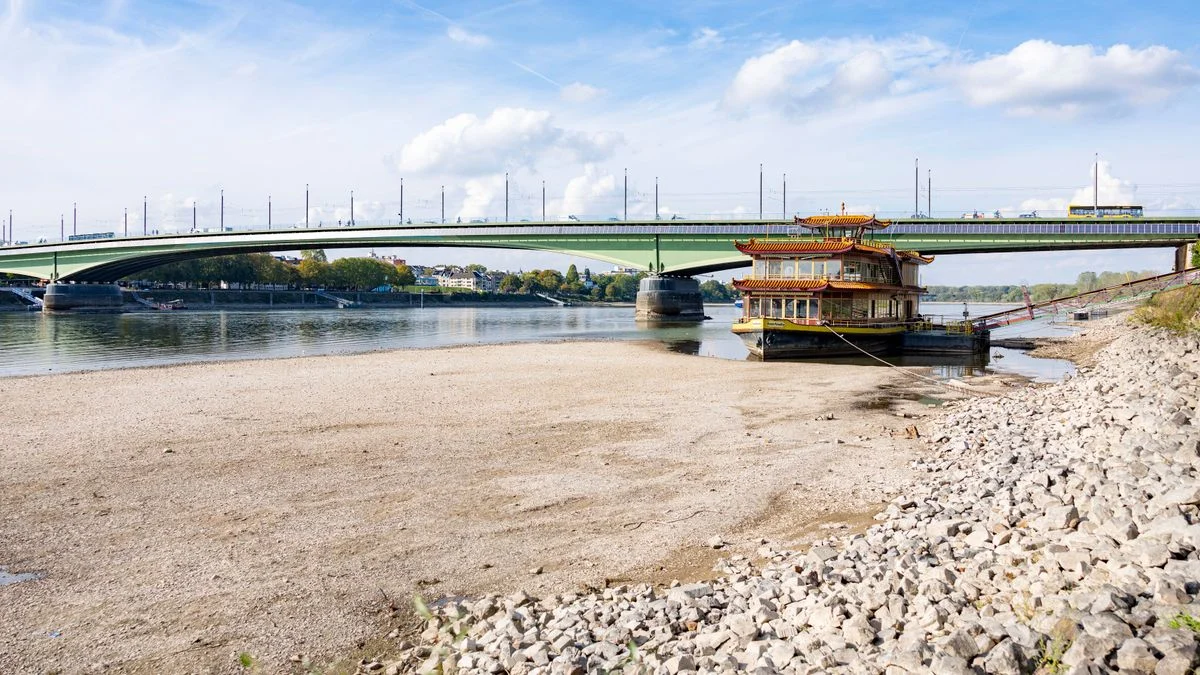
The Rhine, the primary artery for German logistics, is suffering even more acute distress. Throughout August and September, the river repeatedly hit record-breaking low levels, with some segments recording negative gauge values. While a marginal increase from minus nine centimeters to minus one centimeter was recorded in Düsseldorf this week, it is statistically insignificant. Experts agree that the river is essentially gasping for air.
The cause of this depletion is a "perfect storm" of climatic factors. A historically snow-poor winter in the Alps left the region with a massive deficit of stored meltwater. This was compounded by a summer characterized by relentless high temperatures—averaging 2.5 degrees Celsius above the 1991–2020 baseline—which accelerated evaporation rates and increased the "thirst" of vegetation, further depleting groundwater reserves.
A Chronology of Decline
To understand the current state of emergency, one must look at the progression of the last six months:

- Mid-Summer 2026: Temperatures across Western Europe soared, leading to what the EU’s Copernicus Climate Change Service described as the lowest average discharge volumes in European rivers since records began in 1992.
- August–September 2026: The crisis entered a new phase as major inland ports began to experience significant logistical bottlenecks. The Rhine, which serves as a massive conveyor belt for coal, chemicals, and consumer goods, saw water depths fall to levels where standard barges could no longer navigate.
- Late September 2026: The Bodensee reached critical lows. The Landesanstalt für Umwelt (State Agency for the Environment) warned that without significant precipitation, the lake would continue to recede throughout the autumn, which is historically a period of natural water loss.
- October 2, 2026: The crisis reached a symbolic and practical nadir at the Kennedy Bridge in Bonn, where negative gauge readings highlighted the inability of the river to support standard industrial maritime activity.
- Present Day: Industry hubs like Duisburg, Mannheim, and the chemical giant Ludwigshafen are bracing for prolonged supply chain disruptions.
Supporting Data and Scientific Analysis
The severity of the drought is backed by stark metrics. According to the Copernicus Climate Change Service, the 2026 summer was among the hottest on record. The combination of intense heat and lack of rainfall created a feedback loop: soil moisture levels hit historic lows, causing even light rainfall to be absorbed by the parched earth before it could reach the river systems.
Hydrologists point to the "glacier effect" as a primary concern. Traditionally, glacial melt serves as a buffer during hot, dry months. However, the glaciers are shrinking at an accelerated rate, and their contribution to the Rhine’s volume is expected to diminish as the sun’s intensity wanes into late autumn, removing the last major source of "natural" inflow.
Furthermore, the groundwater table has failed to recover. "September and October are the classic low-water months," explains Florian Krekel. "The groundwater does not regenerate during hot, dry periods where evaporation is high and vegetation is aggressively drawing moisture from the soil."
Collateral Damage: From Munitions to Markets
The environmental crisis has spilled over into the physical and economic landscape with dangerous consequences:

- Safety Hazards: In Neuss, the receding riverbed exposed a relic of the Second World War: an unexploded bomb. The exposure to air caused the white phosphorus contained within to ignite, requiring a controlled detonation by local fire departments.
- Infrastructure Failures: Cargo vessels have become stranded on sandbanks. In one notable incident, a freighter carrying a fleet of Mercedes-Benz transporters sat immobilized for days, illustrating the fragility of current river logistics.
- Industrial Strangling: The German economy is heavily reliant on the Rhine for the transport of raw materials. When water levels drop below 1.50 meters, the "draft" of the ships must be significantly reduced, meaning they can only carry a fraction of their capacity. This drives up transportation costs and creates a ripple effect of shortages across the manufacturing sector.
Official Responses and the Call for a New Paradigm
The federal government has acknowledged that the "business as usual" approach to water management is no longer viable. Federal Environment Minister Carsten Schneider (SPD) has issued a stern call to action, demanding a fundamental shift in how the country views its water infrastructure.
"The situation on the Rhine and the Bodensee is a dramatic burden, not only for nature but also for the economy," Schneider stated in an interview with the Kölner Stadt-Anzeiger. He has explicitly urged the federal states to pivot their investment strategies, suggesting that a significant portion of the available special funds (Sondervermögen) must be funneled into modernizing water infrastructure.
"The availability of water is a central factor for security and the economy," Schneider noted. He argues that Germany must transition from a reactive posture—managing crises as they occur—to a proactive, long-term strategy involving better water retention, reservoir management, and infrastructure resilience.
To this end, a special conference is scheduled in Berlin, where Minister Schneider will host EU Environment Commissioner Jessika Roswall. The summit will bring together representatives from state governments, private industry, and environmental associations to discuss a unified strategy for a future where water scarcity may become the new normal.

Implications: The Long Road to Recovery
The consensus among experts like Jens Schwanen of the Federal Association of German Inland Shipping is that we are far from a resolution. "For a recovery, we need roughly two weeks of steady, widespread rainfall—a ‘Landregen’—particularly in the southwest," Schwanen explained.
Even if the rains arrive, the damage to the ecosystem and the economic impact of the supply chain delays will take months to rectify. The 2026 drought serves as a stark warning. As climate change continues to alter weather patterns, the once-dependable flow of Germany’s rivers can no longer be taken for granted. The nation now faces a dual challenge: surviving the current dry spell while simultaneously building a resilient, climate-proof infrastructure that can withstand the hotter, drier future that climate science suggests is inevitable.
For now, the country waits for the clouds to break, watching the gauges on the Rhine and the Bodensee with a mix of anxiety and helplessness, knowing that the water levels represent far more than just depth—they represent the lifeblood of the nation’s future.