The landscape of Israeli electoral campaigning is undergoing a seismic shift. As the nation prepares for its next parliamentary test, the traditional arsenal of billboards, television spots, and door-to-door canvassing has been augmented—and in some cases, eclipsed—by the sophisticated deployment of Artificial Intelligence (AI). From hyper-targeted disinformation campaigns to the rapid-fire generation of propaganda, AI is no longer a futuristic concept in Israeli politics; it is the primary weapon in a high-stakes struggle for power.
The Synthetic Campaign: A New Reality
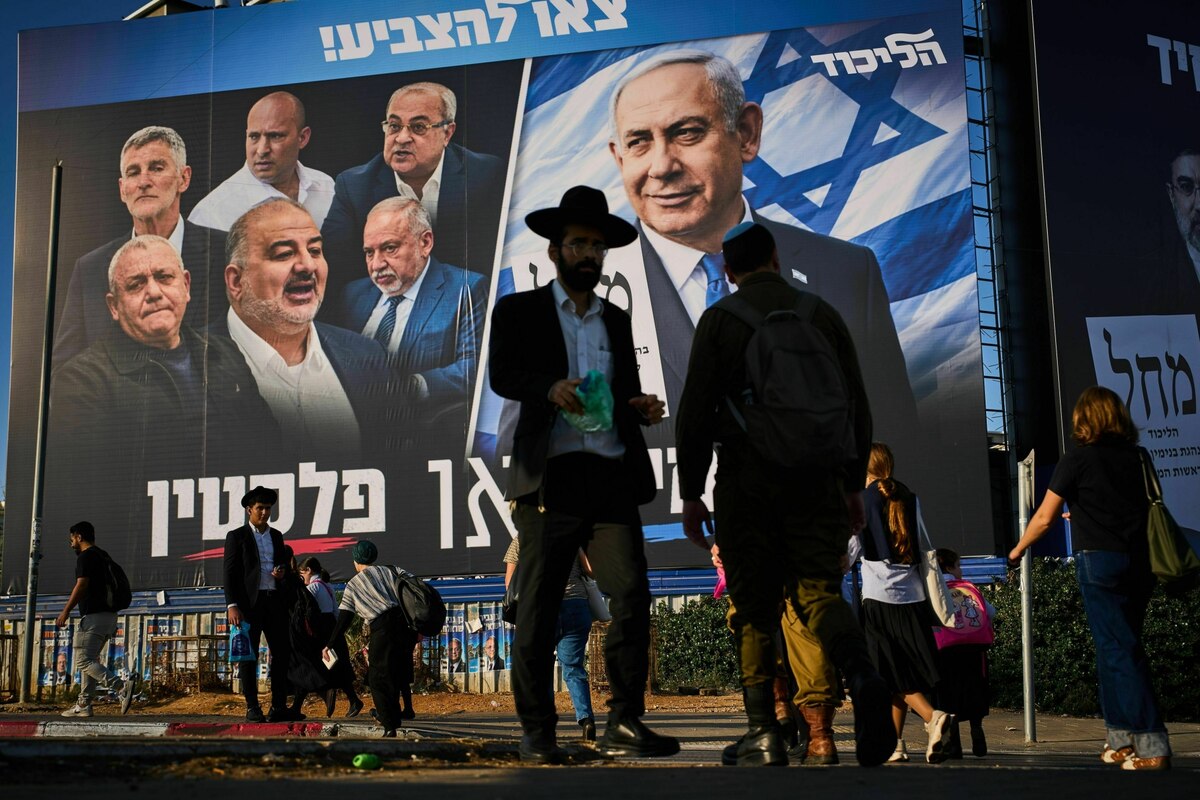
Under the banner of "Taking Off the Masks," Prime Minister Benjamin Netanyahu recently released a video that perfectly encapsulates this technological pivot. The clip features his primary political rivals, Yair Lapid and Naftali Bennett of the B’Yachad party, sharing a friendly embrace. As the video progresses, the two men reach up to peel away their faces, revealing the visages of Arab-Israeli politicians Mansour Abbas and Ahmad Tibi. The imagery is designed to trigger a visceral reaction among the electorate: the implication is that a vote for the center-right is a gateway to a coalition with Arab parties and left-leaning factions.
This video is not an isolated incident. It is part of a broader, algorithmic assault on the electorate’s perception of reality. The "Ze Be AI" project, an initiative by the Open University in Israel, has been meticulously documenting the surge of synthetic content. Their data indicates that in the current election cycle, nearly 15 percent of the approximately 48,600 analyzed political posts contain AI-generated or AI-enhanced elements.
Chronology of a Digital Transformation
The integration of AI into Israeli political life did not happen overnight. It evolved from basic social media engagement to the current state of "Slopaganda"—a portmanteau of "slop" (low-quality, mass-produced content) and "propaganda."
- Early Adoption (2020-2022): Political parties began utilizing basic machine learning to optimize ad targeting, ensuring that specific demographics received personalized messages based on their online behavior.
- The "Deepfake" Emergence (2023): The transition from simple ad-targeting to synthetic media became apparent as parties began deploying tools to create "alternative realities." Manipulated images, such as those depicting political rivals in compromising or inflammatory positions with political opponents, became commonplace.
- Regulatory Reaction (July 2024): Recognizing the existential threat to democratic discourse, Israel’s Central Elections Committee introduced mandatory disclosure rules. Any political content generated or significantly altered by AI must now carry a clear, visible label to inform the voter of its synthetic origin.
- The Current Era of Automation: Beyond mere visuals, political entities are now using AI to handle the logistical heavy lifting of campaigning, from real-time monitoring of social sentiment to the automated management of massive WhatsApp groups.
The Mechanics of Manipulation: Supporting Data
The efficacy of these campaigns is supported by alarming statistics. A study by the Israel Internet Association revealed that 88 percent of the Israeli public regularly uses ChatGPT. Perhaps more concerning is that a quarter of the respondents admitted they would consider utilizing AI tools to help them make their final voting decisions.
This reliance on Large Language Models (LLMs) has created a new front in the information war. There is evidence that some political actors are attempting to "poison the well" by flooding the internet with synthetic studies and reports from fake, independent-looking research institutes. The goal is to influence the training data of models like ChatGPT, ensuring that when a voter asks a query about a candidate, the AI provides an answer colored by the bias of those who seeded the data. According to reports from the news portal Axios, such influence operations can cost millions of dollars, representing a massive investment in the subversion of digital objectivity.

Official Responses and Ethical Friction
The response from the establishment has been a mix of caution and strategic utilization. While the Central Elections Committee has mandated labeling, the enforcement remains a massive challenge. When the Shas party, for instance, releases a video showing a kindergarten student being forced to choose between "Happy Hanukkah" and "Hannu-Christmas," they include a small, black "AI" box. However, the emotional impact of the video far outweighs the intellectual warning provided by the label.
Tehilla Shwartz Altshuler, a Senior Fellow at the Israel Democracy Institute, has been a vocal critic of this trend. She warns that the primary goal of these AI campaigns is not to inform, but to "foster polarization, defame competitors, and spread disinformation." Her warnings echo the concerns of cybersecurity experts who fear that the Israeli public is being subjected to a sustained psychological experiment in real-time.
The Urich Scandal: Efficiency at a Cost
The intersection of high-stakes politics and AI-driven automation was recently thrust into the spotlight by the controversy surrounding Jonathan Urich, a close advisor to Benjamin Netanyahu. Urich, already under scrutiny for his ties to Qatar, is at the center of reports detailing an aggressive, AI-assisted monitoring system.

According to the Jerusalem Post, a program under Urich’s purview scans 50 different media sources every 90 seconds. It searches for mentions of the Prime Minister, his wife Sara, the Likud party, and their various opponents. When a potential narrative shift or a critical mention is detected, the system automatically alerts specific WhatsApp groups. This level of automated responsiveness allows the Likud party to manage its public image with a speed and efficiency that would have been impossible a decade ago—effectively turning a political campaign into a real-time, algorithmic feedback loop.
Implications for Democracy
The implications of this shift are profound and unsettling. When political campaigns move away from the "truth" and toward the "creation of an alternative reality," the foundational requirement for a functioning democracy—an informed citizenry—begins to erode.
- Erosion of Trust: As voters become increasingly aware that their eyes and ears can be deceived by AI, they may eventually stop trusting all information, regardless of its origin. This "liar’s dividend" allows politicians to dismiss genuine, damaging reports as "AI fakes."
- The Automation of Hate: AI allows for the rapid production of content that exploits ethnic and religious fault lines, such as the persistent "Us vs. Them" narrative regarding the Arab-Israeli population. By automating the production of inflammatory content, parties can maintain a state of constant, low-level societal agitation.
- Institutional Vulnerability: The fact that AI can be "trained" or influenced through the saturation of the digital sphere with synthetic content means that democratic institutions are no longer just fighting for votes; they are fighting for the integrity of the information ecosystem itself.
Conclusion: A Turning Point
Israel is currently serving as a global testing ground for the impact of generative AI on democratic processes. The ability to generate convincing imagery, automate messaging, and manipulate the training data of AI assistants marks a fundamental shift in political communication.

As the election approaches, the question is no longer who has the best policy or the most charismatic leader, but who has the most sophisticated digital infrastructure. While Benjamin Netanyahu and his rivals continue to debate the future of the state, a more silent, more powerful force—the algorithm—is quietly determining the parameters of that debate. Whether the democratic process can survive this transition depends not just on new regulations, but on the ability of the Israeli voter to discern the difference between a genuine democratic discourse and the carefully curated, synthetic mirage presented by the machines of modern campaigning.
The masks are indeed coming off, but in the digital age, what lies beneath may be just another layer of code.