For decades, the search for extraterrestrial life has focused primarily on the "habitable zone" of individual star systems—the "Goldilocks" region where liquid water can exist on a planet’s surface. However, a groundbreaking study published in the Monthly Notices of the Royal Astronomical Society suggests that we may have been looking through a keyhole when we should have been observing the entire room.
A team of astrophysicists has concluded that our Solar System resides in a privileged region of the Milky Way, shielded from the lethal radiation and gravitational chaos that plague other sectors of our galaxy. As the Milky Way matures, it has transitioned from a violent, star-forming powerhouse into a stable, quiet haven—a cosmic "sweet spot" that has allowed life on Earth to flourish undisturbed.
The Galactic Crucible: Simulating Cosmic Evolution
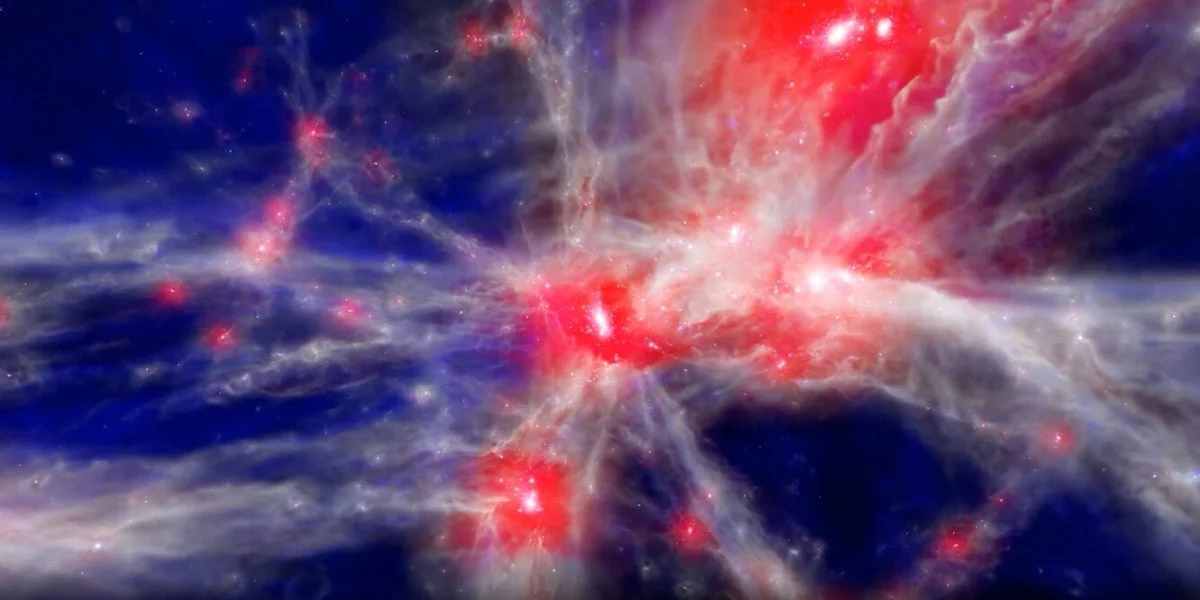
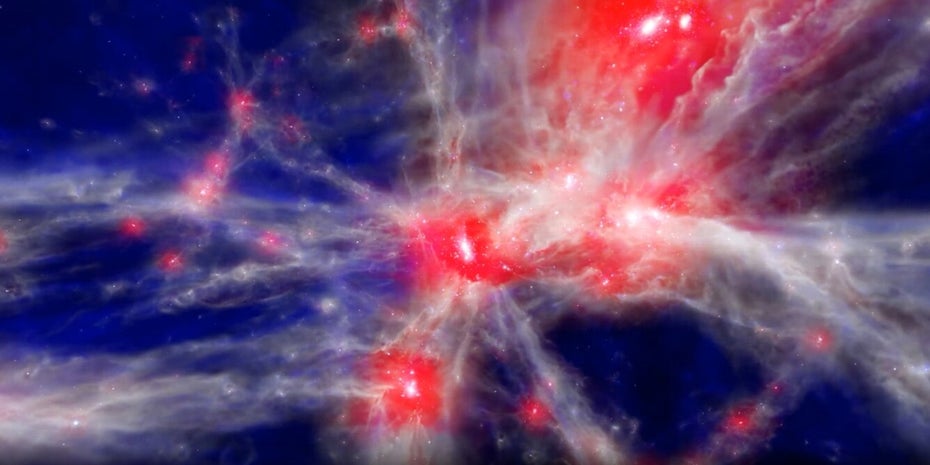
To understand the macro-environmental factors governing life, researchers utilized the "EAGLE" (Evolution and Assembly of GaLaxies and their Environments) project, based at Durham University. This sophisticated simulation acts as a high-fidelity time machine, modeling the expansion of the universe, the complex dance of dark matter and gravity, and the chemical evolution of gas, stars, and black holes.
By simulating the evolution of galaxies over hundreds of millions of light-years, the researchers created a mathematical framework that maps the "Galactic Habitable Zone." Unlike the planetary habitable zone, which is defined by distance from a sun, this galactic metric accounts for the violent flux of energy across entire sectors of space. The simulation highlights that life is not just a function of a planet’s chemistry, but a function of its address within the galactic neighborhood.
The Chemistry of Stability: Finding the Balance
The study reveals that there is a delicate "chemical goldilocks" zone within the Milky Way. To support life, a planetary system requires "metals"—astronomical shorthand for elements heavier than hydrogen and helium. These elements, forged in the hearts of ancient, exploding stars, are the essential building blocks for rocky planets, iron cores, and the chemical complexity of biological organisms.
However, the distribution of these metals is far from uniform. If a planetary system is located too close to the galactic center, it is bombarded with heavy elements and radiation. Conversely, the outer reaches of the galaxy lack the density of these essential materials, making the formation of rocky, terrestrial worlds nearly impossible.
The research identifies a dangerous threshold: an overabundance of heavy elements often leads to the formation of massive gas giants rather than rocky planets. These gaseous behemoths tend to migrate inward toward their host stars, acting like cosmic snowplows that disrupt the orbits of smaller, terrestrial planets and often plunge them into their parent suns. The "safe zone" is therefore a narrow band of moderate chemical density that balances the need for planetary building blocks with the requirement for orbital stability.
Chronology of a Deadly Universe
The history of our galaxy has been defined by extreme violence, and only recently has the Milky Way reached a state of relative peace. The study maps out the timeline of these cosmic threats:
The Era of Primordial Catastrophe
In the early universe, the galaxy was a chaotic nursery. High-mass stars were born and died with incredible frequency, leading to a relentless barrage of core-collapse supernovae. These explosions were so frequent and violent that they effectively sterilized vast swathes of the galaxy, stripping atmosphere from nascent planets and preventing the stabilization of complex chemistry.
The Rise of High-Energy Threats
As the galaxy evolved, new threats emerged. Type Ia supernovae—the violent detonation of white dwarfs—began to pepper the galaxy with high-energy radiation. Simultaneously, massive bursts of gamma rays, potentially from collapsing stars or neutron star mergers, began to tear through the interstellar medium. Even from hundreds of light-years away, these bursts are capable of ionizing an entire planet’s ozone layer, leaving surface life exposed to lethal ultraviolet radiation.
The Modern Era of Gravitational Interference
Over the last five billion years, a different threat has taken center stage: gravitational disturbance. In dense regions of the galaxy, the proximity of other stars creates a "leverage effect." The gravitational pull of passing stars can warp the stable, circular orbits required for long-term climate stability. In extreme cases, these perturbations act like a cosmic slingshot, ejecting Earth-like planets from their systems and sending them drifting into the frozen, lifeless void of interstellar space.
Black Holes and Quasars: The Galactic Engines of Destruction
The simulation specifically addressed the role of Active Galactic Nuclei (AGN) and supermassive black holes. When these gravitational monsters feed on gas and dust, they become "quasars," emitting blindingly intense X-ray and UV radiation.
The study highlights that this radiation is not a momentary flash, but a sustained, multi-million-year assault. A planet subjected to such an environment experiences atmospheric stripping—the energy heats the gases in the upper atmosphere to the point where they reach escape velocity and bleed off into space. What remains is a barren, airless rock, forever incapable of hosting biological life.
The fact that our own Sun and Earth have survived these geological eras without being sterilized by a neighboring quasar or a stray supernova is, statistically speaking, a testament to our exceptionally fortunate location in the "quiet" suburbs of the Milky Way.
Implications: The Limits of Our Knowledge
Despite the impressive power of the EAGLE simulation, the researchers are the first to acknowledge its limitations. The primary challenge is spatial resolution: while the model captures galactic-scale trends, it cannot yet map the hyper-local environment of individual star clusters.
Furthermore, the model is inherently anthropocentric. It defines "habitable" based on the biological requirements of Earth life. We currently possess no evidence that these specific parameters—liquid water, oxygen-rich atmospheres, and moderate temperatures—are the only pathways to biological complexity. Life elsewhere could potentially thrive in environments we currently deem "hostile."
However, the findings provide a sobering statistical context. The probability of an average star in the Milky Way suffering a catastrophic, life-ending event has dropped significantly. Today, only one in a thousand stars in our galaxy is estimated to experience a major destructive event in a given timeframe. We are living in a period of unprecedented stability.
Conclusion: A Rare Sanctuary
The research from Durham University reinforces the "Rare Earth" hypothesis, suggesting that the conditions for life are not just a matter of luck regarding the planet itself, but a matter of geography within the galaxy. Our Solar System benefits from a combination of factors: we are far enough from the chaotic galactic center to avoid radiation, but close enough to have inherited the heavy elements necessary for our existence.
As the Milky Way continues its slow, calm maturation, our "safe harbor" remains one of the few places in the known universe where the conditions are just right. We are not just dwellers on a planet; we are residents of a uniquely peaceful neighborhood in a galaxy that is finally, after billions of years of violence, beginning to settle down. This stability has given life the time it needs to evolve, thrive, and eventually, look back at the stars to wonder if anyone else is watching from a similar sanctuary.