When you reach into your winter apple stash, only to find fruit marred by unsightly, sunken brown spots, you are likely looking at a classic case of "bitter pit." Known to orchardists as a physiological disorder rather than a disease, this condition—which leaves the flesh beneath the skin tasting bitter and corky—is a source of frustration for both commercial growers and home gardeners alike.
While the symptoms are often discovered weeks or even months after the fruit has been harvested and moved into storage, the origins of the damage are firmly rooted in the tree’s development during the early summer. Recent research from the Michigan State University (MSU) provides a compelling, evidence-based look at the mechanics behind this phenomenon, confirming that the race for resources during the fruit’s infancy dictates the quality of your harvest.
Understanding the Core Problem: A Calcium Deficiency
It is a common misconception that bitter pit is a sign of a sick tree or a fungal infection. In reality, the issue is purely nutritional, specifically a localized calcium deficiency. Calcium is the "glue" that stabilizes plant cell walls and membranes; without sufficient levels of it, tiny clusters of cells within the apple simply die off.
The challenge lies in how apple trees transport calcium. Unlike water or sugars, which can travel through the plant’s complex phloem system, calcium moves exclusively through the xylem—the tree’s "plumbing" for water. This transport mechanism is powered by transpiration, the process of water evaporating from the leaves. If the water flow to the developing fruit is insufficient or disrupted, the fruit fails to receive the calcium required for structural integrity.
The Chronology of Development
The window of opportunity for healthy fruit development is surprisingly narrow. According to horticultural experts, an apple tree deposits the vast majority of its calcium into the developing fruit within the first six weeks following bloom.
If the tree is forced to compete for calcium during this critical period, the fruit will suffer. Several factors can impede this process:
- Nutrient Competition: An excess of potassium and magnesium in the soil can inhibit the tree’s ability to absorb calcium.
- Nitrogen Overload: Excessive nitrogen encourages vigorous leafy growth, which consumes vast amounts of calcium, leaving less for the fruit.
- Pruning Practices: Aggressive pruning stimulates the growth of strong, leafy shoots that compete directly with the fruit for calcium resources.
New Research: The "Growth Rate" Hypothesis
To better understand the correlation between fruit size and bitter pit, researchers Chayce Griffith and Todd Einhorn at the Michigan State University conducted a study involving 300 ‘Honeycrisp’ apple trees. Their goal was to move beyond the traditional "dilution theory"—which suggests that big apples get bitter pit because they grow too fast—and examine the actual vascular health of the fruit.
The Study Parameters
The researchers thinned the trees to achieve varying fruit loads, measured in fruit per square centimeter of trunk cross-section. The groups were divided into:
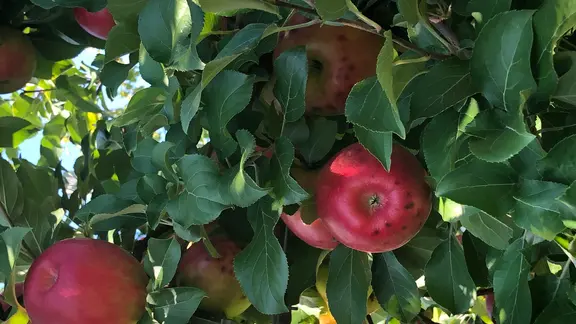
- Low-load trees: Produced fewer, larger fruits (averaging 215 grams).
- High-load trees: Produced more, smaller fruits (averaging 137 grams).
Key Findings
The results were stark. At harvest, 27% of the larger, low-load fruits were already showing signs of bitter pit, compared to just 4% of the smaller, high-load fruits. After three months of cold storage, those numbers surged—reaching 42% for the large-fruit group.
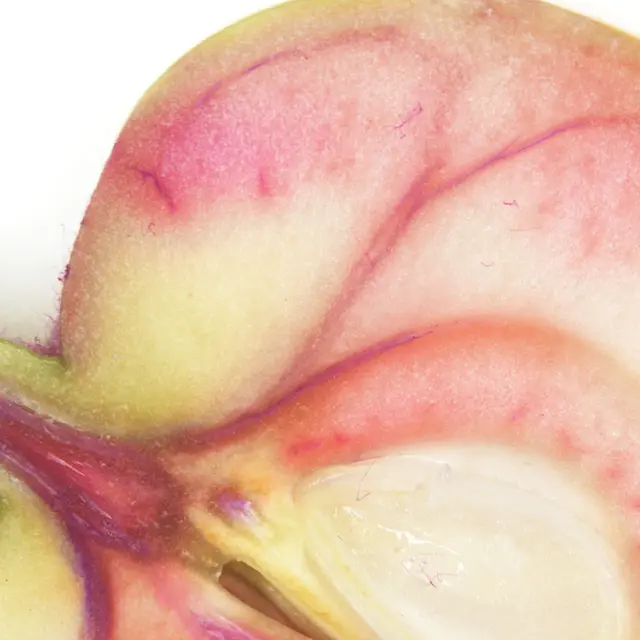
Crucially, the researchers used a red dye solution to track the functionality of the xylem (the water-transporting vessels) in the fruit throughout the season. They discovered that in fast-growing, large apples, the internal "plumbing" stopped functioning much earlier in the summer. By roughly 13 weeks post-bloom, the tiny vessels under the apple skin were no longer transporting water, essentially sealing the fruit off from any further calcium intake.
The Impact of Rapid Expansion
In a secondary 2024 experiment, the researchers used shade cloths to temporarily slow the growth of certain branches. By limiting the amount of sunlight, they restricted sugar flow to the fruit, which forced them to grow more slowly.
The results were fascinating: the fruits that grew more slowly maintained functional, open vascular systems for a longer period. This supports the theory that rapid, aggressive growth literally stretches and tears the delicate vascular channels beneath the skin, effectively "strangling" the supply of calcium just when the fruit needs it most to build strong, resilient cell walls.
Practical Implications for Growers and Gardeners
While this study does not introduce a "silver bullet" solution, it provides a scientific framework for the advice that agricultural extension offices have been offering for decades. Understanding that the damage is "programmed" early in the season changes how we manage our trees.
Strategies for the Home Orchard
- Balanced Fruit Thinning: Don’t let a tree over-produce, but conversely, avoid over-thinning. Aim for a moderate crop load that produces medium-sized fruit. Extremely large apples are almost always the most susceptible to storage disorders.
- Strategic Irrigation: Since calcium transport relies on the water stream, keep trees well-watered during the critical first six weeks after bloom. Drought stress is a major contributor to calcium deficiency.
- Soil Management: Ensure the soil is adequately limed (if pH is low) and avoid over-fertilizing with nitrogen, which can lead to a "growth spurt" that outpaces the tree’s ability to move nutrients.
- Variety Selection: Some varieties are naturally more prone to bitter pit, including ‘Boskoop’, ‘Cox Orange’, ‘Elstar’, ‘Gravensteiner’, and ‘Jonagold’. If your garden soil or climate is prone to these issues, consider planting more resilient cultivars such as ‘Topaz’, ‘Rubinette’, ‘Florina’, ‘Rebella’, or ‘Piros’.
- Pruning: Avoid excessive winter or spring pruning, which can trigger the tree to prioritize vegetative growth over fruit development.
Official Responses and Agricultural Guidance
Agricultural authorities, such as the State Institute for Agriculture and Horticulture in Saxony-Anhalt and the Bavarian Garden Academy, emphasize that managing bitter pit is a holistic, season-long process. The recent MSU study reinforces that the "storage" phase of the apple is merely a period where underlying, early-season physiological failures become visible.
For the commercial industry, these findings are significant. They underscore the importance of precision crop load management and the potential for new monitoring technologies that could predict the likelihood of bitter pit long before the fruit reaches the packing house.
Conclusion: The Long View on Fruit Health
The "bitter pit" phenomenon serves as a perfect microcosm for the complexities of plant physiology. It reminds us that fruit quality is not merely a result of final ripening, but a reflection of the tree’s entire developmental season. By focusing on steady, consistent growth and ensuring that the tree’s internal "plumbing" remains intact through the early summer, gardeners can significantly reduce the risk of finding those unwelcome brown spots in their winter pantry.
Ultimately, the goal is to work with the tree’s natural rhythm rather than forcing it to reach peak size at the expense of its structural integrity. Through careful observation, balanced nutrition, and appropriate variety selection, the dream of a crisp, perfect, long-lasting apple harvest is well within reach.