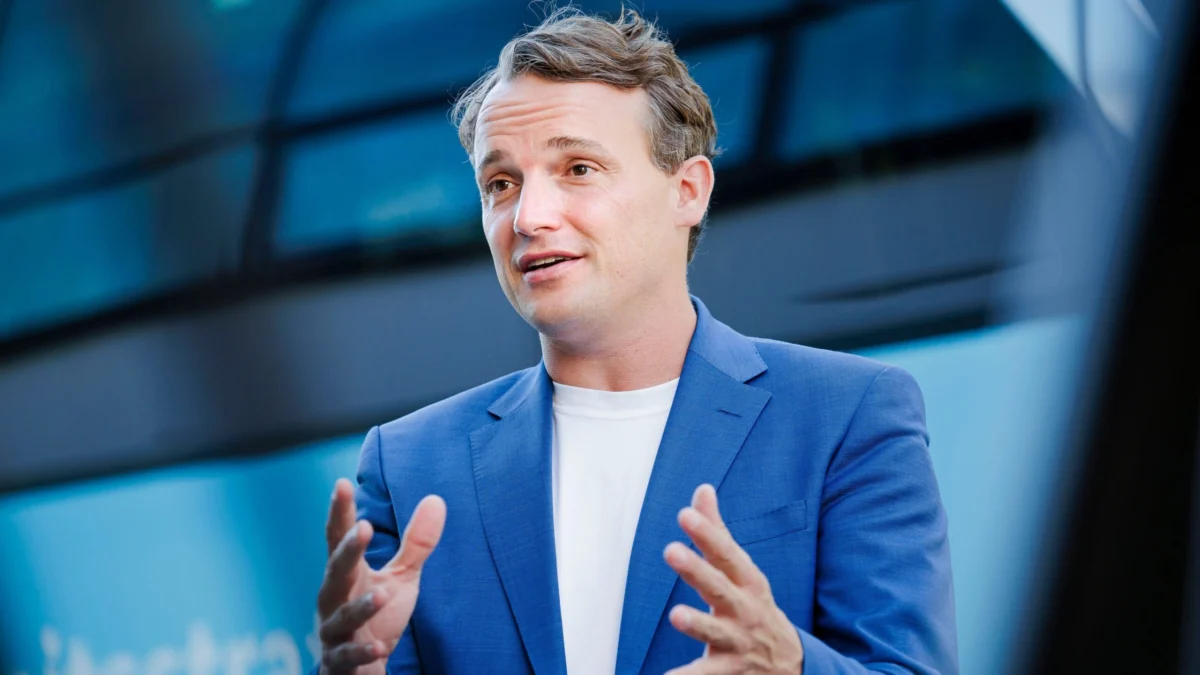
WALLDORF – In a move that underscores the high-stakes transformation of Europe’s most valuable software corporation, SAP CEO Christian Klein recently traded the boardroom for a developer’s workspace. Spending two intensive days in Berlin, Klein joined an international team of specialists to deep-dive into the development of autonomous business systems. This hands-on participation is more than a symbolic gesture; it represents the heartbeat of a company undergoing a fundamental metamorphosis.
As SAP pushes toward its vision of the "Autonomous Enterprise," the message from the top is clear: the future of global business management will no longer be steered solely by human hands, but by intelligent, self-executing systems.
The Vision: Defining the "Autonomous Enterprise"
For decades, SAP has been the backbone of global commerce, providing the Enterprise Resource Planning (ERP) software that keeps the world’s supply chains, HR departments, and financial records in order. However, the paradigm is shifting. Under Klein’s leadership, SAP is pivoting from a tool-based provider to a provider of intelligent, automated outcomes.
The "Autonomous Enterprise" is a concept where routine, high-volume business processes—such as quarterly financial closings, complex logistics scheduling, and even the onboarding of new employees—are handled by AI-driven agents rather than manual input.
"The functions are not all live yet," Klein admitted during a discussion with Handelsblatt, "but we are building them right now."
This shift signifies a transition from predictive analytics to prescriptive, autonomous action. Instead of providing a manager with a report on supply chain bottlenecks, the system of the future will identify the bottleneck, reorder inventory, and notify the relevant stakeholders—all without a single keystroke from a human employee.
Chronology: From Legacy ERP to AI-Native Software
The journey to the Autonomous Enterprise has been a calculated, multi-year evolution for the Walldorf-based giant.
- 2020–2021: The Cloud Foundation: Under Klein, SAP accelerated its "RISE with SAP" program, pushing customers toward cloud-based environments. This was the critical prerequisite; AI models require the massive, unified data sets available only in the cloud to function effectively.
- 2023: The Introduction of Joule: SAP launched "Joule," its generative AI copilot. Designed to act as an interface for the entire SAP software portfolio, Joule allows users to ask natural language questions and receive complex, actionable answers.
- Late 2024: The Berlin Workshop: Klein’s recent two-day workshop in Berlin serves as the latest milestone. By embedding himself with product development teams, the CEO is ensuring that the architectural foundations of the company’s AI are prioritized over peripheral features.
- Present Day: The company is currently shifting its development focus, with roughly 80% of its R&D resources now dedicated to refining Joule and the underlying infrastructure required to support truly autonomous business agents.
Supporting Data: Financial Resilience Amidst Innovation
While the "Autonomous Enterprise" remains a vision under construction, SAP’s financial performance suggests that investors are buying into the narrative. The company’s Q3 2024 financial results, released this past Wednesday, demonstrate a company that is successfully balancing the massive costs of AI development with top-line growth.
Key Financial Indicators (Q3 2024)
- Total Revenue: €10.3 billion, a robust 13% increase year-over-year.
- Cloud Growth: The cloud segment remains the engine of the company, showing strong double-digit growth and serving as the primary anchor for future AI integration.
- Operating Profit: Surpassed analyst expectations, proving that SAP can manage its margins even while pouring billions into R&D for AI.
Jefferies analyst Charles Brennan described the quarterly results as "unbestreitbar stark" (undeniably strong), highlighting that the market’s confidence in SAP is backed by tangible, recurring revenue streams. Despite the heavy investment in R&D, the company’s ability to remain profitable is a critical differentiator compared to smaller AI startups that often burn through capital without a clear path to scale.
Official Responses and Strategic Rationale
The strategic focus on AI is not merely a reaction to industry trends; it is a defensive and offensive necessity. In an era where data-driven efficiency is the primary competitive advantage, SAP cannot afford to be a passive provider of database tools.
During his engagement in Berlin, Klein emphasized that the complexity of modern global enterprises has reached a point where human manual intervention is becoming a bottleneck. By delegating routine tasks to autonomous agents, SAP aims to free up the human workforce for higher-level strategic decision-making.
"We are building the systems that will define the next decade of business," Klein remarked. The company’s internal rhetoric emphasizes that the transition is not about replacing employees, but about "augmentation"—a common refrain in the tech industry that SAP is heavily banking on to ensure corporate buy-in from its massive global customer base.
Implications: The Future of the Global Workplace
The implications of SAP’s pivot are profound, extending far beyond the walls of its Walldorf headquarters.
1. For the Global Workforce
The transition to an autonomous enterprise will inevitably change the nature of white-collar work. If SAP’s AI agents can handle the intricacies of a financial audit or a supply chain adjustment, the role of the accountant, the logistics manager, and the HR specialist will shift from "doer" to "supervisor." This creates a need for widespread upskilling within SAP’s client organizations.
2. For the Competitive Landscape
SAP’s push into autonomous systems places it in direct competition with hyperscalers like Microsoft and Google, who are also integrating AI into enterprise workflows. However, SAP possesses an advantage that these competitors lack: deep, vertical-specific data. SAP’s software knows exactly how a manufacturing plant in Germany or a retail chain in the U.S. operates at a granular level. Leveraging this proprietary data to train its agents gives SAP a "moat" that is difficult for general-purpose AI providers to cross.
3. The Technical Hurdle
The transition is not without risks. The primary challenge is trust. For a CFO to allow an AI to autonomously execute a financial closing, the system must be not only accurate but also auditable, transparent, and compliant with international regulations. SAP’s reputation for reliability is its greatest asset, but it is also the standard against which its AI will be judged. Any failure in the autonomous logic could lead to massive financial or operational disruptions for its clients.
Conclusion: A New Era for Walldorf
Christian Klein’s recent immersion into the developer culture in Berlin serves as a poignant metaphor for the current state of SAP. The CEO is not just managing a company; he is shepherding a legacy institution into a new, uncharted territory.
With 80% of resources funneled into AI-driven systems like Joule, the company is effectively betting its future on the success of the Autonomous Enterprise. While the financial results remain strong and the vision is compelling, the coming years will be the true test. Can SAP deliver on the promise of autonomous business without compromising the stability and reliability that have kept it at the pinnacle of the software world for over five decades?
As the "Autonomous Enterprise" moves from the workshop in Berlin to the balance sheets of multinational corporations, the answer to that question will define not just the future of SAP, but the future of how the global economy functions. For now, the momentum is undeniably with the team in Walldorf.