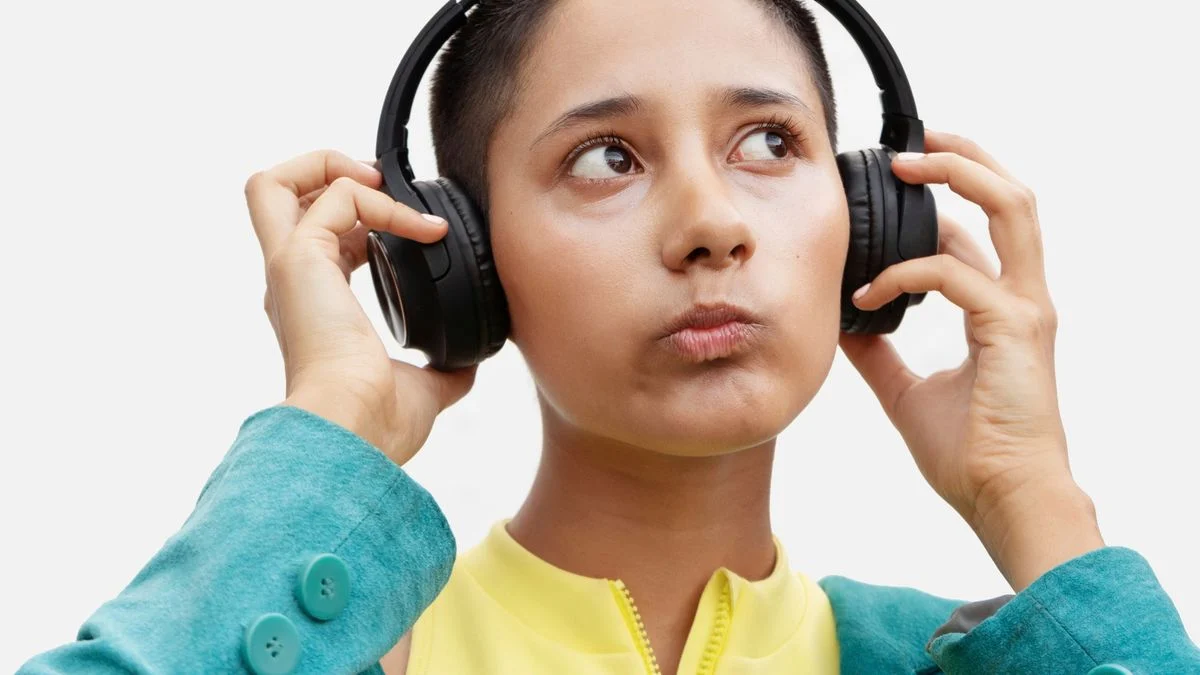
In an era defined by the frantic pace of modern life, the consumption of information has undergone a seismic shift. Where once we sat in quiet contemplation with a physical book or a long-form article, we now navigate our days accompanied by a constant stream of audio: podcasts, audiobooks, and text-to-speech AI assistants. This transition from the visual processing of text to the auditory reception of narrative has sparked a vigorous debate among neuroscientists, educators, and cognitive psychologists.
As we replace the eye with the ear, we must ask: Are we simply optimizing our time, or are we inadvertently trading deep comprehension for passive consumption? Does the "audiofication" of culture make us smarter, or is it fundamentally altering our ability to engage in critical, sustained thought?
The Shift: From Visual Decoding to Auditory Immersion
The proliferation of digital audio platforms—led by giants like Spotify, Audible, and Apple Podcasts—has normalized the integration of information into every aspect of our lives. We "read" during commutes, while doing dishes, or while exercising. This phenomenon, often dubbed "multitasking literacy," suggests that we can maintain our intellectual output without being tethered to a desk.
However, the cognitive mechanics of reading and listening are fundamentally different. Reading is an active, constructive process. The brain must decode symbols, map them onto language, and integrate them into existing mental schemas. It allows for pacing, backtracking, and peripheral reflection. Listening, conversely, is a linear, temporal experience. The speaker dictates the speed; the listener is a passenger in the narrative flow.
Chronology: The Evolution of Audio Consumption
The trajectory toward our current audio-centric landscape did not happen overnight. It is the result of decades of technological maturation:
- 1990s – The Cassette and CD Era: Audiobooks existed, but they were niche, physical products primarily reserved for travel.
- 2004 – The Birth of the Podcast: The term "podcasting" emerged, democratizing audio content creation. Initially a hobbyist medium, it began to gain intellectual gravity.
- 2010 – The Smartphone Inflection Point: With the rise of the iPhone and Android, audio content became omnipresent. The barrier to entry for consuming high-quality audio vanished.
- 2018-2022 – The Great Audio Boom: Driven by the pandemic and a saturation of screen time, consumers sought "low-friction" information. The "Creator Economy" exploded, with podcasts becoming the new prestige media.
- 2023-Present – The AI Integration: The current frontier involves AI-generated audio and advanced text-to-speech (TTS) tools, which have made virtually any written content instantly "listenable," further blurring the lines between text and audio.
Supporting Data: The Cognitive Divide
The core of the debate lies in what researchers call "cognitive load." Studies comparing comprehension between audio and text reveal nuanced results.
The Comprehension Gap
A seminal study conducted at the University of California, Berkeley, found that while the neural pathways activated by listening and reading share significant overlap, the quality of information retention differs. Readers generally score higher on tests involving complex syntax and technical data. The reason is structural: reading allows for "re-reading." If a concept is dense, the eye can hover, pause, and retreat. Listening, by its nature, forces the brain to move forward, often leaving the listener behind when encountering abstract or difficult arguments.
The Multitasking Myth
Proponents of audio often argue that it allows for "productive multitasking." However, cognitive science suggests that the human brain does not truly multitask; it "task-switches." When we listen to an analytical podcast while navigating traffic, the brain is rapidly oscillating between spatial awareness and linguistic processing. This leads to a degradation in the depth of processing—we catch the "gist" of the information, but the nuanced, critical details are often discarded by the brain to save energy.
Official Responses and Expert Perspectives
The academic community remains deeply divided on whether this shift is a net negative or a necessary evolution.
The "Neuro-Plasticity" Optimists
Many experts argue that the brain is highly adaptive. If we are shifting toward audio, our brains are simply developing new "auditory literacy" skills. Dr. Elena Rossi, a cognitive linguist, notes: "We should not romanticize the printed page as the only vessel for intelligence. The oral tradition, after all, was the primary vehicle for human knowledge for thousands of years. We are returning to our roots, augmented by technology."
The "Deep Work" Skeptics
Conversely, proponents of "Deep Work"—a term popularized by Cal Newport—argue that the decline of reading is a direct threat to intellectual focus. "Reading is a training ground for focus," argues Professor Julian Thorne, a neuroscientist at Oxford. "When you listen to a podcast, you are consuming. When you read, you are participating. If we lose the ability to sit in silence with a text, we lose the ability to formulate original, complex thoughts that require prolonged, uninterrupted concentration."
Implications for Future Literacy
As we look toward a future dominated by AI-read news and automated audio summaries, the implications for society are profound.
The Democratization of Information
On the positive side, audio is significantly more accessible. It removes barriers for individuals with visual impairments, learning disabilities, or those for whom a second language is easier to understand when heard rather than read. The ubiquity of audio is undoubtedly a win for general knowledge dissemination.
The Erosion of Nuance
The danger lies in the "flattening" of discourse. Audio content is often produced to be engaging, rhythmic, and entertaining. This favors high-emotion, narrative-driven content over the dry, complex, and sometimes boring nature of deep policy analysis or academic research. If our primary source of information becomes the "audio feed," we risk a culture that is well-informed on surface-level topics but ill-equipped to handle the nuance required for democratic deliberation.
Conclusion: Finding the Balance
Is listening the new reading? In practice, yes. But is it making us "dumber"? That remains a matter of intent.
If audio is used as a supplement—a way to expand one’s horizons during otherwise "dead" time—it is a powerful tool for intellectual growth. However, if audio is used to replace the challenging, active process of deep reading, we risk a gradual atrophy of our critical faculties.
The solution is not to discard the podcast or the audiobook, but to treat them with the same intentionality we once reserved for the library. To maintain a sharp, analytical mind in the 21st century, one must distinguish between information consumption and intellectual engagement. The former can be done while folding laundry; the latter requires a chair, a quiet room, and the deliberate act of reading.
As we continue to integrate these tools into our lives, we must ensure that in our quest for convenience, we do not silence the very part of our brain that requires effort to thrive. The future of our cognitive health depends not on the medium, but on the rigor we apply to the message.