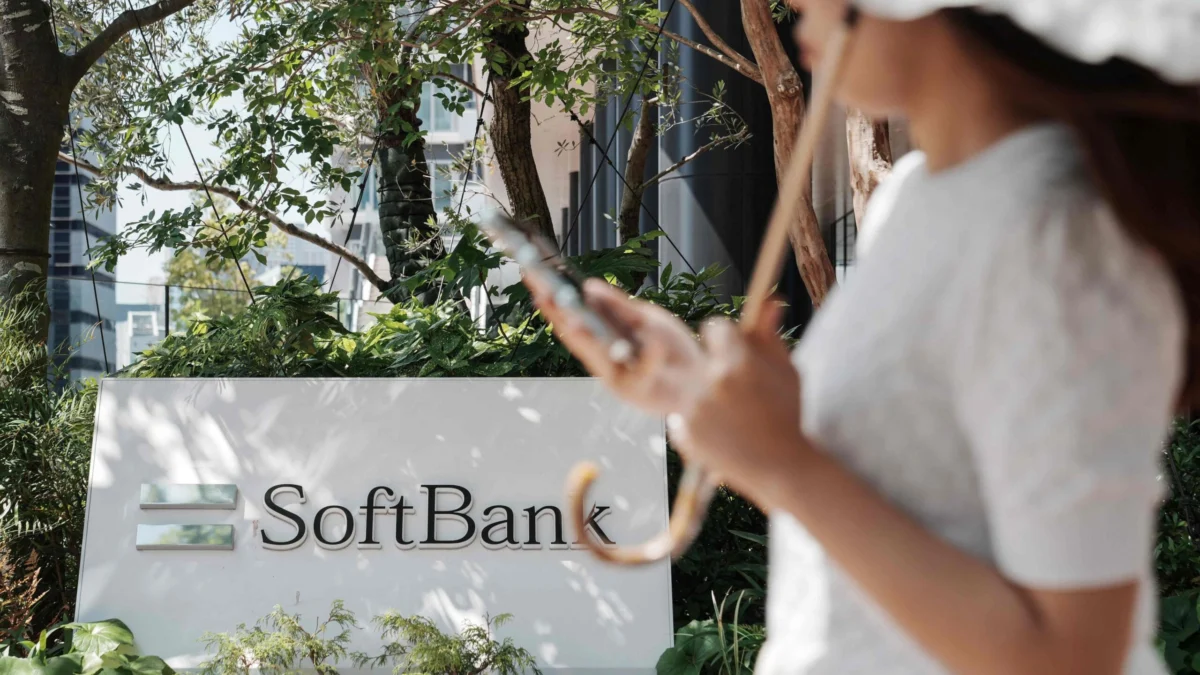
Introduction: The Visionary’s Long Game
In the glass-walled boardrooms of Tokyo, Masayoshi Son, the enigmatic founder and CEO of SoftBank Group, is orchestrating what he considers to be the most significant shift in human history. For decades, Son has been known as a venture capital titan, a man who reshaped the landscape of Silicon Valley by pumping billions into nascent tech giants like Alibaba, Uber, and Arm Holdings. Yet, his latest ambition transcends mere investment portfolio diversification.
"In the next 30 years, we want to be at the center of the AI revolution," Son recently declared. This is not the standard corporate rhetoric of a tech executive looking to capitalize on a fleeting trend. For Son, the goal is "Artificial Superintelligence" (ASI)—a theoretical level of machine intelligence that would not merely mimic human cognition but vastly surpass it, fundamentally altering the trajectory of civilization.
Main Facts: The Pursuit of the ASI
At the core of SoftBank’s current strategy is a transition from being a passive investor to an active architect of the future. Son’s thesis is built on the belief that the current generation of generative AI, while impressive, is merely a precursor to a much more profound paradigm shift.
- The Definition of ASI: Son defines Artificial Superintelligence as a system that is ten times more powerful than the collective intelligence of all humanity.
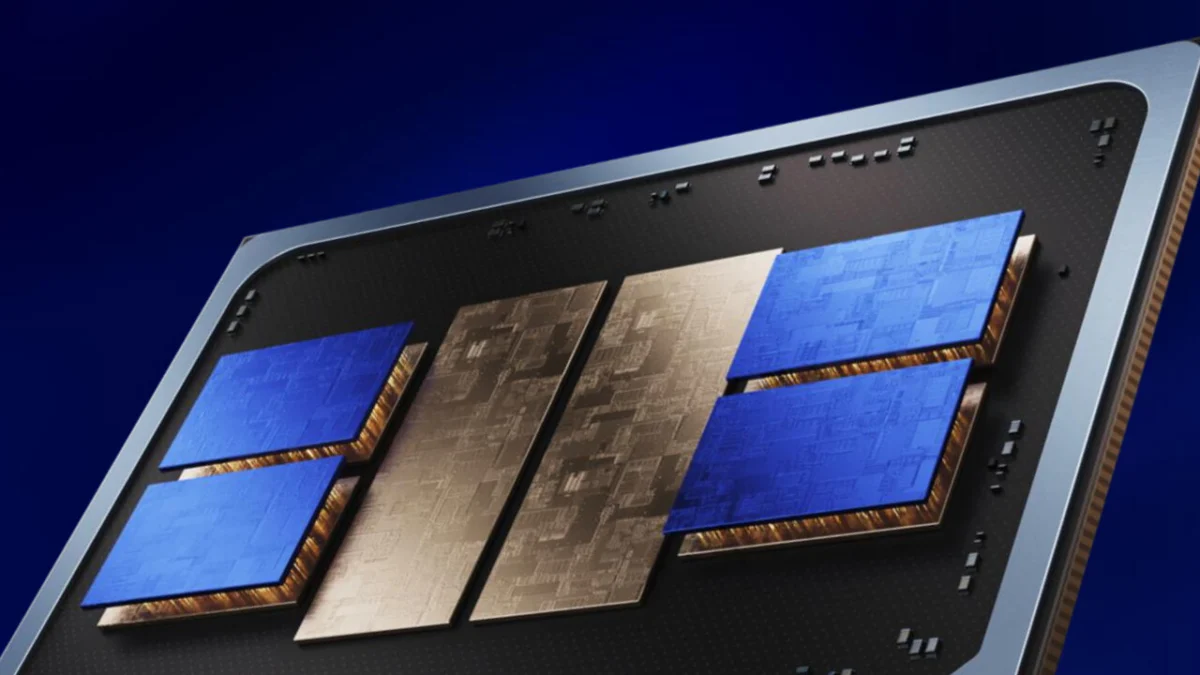
- The Arm Strategy: Through Arm Holdings, the British semiconductor designer acquired by SoftBank, Son controls the fundamental architecture that powers almost every smartphone and AI chip globally. By integrating AI-optimized processing units into the heart of the hardware stack, SoftBank aims to be the "picks and shovels" provider for the AI gold rush.
- The $100 Billion Vision: Reports indicate that Son is exploring a massive capital-raising project, codenamed "Izanagi," designed to funnel over $100 billion into semiconductor and AI infrastructure to compete with the likes of Nvidia.
A Chronology of Ambition: From Telecom to Neural Networks
To understand the gravity of Son’s current push, one must look at the historical trajectory of his investment philosophy.
The Early Years (1981–2000)
SoftBank began as a software distributor. Son’s early success was defined by his ability to identify the digital revolution before it arrived. His investment in Yahoo! in 1996 and a $20 million stake in Alibaba in 2000 (which grew into a $100 billion-plus windfall) solidified his reputation as an oracle of the internet age.
The Vision Fund Era (2017–2022)
The launch of the $100 billion Vision Fund marked a shift toward "mega-investing." While the fund faced significant criticism for high-profile losses—most notably WeWork—it served as a massive testing ground for Son to understand how data, logistics, and AI could converge.
The AI Pivot (2023–Present)
Following the success of Arm’s IPO in 2023, Son signaled a strategic pivot. Recognizing that capital alone was not enough, he began consolidating SoftBank’s assets to focus entirely on the AI ecosystem. He has shifted from being a "distributor" of capital to a "developer" of infrastructure, signaling that the company’s internal culture is now entirely obsessed with the "AI Singularity."
Supporting Data: The Infrastructure of Tomorrow
The sheer scale of the investment required to reach ASI is staggering. Industry experts estimate that the energy and compute requirements for a truly autonomous, superintelligent system would exceed the current output of the world’s leading data centers by several orders of magnitude.
- Compute Requirements: Recent industry benchmarks suggest that training the next generation of LLMs (Large Language Models) requires a 100-fold increase in computing power compared to models released just three years ago.
- The Arm Factor: With over 250 billion Arm-based chips shipped to date, the ubiquity of Son’s hardware provides a unique vantage point. If SoftBank can standardize AI-specific acceleration within the Arm architecture, they essentially own the foundational layer of the global AI economy.
- Energy Consumption: Son has begun scouting for investments in fusion energy and advanced battery storage, recognizing that the "intelligence" he seeks will require a power grid capable of sustaining a perpetual, massive energy draw.
Official Responses and Industry Skepticism
The financial world remains divided on Son’s grand vision.
The Proponents
Supporters of Son argue that his contrarian nature is exactly what is required for such a high-risk, high-reward endeavor. "Masa has been wrong before, but when he is right, he changes the world," says a Tokyo-based technology analyst. Proponents point to the fact that Son has successfully navigated the dot-com bubble and the 2008 financial crisis, always emerging with a renewed focus on the next technological frontier.
The Skeptics
Critics argue that the "superintelligence" Son envisions remains speculative. Investors have expressed concerns regarding the volatility of SoftBank’s stock and the company’s high debt levels. Many fear that the pursuit of ASI is a "black hole" for capital that could drain the company’s resources without producing a commercially viable product in the short term. Furthermore, ethical AI watchdogs have questioned the lack of a regulatory framework for an ASI that could theoretically bypass human oversight.
Implications: A World Transformed
If Masayoshi Son succeeds in his quest for artificial superintelligence, the implications for society, the economy, and the individual are profound.
1. The Economic Singularity
The introduction of an entity capable of problem-solving at a rate exponentially faster than human scientists could lead to the eradication of diseases, the solution to climate change through advanced materials science, and the total automation of the global supply chain. However, it also poses the risk of extreme economic displacement, where traditional labor models become obsolete.
2. Geopolitical Dominance
Control over the infrastructure of ASI is the new "Nuclear Arms Race." Nations that house the data centers and the proprietary chips developed under Son’s vision will wield unparalleled influence. This puts Japan, and by extension, SoftBank, at the center of a new geopolitical axis that could shift the balance of power away from traditional Western tech hubs.
3. The Existential Question
At the heart of the debate is the "alignment problem." If a machine reaches a state of superintelligence, how can we ensure its goals remain aligned with human survival? Son’s public optimism suggests a belief in a benevolent AI, yet his private board discussions likely grapple with the existential risks of creating an entity that may not need—or want—human guidance.
Conclusion: The Final Gamble
Masayoshi Son is 66 years old. He has often stated that he is building a legacy that will outlast his own tenure. His pursuit of Artificial Superintelligence is not merely a business strategy; it is a philosophy of existence. Whether he is remembered as the architect of a new golden age or a cautionary tale of hubris, one thing remains certain: the trajectory of the 21st century is being calculated in a Tokyo office, one billion-dollar chip investment at a time.
As the world watches the convergence of hardware, energy, and intelligence, Son remains undeterred. He is betting everything on the idea that the "Singularity" is not a question of if, but when—and that when it happens, he will be the one holding the switch. For the rest of humanity, the journey toward this future promises to be the most transformative, and perhaps the most perilous, period in history.