The landscape of independent game development is undergoing a seismic, and perhaps existential, shift. At the heart of this transformation lies the Steam Next Fest, a biannual digital exhibition that has long served as a vital launchpad for indie creators. However, the most recent iteration of the event has brought a troubling trend to the forefront: a deluge of low-quality, AI-assisted titles—often derisively labeled as "slop"—that are not only cluttering the storefront but actively threatening the livelihoods of original developers. As generative AI and agentic software development lower the barriers to entry, the industry is witnessing a "race to the bottom" where creativity is being cannibalized by rapid-fire imitation.
The Flood: A Record-Breaking Quantity with Diminishing Returns
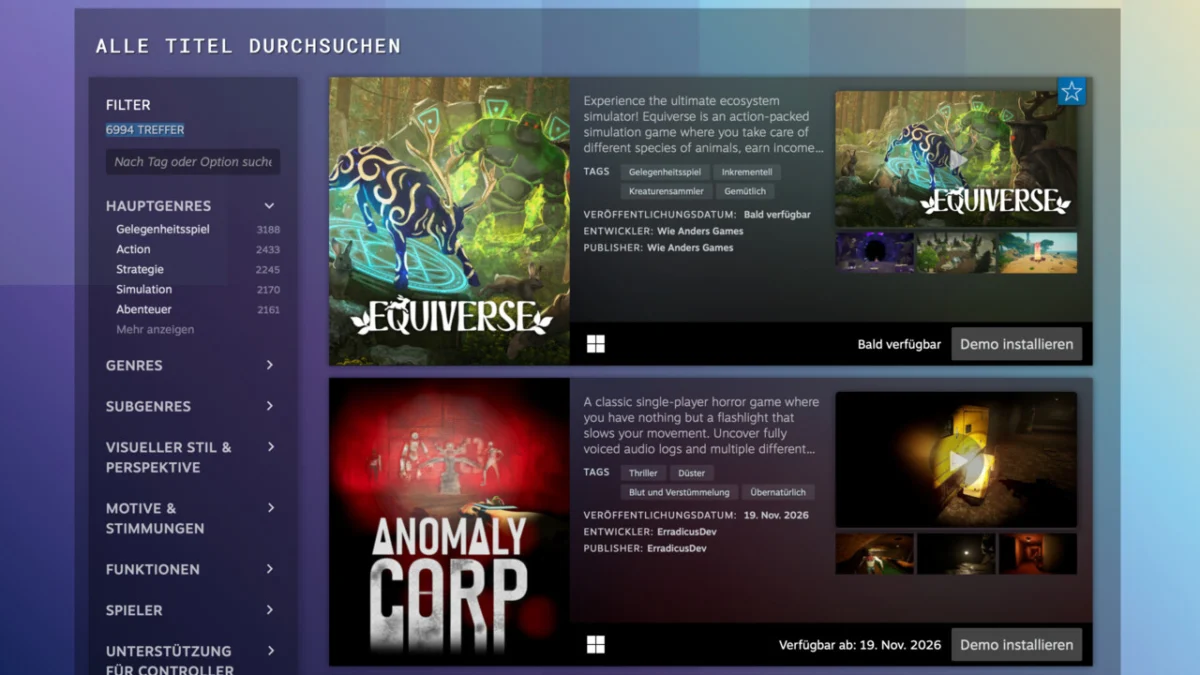
Since the launch of the current Steam Next Fest, the event has reached an unprecedented scale. With nearly 7,000 game demos listed, the sheer volume of content is staggering. To put this into perspective, the June iteration of the festival featured roughly half that number, while the June 2022 event hosted just over 1,000 demos.
While the democratization of game development is often celebrated, this exponential growth suggests that the "democratization" has tipped into oversaturation. The primary driver of this surge is the rapid evolution of artificial intelligence and automated coding agents. These tools allow individuals with limited technical expertise to generate, prototype, and publish game concepts at a speed previously thought impossible.
Where past events functioned as a gallery of near-complete projects looking for final polish and community feedback, today’s Next Fest is flooded with raw, uninspired "feasibility studies." These projects are often little more than shells—mechanics generated via AI prompts that lack the depth, soul, or long-term viability of true indie craftsmanship. The result is a haystack of mediocrity that makes it increasingly difficult for players to discover genuine innovation, effectively burying high-quality projects under a mountain of digital debris.
The Anatomy of an Imitation: The "Copycat" Epidemic
The most insidious consequence of this new era of development is the speed at which original ideas can be commodified and cloned. The case of Escape the Walls, an incremental sandbox game, serves as a grim case study. After the developers shared early footage on social media platform X on October 10, a cynical observer noted: "You have exactly seven hours before someone copies this on Roblox and generates 20 times your revenue."
The prophecy proved accurate. Within a week, at least seven blatant clones had appeared on the Roblox platform, a ecosystem known for its low barrier to entry and permissive stance on derivative works. Emboldened by this success, some copycats even boasted about their actions on social media, framing their theft as "friendly competition."
The situation escalates from mere concept theft to direct code appropriation. The developers of Needle In A Haystack (NoGlyph) publicly accused Little Field Studios of lifting code directly from their project for a game released on Steam on October 16. The evidence was damning: NoGlyph discovered 13 classes with identical naming conventions, with more than half of the internal functions matching their own code word-for-word. Even more tellingly, the copied files contained error messages referring to shaders that did not even exist in the imitator’s game—a "digital fingerprint" proving the source of the stolen assets.
The Defensive Retreat: Why Developers are Withdrawing
The rise of AI-powered cloning has forced a fundamental change in strategy for honest indie developers. Fear of having their intellectual property stripped and re-released by predatory actors is now a primary concern for small teams.
This anxiety reached a boiling point with the title Drunken Goddess Reflux. The developers, Alliance Arts, made the difficult decision to cancel their scheduled public demo for the current Steam Next Fest. In an official statement, they cited the risk of AI-driven replication: "We are concerned that… works imitating or replicating this game’s presentation and gameplay could be quickly produced… and released ahead of the game’s launch."
Instead of a public demo, the developers opted for a closed, controlled environment for play-testing. While this protects the IP, it comes at a significant cost. The "Steam Next Fest" model relies on the viral potential of public demos to build community, generate wishlists, and capture the interest of the gaming press. By retreating into silence, developers are effectively cutting themselves off from the very platform that is supposed to help them succeed. This creates a vicious cycle: the more developers fear the public, the less "genuine" the festival becomes, and the more the platform is dominated by the very "slop" that forced the honest developers away in the first place.
Implications for the Industry: A Race to the Bottom
The implications of this shift are profound and threaten to hollow out the indie sector. For small teams, the lack of resources—financial, legal, or administrative—means they are essentially defenseless against better-funded or more aggressive copycats. When a clone hits the market before the original, the original developer loses not only potential revenue but also the "first-mover advantage" that is essential for a game’s success in a crowded market.
We are looking at a market-wide degradation of trust. If players can no longer distinguish between a passion project and a rushed AI clone, they may lose faith in the Steam storefront as a whole. This is a "tragedy of the commons" scenario:
- Developers lose the incentive to share their work early.
- Platform Operators (Valve) face a crisis of curation and quality control.
- Players are overwhelmed by low-effort content, leading to "decision paralysis" and eventual burnout.
The only parties that stand to gain in this environment are the purveyors of mass-production AI tools and the bad-faith actors who use them to siphon value from the creative efforts of others.
Regulatory Gaps and the Search for Solutions
Valve has acknowledged the complexity of this new environment, previously introducing guidelines in early 2026 for the labeling of AI-generated content. However, these guidelines are largely reactive and focused on disclosure rather than prevention. They do little to address the systemic issue of AI-assisted theft or the rapid-fire cloning of mechanics.
The industry now faces a series of uncomfortable questions that have no easy answers:
- Curation vs. Access: Should Steam implement more stringent entry requirements for its festivals to filter out low-effort prototypes, even if this risks excluding legitimate, under-resourced developers?
- Intellectual Property Protection: How can the platform effectively identify and mitigate "code-lifting" when the sheer volume of submissions makes manual review impossible?
- The "Slop" Threshold: Is it possible to define a metric for "quality" without stifling the creative freedom that defines the indie scene?
As of now, these questions remain unanswered. The current Steam Next Fest stands as a crossroads. If the trend of AI-flooding continues unchecked, the festival risks losing its reputation as the premier destination for indie discovery. Without a coordinated effort to protect original creative work, the "democratization of development" may ultimately result in a market where the barrier to entry is low, but the cost of survival is higher than ever.
The story of the 7,000 demos is not merely a story of growth; it is a warning. The tools that have given developers the power to create more than ever before have simultaneously given bad actors the power to destroy the value of that creation. Unless the industry finds a way to balance the rapid pace of innovation with the protection of human ingenuity, the future of the indie gaming scene looks increasingly bleak.