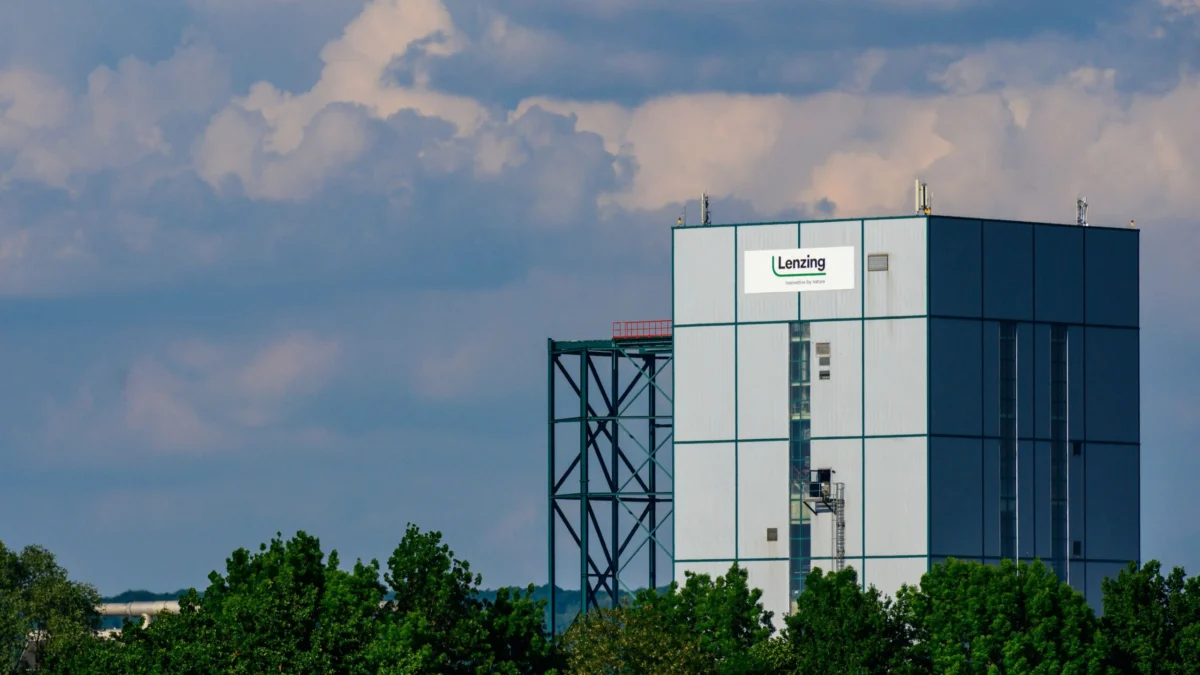
DÜSSELDORF – The Austrian fiber giant Lenzing AG, a global leader in the production of wood-based specialty fibers, has officially launched a critical capital increase, seeking to raise approximately €300 million. While the company positions this move as a strategic necessity to pivot away from volatile commodity textile markets toward high-margin specialty non-woven products, the process has been clouded by the hesitant stance of its most prominent strategic investor.
As of this week, shareholders have the opportunity to exercise their subscription rights. However, behind the veneer of a guaranteed financial backstop provided by a consortium of major banks, market analysts are increasingly questioning the long-term trajectory of the company and the commitment of its key partners.
The Core Facts: A €300 Million Capital Raise
Beginning this Tuesday, shareholders of Lenzing AG are invited to participate in a rights issue. The company is offering new shares at a subscription price of €8.65 per share. Under the terms of the capital increase, investors are entitled to purchase nine new shares for every ten existing shares held. The subscription period is slated to run until October 20.

The primary objective of this cash injection is to provide the liquidity necessary for a comprehensive corporate restructuring. Lenzing, which has historically relied on the production of standard cellulose fibers for the textile industry, is currently undergoing a painful transition. The company intends to shift its production focus heavily toward Vliesstoffe (non-woven fabrics), a segment that promises higher margins and less cyclical exposure than the global fashion supply chain.
Despite the skepticism surrounding the stock, the transaction is effectively "de-risked" in the short term. A consortium of leading financial institutions, including BNP Paribas, Unicredit, Commerzbank, and the Erste Group, has fully guaranteed the emission. This ensures that even if retail and institutional investors shy away from the offer, the full €300 million will be successfully raised.
A Chronology of Strategic Realignment
The current capital call is not an isolated event but the latest chapter in a turbulent multi-year transformation for the Austrian firm.

- 2022: The Suzano Partnership: The Brazilian pulp giant Suzano SA acquired a 15% stake in Lenzing, signaling a deep industrial partnership. The move was widely seen as a way to secure raw material access and integrate the supply chain.
- The Option Agreement: As part of the 2022 deal, Suzano secured an option to acquire another 15% of Lenzing’s shares from the B&C Private Foundation—Lenzing’s largest Austrian shareholder—by the end of 2028.
- 2024: The Strategic Pivot: Facing mounting debt and declining demand for standard textile fibers, management announced a structural shift. This includes the planned closure of the fiber production facility at the Heiligenkreuz site in southeastern Austria, scheduled for spring 2027.
- October 2024: The Capital Call: The company officially launches the €300 million rights issue, attempting to stabilize its balance sheet as it phases out older production lines and invests in new, high-growth categories.
Supporting Data: Debt, Markets, and Valuation
Lenzing’s financial health has been a point of contention for analysts over the past eighteen months. The firm has been grappling with high debt levels, exacerbated by the global downturn in textile demand and high energy costs—a direct byproduct of the European energy crisis.
The Debt Burden
The company’s net debt-to-EBITDA ratio has been under close scrutiny by rating agencies. The €300 million infusion is specifically earmarked to deleverage the balance sheet and provide a "buffer" for the capital-intensive conversion of plants to the new non-woven strategy.
Market Dynamics
The move to pivot toward non-woven materials is a response to the "commodity trap." Textile fibers are increasingly subject to intense price competition from low-cost producers in Asia. By contrast, specialty non-wovens—used in hygiene, medical, and filtration products—offer more stable demand profiles. However, this transition requires significant R&D and capital expenditure, which is why the current cash injection is viewed by the board as non-negotiable.
The "Suzano Factor": A Strategic Investor in Waiting
Perhaps the most significant variable in this equation is the behavior of the Brazilian conglomerate, Suzano. When Suzano first entered the shareholder structure, it was hailed as a stabilizing force. Analysts viewed the 15% stake and the option for an additional 15% as a "soft guarantee" that Lenzing would remain well-capitalized.
However, as Lenzing turns to the public markets for €300 million, Suzano has adopted a noticeably cautious posture. By stepping back from the current capital increase, the Brazilian partner has fueled speculation regarding its long-term intentions.
Under Austrian law, if an investor reaches the 30% threshold, they are legally required to launch a full takeover bid for the entire company. If Suzano were to participate fully in the capital increase, they would risk triggering this threshold prematurely, or at the very least, would be forced to increase their capital commitment to a company that is currently in a state of flux. Their hesitation suggests a "wait and see" approach, leaving market participants wondering if the partnership is cooling.

Official Responses and Corporate Stance
In official statements, the management board of Lenzing has emphasized the "strategic necessity" of the move. CEO-level communications have consistently framed the capital increase as a vote of confidence in the future of the company’s new direction.
"This capital increase provides us with the necessary financial flexibility to accelerate our transformation program," a company spokesperson stated earlier this week. "Our focus remains on high-growth, high-margin specialty fibers, and we are grateful for the support of our banking syndicate in ensuring the success of this issuance."
The B&C Private Foundation, which holds a controlling interest, has expressed support for the transformation but has remained largely silent regarding the specific decision of Suzano to step back. Behind the scenes, the foundation is likely balancing the need for capital against the desire to maintain Austrian control and industrial influence.

Implications: What Lies Ahead?
The next few weeks will be telling. The success of the subscription period, while guaranteed by the banks, will act as a referendum on management’s vision.
1. The Burden of Proof
Lenzing must prove that it can successfully exit the commodity fiber business without incurring massive write-offs that could render the new capital insufficient. If the transition to non-wovens faces technical or market delays, the company may find itself back at the door of its shareholders within another 24 months.
2. The Future of the Partnership
If Suzano chooses not to exercise its option by 2028, or if the relationship deteriorates, Lenzing will lose its most significant strategic anchor. This would leave the company vulnerable to market volatility and potentially open the door for a hostile takeover or a forced divestment of core assets.

3. Shareholder Sentiment
For retail investors, the current situation is complex. The dilution effect of the new shares is significant, and the stock price reflects a high degree of uncertainty. Investors are currently weighing the potential upside of a successful pivot against the risk of further capital calls should the restructuring prove more expensive than currently modeled.
4. The Heiligenkreuz Closure
The decision to shut down the Heiligenkreuz site by 2027 serves as a stark reminder of the human and industrial cost of this transition. It marks the end of an era for the local workforce and underscores the urgency with which management is shedding legacy assets to survive in a rapidly changing global landscape.
Conclusion
Lenzing AG is at a crossroads. The company is betting its future on the hope that it can out-innovate its competitors in the non-woven space while managing a painful restructuring of its core manufacturing footprint. The current €300 million capital raise is the fuel for this journey, but with the primary strategic investor keeping its distance, the path ahead looks significantly steeper than it did just two years ago. Investors, employees, and industry observers will be watching the subscription numbers closely through October 20, as they represent not just a financial transaction, but a vote on the viability of the "new" Lenzing.