The quest for European technological sovereignty in High-Performance Computing (HPC) has reached a critical juncture. SiPearl, the French powerhouse tasked with developing indigenous European microprocessors, has officially unveiled the foundational design for its next-generation platform, the Rhea2. Built upon the architecture of the M100 (Mobius100), this new chip represents a massive leap in technical capability and a strategic alignment with global semiconductor standards. By partnering with Taiwan’s Alcor Micro—a subsidiary of the Egis Group—SiPearl is aiming to bypass the developmental bottlenecks that plagued its predecessor, the Rhea1, setting the stage for a 2027 sample rollout and a 2028 market launch.
The Evolution of Rhea: From Delay to Acceleration
To understand the significance of the M100/Rhea2 announcement, one must first look at the turbulent history of the Rhea1. Originally envisioned as the centerpiece of Europe’s push for supercomputing independence, the Rhea1 was intended to power the massive Jupiter supercomputer at the Jülich Supercomputing Centre.
However, the path to implementation was marred by persistent delays. While the Rhea1 80-core processors are only now being integrated into systems by partners like Bull (Atos) and HPE, the timeline has been pushed significantly beyond initial expectations. Critics have argued that by the time these systems reach full operational capacity, the architectural landscape of HPC will have shifted. SiPearl has internalized these lessons; the development of Rhea2 is not just an iteration but a complete shift in methodology, leveraging international collaboration to ensure that the European market does not fall further behind the rapid cadence of global competitors.
Technical Specifications: The Power of the M100
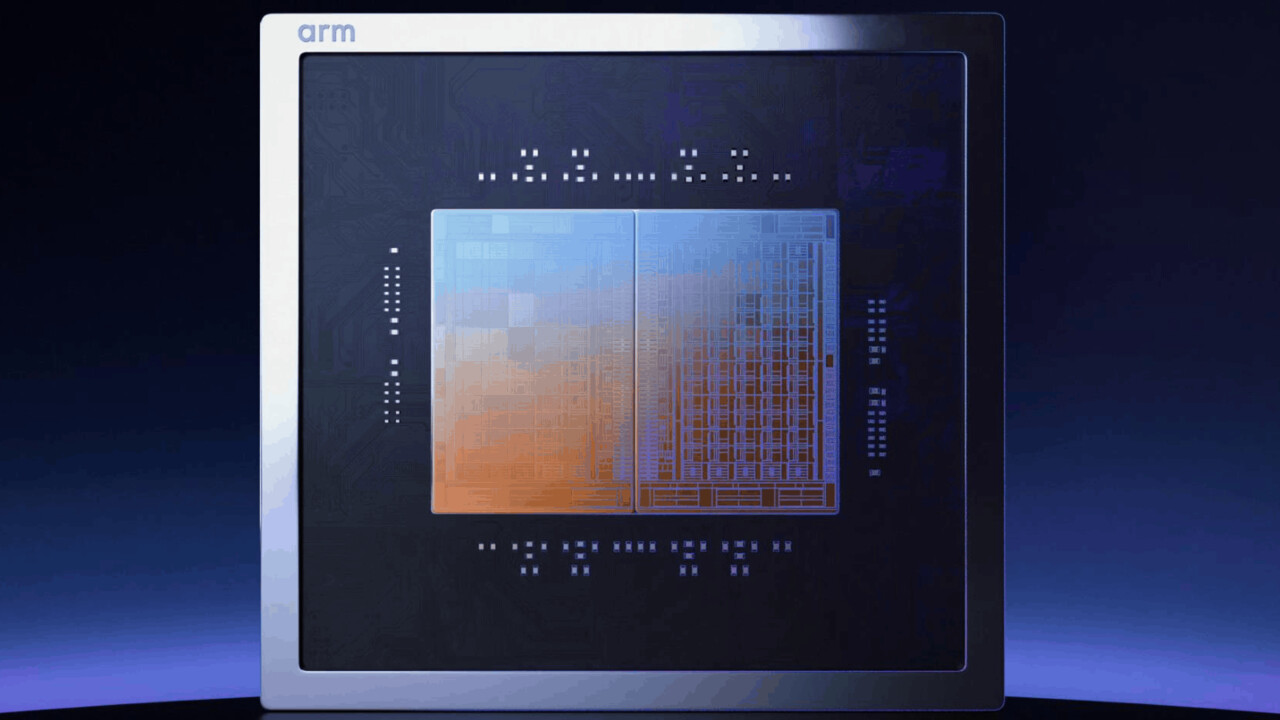
The heart of the new strategy is the Mobius100 (M100). The chip is a technical marvel designed to compete with the latest offerings from industry titans. At its core, the M100 utilizes two CPU chiplets, combining for a total of 140 physical cores. Within this configuration, twelve cores are designated as redundant, ensuring yields and reliability in mission-critical HPC environments.
Key Technical Pillars:
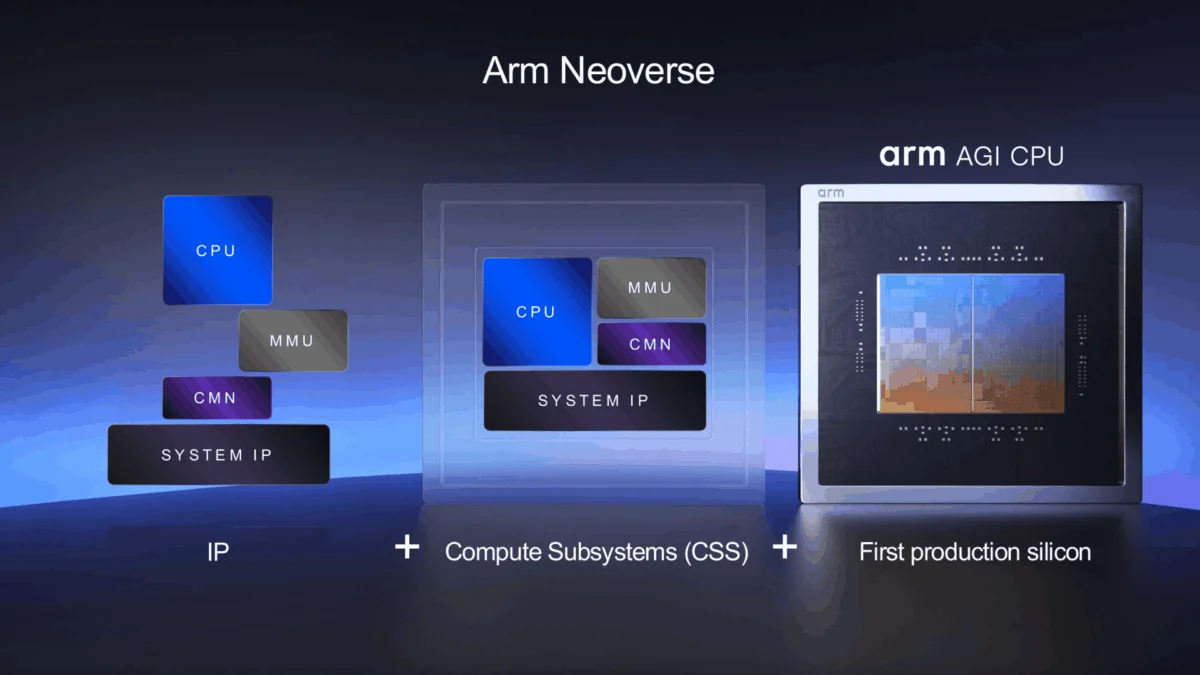
- Architecture: Based on the Arm Neoverse V3 CSS (Compute Subsystems), the M100 aligns with the industry’s most advanced power-efficient, high-performance blueprints.
- Chiplet Interconnect: The use of UCIe 2.0 (Universal Chiplet Interconnect Express) allows for modular, high-speed communication between the two primary CPU tiles.
- Memory and I/O: The platform supports MRDIMM (Multiplexed Registered DIMM) memory technology, boasting speeds up to 12,800 MT/s. Furthermore, the inclusion of PCIe 6.0 and CXL (Compute Express Link) support ensures the M100 is "future-proofed" for high-speed data interconnects and heterogeneous computing tasks.
- Manufacturing: The chip will be produced using TSMC’s N3P process, representing the cutting edge of node efficiency and transistor density.
Strategic Alignment: The Arm AGI Connection
The similarities between SiPearl’s M100 and Arm’s own "AGI" (Artificial General Intelligence) processor are far from coincidental. During the Hot Chips 2026 conference, Arm showcased the AGI processor, a 136-core beast derived from two 70-core tiles. The M100 effectively mirrors this design philosophy.
This alignment highlights a broader shift in SiPearl’s strategy. By adopting the Neoverse V3 CSS, SiPearl is utilizing the "golden middle" of Arm’s portfolio. Rather than attempting to build from the silicon substrate up, SiPearl is utilizing mature, high-performance IP blocks. This modular approach allows for rapid integration and ensures that software developers working on Arm-based HPC platforms elsewhere can easily port their workloads to the European Rhea2 environment.
The partnership with Alcor Micro is the catalyst here. Alcor Micro, through the Egis Group, has recently deepened its strategic ties with Arm, specifically targeting AI and HPC chip innovation. By embedding itself into this ecosystem, SiPearl is essentially tapping into a global supply chain of expertise, significantly de-risking the development of the Rhea2 compared to the solitary development path taken with the Rhea1.
Chronology of Development
The roadmap for the M100 and its European iteration, the Rhea2, is aggressive yet structured:
- Phase 1 (2024-2025): Finalization of the CSS-based architecture and collaborative design with Alcor Micro.
- Phase 2 (Late 2026): Tape-out and verification of the M100/Rhea2 silicon using TSMC’s N3P node.
- Phase 3 (Late 2027): Availability of the first engineering samples for partners and key European research institutions.
- Phase 4 (H2 2028): Final commercial release of the Rhea2, followed shortly by deployment in European Exascale systems.
This timeline is deliberately synchronized with the needs of the "Alice Recoque" supercomputer project in France, which has been cited as a primary target for the Rhea2 deployment.
Official Perspectives and Industry Response
The reception to the announcement has been one of cautious optimism. Industry analysts note that while the specifications are competitive, the true test will be the "time-to-market."
SiPearl’s management has been transparent about the challenges. In official statements, the company emphasized that the "Europeanization" of the M100—rebranded as Rhea2 for the local market—will occur shortly after the primary M100 release. The goal is to provide a sovereign alternative that does not sacrifice performance for political expediency.
Partners in the HPC space, particularly those building the infrastructure for the European High Performance Computing Joint Undertaking (EuroHPC JU), view the M100 as a vital component. Without a European-designed processor that can scale to 128+ cores (the effective yield of the M100 after accounting for redundancy), Europe remains dependent on American silicon (AMD/Intel) or custom solutions that are difficult to sustain.
Implications for the Global HPC Market
The implications of the M100 architecture extend beyond simple hardware specs:
1. Reducing Dependency on Non-European Supply Chains
By securing a design path that leverages Arm IP and TSMC manufacturing, SiPearl is creating a "sovereign buffer." While it still relies on global partners, the core architectural design and IP ownership remain in European hands, providing a degree of control over the software stack and security implementations that is impossible with closed-source, off-the-shelf processors.
2. The Rise of the "Chiplet" Standard
The adoption of UCIe 2.0 confirms that the industry has fully embraced chiplet-based architectures. For SiPearl, this is a massive advantage. It means they can update specific components of their CPU (like the AI accelerator blocks or the memory controller) without having to redesign the entire processor, making future generations of the Rhea series significantly cheaper and faster to develop.
3. AI-HPC Convergence
The technical focus on PCIe 6.0 and CXL support indicates that the M100 is being built with AI training and inference in mind. As supercomputers move away from pure scientific modeling toward AI-driven research, the M100’s ability to handle high-bandwidth data movement will be its most critical feature.
Conclusion: A Turning Point for European Silicon
The announcement of the M100/Rhea2 design is a definitive signal that SiPearl has matured. The transition from the R&D-heavy phase of the Rhea1 to a collaborative, IP-leveraged model with Alcor Micro and Arm represents a pragmatic realization: to compete in the global market, one must utilize the best available tools.
While 2027 and 2028 may seem distant in the fast-paced world of technology, the foundation laid today provides a clear, defensible path to 128-core performance. For European supercomputing, the Rhea2 could finally be the processor that bridges the gap between ambition and reality, proving that the continent can produce world-class silicon capable of powering the next generation of Exascale breakthroughs. The industry will be watching the 2027 sample arrival with bated breath—not just to see a new chip, but to see if Europe can finally deliver on its promise of silicon sovereignty.