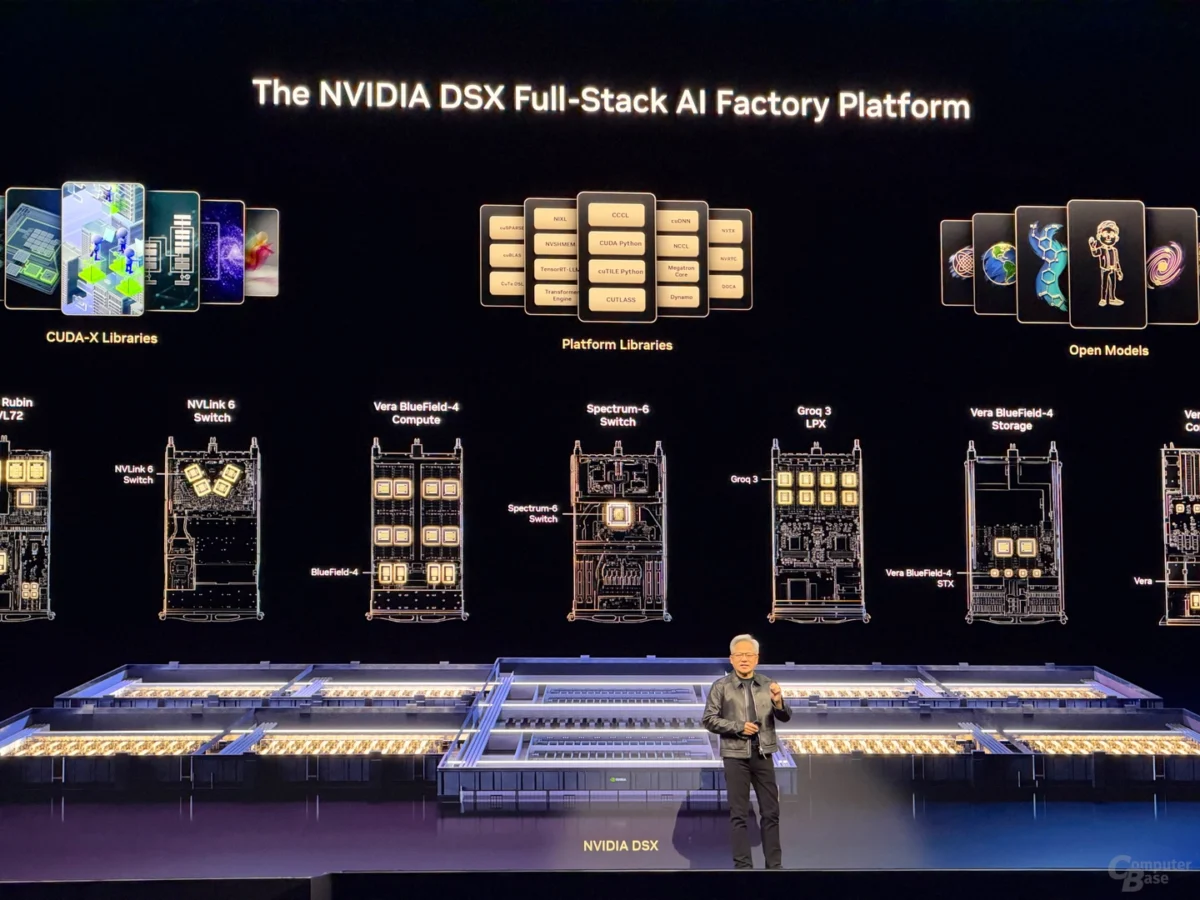
At the GTC Berlin 2026, Nvidia has unveiled a comprehensive evolution of its DSX platform, signaling a fundamental shift in how the world’s most powerful AI supercomputers are designed, cooled, and managed. As the global demand for generative AI continues to scale at an unprecedented rate, the environmental and infrastructural footprint of "AI factories" has become a critical bottleneck. Nvidia’s latest suite of hardware reference designs and software optimizations aims to resolve this tension by prioritizing extreme resource efficiency and grid integration.
The New Frontier: Near-Zero Water Consumption
The most striking announcement from the Berlin event is the introduction of a revolutionary liquid-cooling architecture designed to virtually eliminate water consumption in data center operations.
Traditionally, large-scale data centers rely on evaporative cooling towers, which dissipate heat into the atmosphere by evaporating massive quantities of water. In regions facing water scarcity, this practice has come under intense public and regulatory scrutiny. Nvidia’s new reference designs for its "Vera Rubin" platform pivot away from this model, utilizing a closed-loop liquid cooling system paired with "Dry Coolers."
The Engineering Behind the Dry Cooler
Unlike cooling towers, which act as open systems, these dry coolers function similarly to automotive radiators. A dedicated coolant circulates through the server racks, absorbing heat directly from the high-performance GPUs and associated hardware. This heat is then transported to external dry coolers, which release the thermal energy into the ambient air. Because the system is entirely enclosed, the need for evaporative water loss is removed from the process.

The scale of potential impact is immense. Nvidia estimates that for a data center operating at a two-gigawatt capacity, the shift to dry-cooling technology could save 54 million liters of water every single day. To put this into perspective, this represents the daily water consumption of approximately 180,000 average households. While Nvidia cautions that the efficacy of these systems—and the potential need for supplementary mechanical cooling during extreme heatwaves—remains climate-dependent, the reference architecture sets a new industry standard for sustainable high-performance computing.
DSX MaxLPS: Maximizing Performance per Watt
Beyond physical cooling, Nvidia is tackling the "compute-to-power" ratio through its new software suite, DSX MaxLPS. As power budgets become the primary limiting factor for AI expansion, the ability to squeeze more intelligence out of every kilowatt has become a competitive necessity.
DSX MaxLPS acts as an intelligent traffic controller for electricity within an AI factory. It dynamically redistributes power across the GPU cluster, optimizing performance based on real-time demand. The results reported by early adopters are compelling:
- Efficiency Gains: Nvidia claims that for the same output of AI tokens, the system can reduce power consumption by up to 30%.
- Throughput Benchmarks: In a trial conducted by Lambda using Nvidia HGX B200 systems, the application of DSX MaxLPS resulted in a 24% increase in token throughput and a 19% increase in usable GPU capacity within a fixed power envelope.
- Scalability: British data center operator Nscale reported even more dramatic findings. Utilizing four GB300-NVL72 racks in Iceland, they observed a 49% increase in inference throughput and a 37% gain in GPU capacity while keeping the total power draw strictly capped at 264 kilowatts.
This software-defined approach allows data center operators to either lower their operational costs or significantly increase their compute density without requiring additional power infrastructure—a massive boon for facilities operating near the capacity of their local grid connections.

DSX Flex: The Grid-Responsive Data Center
One of the most persistent challenges for hyperscalers is the strain placed on regional electrical grids. AI data centers are massive, constant loads, but the energy market is increasingly volatile due to the integration of intermittent renewable sources. Nvidia’s "DSX Flex" software is designed to turn the data center from a passive consumer into a flexible grid participant.
DSX Flex enables data centers to adjust their power consumption in real-time based on grid conditions, utility pricing, and the availability of renewable energy. By coordinating the use of grid electricity, on-site renewables, and battery energy storage, the platform allows the data center to act as a load-balancing asset.
In a pilot program involving Emerald AI, the Electric Power Research Institute (EPRI), Nebius, and the UK’s National Grid, researchers were able to reduce the power draw of a Blackwell Ultra GPU cluster by 40% during simulated grid stress events, all while ensuring that critical, high-priority AI workloads continued to run without interruption. This ability to "throttle" non-essential processes in response to grid signals could be the key to securing permits for future mega-scale AI clusters in energy-constrained regions.
Chronology of Innovation: The Road to GTC Berlin
The announcements at GTC Berlin are the culmination of a multi-year effort by Nvidia to vertically integrate its data center offerings.

- Phase 1: Foundation (Early 2024): Nvidia solidified its hardware dominance with the Blackwell architecture, shifting focus from pure silicon performance to inter-rack connectivity and thermal management.
- Phase 2: Integration (2025): The company began expanding the DSX platform, focusing on the "digital twin" concept, where software-defined infrastructure could be modeled before physical deployment.
- Phase 3: Sustainability (2026): With the latest GTC announcements, the focus has shifted entirely to the "Operational Sustainability" era, where efficiency is not just a feature, but a core component of the hardware-software stack.
Digital Twins and the "SimReady" Ecosystem
Modern data centers are far too complex to optimize through trial and error. To address this, Nvidia has introduced the "SimReady Central Library" on Hugging Face. This repository provides validated, high-fidelity digital models of power supplies, cooling units, and networking components.
By pairing these models with "DSX Sim," operators can build a comprehensive digital twin of their facility. This allows engineering teams to simulate the thermodynamic and electrical behavior of a proposed data center design under various loads and climate scenarios before a single piece of hardware is bolted to the floor. This "simulate-first" approach minimizes the risk of costly post-construction retrofitting and ensures that energy efficiency targets are met from day one.
Furthermore, Nvidia is expanding the open-source "DSX OS" with three key developer-preview components:
- Config Manager: Automates complex network configurations, reducing human error.
- Rack Management Service: A unified control plane for firmware, power, and switch management at the rack level.
- Cluster Readiness Engine: A pre-deployment testing suite that runs distributed workloads to identify faulty nodes and bottlenecks before they enter production.
Implications for the Industry
The shift signaled by Nvidia’s GTC Berlin announcements cannot be overstated. For years, the AI arms race has been defined by a "brute force" approach: more GPUs, more power, more water. By introducing a software layer that treats power and water as finite, programmable resources, Nvidia is moving the industry toward a model of "Sustainable Intelligence."

The implications are threefold:
- Regulatory Compliance: As governments introduce stricter ESG (Environmental, Social, and Governance) requirements for data centers, Nvidia’s focus on water-neutral cooling and grid responsiveness provides a pathway for operators to meet these standards without sacrificing competitive advantage.
- Infrastructure Democratization: By allowing operators to maximize capacity within existing power constraints, DSX MaxLPS lowers the barrier to entry for smaller enterprises and research institutions, who can now squeeze more performance out of more modest power contracts.
- Grid Integration: The collaboration with grid operators like the UK’s National Grid suggests a future where data centers are not merely energy consumers, but active partners in the energy transition.
In conclusion, Nvidia’s latest advancements represent a necessary maturation of the AI industry. By embedding sustainability into the very DNA of the data center stack—from the cooling pipes to the management software—Nvidia is ensuring that the compute power required for the next generation of AI does not come at the expense of our planet’s most vital resources. As these technologies move from developer preview to widespread deployment, the benchmark for what constitutes a "state-of-the-art" AI facility will be measured not just in FLOPS, but in liters saved, kilowatts optimized, and grid stability contributed.