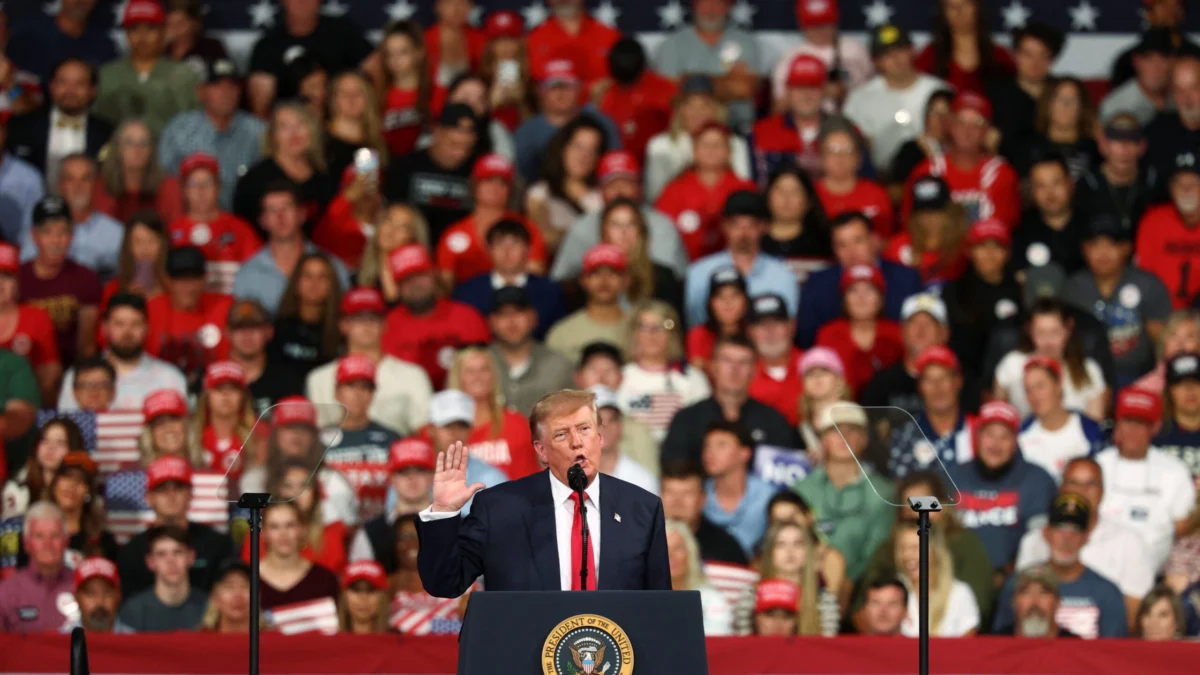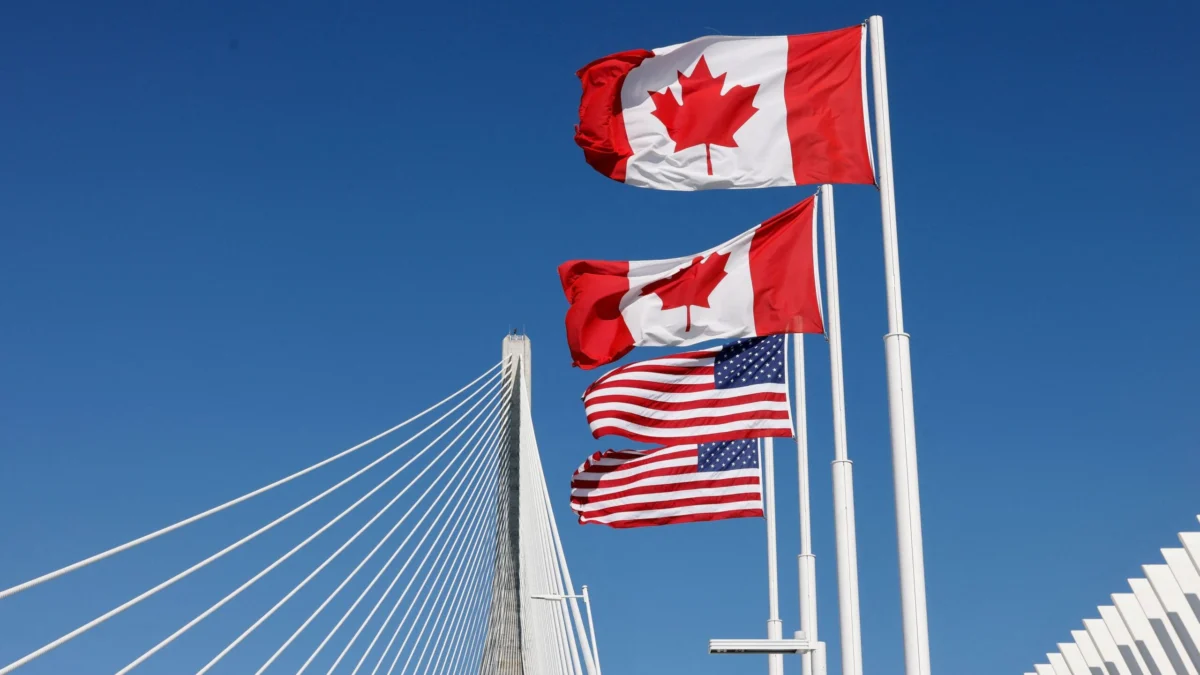
Washington D.C. / Ottawa / Beijing – In a significant move that signals a potential de-escalation of simmering trade tensions, the United States is reportedly moving to lift a 50 percent tariff on certain Canadian agricultural and forestry products. This development comes against a backdrop of complex global trade dynamics, including recent agreements between the U.S. and China on tariff reductions, warnings from U.S. lawmakers regarding technological competition, and emerging diplomatic realignments involving Canada and the European Union.
The decision regarding Canadian tariffs, first reported by the Wall Street Journal, appears to be strategically timed to bolster Republican political prospects in key northern U.S. states ahead of crucial mid-term elections. While a White House official initially cautioned that such reports were speculative, Senator Susan Collins, a Republican from Maine, confirmed that nine specific product categories, including blueberries, potatoes, and apples – vital to her state’s economy – would be exempted. This intricate interplay of trade policy and domestic politics underscores the multifaceted nature of contemporary international relations, as nations navigate economic interests, strategic rivalries, and electoral imperatives.
Chronology of Trade Tensions
The period has been marked by a series of trade disputes and diplomatic maneuvers, reflecting a highly fluid global landscape.
Early Sparks: US-China & US-Canada Tariff Threats
The origins of these recent shifts can be traced back to earlier, more aggressive postures from the United States under the Trump administration.
-
Initial US Tariff Threats Against China: Early reports indicated that the Trump administration was contemplating new tariffs against China, specifically a 7.5 percent levy, to address concerns about China’s alleged practice of "flooding the world market with particularly cheap goods." These considerations emerged as a punitive measure, yet government officials at the time suggested such a move might not derail an existing one-year trade truce or a planned meeting between President Trump and Chinese President Xi Jinping, slated for late September at the White House. This signaled an ongoing, often confrontational, approach to trade imbalances.
-
Escalating Tariffs on Canadian Goods: Concurrently, Canada faced escalating threats from its southern neighbor. President Trump had previously announced a sweeping 50 percent tariff on Canadian vehicles, vehicle parts, and steel, threatening their implementation as early as January 1st of an unspecified year, but within the relevant timeframe of his presidency. He justified these measures by accusing Canada of imposing "ridiculously high tariffs" on U.S. agricultural products and asserted that Canada should no longer be treated like a U.S. state. Prior to this, Trump had already declared 50 percent tariffs on Canadian goods valued at approximately C$20 billion (over 17 billion euros).
-
Canada’s Swift Retaliation: Canada’s response to these aggressive U.S. tariff announcements was swift and resolute. Prime Minister Mark Carney and Finance Minister François-Philippe Champagne quickly announced retaliatory tariffs on U.S. imports, mirroring the U.S. rates at 15, 25, or 50 percent. These countermeasures, affecting some $20 billion worth of U.S. goods, including steel, dairy products, and agricultural equipment, were set to take effect from September 8th. Champagne emphasized Canada’s determination to "stand up for Canadians" when the U.S. demanded too much and offered too little during failed trade talks. This demonstrated Canada’s unwillingness to concede to what it perceived as unfair trade practices.
-
German Auto Industry’s Concern: The ripple effects of the escalating North American trade dispute extended to Europe. The German automotive industry expressed profound concern over the U.S. tariff threats against Canada, particularly the proposed 50 percent tariffs on Canadian cars, commercial vehicles, auto parts, and steel. German suppliers operate numerous production facilities in Canada, which serve as crucial hubs for supplying the U.S. market. Furthermore, German manufacturers have invested significantly in Canada’s burgeoning battery technology sector. The industry warned that "constant changes in tariffs and trade rules as well as ever new threats create uncertainty and burden investments," highlighting the destabilizing impact of protectionist policies on complex global supply chains.

-
US Tourism Sector’s Efforts: Despite the political and economic tensions, some U.S. sectors actively sought to mitigate the negative impact on cross-border relations. U.S. tourism associations launched campaigns to attract Canadian visitors, traditionally a significant source of revenue. For instance, New York initiated its "NY Loves Canada" campaign, offering discounts on hotels, restaurants, and attractions. In Las Vegas, hotels even matched the Canadian dollar with the U.S. dollar to incentivize spending. These efforts underscore the deep cultural and economic ties that exist independently of governmental disputes, though Canadian tourist spending in the U.S. did see a notable decline of approximately $2.4 billion in recent years (referencing a likely past period indicated as "2025" in the original, probably a typo for an earlier year).
Escalation and Diplomatic Maneuvers
As the trade landscape grew more complex, both the U.S. and its partners and rivals engaged in intense diplomatic activity.
-
China and US Signal Intent for Tariff Reductions: Amidst the ongoing trade frictions, signs of a potential thaw in US-China relations began to emerge. Beijing and Washington expressed mutual hopes for a swift agreement on import tariff reductions. Chinese Commerce Ministry spokesperson Huang Ling announced that negotiators were working towards "timely" mutual tariff cuts on goods valued at $30 billion for each side, raising expectations for a significant breakthrough at an upcoming leaders’ summit.
-
Trump’s Reaction to EU-Canada "Associated Membership": A new front in the trade wars opened when European Commission President Ursula von der Leyen proposed making Canada the first "associated member" of the European Union. President Trump reacted sharply, calling the idea "ridiculous" and warning of "very high tariffs against Europe" or even a cessation of trade in many areas if he perceived it as a "hostile act." He reiterated his view of Canada as a "terrible trade partner," highlighting the deeply protectionist and nationalistic undertones of his administration’s trade policy.
-
France’s Rebuke: France swiftly rejected Trump’s tariff threats. French Europe Minister Benjamin Haddad asserted that it was not the place of the U.S. or any other nation to dictate the geopolitical direction of Europeans. He affirmed the EU’s sovereign right to deepen its relations with Canada, underscoring the growing divergence in transatlantic trade philosophies.
-
Canadian PM Carney’s Address to EU Parliament: Following von der Leyen’s announcement and Trump’s threats, Canadian Prime Minister Mark Carney addressed the European Parliament. He directly confronted the "threats from the USA," emphasizing the need to respond to geopolitical disruptions. Carney stressed the long-standing bond between the EU and Canada, declaring, "We are not fair-weather allies. We don’t pursue zero-sum games." He expressed openness to a "special EU membership" for Canada, advocating for stronger trade links, labor market integration (including Canada’s participation in the Erasmus+ student exchange program), and cooperation on critical raw materials to secure a "common strategic autonomy" and enhance resilience in a turbulent global environment.
-
India’s Warning to US Over Russian Oil Tariffs: Beyond North America and Europe, trade policy had broader geopolitical implications. India warned the U.S. that potential punitive tariffs over its purchase of Russian oil could severely strain bilateral relations and destabilize the global energy market. The warning came after the U.S. House of Representatives passed a bill authorizing the President to impose up to 100 percent punitive tariffs on imports from countries like India and China to reduce their reliance on Russian energy. India, the world’s third-largest oil importer, has significantly increased its purchases of sanctioned Russian oil since the 2022 invasion of Ukraine, citing national energy security concerns.
-
China’s "Red Lines" Before Trump-Xi Meeting: As a crucial meeting between President Trump and President Xi Jinping approached, Chinese Ambassador Xie Feng delineated China’s "red lines" for the U.S. These non-negotiable points included Taiwan, democracy and human rights, China’s political system, and its development rights, signaling Beijing’s firm stance on issues it considers internal affairs and core national interests.

-
US Senate Concerns Over Taiwan: In the U.S. Senate, Republican lawmakers, including former Majority Leader Mitch McConnell, expressed apprehension regarding President Trump’s characterization of Taiwan as a "very good bargaining chip" in dealings with Xi. They emphasized that substantial security aid already approved for Taiwan not only reinforced U.S.-Taiwan security ties but also served U.S. security interests, advocating for a consistent and robust policy toward the island.
-
Schumer’s Warning on Chip Export Controls: Senate Democratic leader Chuck Schumer issued a stark warning against easing chip export controls to China. He argued that the U.S. must maintain its leadership in artificial intelligence by restricting China’s access to advanced semiconductor chips and production equipment, while also taking precautions to manage the inherent risks of AI development. This highlights the growing strategic competition in critical technologies.
-
US Postpones China Tariffs: In a conciliatory gesture ahead of Xi’s visit, U.S. Treasury Secretary Scott Bessent announced a two-month postponement of additional tariffs on Chinese imports that had been suspended until November. This move aimed to create a more favorable atmosphere for high-level discussions.
Recent Developments: De-escalation and New Agreements
The intense diplomatic activity culminated in some significant agreements and ongoing adjustments.

-
US Announces Details of Limited Trade Agreements with China: The U.S. government subsequently announced that it would release details of limited trade agreements with China. U.S. Trade Representative Jamieson Greer confirmed that both sides had agreed to trade certain "uncritical goods" under more favorable conditions, and that the existing trade truce would be extended by another two months.
-
China-US Formal Agreement on Tariff Cuts and Broader Cooperation: This was followed by a more formal announcement of an agreement between China and the U.S. to reduce or eliminate tariffs on "insensitive products" worth $30 billion. While specific product categories were not immediately detailed by Beijing, Greer indicated they would include U.S. agricultural products and medical devices, as well as Chinese consumer goods. The trade truce was officially extended, although China remained silent on the duration, while U.S. officials specified a two-month extension. Beyond trade, the two nations also agreed to establish an AI dialogue and an emergency channel for AI incidents to discuss risks and benefits, with the next dialogue scheduled for November. Furthermore, a consensus was reached that Iran "not develop nuclear weapons" and that no state or organization should levy transit fees for international waterways. Both leaders confirmed their intent to attend upcoming APEC and G20 summits, signaling a commitment to ongoing high-level engagement.
-
US Import Ban on Canadian Goods Takes Effect: Despite some de-escalation efforts, the U.S. had previously imposed import bans on specific Canadian goods. Decrees signed by President Trump on September 8th came into effect, prohibiting the import of certain Canadian dairy products, alcoholic beverages, and motorcycles into the United States. These bans, estimated to affect goods worth billions of dollars, represented another layer of escalation in the protracted trade dispute between the two North American neighbors.
-
Report on US Lifting Tariffs on Specific Canadian Products: Most recently, and perhaps most indicative of a shift, is the report that the U.S. will lift the 50 percent tariffs on certain Canadian agricultural and forestry products. This move, driven by a desire to support Republican politicians in competitive northern states during upcoming mid-term elections, reflects the pragmatic and politically influenced nature of trade policy. While the reductions might be offset by increased duties on other Canadian goods, the reported exemptions for blueberries, potatoes, and apples signal a targeted effort to alleviate economic pressure on specific U.S. regions.

Supporting Data and Economic Context
The figures involved in these trade disputes underscore their significant economic impact. The U.S. had imposed 50 percent tariffs on Canadian goods valued at C$27.6 billion, prompting Canada to retaliate with measures of similar magnitude. The recent U.S.-China agreement on tariff reductions covers $30 billion worth of goods for each side, indicating a substantial volume of trade affected by these policy changes.
The auto industry, a cornerstone of both the Canadian and German economies, faces immense pressure from tariff threats. German suppliers with operations in Canada rely on open access to the U.S. market, and any disruption could have cascading effects on investment and employment. Similarly, the agricultural sector, particularly in border regions, is highly sensitive to tariff changes, as demonstrated by Senator Collins’s advocacy for specific Canadian products crucial to Maine’s economy. The decline in Canadian tourism spending in the U.S. further illustrates the broader economic and social ramifications of strained bilateral relations.
Beyond direct economic figures, the discussions around critical raw materials and semiconductor chips highlight a shift towards strategic economic competition. Controlling supply chains for these essential components is now seen as vital for national security and technological leadership, moving beyond traditional trade imbalances to encompass geopolitical influence.
Official Responses and Diplomatic Stances
The various actors involved have articulated clear positions throughout this period of intense trade and diplomatic activity.
- United States:
- President Trump: His stance was characterized by a "America First" approach, using tariffs as a primary tool for leverage in trade negotiations and to protect domestic industries. His rhetoric often conflated trade policy with national pride and political grievances, as seen in his comments on Canada and the EU.
- White House Officials: While occasionally downplaying specific reports as "speculation," they generally affirmed that official announcements would come directly from the administration, maintaining a tight control over the narrative.
- US Trade Representative Jamieson Greer: Played a key role in negotiating the limited trade agreements with China, emphasizing the focus on "uncritical goods" and the extension of trade truces.
- US Treasury Secretary Scott Bessent: Confirmed postponements of tariffs against China, indicating