By MDR News Desk
Updated: October 24, 2026, 16:43 CET
In a coordinated display of public dissent, several hundred demonstrators gathered at major airports across Germany this Saturday to protest the government’s increasingly stringent deportation policy, particularly regarding charter flights bound for Afghanistan. From Leipzig/Halle to Frankfurt and Berlin, activists mobilized under the banner "Together Against Deportations," calling for an immediate halt to the forced removal of individuals to a country still governed by the Taliban.
The Core Conflict: Human Rights vs. Security Policy
The protests, which saw significant participation across the country, were fueled by deep-seated concerns regarding the humanitarian implications of returning asylum seekers to Afghanistan. Activists argue that the German government’s decision to engage in diplomatic dialogue—and subsequent deportation arrangements—with the Taliban regime is morally indefensible.
At the Leipzig/Halle Airport, police estimates placed the number of protesters at approximately 400, while event organizers reported upwards of 600 participants. The atmosphere was one of urgent advocacy. Demonstrators held banners demanding a "Stop to All Deportations," with many speakers labeling the current cooperation between Berlin and the Taliban as a "frightful" betrayal of international asylum standards.
"Schutzsuchende," or those seeking protection, have an inherent right to asylum, a spokesperson for the protest coalition declared. "The German government is trampling on this right. The idea that we are cooperating with the Taliban to facilitate these flights is abhorrent."
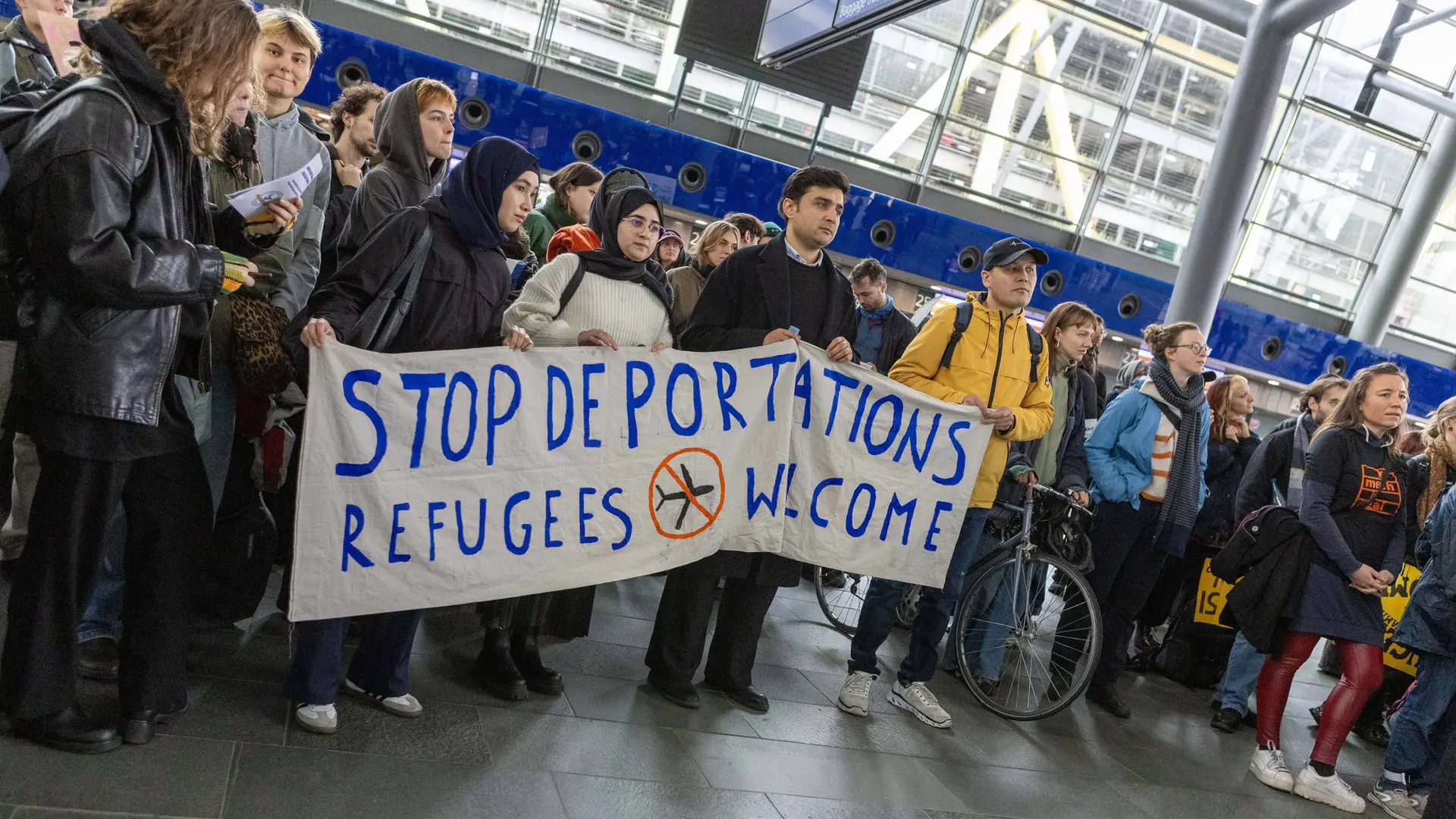
Chronology and Scale of the Protest Movement
The Saturday demonstrations were not isolated incidents but part of a calculated, nationwide action day. The protest movement spanned several key transportation hubs:
- Frankfurt am Main: As Germany’s largest aviation hub, it saw the most significant turnout, with between 500 and 600 people participating. Organizers noted that the attendance exceeded their initial projections, forcing the crowd to relocate to a larger outdoor area to accommodate the influx of activists.
- Berlin (BER): The capital’s airport witnessed several hundred protesters voicing their opposition to the federal government’s immigration stance.
- Leipzig/Halle: A focal point of the movement due to its history as a departure site for charter flights. Protesters here specifically targeted the Turkish airline "Freebird," which has been utilized to carry out deportation flights. Critics labeled it "scandalous" that a private aviation entity could profit from the logistical execution of such controversial removals.
- Düsseldorf and Cologne/Bonn: While smaller in scale, with approximately 50 participants each, these demonstrations underscored the geographic breadth of the resistance.
Despite the intensity of the protests, airport authorities reported no major disruptions to commercial flight operations, even during the peak travel period of the autumn school holidays.
The Shift in Policy: Lowering the Threshold for Removal
The legal and political landscape surrounding deportations has undergone a significant shift in recent months. While the German federal government does not officially recognize the Taliban as the legitimate governing body of Afghanistan, it has increasingly engaged in pragmatic, albeit controversial, dialogue to facilitate the return of Afghan nationals.
A driving force behind this shift has been conservative leadership, most notably former Interior Minister Alexander Dobrindt (CSU), who lobbied heavily for the relaxation of deportation barriers. Under these revised protocols, the criteria for removal have been broadened significantly. It is no longer a requirement that an individual be a convicted criminal to face deportation to Afghanistan. This policy change has triggered a fierce national debate regarding the threshold for returning people to a country where human rights, particularly for women and minorities, remain under severe threat.
Official Responses: The Government’s Position
The state and federal governments remain steadfast in their defense of the current deportation framework. Armin Schuster, the Interior Minister of Saxony, has been one of the most vocal proponents of the current policy.

Following a deportation flight earlier this summer, Schuster defended the state’s actions by emphasizing the distinction between those seeking protection and those deemed a threat to public safety. "The safety of the citizens in Germany is of higher priority than the interest of a criminal in remaining in our country," Schuster stated in an interview with MDR AKTUELL. He noted that previous flights had specifically targeted individuals identified as "serial and repeat offenders," framing the policy as a necessary measure for internal security.
However, the protesters contend that the current government’s rhetoric—focusing on "criminals"—is a distraction from a broader policy that increasingly puts vulnerable people at risk. They argue that the normalization of relations with the Taliban for the sake of domestic political optics undermines Germany’s standing as a champion of human rights.
Implications: A Nation Divided
The tension surrounding these deportations reflects a wider polarization within German society. On one side, the government and various state officials argue that a functional deportation system is essential to maintain public trust in the asylum process and to manage migration flows effectively. They argue that without the ability to return those who do not qualify for protection, the entire system risks collapse.
On the other side, human rights organizations and activists argue that the political cost is too high. By cooperating with a regime that the international community largely shuns, Germany risks compromising its own values. The involvement of private companies like "Freebird" adds a layer of commercial ethical debate, questioning the role of the private sector in enforcing state-sponsored removals.
Future Outlook
As the debate continues, the "Together Against Deportations" movement has vowed to maintain pressure on the government. The intensity of the protests on Saturday suggests that the issue will not be easily resolved through administrative changes alone. With regional and federal elections frequently influenced by migration policy, the "Afghanistan issue" remains a high-stakes political battleground.
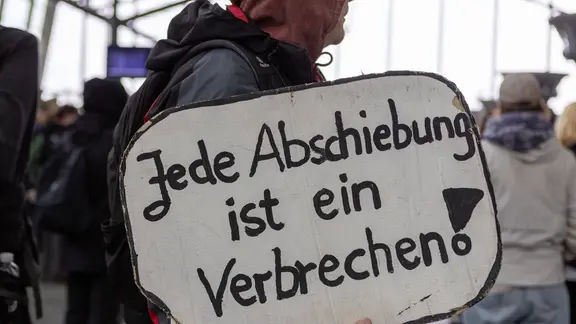
For now, the flights continue. The German authorities maintain that they are acting within the scope of legal and security mandates, while the demonstrators prepare for further actions, insisting that no flight should depart as long as the safety of those returning cannot be guaranteed.
As the autumn progresses, the government will face the dual challenge of balancing its strict security-oriented migration policy with the growing moral and humanitarian criticism voiced by a significant segment of the population. Whether the government will adjust its course or double down on its current trajectory remains to be seen, but the events at airports across the country this weekend have made it clear that the status quo is increasingly untenable for a large portion of the public.
For ongoing coverage of these developments, including video documentation of the protests and expert analysis on the legality of the current deportation protocols, follow the MDR AKTUELL live news feed.