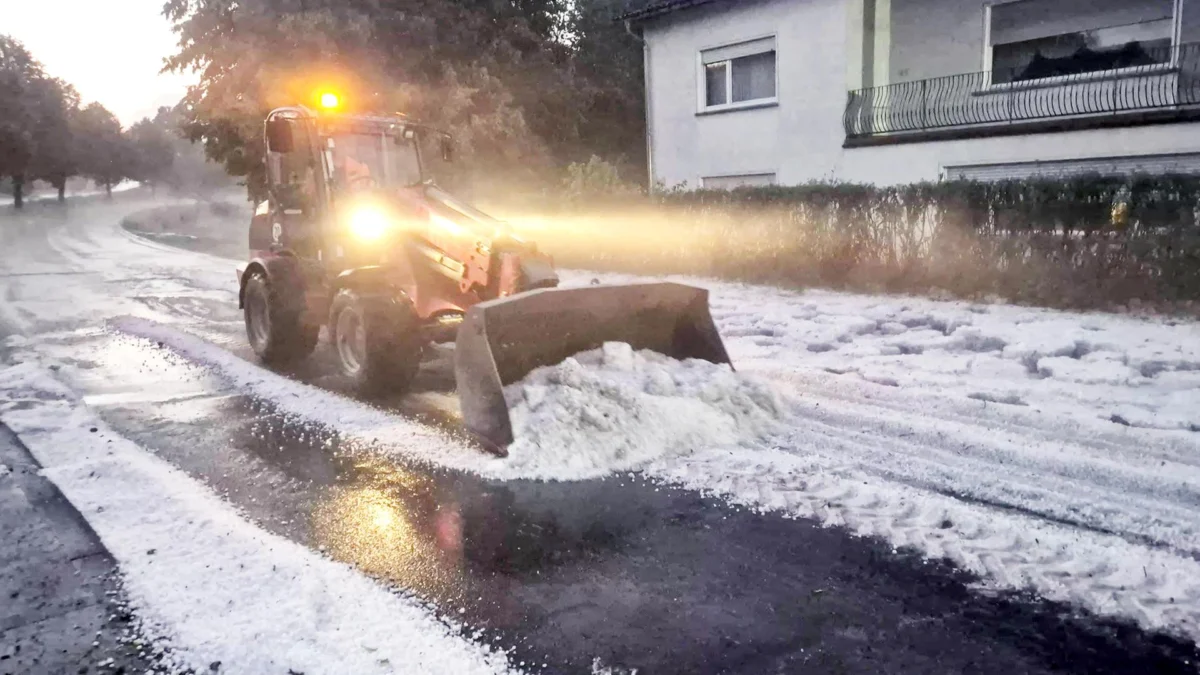
In a surreal display of nature’s volatility, parts of central Hesse were transformed into a winter-like landscape this past Sunday evening. As a brutal heatwave gripped the region, localized, high-intensity thunderstorms unleashed a torrent of hail so dense that it paralyzed traffic, flooded homes, and forced emergency services to deploy snowplows in the middle of June.
Main Facts: A Summer Landscape Transformed
The extreme meteorological event caught residents and authorities off guard. While the rest of the region had been enduring record-breaking temperatures, the Lahn-Dill and Limburg-Weilburg districts experienced a sharp, violent atmospheric shift. The primary culprit was a "heat-induced thunderstorm," a phenomenon where extreme ground heat rapidly destabilizes the atmosphere, creating massive updrafts that form large, dense hail clusters.
In Braunfels-Philippstein, the accumulation of hail was so significant that it clogged storm drains, causing surface water and ice slush to inundate residential basements. Local authorities reported that the sheer volume of precipitation overwhelmed municipal infrastructure, leaving streets impassable for standard vehicles. The most striking visual of the event was the deployment of heavy snow-clearing machinery—equipment usually reserved for January blizzards—to clear the streets of mid-summer ice.
Chronology of the Event: From Heatwave to Hailstorm
The crisis unfolded rapidly on Sunday evening, as the sweltering heat broke with sudden, aggressive intensity.
18:00 – The Onset of Instability
As temperatures hovered at high levels throughout the afternoon, meteorological stations in central Hesse noted a rapid drop in barometric pressure. By early evening, dark, cumulonimbus clouds began to congregate over the Lahn-Dill district, signaling the transition from a dry heatwave to an explosive weather system.
19:00 – The "Hagel-Alarm" in Braunfels
The situation in Braunfels-Philippstein deteriorated within minutes. Residents described a thunderous sound as hail began to pelt the town. The intensity was unprecedented for the season. Within half an hour, the town’s drainage systems were completely incapacitated by the mass of ice, leading to a flash flood of slush that breached basement walls and trapped motorists.
19:30 – Widespread Impact in Wetzlar and Runkel
Simultaneously, the storm front tracked toward Wetzlar and Runkel-Arfurt. In Wetzlar, the onslaught lasted approximately 20 minutes, stripping trees of their foliage and coating entire neighborhoods in a thick, white layer of hail. In Runkel-Arfurt, the damage was structural. Strong wind gusts, combined with the weight of the hail, caused trees to collapse and shattered six historical stained-glass windows at a local church.
20:30 – Emergency Response Escalation
By nightfall, the full scale of the destruction became apparent. Fire departments across the region shifted into high gear, transitioning from standard rescue operations to clearing debris and pumping water out of flooded residential structures.
Supporting Data: The Scale of the Emergency
The scope of the destruction is currently being quantified by local emergency management centers. While initial reports indicate no human casualties, the economic and structural damage is substantial.
- Total Operations: The Lahn-Dill District Control Center coordinated approximately 50 emergency missions throughout the evening.
- Infrastructure Damage: Beyond the flooding of basements, significant damage was reported to public property, including the destruction of a bicycle path in Ennerich caused by an uprooted oak tree.
- Agricultural and Botanical Impact: The mechanical "stripping" effect of the hail destroyed garden plots and damaged canopy trees across several municipalities.
- Structural Damage: In Runkel-Arfurt, the loss of ecclesiastical glass represents a cultural and financial blow, with the church community now facing significant restoration costs.
Official Responses and Tactical Coordination
The response to the event was a masterclass in localized emergency management. Because the storms were highly localized, municipalities had to rely on rapid-response volunteer fire brigades.
"The sheer volume of ice was the primary challenge," stated a representative from the Lahn-Dill control center. "We were not just dealing with water; we were dealing with solid mass that blocked drainage and made roads as slick as a mid-winter highway."
Local officials, including representative Antje Hachmann, emphasized the structural severity of the event. "The hail itself caused massive damage before the flooding even began," Hachmann noted. In the aftermath, the priority remained public safety and clearing arterial roads to ensure that emergency vehicles could continue to reach isolated areas. The fact that no injuries were reported is being attributed to the timing of the storm; most residents were already indoors seeking shelter from the heat, which effectively kept them out of the path of the falling ice.
Implications: The "New Normal" of Heat-Induced Storms
The event in Hesse is being viewed by meteorologists as a textbook example of the volatility inherent in modern climate patterns. When record heat persists for days, the atmosphere stores an immense amount of energy. When that energy is released, it is rarely a gentle rain; it is often a violent, localized event.
Meteorological Outlook
The Hessian weather service (hr-Wetterredaktion) has issued a cautious outlook for the coming week. While the immediate threat of massive, widespread hail is diminishing, the underlying atmospheric instability remains. The heat is not dissipating; rather, it is intensifying.
Experts warn that as long as these high-temperature cycles continue, the probability of "supercell" type storms remains high. Residents are advised to monitor weather apps closely and to ensure that drainage systems around their homes are clear, as the speed at which these summer storms turn into floods is increasing.
Infrastructure Resilience
The use of snowplows in June highlights a growing disconnect between existing municipal infrastructure and the reality of extreme weather. Urban planning in the region will likely need to account for more frequent, high-intensity flash flooding. This includes:
- Enhanced Drainage Capacity: Upgrading town drainage systems to handle high-density runoff that includes solid debris like hail.
- Tree Management: Assessing the health of older trees near public infrastructure, as the combination of high winds and hail is proving lethal to mature vegetation.
- Emergency Preparedness: Updating municipal emergency plans to include "summer-winter" protocols, ensuring that clearing equipment is available for maintenance even outside of the winter season.
Conclusion: A Wake-Up Call
The events of Sunday evening in central Hesse served as a stark, icy reminder of the power of nature. While the residents of Braunfels, Wetzlar, and Runkel begin the process of cleaning up, the broader lesson remains clear: the traditional boundaries of seasonal weather are blurring.
As the recovery continues, the focus will shift from immediate relief to long-term resilience. The images of snowplows navigating a landscape of mid-summer greenery will likely remain a defining image of this season—a symbol of the unpredictable and often harsh realities of a changing climate. For now, the people of Hesse are counting their blessings that, despite the destruction of property and the surreal nature of the event, their communities emerged without personal injury.